
BuddhistCatholicContemplativeEvangelicalGeneral ChristianHinduJewishLatter-day SaintMuslimNew VisionsProgressive Christian
Beliefs
- Buddhist
- Catholic
- Contemplative
- Evangelical
- General Christian
- Hindu
- Jewish
- Latter-day Saint
- More Voices
- Muslim
- New Visions
- Pagan
- Progressive Christian
Topics
- Religion News
- Food and Religion
- Sports and Religion
- Religious Art
- Religious Music and Entertainment
- Religious Events
- History and Religion
- Style and Religion
- Politics and Religion
- Women in Religion
- Recreation Outdoors and Religion
- Business Finance and Religion
- Careers Workplace and Religion
- Education and Religion
- Family Parenting and Religion
- Health Fitness and Religion
- Home and Religion
- Relationships and Religion
- Technology and Religion
- Travel and Religion
Columnists
- Buddhist Columnists
- Business Finance and Religion Columnists
- Careers Workplace and Religion Columnists
- Catholic Columnists
- Contemplative Columnists
- Education and Religion Columnists
- Evangelists Columnists
- Family Parenting and Religion Columnists
- General Christian Columnists
- Health Fitness and Religion Columnists
- Hindu Columnists
- History and Religion Columnists
- Home and Religion Columnists
- Jewish Columnists
- More Voices Columnists
- Latter Day Columnists
- Muslim Columnists
- New Visions Columnists
- Nonreligious Columnists
- Pagan Columnists
- Politics and Religion Columnists
- Progressive Columnists
- Recreation Outdoors and Religion Columnists
- Relationships and Religion Columnists
- Religion News Columnists
- Religious Art Columnists
- Religious Events Columnists
- Religious Music and Entertainment Columnists
- Sports and Religion Columnists
- Style and Religion Columnists
- Technology and Religion Columnists
- Travel and Religion Columnists
- Women in Religion Columnists
Resource Library
- 2026 Calendar
- Library of World Religions
- The 100 Most Holy Places on Earth
- Patheos Answers
- Podcasts
- Videos
- Faith Leaders Database
- Anglican Episcopalian
- Bahai
- Baptist
- Buddhism
- Christianity
- Confucianism
- Eastern Orthodoxy
- Hinduism
- Holiness and Pentecostal
- ISKCON
- Islam
- Judaism
- Lutheran
- Methodist
- The Church of Jesus Christ of Latter-day Saints
- New Age
- Paganism
- Presbytarian and Reformed
- Protestantism
- Religion Behind the Scenes
- Roman Catholic
- Scientology
- Shia Islam
- Sikhism
- Sufism
- Sunni Islam
- Taoism
- Zen
- See all religions
Research Tools
 Ad-Free & Subscriber Log-In Subscription Support
Ad-Free & Subscriber Log-In Subscription Support
Follow Patheos 

- Trending:
- Forgiveness
- |
- Marriage
- |
- Consciousness
- |
- Death Penalty
- |
- Election
- |
- Halloween

- Home
- Catholic
- History and Religion
- Dying To Oneself.
Dying To Oneself.
Last updated on: April 15, 2023 at 9:34 am by David Schloss
Dying To Oneself. 2023-04-15T09:34:28-04:00 David Schloss
Patheos Explore the world's faith through different perspectives on religion and spirituality! Patheos has the views of the prevalent religions and spiritualities of the world.
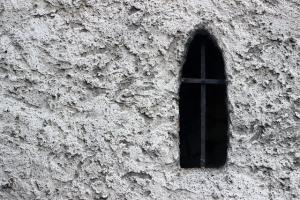
We are at war with ourselves. Within every person, a conflict exists between the spirit and the body. From a Catholic perspective, the outcome of that conflict is essential to the salvation of the soul.
In this paper, I will discuss an essential weapon in the conflict between body and soul; mortification. I will begin by discussing the need for mortification and how it is depicted in the Bible. Lastly, I will examine the various types of mortification common in the Catholic tradition. Finally, I will explore examples of mortification described in the Bible.
What Is Mortification, And Why Is It Needed?
The English rendition of mortification comes from a combination of two Latin words that refer to putting something to death. From this, Catholicism applies the concept to the body. That is, mortification involves putting the body to death. Within a religious sense of the word, mortification is not to be understood literally, of course.
To properly understand what mortification is and why it is necessary, we must travel back to the time before the Fall of Man. During this time, known as original justice, human beings lived properly ordered lives. By properly ordered, I mean to convey the structure that God intended. This structure or order meant that the body – understood as the animal instincts and baser proclivities – was subservient to reason, which is a power of the soul. Thus, the body was subjected to the soul, and the soul was subjected to God.
This order that God intended was destroyed by original sin. No longer were the passions and baser instincts subordinated to reason. Worse still, those baser instincts and passions distort and disturb the soul, causing the individual to be predisposed to sin. This predisposition or propensity, known as concupiscence, manifests itself as an intense desire, a tendency, or attraction, usually arising from lust or sensual desires. So it is that Saint Paul writes, “For the flesh has desires against the Spirit, and the Spirit against the flesh; these are opposed to each other, so that you may not do what you want.” (Galatians 5:17).
Any biblical perspective of human history must recognize this internal civil war and mankind’s efforts to regain the proper order of body and soul, to once more subjugate the flesh to the spirit.
Biblical And Traditional Basis For Mortification
What Catholicism refers to as mortification is generally referred to as asceticism in the Jewish tradition. While very similar, asceticism often involves eschewing material and sensual pleasures so as to obtain spiritual purity.
Catholicism asserts that the purpose of mortification is to “Train the soul to virtuous and holy living.” By mortifying the body, Catholics seek to reestablish the proper order of soul and body.
For this reason, Saint Paul often drew a dichotomy between the spirit and the flesh. He writes, “If you live according to the flesh you will die, but if by the Spirit you put to death the deeds of the body, you will live” (Romans 8:13). Now, it must be that Paul is not referring to physical death, for that is common to all living things. Rather, Saint Paul is addressing the spiritual death of one who is separated from God.
The concept of putting the flesh to death can appear extreme or esoterical. What does it mean to put one’s flesh to death? Again, Saint Paul explains what mortification entails by suggesting traits or characteristics common to those living according to the flesh. Disordered desires such as sexual immorality, impurity, passion, evil desire, and covetousness are aspects of the body that are to be “put to death.”
If, then, mortification is intended to train the soul in virtue and to effectuate a holy way of life, are there different forms of mortification that can be utilized to that end?
Types Of Mortifications In Catholicism
At its heart, mortification is self-denial. This self-denial can take on several forms.
As indicated earlier, mortification or asceticism is a well-known practice in Judaism. In the Old Testament, mortification often manifests itself as fasting, and examples of this range from Moses (Exodus 34:28) to Esther (Esther 4:16). Fasting remains an essential component of Yom Kippur, the Jewish Day of Atonement.
Catholicism, too, utilizes fasting as a form of mortification. Saint Augustine observed that fasting “Cleanses the soul, raises the mind, subjects one’s flesh to the spirit, renders the heart contrite and humble, scatters the clouds of concupiscence, quenches the fire of lust, and kindles the true light of chastity.”
A more severe and, therefore, less utilized form of mortification involves self-flagellation. This type of mortification can involve the use of what is called a discipline. A discipline is a small whip one uses to “punish the flesh.” While the Catholic Church does not sanction this type of mortification, it is thought Pope John Paul II engaged in self-flagellation.
Additional forms of mortification can include sleeping on the floor or, as in the case of Thomas More, wearing a hair shirt. For Catholics worldwide, self-denial often takes place during the season of Lent. It can involve periods of fasting, refraining from some pleasurable activity, or even waking up earlier to pray. In this sense, mortification takes on the added quality of penance.
Conclusion
The various practices that encompass mortification – from fasting to self-flagellation – are a part of the spiritual life of several traditions.
From the Catholic point of view, mortification is not masochistic, nor is it an end to itself. Rather, mortification is the practice of self-denial that is meant to bring the body into proper order with the soul so that the soul may be in the right relationship with God. As Catholics, we are followers of the One who told us, “Whoever wishes to come after me must deny himself, take up his cross, and follow me.”
Jewish
History and Religion
Food and Religion
Previous Post
April 2, 2023
Some Thoughts On Thoughts And Prayers
Next Post
April 16, 2023 Catholic Social Teaching
Recent Comments
"Why would it matter if atheism is wrong? The fact that Catholic and Protestant scholars ..."
Beyond the Absence of Belief: The ..."
"Kaiser Member Service Proponents often compare atheism to not collecting stamps—it is the lack of ..."
Beyond the Absence of Belief: The ..."
""these dual denials (objective truth and objective meaning)"This is not accurate. Post-modern thought does not ..."
Defending the Faith in a Post-Truth ..."
"The theologians still haven't received the memo. Your opposition are no longer atheists, but they ..."
Defending the Faith in a Post-Truth ..."
Browse Our Archives
Select a Category Abortion Atheism Catholicism. Catholicism. God. Theophany. Christmas Eschatology Faith and Works. God. Holy Spirit Intelligent Design Jesus Christ Justice Law Politics Protestantism Religion Sabbath Salvation. Soteriology. The Bible Theology Uncategorized
Select a Month October 2026 September 2026 August 2026 July 2026 June 2026 May 2026 April 2026 March 2026 February 2026 January 2026 December 2025 November 2025 October 2025 September 2025 August 2025 July 2025 June 2025 May 2025 April 2025 March 2025 February 2025 January 2025 December 2024 November 2024 October 2024 September 2024 August 2024 July 2024 June 2024 May 2024 April 2024 March 2024 February 2024 January 2024 December 2023 November 2023 October 2023 September 2023 August 2023 July 2023 June 2023 May 2023 April 2023 March 2023 February 2023 January 2023 December 2022 November 2022 October 2022 September 2022 August 2022 July 2022 June 2022 May 2022 April 2022 March 2022 February 2022 January 2022 December 2021
Follow Us!
TAKE THE
Religious Wisdom Quiz
Which book contains the story of the Valley of Dry Bones?
Select your answer to see how you score.
Isaiah Daniel Jeremiah Ezekiel
Related posts from Summa Catholic

The Anatomy of Divine Revelation in Catholic Thought

Beyond the Absence of Belief: The Implications of...

Can Catholic Apologetics Survive a Postmodern World?

From Samaria to Sanctity: Analyzing The Woman At...
TRENDING AT PATHEOS Catholic

The Parable Of The Sower And The Word...
One of Christ’s most famous parables is that of the sower who...

Rejecting Doom: Christian Hope And Human Action
Christianity is a religion of hope. We are to have hope and...

Why I Choose the Eucharist Over the Sermon
Choose the Eucharist, Not the Sermon What are we supposed to get...

5 Design Elements Found in Spiritually Rooted Homes
Putting Spirituality Into Home Decor Our homes are more than our living...

Credo: A Story of God Told with the...
About 10 years ago, I began to imagine a personal "Credo" that...

The Anatomy of Divine Revelation in Catholic Thought
The claim that God has made Himself known to human beings is...
view all Catholic blogs
What Are Your Thoughts?leave a comment
Ad-Free & Subscriber Log-In Subscription Support
- About Us
- 2026 Calendar
- Videos
- Podcasts
- Library of World Religions
- Faith In Media Tracker
- Advertise With Us
- Write for Us
- Privacy Policy
- Terms of Service
- Do Not Sell My Data
- Contact Us
- Radiant Digital
- Manage Newsletter Subscriptions
- Unsubscribe From Notifications
- Sitemap
Copyright 2008-2026, Patheos. All rights reserved.
Subscription Support Ad-Free & Subscriber Log-In
Follow Patheos