
BuddhistCatholicContemplativeEvangelicalGeneral ChristianHinduJewishLatter-day SaintMuslimNew VisionsProgressive Christian
Beliefs
- Buddhist
- Catholic
- Contemplative
- Evangelical
- General Christian
- Hindu
- Jewish
- Latter-day Saint
- More Voices
- Muslim
- New Visions
- Pagan
- Progressive Christian
Topics
- Religion News
- Food and Religion
- Sports and Religion
- Religious Art
- Religious Music and Entertainment
- Religious Events
- History and Religion
- Style and Religion
- Politics and Religion
- Women in Religion
- Recreation Outdoors and Religion
- Business Finance and Religion
- Careers Workplace and Religion
- Education and Religion
- Family Parenting and Religion
- Health Fitness and Religion
- Home and Religion
- Relationships and Religion
- Technology and Religion
- Travel and Religion
Columnists
- Buddhist Columnists
- Business Finance and Religion Columnists
- Careers Workplace and Religion Columnists
- Catholic Columnists
- Contemplative Columnists
- Education and Religion Columnists
- Evangelists Columnists
- Family Parenting and Religion Columnists
- General Christian Columnists
- Health Fitness and Religion Columnists
- Hindu Columnists
- History and Religion Columnists
- Home and Religion Columnists
- Jewish Columnists
- More Voices Columnists
- Latter Day Columnists
- Muslim Columnists
- New Visions Columnists
- Nonreligious Columnists
- Pagan Columnists
- Politics and Religion Columnists
- Progressive Columnists
- Recreation Outdoors and Religion Columnists
- Relationships and Religion Columnists
- Religion News Columnists
- Religious Art Columnists
- Religious Events Columnists
- Religious Music and Entertainment Columnists
- Sports and Religion Columnists
- Style and Religion Columnists
- Technology and Religion Columnists
- Travel and Religion Columnists
- Women in Religion Columnists
Resource Library
- 2026 Calendar
- Library of World Religions
- The 100 Most Holy Places on Earth
- Patheos Answers
- Podcasts
- Videos
- Faith Leaders Database
- Anglican Episcopalian
- Bahai
- Baptist
- Buddhism
- Christianity
- Confucianism
- Eastern Orthodoxy
- Hinduism
- Holiness and Pentecostal
- ISKCON
- Islam
- Judaism
- Lutheran
- Methodist
- The Church of Jesus Christ of Latter-day Saints
- New Age
- Paganism
- Presbytarian and Reformed
- Protestantism
- Religion Behind the Scenes
- Roman Catholic
- Scientology
- Shia Islam
- Sikhism
- Sufism
- Sunni Islam
- Taoism
- Zen
- See all religions
Research Tools
 Ad-Free & Subscriber Log-In Subscription Support
Ad-Free & Subscriber Log-In Subscription Support
Follow Patheos 

- Trending:
- Forgiveness
- |
- Marriage
- |
- Consciousness
- |
- Death Penalty
- |
- Election
- |
- Halloween

- Home
- Catholic
- History and Religion
- Notes On Doctrine
Notes On Doctrine
Last updated on: March 5, 2023 at 9:28 am by David Schloss
Notes On Doctrine 2023-03-05T09:28:23-05:00 David Schloss
Patheos Explore the world's faith through different perspectives on religion and spirituality! Patheos has the views of the prevalent religions and spiritualities of the world.
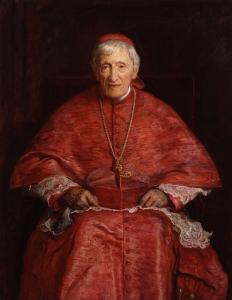
Is Catholicism a living thing? The idea (analogous though it may be) of the Catholic Church as a living entity is not unknown in the Bible. The analogy of bride and groom to refer to the Church (as the bride) and Jesus (as the groom) is used in various verses (e.g., Ephesians 5:22-33; Matthew 9:15).
Uniquely, the theologian and Cardinal John Henry Newman likened the Catholic Church to an organism that appropriates what is good and deters what is harmful or evil.
Extending the metaphor to Church doctrines, one sees these various doctrines develop and change over time. This leads to the question of the validity of these doctrines. If doctrines develop and change, how can we be certain that they have not become tainted to the point that they no longer represent what the early Church and Jesus intended?
To rectify this concern, John Henry Newman identified seven notes or criteria that ought to be applied to doctrines as a test of their faithfulness to the teachings of Christ and the Church fathers.
In this work, I will provide summaries of Cardinal Newman’s notes on the development of doctrine.
Preservation of Type
Newman suggests that doctrine can and should evolve and develop as it matures. An analogy would be that of childhood to adulthood. The child increases in size and knowledge, but he remains of the same essence; he remains a human being.
Similarly, a doctrine or idea may be subject to change. As such, a doctrine is more fully understood with time and reflection. An example might be how the doctrine of the Holy Trinity developed and matured with time. While the use of the plural to refer to God does appear in the Old Testament, it is only with a deeper understanding of the revelations provided by Jesus Christ that the Church began to develop its doctrine and teaching on the Trinity. And even this understanding of the Trinity was expanded and made more precise by the work of Tertullian, Augustine, and Aquinas.
Yet, despite how a doctrine may evolve or expand, the central idea must be preserved, and any changes must be consistent with the underlying premise of the doctrine.
Continuity of Principles
Accepting the fact that the ideas that provide the foundation for doctrines grow and evolve, the principles upon which the various doctrines are developed remain intact.
Cardinal Newman identifies nine principles that are foundational to the Catholic religion. They are dogma, faith, theology, sacraments, Scripture and its mystical interpretation, grace, asceticism, the harm of sin, and the potential of matter to be sanctified.
While the Church accepts that the understanding of these principles may be expounded upon, the continuity of the foundational principles of Catholicism protects against heresy.
Docetism provides an example. Docetism denied the Incarnation, claiming that Christ only appeared to have a human body and was instead a phantom. This teaching was not an advance in understanding the Incarnation, but rather a perversion of Scripture and Catholic theology. As such, Docetism was condemned as a heresy by the Church.
Power Of Assimilation
Perhaps in no other aspect of Cardinal Newman’s notes on doctrine does the concept of ideas (and the doctrines that emerge from them) being living things appear so strongly.
Newman observes that just as organisms assimilate resources such as food, water, and sunlight without experiencing a change in their nature, so too can ideas and doctrines develop and grow by incorporating other ideas into themselves without changing their fundamental nature.
An example of this note can be seen in the manner in which the Catholic Church appropriated the great western philosophical tradition to understand and explain various aspects of its teaching.
Logical Sequence
This note is perhaps the most critical when it comes to guarding against the corruption of doctrines and, subsequently, heresies.
Any doctrine that claims fidelity to the teaching of Christ and the early Church must be one that is logically consistent. Stated differently, any new doctrine must show itself to be a logical consequence or development of antecedent teaching.
Cardinal Newman explains this note by analogy. If one were to look upon a mature tree, he would not necessarily conclude that it is the result of a seed. Yet the tree is the logical development of a seed. Similarly, any contemporary teaching must be logically consistent with the Church’s teaching historically.
Anticipation Of Its Future
This particular note is, in a sense, an ancillary one to the note on the logical sequence.
A doctrine ought to be so construed that it allows for its logical development without devolving into corruption or heresy. That is to say; a thought-out doctrine is one where its consequences can be reasonably predicted.
Conservative Action
Here too, one sees the note of conservative action building upon the previous two notes.
For Newman, conservative action is intended to show that doctrines or their developments build on past theological reflections. Put differently, orthodox doctrinal developments ought to clarify and strengthen previous doctrines. In contrast, heterodoxy would contradict or even reverse the preceding consequences of doctrines.
An example of this note would be comparing the Apostles and Nicene Creeds. While the Nicene Creed is of greater length, it in no way contradicts the tenets of the Apostles Creed. Rather, the Nicene Creed builds and expounds upon the Apostles Creed.
Chronic Vigor
The seventh and final note is what John Henry Newman called chronic vigor.
Newman observes that corrupted or heretical teachings are often short-lived. They appear suddenly and may cause excitement but are soon repudiated, retreating into historical obscurity.
In contrast, orthodox doctrines remain abiding and vigorous while subject to growth and development.
Conclusion
The concept of ideas being analogical to organisms that evolve and develop is uniquely applied to Catholicism by Cardinal John Henry Newman.
In his work “Conscience, Consensus, and the Development of Doctrine,” Newman articulates seven notes that can be applied to doctrines and ideas to determine their validity. I have endeavored to provide a synopsis of these seven notes in this paper.
History and Religion
Previous Post

February 26, 2023
On Heresies
Next Post

March 12, 2023 Relics
Recent Comments
"Why would it matter if atheism is wrong? The fact that Catholic and Protestant scholars ..."
Beyond the Absence of Belief: The ..."
"Kaiser Member Service Proponents often compare atheism to not collecting stamps—it is the lack of ..."
Beyond the Absence of Belief: The ..."
""these dual denials (objective truth and objective meaning)"This is not accurate. Post-modern thought does not ..."
Defending the Faith in a Post-Truth ..."
"The theologians still haven't received the memo. Your opposition are no longer atheists, but they ..."
Defending the Faith in a Post-Truth ..."
Browse Our Archives
Select a Category Abortion Atheism Catholicism. Catholicism. God. Theophany. Christmas Eschatology Faith and Works. God. Holy Spirit Intelligent Design Jesus Christ Justice Law Politics Protestantism Religion Sabbath Salvation. Soteriology. The Bible Theology Uncategorized
Select a Month October 2026 September 2026 August 2026 July 2026 June 2026 May 2026 April 2026 March 2026 February 2026 January 2026 December 2025 November 2025 October 2025 September 2025 August 2025 July 2025 June 2025 May 2025 April 2025 March 2025 February 2025 January 2025 December 2024 November 2024 October 2024 September 2024 August 2024 July 2024 June 2024 May 2024 April 2024 March 2024 February 2024 January 2024 December 2023 November 2023 October 2023 September 2023 August 2023 July 2023 June 2023 May 2023 April 2023 March 2023 February 2023 January 2023 December 2022 November 2022 October 2022 September 2022 August 2022 July 2022 June 2022 May 2022 April 2022 March 2022 February 2022 January 2022 December 2021
Follow Us!
TAKE THE
Religious Wisdom Quiz
What animal tricked Eve in the garden?
Select your answer to see how you score.
A wolf A fox A serpent A lion
Related posts from Summa Catholic

The Anatomy of Divine Revelation in Catholic Thought

Beyond the Absence of Belief: The Implications of...

Can Catholic Apologetics Survive a Postmodern World?

From Samaria to Sanctity: Analyzing The Woman At...
TRENDING AT PATHEOS Catholic

The Parable Of The Sower And The Word...
One of Christ’s most famous parables is that of the sower who...

Rejecting Doom: Christian Hope And Human Action
Christianity is a religion of hope. We are to have hope and...

Why I Choose the Eucharist Over the Sermon
Choose the Eucharist, Not the Sermon What are we supposed to get...

5 Design Elements Found in Spiritually Rooted Homes
Putting Spirituality Into Home Decor Our homes are more than our living...

Credo: A Story of God Told with the...
About 10 years ago, I began to imagine a personal "Credo" that...

The Anatomy of Divine Revelation in Catholic Thought
The claim that God has made Himself known to human beings is...
view all Catholic blogs
What Are Your Thoughts?leave a comment
Ad-Free & Subscriber Log-In Subscription Support
- About Us
- 2026 Calendar
- Videos
- Podcasts
- Library of World Religions
- Faith In Media Tracker
- Advertise With Us
- Write for Us
- Privacy Policy
- Terms of Service
- Do Not Sell My Data
- Contact Us
- Radiant Digital
- Manage Newsletter Subscriptions
- Unsubscribe From Notifications
- Sitemap
Copyright 2008-2026, Patheos. All rights reserved.
Subscription Support Ad-Free & Subscriber Log-In
Follow Patheos