
BuddhistCatholicContemplativeEvangelicalGeneral ChristianHinduJewishLatter-day SaintMuslimNew VisionsProgressive Christian
Beliefs
- Buddhist
- Catholic
- Contemplative
- Evangelical
- General Christian
- Hindu
- Jewish
- Latter-day Saint
- More Voices
- Muslim
- New Visions
- Pagan
- Progressive Christian
Topics
- Religion News
- Food and Religion
- Sports and Religion
- Religious Art
- Religious Music and Entertainment
- Religious Events
- History and Religion
- Style and Religion
- Politics and Religion
- Women in Religion
- Recreation Outdoors and Religion
- Business Finance and Religion
- Careers Workplace and Religion
- Education and Religion
- Family Parenting and Religion
- Health Fitness and Religion
- Home and Religion
- Relationships and Religion
- Technology and Religion
- Travel and Religion
Columnists
- Buddhist Columnists
- Business Finance and Religion Columnists
- Careers Workplace and Religion Columnists
- Catholic Columnists
- Contemplative Columnists
- Education and Religion Columnists
- Evangelists Columnists
- Family Parenting and Religion Columnists
- General Christian Columnists
- Health Fitness and Religion Columnists
- Hindu Columnists
- History and Religion Columnists
- Home and Religion Columnists
- Jewish Columnists
- More Voices Columnists
- Latter Day Columnists
- Muslim Columnists
- New Visions Columnists
- Nonreligious Columnists
- Pagan Columnists
- Politics and Religion Columnists
- Progressive Columnists
- Recreation Outdoors and Religion Columnists
- Relationships and Religion Columnists
- Religion News Columnists
- Religious Art Columnists
- Religious Events Columnists
- Religious Music and Entertainment Columnists
- Sports and Religion Columnists
- Style and Religion Columnists
- Technology and Religion Columnists
- Travel and Religion Columnists
- Women in Religion Columnists
Resource Library
- 2026 Calendar
- Library of World Religions
- The 100 Most Holy Places on Earth
- Patheos Answers
- Podcasts
- Videos
- Faith Leaders Database
- Anglican Episcopalian
- Bahai
- Baptist
- Buddhism
- Christianity
- Confucianism
- Eastern Orthodoxy
- Hinduism
- Holiness and Pentecostal
- ISKCON
- Islam
- Judaism
- Lutheran
- Methodist
- The Church of Jesus Christ of Latter-day Saints
- New Age
- Paganism
- Presbytarian and Reformed
- Protestantism
- Religion Behind the Scenes
- Roman Catholic
- Scientology
- Shia Islam
- Sikhism
- Sufism
- Sunni Islam
- Taoism
- Zen
- See all religions
Research Tools
 Ad-Free & Subscriber Log-In Subscription Support
Ad-Free & Subscriber Log-In Subscription Support
Follow Patheos 

- Trending:
- Forgiveness
- |
- Marriage
- |
- Consciousness
- |
- Death Penalty
- |
- Election
- |
- Halloween

- Home
- Catholic
- History and Religion
- On Heresies
On Heresies
Last updated on: February 26, 2023 at 10:21 am by David Schloss
On Heresies 2023-02-26T10:21:56-05:00 David Schloss
Patheos Explore the world's faith through different perspectives on religion and spirituality! Patheos has the views of the prevalent religions and spiritualities of the world.
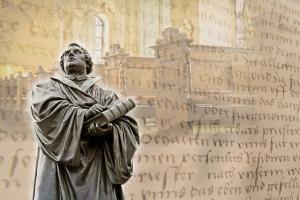
God is truth, Scripture tells us. And if that is the case, then a logical consequence of that fact is that the Church He founded is responsible for promulgating that truth and militating against any false teachings.
In this paper, I will provide an outline of the most prominent claims and teachings contrary to the truth that the Church has been entrusted with. These claims and teachings are known as heresies.
Before commencing, it is beneficial to note that the Catholic Church defines heresy as, “The obstinate post-baptismal denial of some truth which must be believed with divine and Catholic faith, or it is likewise an obstinate doubt concerning the same; apostasy is the total repudiation of the Christian faith; schism is the refusal of submission to the Roman Pontiff or of communion with the members of the Church subject to him” (Catechism of the Catholic Church, paragraph 2089).
Owing to the sheer number of heresies that may be listed, I will provide a basic outline by organizing the heresies into seven categories. They are Docetism, Montanism, Adoptionism, Sabellianism, Arianism, Pelagianism, and Gnosticism.
Docetism
Making difficult the effort to categorize the various heresies is the fact that there is often some intermingling among the heresies. This is the case with Docetism, as it shares some of its philosophy with Gnosticism.
Docetism is a system of thought that appeared very early in the history of the Church. Docetism denied that Christ was born, that He took a human body, suffered, and died. Rather, Docetism argued that Christ was a type of phantom, only appearing to have a human body.
The foundation upon which Docetism was founded was the belief that things composed of matter (e.g., bodies) were corrupted and evil. Therefore, Docetism thought it impossible that God – as a pure spirit – could or would take a human body.
Such a view that accepts Christ as a type of phantom is in direct contradiction to Jesus’ own words (see John 20:27). The Council of Nicea in 325 officially condemned Docetism.
Montanism
Montanism (named after its founder, Montanus) was a heresy that appeared in the second century, predominantly in present-day Turkey.
The basic teaching of Montanism was that the Holy Spirit was manifesting itself in and through Montanus and his followers. While this teaching was unusual, it was not, initially, at variance with the doctrines and authority of the Catholic Church.
However, Montanus claimed that the Holy Spirit was speaking through him and expanding upon the teachings of Christ. Montanus went even further, claiming that he was the embodiment of the Holy Spirit.
It was Montanus’s claim that his teachings were superior to the teachings of the Catholic Church and that Christ’s revelation was still ongoing that led to Montanism being considered a heresy. Montanus and his followers were excommunicated circa AD 177.
Adoptionism
Adoptionism is a Christological heresy dating to the second century, whose name hints at the heresy involved.
While there are several variations of Adoptionism, the principal argument underlying it is that Jesus, as a human being, was the adopted son of God. Two Spanish Bishops, Elipandus and Felix, expounded the initial version of Adoptionism, although a version of it dates back to Paul of Samosata in the third century.
Adoptionsim asserts that, within Christ, there is a double sonship. Christ has a Divine nature that, by generation and grace, makes Him the Son of God. However, Christ, in His human nature, is the adopted Son of God by adoption and grace. The premise for this argument is that before Jesus became the adopted Son of God, He was only a sinless human being.
Owing to the fact that Adoptionism stands in contradiction to Scripture (See the Gospel of John), Adoptionism was declared a heresy by Pope Hadrian and the Council of Frankfurt.
Sabellianism
Sabellianism was a heresy occurring in the third century. Known also as Monarchianism, Sabellianism denied the Personhood of the members of the Holy Trinity.
Sabellianism was named after its founder, a third-century Roman priest named Sabellius. Sabellianism denies that Father, Son, and Holy Spirit are separate Persons of the Godhead. Rather, Sabellius thought that the Trinity represents modes, aspects, or phases of one single Divine Person. The appeal of Sabellianism appears to lie in the fact that its formulation of God is easier to understand than three Persons sharing one Divine essence.
Yet Sabellianism contradicts Scripture (e.g., Matthew 28:19). Sabellius was excommunicated in AD 220. In AD 382, the Council of Rome condemned Sabellianism as heretical.
Arianism
Arius was a third-century priest of Greek origin whose teachings led to one of the most significant heresies in Christianity.
A core belief of Catholicism is that Jesus is God. Phrased differently, Jesus shares a Divine essence with the Father and the Holy Spirit. The Arian heresy, however, denies the Divine essence of Jesus.
The Arian heresy is predicated on the premise that the immutability and uniqueness of God cannot be communicated to another being. Consequently, Arianism reduced Jesus to a creature – albeit a holy one – who is worthy of worship even though He is not God.
Such a view contradicts Jesus’ own words (e.g., “I and the Father are one”) and brings into question the holiness of Jesus. Furthermore, as pointed out by Saint Athanasius, Arianism reduces Jesus to a type of demigod that introduces polytheism into Catholic theology. Perhaps even more damaging, Arianism undermines the redemptive work of Jesus since only God can reconcile God and man.
In AD 325, the Council of Nicea condemned Arius and issued a creed (the Nicene Creed) to counter Arius’ teaching. The Nicene Creed states that Christ is of one substance (essence) with God.
Pelagianism
There is little known about the author of the heresy that took his name. Pelagius was likely born in England and eventually became a monk and theologian.
The foundational teaching of Pelgianism is the denial of original sin. This view allows for the possibility of human perfectibility while appearing to eliminate the need for a Savior. If human beings are not damaged by original sin, there is no need for salvation. Extending this philosophy to its logical conclusion would suggest that the Incarnation and salvific work of Christ was unnecessary or even a mistake.
Indeed, Pelagius suggests that Jesus is more a model for human conduct than a Savior. Pelagius writes, “In the teachings and the example of Jesus Christ, we learn the general principles of behavior which pleases God.”
In AD 418, Pelagius was declared a heretic. The Council of Ephesus would later condemn Pelagianism in AD 431.
Gnosticism
The origin of Gnosticism is murky, at best. It is evident, however, that forms of Gnosticism predate the advent of Christianity.
Essentially, Gnosticism refers to various pantheistic sects that believed knowledge (specifically, spiritual knowledge) was the foundation or prerequisite for salvation. Additionally, Gnostics thought that physical matter was corrupt and evil.
These two teachings of Gnosticism, that salvation was predicated upon one’s knowledge and the view that matter was evil, placed it in direct conflict with Scripture and, subsequently, Catholicism.
Because Gnosticism often took various forms, it was not condemned as such. Instead, the Church anathematized and declared numerous iterations of it as heretical. The most vigorous and articulate critic of Gnosticism was Saint Irenaeus. Irenaeus thought Gnostics arrogant for thinking that knowledge alone could bring about their salvation. Irenaeus also argued that creation (including matter) was inherently good and that sin led to evil in the world.
Conclusion
What I have sought to do is briefly explain seven of the most prominent heresies in history. Suffice it to say that this essay in no way exhausts what can be said about heresies.
In conclusion, it must be said that a foundational principle of Catholicism is that the ultimate truth exists and has been made manifest in Jesus Christ. Yet human beings are finite and fallible, and that ultimate truth that God has revealed is often distorted or perverted by the human intellect. In a sense, that is what heresy is.
History and Religion
Previous Post

February 19, 2023
Papal Infallibility
Next Post

March 5, 2023 Notes On Doctrine
Recent Comments
"Why would it matter if atheism is wrong? The fact that Catholic and Protestant scholars ..."
Beyond the Absence of Belief: The ..."
"Kaiser Member Service Proponents often compare atheism to not collecting stamps—it is the lack of ..."
Beyond the Absence of Belief: The ..."
""these dual denials (objective truth and objective meaning)"This is not accurate. Post-modern thought does not ..."
Defending the Faith in a Post-Truth ..."
"The theologians still haven't received the memo. Your opposition are no longer atheists, but they ..."
Defending the Faith in a Post-Truth ..."
Browse Our Archives
Select a Category Abortion Atheism Catholicism. Catholicism. God. Theophany. Christmas Eschatology Faith and Works. God. Holy Spirit Intelligent Design Jesus Christ Justice Law Politics Protestantism Religion Sabbath Salvation. Soteriology. The Bible Theology Uncategorized
Select a Month October 2026 September 2026 August 2026 July 2026 June 2026 May 2026 April 2026 March 2026 February 2026 January 2026 December 2025 November 2025 October 2025 September 2025 August 2025 July 2025 June 2025 May 2025 April 2025 March 2025 February 2025 January 2025 December 2024 November 2024 October 2024 September 2024 August 2024 July 2024 June 2024 May 2024 April 2024 March 2024 February 2024 January 2024 December 2023 November 2023 October 2023 September 2023 August 2023 July 2023 June 2023 May 2023 April 2023 March 2023 February 2023 January 2023 December 2022 November 2022 October 2022 September 2022 August 2022 July 2022 June 2022 May 2022 April 2022 March 2022 February 2022 January 2022 December 2021
Follow Us!
TAKE THE
Religious Wisdom Quiz
What do the "Weeping Prophet" and "Book of Lamentations" refer to?
Select your answer to see how you score.
Daniel Isaiah Jeremiah Ezekiel
Related posts from Summa Catholic

The Anatomy of Divine Revelation in Catholic Thought

Beyond the Absence of Belief: The Implications of...

Can Catholic Apologetics Survive a Postmodern World?

From Samaria to Sanctity: Analyzing The Woman At...
TRENDING AT PATHEOS Catholic

Rejecting Doom: Christian Hope And Human Action
Christianity is a religion of hope. We are to have hope and...

It’s What Comes From Within Which Matters
One of the most difficult things for us to understand is why...

Why I Choose the Eucharist Over the Sermon
Choose the Eucharist, Not the Sermon What are we supposed to get...

5 Design Elements Found in Spiritually Rooted Homes
Putting Spirituality Into Home Decor Our homes are more than our living...

Credo: A Story of God Told with the...
About 10 years ago, I began to imagine a personal "Credo" that...

The Anatomy of Divine Revelation in Catholic Thought
The claim that God has made Himself known to human beings is...
view all Catholic blogs
What Are Your Thoughts?leave a comment
Ad-Free & Subscriber Log-In Subscription Support
- About Us
- 2026 Calendar
- Videos
- Podcasts
- Library of World Religions
- Faith In Media Tracker
- Advertise With Us
- Write for Us
- Privacy Policy
- Terms of Service
- Do Not Sell My Data
- Contact Us
- Radiant Digital
- Manage Newsletter Subscriptions
- Unsubscribe From Notifications
- Sitemap
Copyright 2008-2026, Patheos. All rights reserved.
Subscription Support Ad-Free & Subscriber Log-In
Follow Patheos