
BuddhistCatholicContemplativeEvangelicalGeneral ChristianHinduJewishLatter-day SaintMuslimNew VisionsProgressive Christian
Beliefs
- Buddhist
- Catholic
- Contemplative
- Evangelical
- General Christian
- Hindu
- Jewish
- Latter-day Saint
- More Voices
- Muslim
- New Visions
- Pagan
- Progressive Christian
Topics
- Religion News
- Food and Religion
- Sports and Religion
- Religious Art
- Religious Music and Entertainment
- Religious Events
- History and Religion
- Style and Religion
- Politics and Religion
- Women in Religion
- Recreation Outdoors and Religion
- Business Finance and Religion
- Careers Workplace and Religion
- Education and Religion
- Family Parenting and Religion
- Health Fitness and Religion
- Home and Religion
- Relationships and Religion
- Technology and Religion
- Travel and Religion
Columnists
- Buddhist Columnists
- Business Finance and Religion Columnists
- Careers Workplace and Religion Columnists
- Catholic Columnists
- Contemplative Columnists
- Education and Religion Columnists
- Evangelists Columnists
- Family Parenting and Religion Columnists
- General Christian Columnists
- Health Fitness and Religion Columnists
- Hindu Columnists
- History and Religion Columnists
- Home and Religion Columnists
- Jewish Columnists
- More Voices Columnists
- Latter Day Columnists
- Muslim Columnists
- New Visions Columnists
- Nonreligious Columnists
- Pagan Columnists
- Politics and Religion Columnists
- Progressive Columnists
- Recreation Outdoors and Religion Columnists
- Relationships and Religion Columnists
- Religion News Columnists
- Religious Art Columnists
- Religious Events Columnists
- Religious Music and Entertainment Columnists
- Sports and Religion Columnists
- Style and Religion Columnists
- Technology and Religion Columnists
- Travel and Religion Columnists
- Women in Religion Columnists
Resource Library
- 2026 Calendar
- Library of World Religions
- The 100 Most Holy Places on Earth
- Patheos Answers
- Podcasts
- Videos
- Faith Leaders Database
- Anglican Episcopalian
- Bahai
- Baptist
- Buddhism
- Christianity
- Confucianism
- Eastern Orthodoxy
- Hinduism
- Holiness and Pentecostal
- ISKCON
- Islam
- Judaism
- Lutheran
- Methodist
- The Church of Jesus Christ of Latter-day Saints
- New Age
- Paganism
- Presbytarian and Reformed
- Protestantism
- Religion Behind the Scenes
- Roman Catholic
- Scientology
- Shia Islam
- Sikhism
- Sufism
- Sunni Islam
- Taoism
- Zen
- See all religions
Research Tools
 Ad-Free & Subscriber Log-In Subscription Support
Ad-Free & Subscriber Log-In Subscription Support
Follow Patheos 

- Trending:
- Forgiveness
- |
- Marriage
- |
- Consciousness
- |
- Death Penalty
- |
- Election
- |
- Halloween

- Home
- Catholic
- History and Religion
- Introduction Into The Sacred Secrets
Introduction Into The Sacred Secrets
Last updated on: January 22, 2023 at 10:20 am by David Schloss
Introduction Into The Sacred Secrets 2023-01-22T10:20:04-05:00 David Schloss
Patheos Explore the world's faith through different perspectives on religion and spirituality! Patheos has the views of the prevalent religions and spiritualities of the world.
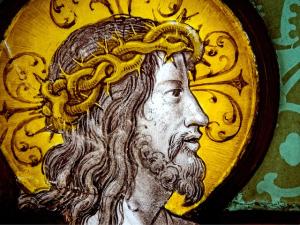
“Brothers, I could not talk to you as spiritual people, but as fleshly people, as infants in Christ. I fed you milk, not solid food, because you were unable to take it. Indeed, you are still not able, even now.” – 1 Corinthians 3:1-2.
God is truth, and it is the work of the Church that He created – the Catholic Church – to teach of Christ and the truths that God wants to be known. Despite this, at some point, the early Church thought it necessary to withhold certain aspects and teachings of Christianity.
In the following work, I will seek to explain this secrecy, known as disciplina arcani, and why it was needed. I will also examine whether this tradition of withholding certain teachings of Catholicism is still practiced today.
Disciplina Arcani
Known as the discipline of secrecy, the practice of disciplina arcani refers to a custom begun in the early Church (evidence of its use appears in the third century) of withholding knowledge of specific mysteries and doctrines central to Catholicism.
It appears that the practice is predicated upon the words used by Christ. “Give not that which is holy to dogs; neither cast your pearls before swine; lest perhaps they trample them under their feet, and turning upon you, they tear you” (Matthew 7:6). “Dogs” appear to refer to people who scorn, oppose, and abuse doctrine. “Swine” likely denotes those who would trample upon Catholic principles. That is, those who would not know the value of the Gospel and would tread it down as swine would pearls.
While disciplina arcani often meant denying entirely specific truths accepted by the Church to those outside of the Church, it frequently included a gradual vouchsafing of knowledge as well. This gradation of dispensing the truth of Catholicism seems to be what Saint Paul has in mind in 1 Corinthians 3:1-2. The analogy of food and drink illustrates that, like children who must first consume milk and soft food before they can eat meat, the truths taught by Christ must be measured out over time.
Like many things in life, disciplina arcani was born in response to difficulties.
The Need For Secrecy
The practice of withholding certain aspects of Catholic teaching from the general public appears to have occurred in response to the persecution the Church experienced in the second and third centuries.
As the persecutions of Christians waned, the practice of disciplina arcani dwindled Yet the need for the Church to protect itself did not entirely dissipate. The Church remained encircled by various forms of Paganism that were hostile to it.
After Christianity was established and secure in the fifth or sixth century, the need for such a discipline was no longer felt and became applicable only in certain situations. Disciplina arcani was limited to the slow parsing out of the Church’s teachings with regard to catechumens and Pagans.
It seemed prudent to the early Church to bring catechumens into the Faith slowly and by degrees. The premise being that one converting from Paganism could not be expected to incorporate the Catholic religion all at once. Rather, it was thought that a convert must first become familiar with certain first principles. For example, a Pagan from a polytheistic belief system would need to accept the unity of God. Only then could he be expected to be exposed to the teachings about the Holy Trinity.
Also of consideration for the Church was the possibility of spies seeking to infiltrate the Church for the purpose of betraying her teachings. As such, doctrines related to the Trinity, the sacraments, and the Lord’s Prayer were guarded closely. In fact, as late as the fifth century, the teaching of the Lord’s prayer and the Creed did not occur until within a week of one’s baptism. Advanced instruction involving the Holy Trinity and the sacraments was often not offered until after one had been baptized.
Having now endeavored to provide a glimpse of the ancient practice of disciplina arcani, I turn to whether this practice remains in effect today and, if not, whether it should be revived.
A Modern Practice?
The need to protect the Church from its numerous enemies made the Church fathers very reticent in teaching the mysteries of the Catholic Faith. As the Roman Empire and later Europe became tolerant of Christianity, the practice of disciplina arcani all but disappeared. It remained in effect as it was pertinent to catechesis.
I shall like to conclude by raising the question of whether disciplina arcani should be again a part of the Catholic Church. As of this writing, it is estimated that some 340 million Christians worldwide are subjected to some form of persecution. Much of this persecution is the result of Islamic “extremism.” In addition, an increasingly secularized culture is often hostile to Christianity.
In light of these facts, is it time for the Catholic Church to once again implement specific practices to protect the Catholic Faith? While any such efforts to protect against persecution may involve increased secrecy, raising awareness and political advocation may also be considered.
Conclusion
In this article, I have sought to explain the ancient and now-defunct practice of disciplina arcani. The persecution of the ancient Church necessitated this practice. However, in light of the increase of persecuted Christians throughout the world, should some form of disciplina arcani be reintroduced in the Catholic Church?
History and Religion
Next Post

January 29, 2023 The Sorrows Of Mary
Recent Comments
"Why would it matter if atheism is wrong? The fact that Catholic and Protestant scholars ..."
Beyond the Absence of Belief: The ..."
"Kaiser Member Service Proponents often compare atheism to not collecting stamps—it is the lack of ..."
Beyond the Absence of Belief: The ..."
""these dual denials (objective truth and objective meaning)"This is not accurate. Post-modern thought does not ..."
Defending the Faith in a Post-Truth ..."
"The theologians still haven't received the memo. Your opposition are no longer atheists, but they ..."
Defending the Faith in a Post-Truth ..."
Browse Our Archives
Select a Category Abortion Atheism Catholicism. Catholicism. God. Theophany. Christmas Eschatology Faith and Works. God. Holy Spirit Intelligent Design Jesus Christ Justice Law Politics Protestantism Religion Sabbath Salvation. Soteriology. The Bible Theology Uncategorized
Select a Month October 2026 September 2026 August 2026 July 2026 June 2026 May 2026 April 2026 March 2026 February 2026 January 2026 December 2025 November 2025 October 2025 September 2025 August 2025 July 2025 June 2025 May 2025 April 2025 March 2025 February 2025 January 2025 December 2024 November 2024 October 2024 September 2024 August 2024 July 2024 June 2024 May 2024 April 2024 March 2024 February 2024 January 2024 December 2023 November 2023 October 2023 September 2023 August 2023 July 2023 June 2023 May 2023 April 2023 March 2023 February 2023 January 2023 December 2022 November 2022 October 2022 September 2022 August 2022 July 2022 June 2022 May 2022 April 2022 March 2022 February 2022 January 2022 December 2021
Follow Us!
TAKE THE
Religious Wisdom Quiz
The Lord is close to the brokenhearted and saves those who are crushed in ____.
Select your answer to see how you score.
Fear Pain Grief Spirit
Related posts from Summa Catholic

The Anatomy of Divine Revelation in Catholic Thought

Beyond the Absence of Belief: The Implications of...

Can Catholic Apologetics Survive a Postmodern World?

From Samaria to Sanctity: Analyzing The Woman At...
TRENDING AT PATHEOS Catholic

Rejecting Doom: Christian Hope And Human Action
Christianity is a religion of hope. We are to have hope and...

It’s What Comes From Within Which Matters
One of the most difficult things for us to understand is why...

Why I Choose the Eucharist Over the Sermon
Choose the Eucharist, Not the Sermon What are we supposed to get...

5 Design Elements Found in Spiritually Rooted Homes
Putting Spirituality Into Home Decor Our homes are more than our living...

Credo: A Story of God Told with the...
About 10 years ago, I began to imagine a personal "Credo" that...

The Anatomy of Divine Revelation in Catholic Thought
The claim that God has made Himself known to human beings is...
view all Catholic blogs
What Are Your Thoughts?leave a comment
Ad-Free & Subscriber Log-In Subscription Support
- About Us
- 2026 Calendar
- Videos
- Podcasts
- Library of World Religions
- Faith In Media Tracker
- Advertise With Us
- Write for Us
- Privacy Policy
- Terms of Service
- Do Not Sell My Data
- Contact Us
- Radiant Digital
- Manage Newsletter Subscriptions
- Unsubscribe From Notifications
- Sitemap
Copyright 2008-2026, Patheos. All rights reserved.
Subscription Support Ad-Free & Subscriber Log-In
Follow Patheos