
BuddhistCatholicContemplativeEvangelicalGeneral ChristianHinduJewishLatter-day SaintMuslimNew VisionsProgressive Christian
Beliefs
- Buddhist
- Catholic
- Contemplative
- Evangelical
- General Christian
- Hindu
- Jewish
- Latter-day Saint
- More Voices
- Muslim
- New Visions
- Pagan
- Progressive Christian
Topics
- Religion News
- Food and Religion
- Sports and Religion
- Religious Art
- Religious Music and Entertainment
- Religious Events
- History and Religion
- Style and Religion
- Politics and Religion
- Women in Religion
- Recreation Outdoors and Religion
- Business Finance and Religion
- Careers Workplace and Religion
- Education and Religion
- Family Parenting and Religion
- Health Fitness and Religion
- Home and Religion
- Relationships and Religion
- Technology and Religion
- Travel and Religion
Columnists
- Buddhist Columnists
- Business Finance and Religion Columnists
- Careers Workplace and Religion Columnists
- Catholic Columnists
- Contemplative Columnists
- Education and Religion Columnists
- Evangelists Columnists
- Family Parenting and Religion Columnists
- General Christian Columnists
- Health Fitness and Religion Columnists
- Hindu Columnists
- History and Religion Columnists
- Home and Religion Columnists
- Jewish Columnists
- More Voices Columnists
- Latter Day Columnists
- Muslim Columnists
- New Visions Columnists
- Nonreligious Columnists
- Pagan Columnists
- Politics and Religion Columnists
- Progressive Columnists
- Recreation Outdoors and Religion Columnists
- Relationships and Religion Columnists
- Religion News Columnists
- Religious Art Columnists
- Religious Events Columnists
- Religious Music and Entertainment Columnists
- Sports and Religion Columnists
- Style and Religion Columnists
- Technology and Religion Columnists
- Travel and Religion Columnists
- Women in Religion Columnists
Resource Library
- 2026 Calendar
- Library of World Religions
- The 100 Most Holy Places on Earth
- Patheos Answers
- Podcasts
- Videos
- Faith Leaders Database
- Anglican Episcopalian
- Bahai
- Baptist
- Buddhism
- Christianity
- Confucianism
- Eastern Orthodoxy
- Hinduism
- Holiness and Pentecostal
- ISKCON
- Islam
- Judaism
- Lutheran
- Methodist
- The Church of Jesus Christ of Latter-day Saints
- New Age
- Paganism
- Presbytarian and Reformed
- Protestantism
- Religion Behind the Scenes
- Roman Catholic
- Scientology
- Shia Islam
- Sikhism
- Sufism
- Sunni Islam
- Taoism
- Zen
- See all religions
Research Tools
 Ad-Free & Subscriber Log-In Subscription Support
Ad-Free & Subscriber Log-In Subscription Support
Follow Patheos 

- Trending:
- Forgiveness
- |
- Marriage
- |
- Consciousness
- |
- Death Penalty
- |
- Election
- |
- Halloween

- Home
- Catholic
- History and Religion
- Resurrection
Resurrection
Last updated on: October 30, 2022 at 10:07 am by David Schloss
Resurrection 2022-10-30T10:07:46-04:00 David Schloss
Patheos Explore the world's faith through different perspectives on religion and spirituality! Patheos has the views of the prevalent religions and spiritualities of the world.
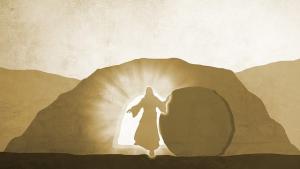
One of the most well-known and theologically significant statements made by Christ occurs in John 11:25. “I am the resurrection and the life.” While the belief in the resurrection of the dead is central and foundational in Catholicism, Christ’s words have a deeper meaning which ought to be examined.
In this paper, I will explore the belief in a resurrection from the dead from a biblical perspective and examine how Jesus’ words should be understood by placing them in a philosophical context.
Resurrection And Religion
I want to begin by asserting a presupposition. As Catholicism is the fulfillment of Judaism, it is often beneficial to place Catholic theology within a broader framework of the Old Testament.
The resurrection of the dead is a core doctrine of traditional Jewish theology. Put succinctly, when the Temple Mount is rebuilt for the third time, the Messiah will come, and the bodies of the dead will be brought back to life and reunited with their souls. This, of course, has a significant eschatological significance that is beyond the scope of this paper.
All this is to point out that the Jews of Jesus’ time would have been familiar with the concept of resurrection. We see evidence of this knowledge in Martha’s conversation with Jesus after her brother’s death. “Jesus said to her [Martha], ‘Your brother will rise.’ Martha said to him, ‘I know he will rise in the resurrection on the last day.” (See John 11:23).
The belief in resurrection is predicated upon the understanding that living things are composite creatures. Every living being is composed of a spiritual soul and a material body. At death, the soul is separated from the body and judged by God. If our souls return to God (Ecclesiastes 12:7), why is resurrection necessary or important? The answer lies in understanding the integrated nature of human beings.
Being a complete and integrated human means having both a body and a soul. It is true, of course, that while the soul as the form or essence of a person can exist without a body, it is believed to be limited in its full capacities. The reason for this limitation lies in the fact that knowledge begins with sensory impressions, and these impressions are reliant on a physical body.
Therefore, we can say that any Catholic anthropology must formulate the human being as that which is composed of an immaterial soul and a material body.
Analyzing John
A close reading of John 11:25 suggests some interesting features of the words of Christ. There are two points that I should like to examine. First, Christ does not say that He has been resurrected. Rather, He states that He is the resurrection. Why is this significant?
As indicated above, though the belief that God can and will resurrect the dead was an accepted concept, Jesus is stating that He is the cause of His own resurrection. As seen elsewhere, this is yet another indication that Jesus is God, for only God can bring life from death. Placing Jesus’ words in this light allows for increased intelligibility when reading the remainder of the verse. “Whoever believes in me, even if he dies, will live.”
From what has been said, we can draw on Aristotelian metaphysics to allow us to be in a better position to understand what Jesus means by claiming that He is the resurrection. Not only has Christ been resurrected, but He is the efficient cause of the power of resurrection. That is to say that Christ is the agent that makes resurrection possible. Therefore, it is faith in Jesus as God that makes it possible for us to hope for eternal life.
The second observation drawn from the text is that the resurrection of Christ provides a model of what human beings can hope for when they are raised from the dead. It is clear from the biblical record that a resurrected person will be united with a glorified body. In Philippians 3:21, Saint Paul writes, “He [Christ] will change our lowly body to conform with his glorified body by the power that enables him also to bring all things into subjection to himself.”
A Glorified Body
“It [the glorified body] is sown corruptible; it is raised incorruptible. It is sown dishonorable; it is raised glorious. It is sown weak; it is raised powerful. It is sown as a natural body; it is raised as a spiritual body. If there is a natural body, there is also a spiritual one. (1 Corinthians 15:42-44).”
Because a resurrected person now possesses the beatific vision, the body is said to be glorified. The beatific vision is the soul’s immediate knowledge and intimacy with God that is the reward of the saved. It is possible to reason to several characteristics that a glorified body possesses.
However, before examining the traits of a glorified body, it is important to clarify that what we are speaking of is a physical body and not an entirely ethereal entity. This fact was made clear to a skeptical Thomas when Jesus appeared to him after the resurrection. (See John 20:27).
Having sought to clarify the physical nature of the glorified body, I can state four traits or powers possessed by a glorified body.
Impassibility
Impassibility means that the glorified body will not experience pain or death. Because the soul is perfectly ordered to God, the glorified body is perfectly ordered to the eternal soul.
Subtlety
As stated above, the glorified body is not a ghost. However, the glorified body will not be limited by the laws of physics. This point is made in various places in John’s Gospel. We read that Christ passed through a locked door or traversed distances that were not possible for ordinary bodies.
Agility
With time we grow accustomed to our bodies not obeying our minds. However, in a glorified body, that will not be the case. Agility, in this context, refers to the capacity of the glorified body to move with the same ease as our souls.
Clarity
The last trait, clarity, is probably the most abstract. The clarity of a glorified body refers to the beauty and perfection that it will possess. As a result of the beatific vision, the glorified body will reflect the radiant light of God.
Conclusion
The doctrine of resurrection is vitally important on several levels. The death and resurrection of Christ is the vehicle by which God effects human salvation. Additionally, the resurrected Jesus is the model for the glorified body that the faithful hope for when Christ comes again.
History and Religion
Previous Post

October 23, 2022
Would Your God Consider Himself A Catholic?
Next Post
November 6, 2022 Universalism And The Will
Browse Our Archives
Select a Category Abortion Atheism Catholicism. Catholicism. God. Theophany. Christmas Eschatology Faith and Works. God. Holy Spirit Intelligent Design Jesus Christ Justice Law Politics Protestantism Religion Sabbath Salvation. Soteriology. The Bible Theology Uncategorized
Select a Month October 2026 September 2026 August 2026 July 2026 June 2026 May 2026 April 2026 March 2026 February 2026 January 2026 December 2025 November 2025 October 2025 September 2025 August 2025 July 2025 June 2025 May 2025 April 2025 March 2025 February 2025 January 2025 December 2024 November 2024 October 2024 September 2024 August 2024 July 2024 June 2024 May 2024 April 2024 March 2024 February 2024 January 2024 December 2023 November 2023 October 2023 September 2023 August 2023 July 2023 June 2023 May 2023 April 2023 March 2023 February 2023 January 2023 December 2022 November 2022 October 2022 September 2022 August 2022 July 2022 June 2022 May 2022 April 2022 March 2022 February 2022 January 2022 December 2021
Follow Us!
TAKE THE
Religious Wisdom Quiz
Who said: "Dear friends, do not be surprised at the fiery ordeal that has come on you to test you"?
Select your answer to see how you score.
Paul John James Peter
Related posts from Summa Catholic
The Incarnation: Why Only Christ Took Human Form
The Grammar of Faith: Why Catholicism Needs Metaphysics
Balancing Rationality And Mysticism In Catholic Theology
The Pillars Of Catholic Theology
TRENDING AT PATHEOS Catholic

Rejecting Doom: Christian Hope And Human Action
Christianity is a religion of hope. We are to have hope and...

It’s What Comes From Within Which Matters
One of the most difficult things for us to understand is why...

Why I Choose the Eucharist Over the Sermon
Choose the Eucharist, Not the Sermon What are we supposed to get...

5 Design Elements Found in Spiritually Rooted Homes
Putting Spirituality Into Home Decor Our homes are more than our living...

Credo: A Story of God Told with the...
About 10 years ago, I began to imagine a personal "Credo" that...

The Anatomy of Divine Revelation in Catholic Thought
The claim that God has made Himself known to human beings is...
view all Catholic blogs
Ad-Free & Subscriber Log-In Subscription Support
- About Us
- 2026 Calendar
- Videos
- Podcasts
- Library of World Religions
- Faith In Media Tracker
- Advertise With Us
- Write for Us
- Privacy Policy
- Terms of Service
- Do Not Sell My Data
- Contact Us
- Radiant Digital
- Manage Newsletter Subscriptions
- Unsubscribe From Notifications
- Sitemap
Copyright 2008-2026, Patheos. All rights reserved.
Subscription Support Ad-Free & Subscriber Log-In
Follow Patheos