
BuddhistCatholicContemplativeEvangelicalGeneral ChristianHinduJewishLatter-day SaintMuslimNew VisionsProgressive Christian
Beliefs
- Buddhist
- Catholic
- Contemplative
- Evangelical
- General Christian
- Hindu
- Jewish
- Latter-day Saint
- More Voices
- Muslim
- New Visions
- Pagan
- Progressive Christian
Topics
- Religion News
- Food and Religion
- Sports and Religion
- Religious Art
- Religious Music and Entertainment
- Religious Events
- History and Religion
- Style and Religion
- Politics and Religion
- Women in Religion
- Recreation Outdoors and Religion
- Business Finance and Religion
- Careers Workplace and Religion
- Education and Religion
- Family Parenting and Religion
- Health Fitness and Religion
- Home and Religion
- Relationships and Religion
- Technology and Religion
- Travel and Religion
Columnists
- Buddhist Columnists
- Business Finance and Religion Columnists
- Careers Workplace and Religion Columnists
- Catholic Columnists
- Contemplative Columnists
- Education and Religion Columnists
- Evangelists Columnists
- Family Parenting and Religion Columnists
- General Christian Columnists
- Health Fitness and Religion Columnists
- Hindu Columnists
- History and Religion Columnists
- Home and Religion Columnists
- Jewish Columnists
- More Voices Columnists
- Latter Day Columnists
- Muslim Columnists
- New Visions Columnists
- Nonreligious Columnists
- Pagan Columnists
- Politics and Religion Columnists
- Progressive Columnists
- Recreation Outdoors and Religion Columnists
- Relationships and Religion Columnists
- Religion News Columnists
- Religious Art Columnists
- Religious Events Columnists
- Religious Music and Entertainment Columnists
- Sports and Religion Columnists
- Style and Religion Columnists
- Technology and Religion Columnists
- Travel and Religion Columnists
- Women in Religion Columnists
Resource Library
- 2026 Calendar
- Library of World Religions
- The 100 Most Holy Places on Earth
- Patheos Answers
- Podcasts
- Videos
- Faith Leaders Database
- Anglican Episcopalian
- Bahai
- Baptist
- Buddhism
- Christianity
- Confucianism
- Eastern Orthodoxy
- Hinduism
- Holiness and Pentecostal
- ISKCON
- Islam
- Judaism
- Lutheran
- Methodist
- The Church of Jesus Christ of Latter-day Saints
- New Age
- Paganism
- Presbytarian and Reformed
- Protestantism
- Religion Behind the Scenes
- Roman Catholic
- Scientology
- Shia Islam
- Sikhism
- Sufism
- Sunni Islam
- Taoism
- Zen
- See all religions
Research Tools
 Ad-Free & Subscriber Log-In Subscription Support
Ad-Free & Subscriber Log-In Subscription Support
Follow Patheos 

- Trending:
- Forgiveness
- |
- Marriage
- |
- Consciousness
- |
- Death Penalty
- |
- Election
- |
- Halloween

- Home
- Catholic
- Relationships and Religion
- Would Your God Consider Himself A Catholic?
Would Your God Consider Himself A Catholic?
Last updated on: October 23, 2022 at 10:17 am by David Schloss
Would Your God Consider Himself A Catholic? 2022-10-23T10:17:13-04:00 David Schloss
Patheos Explore the world's faith through different perspectives on religion and spirituality! Patheos has the views of the prevalent religions and spiritualities of the world.
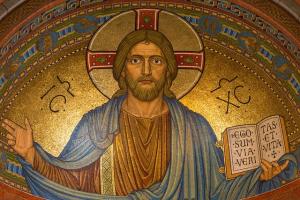
This paper seeks to answer the question, “Is God a Catholic”? It seems possible to pursue this question from one of two points of departure. The first is to address whether God, as a being, is a member of the Catholic Church. The second point from which one can access this question is whether the Catholic Church reflects who God is and what God teaches.
Regardless of which point of departure one begins with, it seems prudent to define the relevant terms first. While the definition of God should begin with philosophy, any proper explanation of Catholicism must come from the religion itself.
I will begin by examining what Catholicism – by way of philosophy – means by God. I will then seek to define Catholicism and argue that while God cannot be a member of a religion, the Catholic Church does represent and reflect God’s will.
Who Is God?
In point of fact, it is impossible to give an essential definition of God. This is because an essential definition states the essence of what is being defined, and finite human beings cannot comprehend the essence of an infinite God. Furthermore, a definition requires limiting the subject to distinguish it from other things. Since God is necessarily infinite, it is impossible to limit Him. As such, this makes explaining who or what God is a complicated task.
The difficulties inherent in defining God have not dissuaded philosophy or theology from pursuing the question. From the perspective of philosophy, God is the eternal first cause of existence itself. What Aristotle called “the unmoved mover.” For Aristotle, as for Thomas Aquinas, movement was synonymous with change. All creation is contingent and relies on another for its change or cause. That which is the cause of this “movement” or change which itself is not moved or changed, is God.
From a Catholic perspective, “God is almighty, eternal, beyond measure, incomprehensible, and infinite in intellect, will, and in every perfection. Since He is one unique spiritual substance, entirely simple and unchangeable, He must be declared really and essentially distinct from the world, perfectly happy in Himself and by his very nature, and inexpressibly exalted over all things that exist or can be conceived other than Himself” (Denzinger 3001).
Having sought to explain what the Catholic Church means by God, I turn to define the Catholic Church itself.
Catholicism
We may define the Catholic religion as the faith, worship, and practice of all Christians in communion with the Bishop of Rome, whom they acknowledge as the Vicar of Christ and the visible head of the Church founded by Christ. (Hardon, John A. Modern Catholic Dictionary. Eternal Life Publications, 1999).
This definition of Catholicism ought to be placed within the broader context of religion. While settling on one particular definition of religion is challenging, it can be defined as the moral virtue by which a person is disposed to render the worship and service owed to God.
Religion is also a composite of all the virtues that arise from a human being’s relationship to God as the author of his or her being. Religion thus corresponds to the practice of piety owed to God as the Creator of the universe.
Is God Catholic?
Having sought to define (to the extent possible) both God and the Catholic religion, I can address the question at hand, to wit, is God Catholic?
A fundamental belief of Catholicism is that God has revealed Himself in the Person of Jesus of Nazareth. Catholicism further asserts that God created the Catholic Church (Matthew 16:18) to bring all peoples to Him (Matthew 28:19-20). From these two articles of faith, one can infer that God cannot be a member of the Church, for that which is the cause of a thing must exist prior to what is caused. Therefore, God must exist independently of the Catholic Church. Yet it is also evident that God created the Catholic Church to teach humanity what is needed for salvation (See Luke 10:16).
I think it is important to emphasize the non-contingent nature of God. God does not need anything outside of Himself. Indeed, God would be God even if there were no Catholic Church or even human beings. God created the Catholic Church to make applicable individually the salvation that Jesus created. Said differently, the Church provides the means by which one may partake of the salvation brought by Jesus. This is done through worship and the sacraments entrusted to the Church by God.
Furthermore, because salvation comes from Christ the Head through the Church, which is his Body, the Catholic Church is an extension of the Incarnation. (See Catechism of the Catholic Church, Paragraph 846).
This claim that the Church is the (mystical) body of Christ may lead one to infer that Jesus is Catholic. If the Church is the mystical body of Christ, and if Christ is God, is it not accurate to state that God is Catholic? To answer this question, we must understand what is meant by the mystical body of Christ.
The term “body,” when referring to the Church, derives its meaning from the analogy used by Saint Paul, where he speaks of Catholics: “You are the Body of Christ, member for member” (1 Corinthians 12:27), and of Christ: “the Head of His Body, the Church” (Colossians 1:18). Christ is the originator of the Church, and He continues to rule the Church from within by supernatural means that are permanent and constantly active within the members.
From what has been said, I hope it is evident that while God cannot be Catholic, the Catholic Church reflects who God is.
Conclusion
In this paper, I have sought to answer the question of whether God is Catholic. I have suggested that while it is not accurate to state that God is a member of the Catholic Church, it is correct and proper to argue that the Catholic Church is the means by which God has sought to bring human beings to Him.
Catholicism exists so that people of faith can come to know and worship God. If faith is having good reasons to believe in God, religion is living out of that faith. Faith also entails trust where one does not know with certainty. Since God is omniscient, He does not have faith; He knows. In a sense, we must say that there is no faith in Heaven. For in Heaven, “We shall know fully, even as we are fully known.” (See 1 Corinthians 13:12).
Relationships and Religion
History and Religion
Previous Post

October 16, 2022
A Descent Into Hell
Next Post
October 30, 2022 Resurrection
Browse Our Archives
Select a Category Abortion Atheism Catholicism. Catholicism. God. Theophany. Christmas Eschatology Faith and Works. God. Holy Spirit Intelligent Design Jesus Christ Justice Law Politics Protestantism Religion Sabbath Salvation. Soteriology. The Bible Theology Uncategorized
Select a Month October 2026 September 2026 August 2026 July 2026 June 2026 May 2026 April 2026 March 2026 February 2026 January 2026 December 2025 November 2025 October 2025 September 2025 August 2025 July 2025 June 2025 May 2025 April 2025 March 2025 February 2025 January 2025 December 2024 November 2024 October 2024 September 2024 August 2024 July 2024 June 2024 May 2024 April 2024 March 2024 February 2024 January 2024 December 2023 November 2023 October 2023 September 2023 August 2023 July 2023 June 2023 May 2023 April 2023 March 2023 February 2023 January 2023 December 2022 November 2022 October 2022 September 2022 August 2022 July 2022 June 2022 May 2022 April 2022 March 2022 February 2022 January 2022 December 2021
Follow Us!
TAKE THE
Religious Wisdom Quiz
What did Ezra famously do upon learning about the people's intermarriage?
Select your answer to see how you score.
Fasted for 40 days Broke the tablets Fled to Babylon Tore his robe and pulled hair
Related posts from Summa Catholic

The Anatomy of Divine Revelation in Catholic Thought

Beyond the Absence of Belief: The Implications of...

Can Catholic Apologetics Survive a Postmodern World?

From Samaria to Sanctity: Analyzing The Woman At...
TRENDING AT PATHEOS Catholic

Rejecting Doom: Christian Hope And Human Action
Christianity is a religion of hope. We are to have hope and...

It’s What Comes From Within Which Matters
One of the most difficult things for us to understand is why...

Why I Choose the Eucharist Over the Sermon
Choose the Eucharist, Not the Sermon What are we supposed to get...

5 Design Elements Found in Spiritually Rooted Homes
Putting Spirituality Into Home Decor Our homes are more than our living...

Credo: A Story of God Told with the...
About 10 years ago, I began to imagine a personal "Credo" that...

The Anatomy of Divine Revelation in Catholic Thought
The claim that God has made Himself known to human beings is...
view all Catholic blogs
Ad-Free & Subscriber Log-In Subscription Support
- About Us
- 2026 Calendar
- Videos
- Podcasts
- Library of World Religions
- Faith In Media Tracker
- Advertise With Us
- Write for Us
- Privacy Policy
- Terms of Service
- Do Not Sell My Data
- Contact Us
- Radiant Digital
- Manage Newsletter Subscriptions
- Unsubscribe From Notifications
- Sitemap
Copyright 2008-2026, Patheos. All rights reserved.
Subscription Support Ad-Free & Subscriber Log-In
Follow Patheos