
BuddhistCatholicContemplativeEvangelicalGeneral ChristianHinduJewishLatter-day SaintMuslimNew VisionsProgressive Christian
Beliefs
- Buddhist
- Catholic
- Contemplative
- Evangelical
- General Christian
- Hindu
- Jewish
- Latter-day Saint
- More Voices
- Muslim
- New Visions
- Pagan
- Progressive Christian
Topics
- Religion News
- Food and Religion
- Sports and Religion
- Religious Art
- Religious Music and Entertainment
- Religious Events
- History and Religion
- Style and Religion
- Politics and Religion
- Women in Religion
- Recreation Outdoors and Religion
- Business Finance and Religion
- Careers Workplace and Religion
- Education and Religion
- Family Parenting and Religion
- Health Fitness and Religion
- Home and Religion
- Relationships and Religion
- Technology and Religion
- Travel and Religion
Columnists
- Buddhist Columnists
- Business Finance and Religion Columnists
- Careers Workplace and Religion Columnists
- Catholic Columnists
- Contemplative Columnists
- Education and Religion Columnists
- Evangelists Columnists
- Family Parenting and Religion Columnists
- General Christian Columnists
- Health Fitness and Religion Columnists
- Hindu Columnists
- History and Religion Columnists
- Home and Religion Columnists
- Jewish Columnists
- More Voices Columnists
- Latter Day Columnists
- Muslim Columnists
- New Visions Columnists
- Nonreligious Columnists
- Pagan Columnists
- Politics and Religion Columnists
- Progressive Columnists
- Recreation Outdoors and Religion Columnists
- Relationships and Religion Columnists
- Religion News Columnists
- Religious Art Columnists
- Religious Events Columnists
- Religious Music and Entertainment Columnists
- Sports and Religion Columnists
- Style and Religion Columnists
- Technology and Religion Columnists
- Travel and Religion Columnists
- Women in Religion Columnists
Resource Library
- 2026 Calendar
- Library of World Religions
- The 100 Most Holy Places on Earth
- Patheos Answers
- Podcasts
- Videos
- Faith Leaders Database
- Anglican Episcopalian
- Bahai
- Baptist
- Buddhism
- Christianity
- Confucianism
- Eastern Orthodoxy
- Hinduism
- Holiness and Pentecostal
- ISKCON
- Islam
- Judaism
- Lutheran
- Methodist
- The Church of Jesus Christ of Latter-day Saints
- New Age
- Paganism
- Presbytarian and Reformed
- Protestantism
- Religion Behind the Scenes
- Roman Catholic
- Scientology
- Shia Islam
- Sikhism
- Sufism
- Sunni Islam
- Taoism
- Zen
- See all religions
Research Tools
 Ad-Free & Subscriber Log-In Subscription Support
Ad-Free & Subscriber Log-In Subscription Support
Follow Patheos 

- Trending:
- Forgiveness
- |
- Marriage
- |
- Consciousness
- |
- Death Penalty
- |
- Election
- |
- Halloween

- Home
- Catholic
- History and Religion
- Does God Want You To Hate Your Family?
Does God Want You To Hate Your Family?
Last updated on: October 9, 2022 at 9:45 am by David Schloss
Does God Want You To Hate Your Family? 2022-10-09T09:45:24-04:00 David Schloss
Patheos Explore the world's faith through different perspectives on religion and spirituality! Patheos has the views of the prevalent religions and spiritualities of the world.
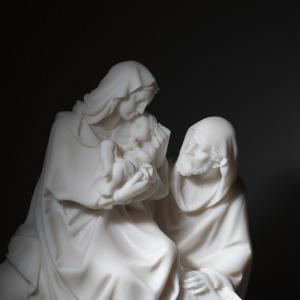
To be sure, Jesus’ words and teachings often surprised, stunned, or even angered His listeners. The breaking in of the Kingdom of God into this world is often unsettling and even shocking. Among the more disturbing and astonishing words of Jesus are those involving the family.
In this paper, I will examine two events that seem to suggest Jesus’ disdain for families. After reviewing these two occasions in the Bible, I will attempt to interpret them by placing Jesus’ words into the context of the ordering of one’s life as well as the necessary conditions of discipleship.
God And Family
The first derisive statement of Christ regarding the family that I will examine appears in the fourteenth chapter of Luke’s Gospel. In this discourse, Jesus makes a startling and even impossible demand of anyone wishing to be His disciple. “If anyone comes to me without hating his father and mother, wife and children, brothers and sisters, and even his own life, he cannot be my disciple.”
Before attempting to interpret this verse, it is prudent to understand who the author was, as well as the context and purpose of the text. A physician by training, Saint Luke was the author of both the Gospel of Luke and the Book of Acts. As a traveling companion to Saint Paul, Luke had direct access to the apostles and other accounts of Jesus’ life and ministry.
Luke’s audience was likely gentiles and wealthier Christians in an urban setting who were at risk of becoming complacent. As such, Luke’s Gospel often takes on the purpose of challenging believers to put their faith into practice.
The second statement that I shall touch upon appears in Matthew’s Gospel. In this example, the father of a disciple has died, and the disciple wishes to attend to family matters. “Lord, let me go first and bury my father.” But Jesus answered him, “Follow me, and let the dead bury their dead.”
Matthew was a Jewish tax collector called to follow Jesus. Matthew’s Gospel is decidedly Jewish in its approach, seeking to show that Jesus is the Messiah foretold by the Jewish Scriptures.
Having sought to provide some context, I turn now to interpreting Jesus’ statement.
An Interpretation
The first step in understanding these apparently harsh interactions between Jesus and His followers is to note the frequency of hyperbole or exaggeration in the Hebrew language. At times, Jesus makes use of these rhetorical devices to express His literal meaning. (See Bullinger, E. W. Figures of Speech Used in the Bible. 1986).
So while these statements should be understood as examples of hyperbole, we must not assume that there is not a more profound and more significant theological theme involved. It seems to me that both of these verses are intended to convey two different yet related points that are paramount for Catholics.
The first lesson that may be discerned from the two verses is the necessity of properly ordering one’s life. And the proper ordering of one’s life means placing God at the center. If I may indulge in a poor but hopefully enlightening metaphor, we can think of each individual life as a solar system. A properly ordered life would have God as the center (i.e., the sun) and each aspect of one’s life (i.e., the planets) revolving around God.
How does a Catholic properly order his life to God? First, one should commit to praying multiple times throughout the day. Partake of the sacraments, particularly Communion and Reconciliation. Additionally, as Catholics, we should seek to live out the Beatitudes. Finally, we should strive to be witnesses to Christ. This can be done through a life of charity.
The second lesson that seems to be evident from the two verses is that one must pay a price to follow Christ. There is indeed a cost to discipleship. For those of us living in the West, we can often take for granted the price many have paid and continue to pay for their faith. As anyone who has studied the lives of the apostles of Christ knows, all twelve suffered because of their faith in Christ. Suffered unto death, in many instances.
As Catholics, we are called to follow Christ. While most of us will never be asked to pay the heavy price that the apostles paid, we must be prepared for the cost.
Both of these instances of Jesus’ words are meant to place one’s life in the proper order. This involves subordinating the various aspects of one’s life, including one’s family, to those that involve one’s relationship with God. In both cases, Jesus preached about the cost of discipleship. The person that could not place Jesus first in his or her life was not able to be his follower. The underlying theme in both of these statements is Jesus seeking to show that we cannot have split priorities. As He says elsewhere, “No man can serve two masters.”
Discipleship requires not only that we follow Christ, but also that we seek to reveal Christ to others. In other words, through our struggles and the consequences of faith, Christ is present to us and to those who see us.
Conclusion
In this paper, I have examined two events in which Jesus seems to disparage the family. I have sought to show that in both cases, the point of Jesus’ harsh tone is to awaken us to the necessity of prioritizing God above all our possessions and relationships. Only then can we be called true disciples of Christ.
History and Religion
Relationships and Religion
Previous Post

October 2, 2022
The Catholic Church
Next Post
October 16, 2022 A Descent Into Hell
Browse Our Archives
Select a Category Abortion Atheism Catholicism. Catholicism. God. Theophany. Christmas Eschatology Faith and Works. God. Holy Spirit Intelligent Design Jesus Christ Justice Law Politics Protestantism Religion Sabbath Salvation. Soteriology. The Bible Theology Uncategorized
Select a Month October 2026 September 2026 August 2026 July 2026 June 2026 May 2026 April 2026 March 2026 February 2026 January 2026 December 2025 November 2025 October 2025 September 2025 August 2025 July 2025 June 2025 May 2025 April 2025 March 2025 February 2025 January 2025 December 2024 November 2024 October 2024 September 2024 August 2024 July 2024 June 2024 May 2024 April 2024 March 2024 February 2024 January 2024 December 2023 November 2023 October 2023 September 2023 August 2023 July 2023 June 2023 May 2023 April 2023 March 2023 February 2023 January 2023 December 2022 November 2022 October 2022 September 2022 August 2022 July 2022 June 2022 May 2022 April 2022 March 2022 February 2022 January 2022 December 2021
Follow Us!
TAKE THE
Religious Wisdom Quiz
What did the Israelites carry through the wilderness that symbolized God's presence?
Select your answer to see how you score.
Scroll of Moses Ark of the Covenant Golden Calf Burning torch
Related posts from Summa Catholic

The Anatomy of Divine Revelation in Catholic Thought

Beyond the Absence of Belief: The Implications of...

Can Catholic Apologetics Survive a Postmodern World?

From Samaria to Sanctity: Analyzing The Woman At...
TRENDING AT PATHEOS Catholic

Rejecting Doom: Christian Hope And Human Action
Christianity is a religion of hope. We are to have hope and...

It’s What Comes From Within Which Matters
One of the most difficult things for us to understand is why...

Why I Choose the Eucharist Over the Sermon
Choose the Eucharist, Not the Sermon What are we supposed to get...

5 Design Elements Found in Spiritually Rooted Homes
Putting Spirituality Into Home Decor Our homes are more than our living...

Credo: A Story of God Told with the...
About 10 years ago, I began to imagine a personal "Credo" that...

The Anatomy of Divine Revelation in Catholic Thought
The claim that God has made Himself known to human beings is...
view all Catholic blogs
Ad-Free & Subscriber Log-In Subscription Support
- About Us
- 2026 Calendar
- Videos
- Podcasts
- Library of World Religions
- Faith In Media Tracker
- Advertise With Us
- Write for Us
- Privacy Policy
- Terms of Service
- Do Not Sell My Data
- Contact Us
- Radiant Digital
- Manage Newsletter Subscriptions
- Unsubscribe From Notifications
- Sitemap
Copyright 2008-2026, Patheos. All rights reserved.
Subscription Support Ad-Free & Subscriber Log-In
Follow Patheos