
BuddhistCatholicContemplativeEvangelicalGeneral ChristianHinduJewishLatter-day SaintMuslimNew VisionsProgressive Christian
Beliefs
- Buddhist
- Catholic
- Contemplative
- Evangelical
- General Christian
- Hindu
- Jewish
- Latter-day Saint
- More Voices
- Muslim
- New Visions
- Pagan
- Progressive Christian
Topics
- Religion News
- Food and Religion
- Sports and Religion
- Religious Art
- Religious Music and Entertainment
- Religious Events
- History and Religion
- Style and Religion
- Politics and Religion
- Women in Religion
- Recreation Outdoors and Religion
- Business Finance and Religion
- Careers Workplace and Religion
- Education and Religion
- Family Parenting and Religion
- Health Fitness and Religion
- Home and Religion
- Relationships and Religion
- Technology and Religion
- Travel and Religion
Columnists
- Buddhist Columnists
- Business Finance and Religion Columnists
- Careers Workplace and Religion Columnists
- Catholic Columnists
- Contemplative Columnists
- Education and Religion Columnists
- Evangelists Columnists
- Family Parenting and Religion Columnists
- General Christian Columnists
- Health Fitness and Religion Columnists
- Hindu Columnists
- History and Religion Columnists
- Home and Religion Columnists
- Jewish Columnists
- More Voices Columnists
- Latter Day Columnists
- Muslim Columnists
- New Visions Columnists
- Nonreligious Columnists
- Pagan Columnists
- Politics and Religion Columnists
- Progressive Columnists
- Recreation Outdoors and Religion Columnists
- Relationships and Religion Columnists
- Religion News Columnists
- Religious Art Columnists
- Religious Events Columnists
- Religious Music and Entertainment Columnists
- Sports and Religion Columnists
- Style and Religion Columnists
- Technology and Religion Columnists
- Travel and Religion Columnists
- Women in Religion Columnists
Resource Library
- 2026 Calendar
- Library of World Religions
- The 100 Most Holy Places on Earth
- Patheos Answers
- Podcasts
- Videos
- Faith Leaders Database
- Anglican Episcopalian
- Bahai
- Baptist
- Buddhism
- Christianity
- Confucianism
- Eastern Orthodoxy
- Hinduism
- Holiness and Pentecostal
- ISKCON
- Islam
- Judaism
- Lutheran
- Methodist
- The Church of Jesus Christ of Latter-day Saints
- New Age
- Paganism
- Presbytarian and Reformed
- Protestantism
- Religion Behind the Scenes
- Roman Catholic
- Scientology
- Shia Islam
- Sikhism
- Sufism
- Sunni Islam
- Taoism
- Zen
- See all religions
Research Tools
 Ad-Free & Subscriber Log-In Subscription Support
Ad-Free & Subscriber Log-In Subscription Support
Follow Patheos 

- Trending:
- Forgiveness
- |
- Marriage
- |
- Consciousness
- |
- Death Penalty
- |
- Election
- |
- Halloween

- Home
- Catholic
- History and Religion
- A Descent Into Hell
A Descent Into Hell
Last updated on: October 16, 2022 at 9:36 am by David Schloss
A Descent Into Hell 2022-10-16T09:36:36-04:00 David Schloss
Patheos Explore the world's faith through different perspectives on religion and spirituality! Patheos has the views of the prevalent religions and spiritualities of the world.

The Apostles Creed contains a remarkable claim that would astonish us if familiarity had not dulled our senses. In the fourth paragraph of the Creed, we are told that Jesus descended into Hell.
In this paper, I will review the basis for this assertion and what, within the context of the Apostles Creed, is meant by Hell. Lastly, I will examine the purpose of Jesus’ descent into Hell.
What Is The Basis For The Claim?
The Apostles’ Creed was primarily composed to combat heresies and to defend the Catholic faith. As such, it is apologetic in nature.
As to the Creed’s claim that Jesus descended to Hell, it appears predicated upon the words of the Apostle Peter. In 1 Peter 3:18-19, we read, “For Christ also suffered for sins once, the righteous for the sake of the unrighteous, that he might lead you to God. Put to death in the flesh; he was brought to life in the spirit. In it, he also went to preach to the spirits in prison.”
It follows from Scripture, then, that the Catholic Church asserts that Jesus experienced death. For this reason, the Catechism of the Catholic Church situates Jesus’ descent into Hell in a larger context: “The frequent New Testament affirmations that Jesus was ‘raised from the dead’ presuppose that the crucified one sojourned in the realm of the dead prior to his Resurrection. This was the first meaning given in the apostolic preaching to Christ’s descent into Hell: that Jesus, like all men, experienced death and, in his soul, joined the others in the realm of the dead. But he descended there as Savior, proclaiming the Good News to the spirits imprisoned there” (Catechism of the Catholic Church, Paragraph 632).
In conclusion, we can see that Jesus, in His human nature, experienced death, and in His human and divine nature, descended into the abode of the dead, into a place called Sheol.
A Place Called Sheol
The Hebrew word Sheol connotes the place where those that had died were believed to reside. Unlike the Christian conception of Hell, however, Sheol was initially considered to be the abode of all the dead, whether righteous or otherwise. However, this view would evolve, and by the time of Jesus, Judaism generally believed that Sheol was the place for the righteous dead only. Because of this, it became known as Abraham’s bosom, most likely because Abraham was considered the father of the Jewish people. To die, then, was to return to one’s ancestors.
The development of the doctrine that Sheol was a place for only the righteous dead placed it in agreement with the Christian view of God’s judgment of individual souls at the time of death. Significantly, this also placed Sheol in contrast with Hades. The Greek word Hades is in line with the English translation of Hell.
It would be an error, however, to consider Sheol as Heaven. Within the Jewish tradition, Sheol is described as a place of darkness where souls wait in silence. This concept of waiting can be inferred from the Jewish liturgy pertaining to Sheol. In the prayer called Shemoneh Esreh, those in Sheol are referred to as “sleepers in the dust.”
Contrast Sheol with the Catholic understanding of Heaven as the place and condition of perfect supernatural happiness predicated upon the beatific vision, primarily and the knowledge, love, and enjoyment of creatures secondarily. From the Catholic perspective, Sheol was the place the righteous dead went while awaiting the coming of Christ.
This excursion into Jewish theology provides a framework for understanding the Apostles Creed’s statement that Jesus descended into Hell. If we understand Hell within the context of Sheol, we have some comprehension of Jesus’ descent. Still, we must ask, why was it necessary that Jesus descend into Hell? To that question, I turn next.
Why Did Jesus Enter Into Hell?
To properly answer why Jesus entered Hell, it is beneficial to place the question within the larger framework of soteriology. Soteriology is that aspect of theology that concerns itself with how God – in the person of Jesus – effected human salvation. Put succinctly; soteriology is the doctrine of salvation. From the Catholic perspective, salvation is predicated upon faith in Jesus and His work on the Cross.
In order to understand why Jesus entered Hell, we must address the question of the status of those souls that died prior to the Incarnation. If salvation is predicated on faith in God, it would seem an injustice that the faithful who died prior to Jesus would be condemned. As Clement of Alexandria wrote, “It is not right that these should be condemned without trial, and those alone who lived after the advent should have the advantage of the divine righteousness.”
It is for this reason that the Catholic Church teaches that those who died in friendship with God before the Resurrection went to Sheol. In a sense, Sheol can be understood as a “waiting room” for those awaiting the Savior. In this light, it becomes intelligible why Jesus descended there to share the Good News.
Jesus’ descent into Hell should also be understood within the context of the Ascension. By descending into Hell, Jesus freed the righteous dead and brought them with Him to Heaven.
Conclusion
“Just as Jonah was in the belly of the whale three days and three nights, so will the Son of Man be in the heart of the earth three days and three nights.” – Matthew 12:40.
It seems logical that if the purpose of God becoming a human being was to provide a pathway for the salvation of all souls, then salvation must have been made available to those righteous souls who resided in Sheol. For that reason, for love, so did Jesus descend into Hell.
History and Religion
Religion News
Previous Post

October 9, 2022
Does God Want You To Hate Your Family?
Next Post
October 23, 2022 Would Your God Consider Himself A Catholic?
Browse Our Archives
Select a Category Abortion Atheism Catholicism. Catholicism. God. Theophany. Christmas Eschatology Faith and Works. God. Holy Spirit Intelligent Design Jesus Christ Justice Law Politics Protestantism Religion Sabbath Salvation. Soteriology. The Bible Theology Uncategorized
Select a Month October 2026 September 2026 August 2026 July 2026 June 2026 May 2026 April 2026 March 2026 February 2026 January 2026 December 2025 November 2025 October 2025 September 2025 August 2025 July 2025 June 2025 May 2025 April 2025 March 2025 February 2025 January 2025 December 2024 November 2024 October 2024 September 2024 August 2024 July 2024 June 2024 May 2024 April 2024 March 2024 February 2024 January 2024 December 2023 November 2023 October 2023 September 2023 August 2023 July 2023 June 2023 May 2023 April 2023 March 2023 February 2023 January 2023 December 2022 November 2022 October 2022 September 2022 August 2022 July 2022 June 2022 May 2022 April 2022 March 2022 February 2022 January 2022 December 2021
Follow Us!
TAKE THE
Religious Wisdom Quiz
Who told Saul, "To obey is better than sacrifice"?
Select your answer to see how you score.
Samuel David Nathan Eli
Related posts from Summa Catholic
The Incarnation: Why Only Christ Took Human Form
The Grammar of Faith: Why Catholicism Needs Metaphysics
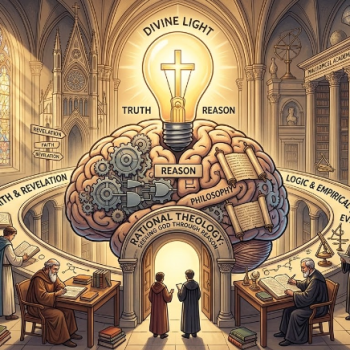
Balancing Rationality And Mysticism In Catholic Theology
The Pillars Of Catholic Theology
TRENDING AT PATHEOS Catholic

Rejecting Doom: Christian Hope And Human Action
Christianity is a religion of hope. We are to have hope and...

It’s What Comes From Within Which Matters
One of the most difficult things for us to understand is why...

Why I Choose the Eucharist Over the Sermon
Choose the Eucharist, Not the Sermon What are we supposed to get...

5 Design Elements Found in Spiritually Rooted Homes
Putting Spirituality Into Home Decor Our homes are more than our living...

Credo: A Story of God Told with the...
About 10 years ago, I began to imagine a personal "Credo" that...

The Anatomy of Divine Revelation in Catholic Thought
The claim that God has made Himself known to human beings is...
view all Catholic blogs
Ad-Free & Subscriber Log-In Subscription Support
- About Us
- 2026 Calendar
- Videos
- Podcasts
- Library of World Religions
- Faith In Media Tracker
- Advertise With Us
- Write for Us
- Privacy Policy
- Terms of Service
- Do Not Sell My Data
- Contact Us
- Radiant Digital
- Manage Newsletter Subscriptions
- Unsubscribe From Notifications
- Sitemap
Copyright 2008-2026, Patheos. All rights reserved.
Subscription Support Ad-Free & Subscriber Log-In
Follow Patheos