
BuddhistCatholicContemplativeEvangelicalGeneral ChristianHinduJewishLatter-day SaintMuslimNew VisionsProgressive Christian
Beliefs
- Buddhist
- Catholic
- Contemplative
- Evangelical
- General Christian
- Hindu
- Jewish
- Latter-day Saint
- More Voices
- Muslim
- New Visions
- Pagan
- Progressive Christian
Topics
- Religion News
- Food and Religion
- Sports and Religion
- Religious Art
- Religious Music and Entertainment
- Religious Events
- History and Religion
- Style and Religion
- Politics and Religion
- Women in Religion
- Recreation Outdoors and Religion
- Business Finance and Religion
- Careers Workplace and Religion
- Education and Religion
- Family Parenting and Religion
- Health Fitness and Religion
- Home and Religion
- Relationships and Religion
- Technology and Religion
- Travel and Religion
Columnists
- Buddhist Columnists
- Business Finance and Religion Columnists
- Careers Workplace and Religion Columnists
- Catholic Columnists
- Contemplative Columnists
- Education and Religion Columnists
- Evangelists Columnists
- Family Parenting and Religion Columnists
- General Christian Columnists
- Health Fitness and Religion Columnists
- Hindu Columnists
- History and Religion Columnists
- Home and Religion Columnists
- Jewish Columnists
- More Voices Columnists
- Latter Day Columnists
- Muslim Columnists
- New Visions Columnists
- Nonreligious Columnists
- Pagan Columnists
- Politics and Religion Columnists
- Progressive Columnists
- Recreation Outdoors and Religion Columnists
- Relationships and Religion Columnists
- Religion News Columnists
- Religious Art Columnists
- Religious Events Columnists
- Religious Music and Entertainment Columnists
- Sports and Religion Columnists
- Style and Religion Columnists
- Technology and Religion Columnists
- Travel and Religion Columnists
- Women in Religion Columnists
Resource Library
- 2026 Calendar
- Library of World Religions
- The 100 Most Holy Places on Earth
- Patheos Answers
- Podcasts
- Videos
- Faith Leaders Database
- Anglican Episcopalian
- Bahai
- Baptist
- Buddhism
- Christianity
- Confucianism
- Eastern Orthodoxy
- Hinduism
- Holiness and Pentecostal
- ISKCON
- Islam
- Judaism
- Lutheran
- Methodist
- The Church of Jesus Christ of Latter-day Saints
- New Age
- Paganism
- Presbytarian and Reformed
- Protestantism
- Religion Behind the Scenes
- Roman Catholic
- Scientology
- Shia Islam
- Sikhism
- Sufism
- Sunni Islam
- Taoism
- Zen
- See all religions
Research Tools
 Ad-Free & Subscriber Log-In Subscription Support
Ad-Free & Subscriber Log-In Subscription Support
Follow Patheos 

- Trending:
- Forgiveness
- |
- Marriage
- |
- Consciousness
- |
- Death Penalty
- |
- Election
- |
- Halloween

- Home
- Catholic
- Religion News
- What Is A Soul?
What Is A Soul?
Last updated on: September 14, 2022 at 6:37 am by David Schloss
What Is A Soul? 2022-09-14T06:37:57-04:00 David Schloss
Patheos Explore the world's faith through different perspectives on religion and spirituality! Patheos has the views of the prevalent religions and spiritualities of the world.
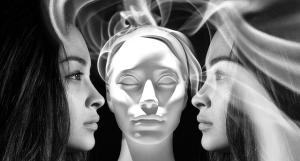
If materialism and secularism are true, human beings are essentially accidents of biology. They are, to paraphrase Shakespeare, “poor players, that strut and fret their hour upon the stage, and then is heard no more.”
Of course, this is not the teaching of the Bible or Catholicism. Instead, the biblical and Catholic view is that everything is created by God and that all living things are endowed with a soul. But what exactly is a soul, and what is it made of? Perhaps an even more urgent question is, what does a soul do?
In this paper, I will review the evidence for the existence of souls and discuss how Catholicism formulates its understanding of the human soul. Lastly, I will examine what powers and qualities are generally associated with the soul.
The Existence of Souls
Before one can speak of what a soul is, one should provide evidence of its existence. Here logic is of great benefit.
One of the laws of logic is the law of identity. Simply put, a thing is what it is; it is identical to itself. In order to show the existence of the soul, one needs only to show properties or traits that cannot be identified with or reducible to the physical body. There are several such properties or traits, and for the purpose of this paper, I will discuss two.
The first property is called qualia. Qualia refers to the subjective, private features of consciousness and reality. For example, what something tastes like, what pain feels like, and what a sunset looks like are all considered qualia. They are features of reality that are only accessible to the individual who experiences them.
As such, qualia is in opposition to the “public” features of objective reality. Any physical reality can, at least in principle, be observed. This includes the body of which the brain is a part. As an example, any medical or physical observation of a person’s body and brain would not be able to ascertain what a person is feeling or thinking about. What one is thinking or feeling is not entirely a feature of objective physical reality, including the brain.
In other words, a mental state is not the same as or a feature of a physical state. Since everybody experiences these mental states, it is clear that there are aspects of a human being that are not predicated on the physical body. Returning to the standard of the law of identity, what is not identical to something, must be another thing. As qualia are not identical to the body, it must be something else. And, again, accepting a dualistic ontology, what is not composed of a material substance must be composed of a spiritual substance. Therefore, it is reasonable to conclude that qualia or mental states are composed of a spiritual substance.
The second property that I shall mention that distinguishes the soul from the body is intentionality. Intentionality refers to the “aboutness” of one’s thoughts. Every mental state is referential; every thought points to or represents something else. One may think about God or about work. As with qualia, intentionality is not present in purely material things. An apple or television is not about anything. Any meaning that they obtain is derived from what people give to them. Even the words that you now read only have meaning because they are given so by our language. Since intentionality is absent from purely material substances, we may infer – in accord with the law of identity – that intentionality is spiritual in nature.
I have, I hope, provided some basis for accepting the existence of the soul. I turn to how Catholicism understands the soul.
The Soul
There are two fundamental sources upon which Catholicism relies in formulating its understanding of the soul; philosophy and Scripture.
Catholic philosophy, particularly the scholastic tradition, draws heavily upon the Greek and Roman philosophers. Here too, the teachings of Aristotle are foundational to the Catholic understanding of the soul.
For Aristotle and later for Thomas Aquinas, the soul is that which is life actually; it is that principle that makes something alive. By actual, philosophy means that which exists as opposed to that which might exist (exist in potency). A way of explaining this would be to say that a human body is a human being potentially. It is the soul that makes a human being what it is. The soul is the essence of a particular being.
The biblical view of the soul lends itself to dualistic anthropology. By dualism, I mean to denote that a particular being is composed of two fundamentally different substances. Substance (as used in philosophy) is the foundation for existence. Ontologically, Catholicism generally asserts that there are two types of substances in the universe, material and spiritual. Therefore, dualistic anthropology would argue that human beings are composed of both material and spiritual substances.
Perhaps the clearest and most emphatic declaration of dualistic anthropology in the Bible appears in Matthew 10:28. In this verse, Jesus makes clear the distinction between the body (material substance) and the soul (spiritual substance). The Lord puts it this way, “Do not be afraid of those who kill the body but cannot kill the soul; rather, be afraid of the one who can destroy both soul and body.”
It is clear that both the biblical record and the philosophical traditions accept the existence of the soul. What powers or traits does a soul possess? To that, I turn next.
The Powers Of The Human Soul
The last issue to examine is the powers that are generally attributed to the human soul. For the sake of brevity, I will delineate two foundational powers of the soul; rationality and consciousness.
For the purposes of this paper, I will define rationality as the capacity to think or reason – particularly in an abstract form – and willpower (including free will). The intellect and the thoughts that it produces lack the spatio-temporal properties of material objects*.* Said differently, concepts are mental states, and mental states do not take up space as physical objects do. Because mental states (I include free will in this definition) are not physical properties, they must be spiritual in nature. Whatever is proper to human nature (and rationality is) that is not a physical property is also not part of the body. Therefore, rationality is a property or power of the spiritual soul.
Consciousness is one of the greatest mysteries of philosophy and science. I shall make no illusions as to solving it. I will simply state that consciousness may be defined as a being’s awareness of both itself and its surroundings.
As evidence that consciousness is not reducible to the body, one can point out that consciousness is self-aware or reflexive, while material objects lack self-awareness. Furthermore, there is no explanation of how material brain events such as neural firings give rise to the qualitative and non-spatial features of conscious experience. That is to say that there is no correlation between brain (physical) events and the content of one’s thoughts. Again, appealing to the law of identity, it is evident that rationality and consciousness are not reducible to the body and are, therefore, spiritual and belonging to the soul.
Conclusion
In a real sense, the soul is the sine qua non of living things. The soul is that spiritual principle that makes a being what it is and differentiates it from inanimate material things.
In this paper, I have sought to provide evidence of the existence of the soul, a general definition of what it is, and, finally, some of the powers generally associated with the soul.
Religion News
Previous Post

September 11, 2022
The Incarnate God
Next Post
September 18, 2022 Lex Talionis
Browse Our Archives
Select a Category Abortion Atheism Catholicism. Catholicism. God. Theophany. Christmas Eschatology Faith and Works. God. Holy Spirit Intelligent Design Jesus Christ Justice Law Politics Protestantism Religion Sabbath Salvation. Soteriology. The Bible Theology Uncategorized
Select a Month October 2026 September 2026 August 2026 July 2026 June 2026 May 2026 April 2026 March 2026 February 2026 January 2026 December 2025 November 2025 October 2025 September 2025 August 2025 July 2025 June 2025 May 2025 April 2025 March 2025 February 2025 January 2025 December 2024 November 2024 October 2024 September 2024 August 2024 July 2024 June 2024 May 2024 April 2024 March 2024 February 2024 January 2024 December 2023 November 2023 October 2023 September 2023 August 2023 July 2023 June 2023 May 2023 April 2023 March 2023 February 2023 January 2023 December 2022 November 2022 October 2022 September 2022 August 2022 July 2022 June 2022 May 2022 April 2022 March 2022 February 2022 January 2022 December 2021
Follow Us!
TAKE THE
Religious Wisdom Quiz
True or False: The Corinthians were told that if Christ has not been raised, their preaching and faith are useless.
Select your answer to see how you score.
TRUE FALSE
Related posts from Summa Catholic

The Anatomy of Divine Revelation in Catholic Thought

Beyond the Absence of Belief: The Implications of...

Can Catholic Apologetics Survive a Postmodern World?

From Samaria to Sanctity: Analyzing The Woman At...
TRENDING AT PATHEOS Catholic

The Parable Of The Sower And The Word...
One of Christ’s most famous parables is that of the sower who...

Rejecting Doom: Christian Hope And Human Action
Christianity is a religion of hope. We are to have hope and...

Why I Choose the Eucharist Over the Sermon
Choose the Eucharist, Not the Sermon What are we supposed to get...

5 Design Elements Found in Spiritually Rooted Homes
Putting Spirituality Into Home Decor Our homes are more than our living...

Credo: A Story of God Told with the...
About 10 years ago, I began to imagine a personal "Credo" that...

The Anatomy of Divine Revelation in Catholic Thought
The claim that God has made Himself known to human beings is...
view all Catholic blogs
Ad-Free & Subscriber Log-In Subscription Support
- About Us
- 2026 Calendar
- Videos
- Podcasts
- Library of World Religions
- Faith In Media Tracker
- Advertise With Us
- Write for Us
- Privacy Policy
- Terms of Service
- Do Not Sell My Data
- Contact Us
- Radiant Digital
- Manage Newsletter Subscriptions
- Unsubscribe From Notifications
- Sitemap
Copyright 2008-2026, Patheos. All rights reserved.
Subscription Support Ad-Free & Subscriber Log-In
Follow Patheos