
BuddhistCatholicContemplativeEvangelicalGeneral ChristianHinduJewishLatter-day SaintMuslimNew VisionsProgressive Christian
Beliefs
- Buddhist
- Catholic
- Contemplative
- Evangelical
- General Christian
- Hindu
- Jewish
- Latter-day Saint
- More Voices
- Muslim
- New Visions
- Pagan
- Progressive Christian
Topics
- Religion News
- Food and Religion
- Sports and Religion
- Religious Art
- Religious Music and Entertainment
- Religious Events
- History and Religion
- Style and Religion
- Politics and Religion
- Women in Religion
- Recreation Outdoors and Religion
- Business Finance and Religion
- Careers Workplace and Religion
- Education and Religion
- Family Parenting and Religion
- Health Fitness and Religion
- Home and Religion
- Relationships and Religion
- Technology and Religion
- Travel and Religion
Columnists
- Buddhist Columnists
- Business Finance and Religion Columnists
- Careers Workplace and Religion Columnists
- Catholic Columnists
- Contemplative Columnists
- Education and Religion Columnists
- Evangelists Columnists
- Family Parenting and Religion Columnists
- General Christian Columnists
- Health Fitness and Religion Columnists
- Hindu Columnists
- History and Religion Columnists
- Home and Religion Columnists
- Jewish Columnists
- More Voices Columnists
- Latter Day Columnists
- Muslim Columnists
- New Visions Columnists
- Nonreligious Columnists
- Pagan Columnists
- Politics and Religion Columnists
- Progressive Columnists
- Recreation Outdoors and Religion Columnists
- Relationships and Religion Columnists
- Religion News Columnists
- Religious Art Columnists
- Religious Events Columnists
- Religious Music and Entertainment Columnists
- Sports and Religion Columnists
- Style and Religion Columnists
- Technology and Religion Columnists
- Travel and Religion Columnists
- Women in Religion Columnists
Resource Library
- 2026 Calendar
- Library of World Religions
- The 100 Most Holy Places on Earth
- Patheos Answers
- Podcasts
- Videos
- Faith Leaders Database
- Anglican Episcopalian
- Bahai
- Baptist
- Buddhism
- Christianity
- Confucianism
- Eastern Orthodoxy
- Hinduism
- Holiness and Pentecostal
- ISKCON
- Islam
- Judaism
- Lutheran
- Methodist
- The Church of Jesus Christ of Latter-day Saints
- New Age
- Paganism
- Presbytarian and Reformed
- Protestantism
- Religion Behind the Scenes
- Roman Catholic
- Scientology
- Shia Islam
- Sikhism
- Sufism
- Sunni Islam
- Taoism
- Zen
- See all religions
Research Tools
 Ad-Free & Subscriber Log-In Subscription Support
Ad-Free & Subscriber Log-In Subscription Support
Follow Patheos 

- Trending:
- Forgiveness
- |
- Marriage
- |
- Consciousness
- |
- Death Penalty
- |
- Election
- |
- Halloween

- Home
- Catholic
- The Memory Of Original Justice
The Memory Of Original Justice
Last updated on: September 4, 2022 at 9:03 am by David Schloss
The Memory Of Original Justice 2022-09-04T09:03:43-04:00 David Schloss
Patheos Explore the world's faith through different perspectives on religion and spirituality! Patheos has the views of the prevalent religions and spiritualities of the world.
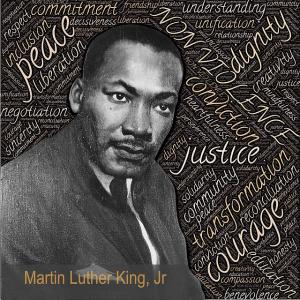
What does it mean to be “good”? Are the concepts of good and evil an artificial edifice imposed on us by society, or is there an objective standard by which actions can be judged?
While these questions can appear abstract and philosophical, they are of no small importance to Catholics. In the following paper, I will examine these questions and argue that the concepts of good and evil are predicated upon our memory of original justice.
On Good And Evil
To speak of good and evil is to speak of moral judgments. And any judgment requires two things, one, that we understand the meanings of the terms involved and, two, that we have a standard by which we can make a judgment.
Curiously, it is the standard by which we determine what is good and evil that also determines the definitions of the terms. The reason for this lies in the fact that there are two types of standards; subjective and objective.
A subjective judgment is one where the standard is determined by the individual (i.e., the subject). Within the moral universe, it is the individual or group that determines what is good and evil. Objective judgments, on the other hand, are determined by an extrinsic standard. What is considered good and evil is not determined by the individual but by a standard that exists independently. The individual is tasked with adhering to the objective standard.
Considered under this rubric, it becomes evident that the definition of what is good and evil becomes predicated upon whether the judgment is subjective or objective. What is good subjectively (that is, for the individual) may not be good objectively.
From a Catholic perspective, good and evil are objective judgments made in accordance with natural law. In following Thomas Aquinas, natural law is the manifestation of the mind of God, knowable to human reason that allows one seeks the good and avoids what is evil. The standard by which we are to conduct ourselves is the standard set by God and made evident in natural law.
Human nature appears so constituted that it seeks what is good and just. We are innately desirous of justice, regardless of our personal philosophies or religious sense. Yet, it would be irrational for human beings to seek that which does not exist or that which cannot be obtained. Therefore, we may infer that human nature is cognizant of a time of perfect justice. We have, as it were, a memory of original justice.
Original Justice
Original justice refers to the state that Adam and Eve enjoyed before they sinned. The state of original justice meant the simultaneous possession of sanctifying grace, with its right to enter Heaven and the preternatural gifts. Preternatural gifts include infused knowledge, absence of concupiscence, and bodily immortality.
I shall like to suggest further that the state of original justice included a properly ordered sense of morality. If God is the standard by which one appeals his moral judgments, then the state of original justice, with its attendant intimate knowledge of God, means that all moral judgments were clear and unhindered by sin. This clarity of moral precepts was lost at the Fall of Man. Yet, the memory of this knowledge remains. If this were not so, human beings would not seek justice; they would not seek the objective good. The memory of original justice makes us aware of the presence of natural law and an objective standard of justice. Whether acknowledged or not, it is the existence of natural law that makes positive law possible, and it is positive law that provides the foundation for civilization.
Natural Law And A Traffic Ticket
As stated above, natural law is the manifestation of the mind of God that exists in the universe and is knowable to human beings by virtue of their reason. Perhaps the most well-known example of natural law is the Ten Commandments.
A type of law that is very familiar to all of us is positive law. Positive law is man-made law that governs everything from international treaties to traffic tickets. What, I suggest, undergirds man-made law is an innate knowledge of natural law. The reason for this is that if natural law did not inform positive law, we would view the laws that govern our society as arbitrary. I do not think that society thinks a prohibition on murder is arbitrary, however. Rather, we see it as a codification of what we believe is naturally right.
In other words, the laws that society makes appeal to are grounded in an objective standard of justice. When it is not, when the laws of society are not so grounded, we are inclined to protest. We say with Saint Augustine and Martin Luther King that an unjust law is no law at all.
Conclusion
The laws that society makes are only deemed just when they are perceived as being in accord with some objective standard of morality. This objective standard is known as natural law. Prior to original sin, human beings had ready access to natural law and thus lived in a state of original justice. After the Fall, this state of original justice was destroyed, yet we have a kind of institutional memory of that state.
The memory of original justice – the time when human beings existed in perfect justice – permeates our lives and society. It is only because there was a time when man lived in harmony with God that we now seek justice in our world. Haunted by this memory, we seek to make right a world gone wrong because of sin.
Previous Post

August 31, 2022
Of Angels
Next Post
September 7, 2022 Made For God?
Browse Our Archives
Select a Category Abortion Atheism Catholicism. Catholicism. God. Theophany. Christmas Eschatology Faith and Works. God. Holy Spirit Intelligent Design Jesus Christ Justice Law Politics Protestantism Religion Sabbath Salvation. Soteriology. The Bible Theology Uncategorized
Select a Month October 2026 September 2026 August 2026 July 2026 June 2026 May 2026 April 2026 March 2026 February 2026 January 2026 December 2025 November 2025 October 2025 September 2025 August 2025 July 2025 June 2025 May 2025 April 2025 March 2025 February 2025 January 2025 December 2024 November 2024 October 2024 September 2024 August 2024 July 2024 June 2024 May 2024 April 2024 March 2024 February 2024 January 2024 December 2023 November 2023 October 2023 September 2023 August 2023 July 2023 June 2023 May 2023 April 2023 March 2023 February 2023 January 2023 December 2022 November 2022 October 2022 September 2022 August 2022 July 2022 June 2022 May 2022 April 2022 March 2022 February 2022 January 2022 December 2021
Follow Us!
TAKE THE
Religious Wisdom Quiz
What African country is known for its ancient Coptic Christian Church?
Select your answer to see how you score.
Nigeria Ghana Egypt South Africa
Related posts from Summa Catholic
Creation, Preservation, and Teleology in Catholic Theology

The Anatomy of Divine Revelation in Catholic Thought

Beyond the Absence of Belief: The Implications of...

Can Catholic Apologetics Survive a Postmodern World?
TRENDING AT PATHEOS Catholic

Creation, Preservation, and Teleology in Catholic Theology
As I write this, it is very early Monday morning. Like millions...

The Parable Of The Sower And The Word...
One of Christ’s most famous parables is that of the sower who...

Rejecting Doom: Christian Hope And Human Action
Christianity is a religion of hope. We are to have hope and...

Why I Choose the Eucharist Over the Sermon
Choose the Eucharist, Not the Sermon What are we supposed to get...

5 Design Elements Found in Spiritually Rooted Homes
Putting Spirituality Into Home Decor Our homes are more than our living...

Credo: A Story of God Told with the...
About 10 years ago, I began to imagine a personal "Credo" that...
view all Catholic blogs
Ad-Free & Subscriber Log-In Subscription Support
- About Us
- 2026 Calendar
- Videos
- Podcasts
- Library of World Religions
- Faith In Media Tracker
- Advertise With Us
- Write for Us
- Privacy Policy
- Terms of Service
- Do Not Sell My Data
- Contact Us
- Radiant Digital
- Manage Newsletter Subscriptions
- Unsubscribe From Notifications
- Sitemap
Copyright 2008-2026, Patheos. All rights reserved.
Subscription Support Ad-Free & Subscriber Log-In
Follow Patheos