
BuddhistCatholicContemplativeEvangelicalGeneral ChristianHinduJewishLatter-day SaintMuslimNew VisionsProgressive Christian
Beliefs
- Buddhist
- Catholic
- Contemplative
- Evangelical
- General Christian
- Hindu
- Jewish
- Latter-day Saint
- More Voices
- Muslim
- New Visions
- Pagan
- Progressive Christian
Topics
- Religion News
- Food and Religion
- Sports and Religion
- Religious Art
- Religious Music and Entertainment
- Religious Events
- History and Religion
- Style and Religion
- Politics and Religion
- Women in Religion
- Recreation Outdoors and Religion
- Business Finance and Religion
- Careers Workplace and Religion
- Education and Religion
- Family Parenting and Religion
- Health Fitness and Religion
- Home and Religion
- Relationships and Religion
- Technology and Religion
- Travel and Religion
Columnists
- Buddhist Columnists
- Business Finance and Religion Columnists
- Careers Workplace and Religion Columnists
- Catholic Columnists
- Contemplative Columnists
- Education and Religion Columnists
- Evangelists Columnists
- Family Parenting and Religion Columnists
- General Christian Columnists
- Health Fitness and Religion Columnists
- Hindu Columnists
- History and Religion Columnists
- Home and Religion Columnists
- Jewish Columnists
- More Voices Columnists
- Latter Day Columnists
- Muslim Columnists
- New Visions Columnists
- Nonreligious Columnists
- Pagan Columnists
- Politics and Religion Columnists
- Progressive Columnists
- Recreation Outdoors and Religion Columnists
- Relationships and Religion Columnists
- Religion News Columnists
- Religious Art Columnists
- Religious Events Columnists
- Religious Music and Entertainment Columnists
- Sports and Religion Columnists
- Style and Religion Columnists
- Technology and Religion Columnists
- Travel and Religion Columnists
- Women in Religion Columnists
Resource Library
- 2026 Calendar
- Library of World Religions
- The 100 Most Holy Places on Earth
- Patheos Answers
- Podcasts
- Videos
- Faith Leaders Database
- Anglican Episcopalian
- Bahai
- Baptist
- Buddhism
- Christianity
- Confucianism
- Eastern Orthodoxy
- Hinduism
- Holiness and Pentecostal
- ISKCON
- Islam
- Judaism
- Lutheran
- Methodist
- The Church of Jesus Christ of Latter-day Saints
- New Age
- Paganism
- Presbytarian and Reformed
- Protestantism
- Religion Behind the Scenes
- Roman Catholic
- Scientology
- Shia Islam
- Sikhism
- Sufism
- Sunni Islam
- Taoism
- Zen
- See all religions
Research Tools
 Ad-Free & Subscriber Log-In Subscription Support
Ad-Free & Subscriber Log-In Subscription Support
Follow Patheos 

- Trending:
- Forgiveness
- |
- Marriage
- |
- Consciousness
- |
- Death Penalty
- |
- Election
- |
- Halloween

- Home
- Catholic
- History and Religion
- The Incarnate God
The Incarnate God
Last updated on: September 11, 2022 at 9:18 am by David Schloss
The Incarnate God 2022-09-11T09:18:17-04:00 David Schloss
Patheos Explore the world's faith through different perspectives on religion and spirituality! Patheos has the views of the prevalent religions and spiritualities of the world.
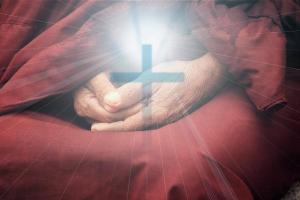
The central tenet of Catholicism – and the foundation of the New Testament – is the belief that God became a human being. This belief, known as the Incarnation, is essential to understanding who Jesus is and His work of salvation.
I will begin by asking why the Incarnation was necessary and what it means that God became a man. Lastly, I will explore the purposes and effects of the Incarnation.
Why Was The Incarnation Necessary?
To properly set the ground for understanding the Incarnation, it is beneficial to ask why it was necessary in the first place. One way of viewing the Incarnation is an act of reconciliation. However, for reconciliation to occur, divine justice must be satisfied.
In a sense, sin is an offense, a crime against the will and dictates of God. Divine justice is so constituted that atonement for sin requires sacrifice. This fact is evident throughout the Old Testament. One need not read much of the Torah to come across efforts by human beings to seek atonement with God. These efforts often were in the form of blood sacrifices. However, owing to man’s fallen nature, these sacrifices were only partially and temporarily efficacious.
Since sin is an offense against a holy and eternal God, atonement requires a holy and eternal sacrifice. This essentially makes any human efforts at atonement effete.
Yet, it is certainly possible that God could have acted other than He did. He could have “started over” by destroying human beings and creating anew, or He could have forgiven human beings by divine fiat. The fact that He did neither leads to two inferences. First, God so loved what He created that He did not want it destroyed. The second inference is that a divine fiat would have failed to satisfy divine justice.
Suppose we accept the fact that any human effort at atonement would be lacking, and we further accept that God wanted neither to destroy human beings nor to forgive via divine fiat. In that case, we have, I think, a viable understanding of why God became a human being in the person of Jesus of Nazareth. It is only in a being that is both God and human that reconciliation can be effected.
What Does It Mean That God Became A Human Being?
Having sought to explain why the Incarnation was necessary, we can ask, what does it mean that God, Who is entirely other, entirely transcendent, became a human being?
To speak of God is to predicate certain attributes of a being who exists necessarily and eternally. Historically, those attributes include omnipotence, omniscience, and omnipresence. That is to say that God is a being who is all-powerful, all-knowing, and present in all times and places. In comparison, a human being is composed of an animal (material) body and a spiritual, rational soul. and
Therefore, in the Incarnation, we have the remarkable event whereby God took to Himself a human nature (John 1:14). It is necessary, however, to be more precise. The Incarnation means that the Logos of God became a human being. That is to say that the divine reason and the principle by which God creates became a human being in the person of Jesus of Nazareth.
It is of extreme importance that one understands that God did not cease to be God after the Incarnation. That is to say that in Jesus, there exists both the divine nature and a human nature. One last caveat regarding the human nature of Jesus is to note that, unlike the rest of humanity (with the exception of Mary), Jesus was not subject to original sin. Or, to put it as Saint Paul does, Jesus is like us in every way, “Yet, without sin.”
Having sought to understand what the Incarnation is, I turn to the purpose and effects of God taking a human nature.
The Purposes And Effects Of The Incarnation
The most significant purpose and effect of the Incarnation were to effect our salvation. The impact of original sin was to create a separation between human beings and God that sinful human beings cannot mend. Furthermore, since salvation consists of a union with God, the separation of original sin made such a union and our salvation impossible. Additionally, a finite human being cannot unite itself to an infinite God; a created being cannot bind itself to its Creator.
These facts lead to a dilemma. God requires satisfaction for sin that human beings cannot pay. The solution is Jesus. Because Jesus has a sinless human nature, He can make atonement for humanity. Because Jesus has a Divine nature, He can forgive sin and reconcile human beings with God. It is through Christ’s crucifixion and resurrection that salvation is made possible. Jesus takes upon Himself our sin and pays the price owed for sin by His death. The resurrection means that Jesus has defeated death and provided the pathway to eternal life (2 Corinthians 5:21).
Simply put, Jesus has reconciled God and man through His death and resurrection and made salvation a gift God offers us (Romans 5:15-18). We accept that gift when we cooperate with God (Titus 2:11).
I would like to conclude by briefly delineating six points regarding the effects of the Incarnation. First, God experiences, first-hand as it were, what it is to be a human being. Second, Jesus represents the link between humanity and divinity. Because Jesus is both man and God, He can act as both the redeemed and the redeemer. This leads to the third point, which is that Jesus, as the exemplar of the redeemed human being, can communicate to us how we are to live. Fourth is that the Incarnation is evidence par excellence that God loves us. The fifth point is the inverse position of the second point. Because Jesus existed as a human being, we are able to identify with Him, which makes faith in Him more attainable. Finally, the fact that God saw it necessary to take upon Himself a human nature is indicative of the fact that our salvation is tangible in the work of Jesus. We have not been saved by some divine fiat but by the life, death, and resurrection of Christ.
Conclusion
In this paper, I have sought to explain the foundational claim of the New Testament and of Christianity. That is, in order to save human beings from the devasting and deadly effects of sin, God became a human being and, in taking upon Himself our sins, reconciled God and humanity.
History and Religion
Previous Post

September 7, 2022
Made For God?
Next Post
September 14, 2022 What Is A Soul?
Browse Our Archives
Select a Category Abortion Atheism Catholicism. Catholicism. God. Theophany. Christmas Eschatology Faith and Works. God. Holy Spirit Intelligent Design Jesus Christ Justice Law Politics Protestantism Religion Sabbath Salvation. Soteriology. The Bible Theology Uncategorized
Select a Month October 2026 September 2026 August 2026 July 2026 June 2026 May 2026 April 2026 March 2026 February 2026 January 2026 December 2025 November 2025 October 2025 September 2025 August 2025 July 2025 June 2025 May 2025 April 2025 March 2025 February 2025 January 2025 December 2024 November 2024 October 2024 September 2024 August 2024 July 2024 June 2024 May 2024 April 2024 March 2024 February 2024 January 2024 December 2023 November 2023 October 2023 September 2023 August 2023 July 2023 June 2023 May 2023 April 2023 March 2023 February 2023 January 2023 December 2022 November 2022 October 2022 September 2022 August 2022 July 2022 June 2022 May 2022 April 2022 March 2022 February 2022 January 2022 December 2021
Follow Us!
TAKE THE
Religious Wisdom Quiz
How long did Persian empire rule?
Select your answer to see how you score.
150 years 200 years 180 years 250 years
Related posts from Summa Catholic

The Anatomy of Divine Revelation in Catholic Thought

Beyond the Absence of Belief: The Implications of...

Reclaiming Objective Faith in an Individualistic World

Soul and Species: Catholic Theology Meets Evolution
TRENDING AT PATHEOS Catholic

The Parable Of The Sower And The Word...
One of Christ’s most famous parables is that of the sower who...

Rejecting Doom: Christian Hope And Human Action
Christianity is a religion of hope. We are to have hope and...

Why I Choose the Eucharist Over the Sermon
Choose the Eucharist, Not the Sermon What are we supposed to get...

5 Design Elements Found in Spiritually Rooted Homes
Putting Spirituality Into Home Decor Our homes are more than our living...

Credo: A Story of God Told with the...
About 10 years ago, I began to imagine a personal "Credo" that...

The Anatomy of Divine Revelation in Catholic Thought
The claim that God has made Himself known to human beings is...
view all Catholic blogs
Ad-Free & Subscriber Log-In Subscription Support
- About Us
- 2026 Calendar
- Videos
- Podcasts
- Library of World Religions
- Faith In Media Tracker
- Advertise With Us
- Write for Us
- Privacy Policy
- Terms of Service
- Do Not Sell My Data
- Contact Us
- Radiant Digital
- Manage Newsletter Subscriptions
- Unsubscribe From Notifications
- Sitemap
Copyright 2008-2026, Patheos. All rights reserved.
Subscription Support Ad-Free & Subscriber Log-In
Follow Patheos