
BuddhistCatholicContemplativeEvangelicalGeneral ChristianHinduJewishLatter-day SaintMuslimNew VisionsProgressive Christian
Beliefs
- Buddhist
- Catholic
- Contemplative
- Evangelical
- General Christian
- Hindu
- Jewish
- Latter-day Saint
- More Voices
- Muslim
- New Visions
- Pagan
- Progressive Christian
Topics
- Religion News
- Food and Religion
- Sports and Religion
- Religious Art
- Religious Music and Entertainment
- Religious Events
- History and Religion
- Style and Religion
- Politics and Religion
- Women in Religion
- Recreation Outdoors and Religion
- Business Finance and Religion
- Careers Workplace and Religion
- Education and Religion
- Family Parenting and Religion
- Health Fitness and Religion
- Home and Religion
- Relationships and Religion
- Technology and Religion
- Travel and Religion
Columnists
- Buddhist Columnists
- Business Finance and Religion Columnists
- Careers Workplace and Religion Columnists
- Catholic Columnists
- Contemplative Columnists
- Education and Religion Columnists
- Evangelists Columnists
- Family Parenting and Religion Columnists
- General Christian Columnists
- Health Fitness and Religion Columnists
- Hindu Columnists
- History and Religion Columnists
- Home and Religion Columnists
- Jewish Columnists
- More Voices Columnists
- Latter Day Columnists
- Muslim Columnists
- New Visions Columnists
- Nonreligious Columnists
- Pagan Columnists
- Politics and Religion Columnists
- Progressive Columnists
- Recreation Outdoors and Religion Columnists
- Relationships and Religion Columnists
- Religion News Columnists
- Religious Art Columnists
- Religious Events Columnists
- Religious Music and Entertainment Columnists
- Sports and Religion Columnists
- Style and Religion Columnists
- Technology and Religion Columnists
- Travel and Religion Columnists
- Women in Religion Columnists
Resource Library
- 2026 Calendar
- Library of World Religions
- The 100 Most Holy Places on Earth
- Patheos Answers
- Podcasts
- Videos
- Faith Leaders Database
- Anglican Episcopalian
- Bahai
- Baptist
- Buddhism
- Christianity
- Confucianism
- Eastern Orthodoxy
- Hinduism
- Holiness and Pentecostal
- ISKCON
- Islam
- Judaism
- Lutheran
- Methodist
- The Church of Jesus Christ of Latter-day Saints
- New Age
- Paganism
- Presbytarian and Reformed
- Protestantism
- Religion Behind the Scenes
- Roman Catholic
- Scientology
- Shia Islam
- Sikhism
- Sufism
- Sunni Islam
- Taoism
- Zen
- See all religions
Research Tools
 Ad-Free & Subscriber Log-In Subscription Support
Ad-Free & Subscriber Log-In Subscription Support
Follow Patheos 

- Trending:
- Forgiveness
- |
- Marriage
- |
- Consciousness
- |
- Death Penalty
- |
- Election
- |
- Halloween

- Home
- Catholic
- Spiritual Desolation
Spiritual Desolation
Last updated on: August 10, 2022 at 6:33 am by David Schloss
Spiritual Desolation 2022-08-10T06:33:55-04:00 David Schloss
Patheos Explore the world's faith through different perspectives on religion and spirituality! Patheos has the views of the prevalent religions and spiritualities of the world.
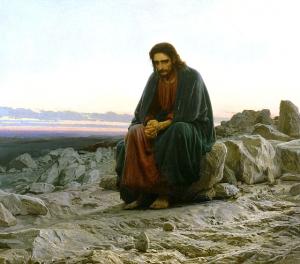
One of the most common traits shared by the saints and by religious people, in general, is spiritual dryness. Many of the most significant Catholics in the tradition’s history – from John of the Cross to Mother Teresa – have experienced and written about encountering spiritual dryness.
In this article, I will discuss what spiritual dryness means, why it is experienced, and how many spiritual masters in the Catholic tradition have dealt with it. First, defining what Catholicism means by the spiritual life is beneficial.
What Is The Spiritual Life?
It must be admitted that any discussion on the spiritual life requires a certain amount of anthropology. In order to know what the spiritual life entails as it pertains to human beings, we must understand what a human being is.
Depending upon one’s purpose and perspective, a definition of a human being may take several forms. For the purpose of this paper, I will define a human being as a creature composed of a material body and a rational soul that is made in the image of God.
From the Catholic standpoint, spirituality can be traced back to the letters of Paul. Infused with God’s grace, the soul develops a desire and capacity for growing in union with the Triune God. It encompasses the dynamic character of human life lived in a conscious relationship with God in Christ through the spirit, as experienced within a community of believers. Therefore, Catholic spirituality is to attend to what is of God and to deepen in a life of conversion and discipleship.
As indicated above, human beings are composite creatures; made of a spiritual soul and a material body. The spiritual aspect of a person is those things that are over and above the physical body. For example, consciousness and prayer are not reducible to the physical body. This is not to discount the importance of the physical component of a person. The senses and the physical desires are all part of the human being.
Nevertheless, the spiritual soul, which is made in the image of God, must be given preeminence. Therefore, when a person is in the right relationship with God, the passions of the body are subordinated to the rationality of the soul.
Disturbingly, the Bible suggests that human beings are engaged in a kind of civil war, with the body and the spirit in conflict. Saint Paul writes, “For the flesh has desires against the spirit, and the spirit against the flesh; these are opposed to each other, so that you may not do what you want.” (Galatians 5:17).
For this reason, the Bible often draws a stark distinction between the spiritual life and the life of the flesh. In John’s Gospel, we read, “It is the spirit that gives life, while the flesh is of no avail. The words I have spoken to you are spirit and life.” (John 6:63).
Having now defined the spiritual life as one that is ordered to God and discipleship, we are in a position to understand what is meant by spiritual dryness.
Encountering Dryness
Since spiritual dryness is the absence of spiritual consolations, it is helpful to understand dryness in relation to spiritual consolations.
Consolation occurs when the soul is moved by grace to become “Inflamed with love of its Creator and Lord; and when it can, in consequence, love no created thing on the face of the earth in itself, but in the Creator of them all.” (Saint Ignatius of Loyola, Discernment of Spirits).
In other words, spiritual consolation gives us an authentic experience of God’s love. Such an experience of God’s love causes the individual to desire even a greater union with God. God provides the individual with consolations to renew and reward one for spiritual fidelity.
Yet the rhythm of the spiritual life is such that consolations tend to ebb and flow. It is not uncommon for one to experience long periods without sensing or feeling the union with God that the soul desires. Such periods of time are what is referred to as spiritual dryness or desolation.
For Saint Ignatius and John of the Cross, the reason for spiritual dryness is owing to the fallen nature of mankind. Yet this is not the most important thing one should understand about dryness. Rather, one should see such a time as a period where God is purifying the soul.
John of the Cross identifies two types of spiritual dryness. The first type, which John calls the dark night of the senses, is intended to purge the senses of those things hindering spiritual progress. In addition, such a purification helps to order the body to the soul.
The second type of dryness, the dark night of the soul, affects the soul by purifying it so as to prepare the soul for union with God. Ultimately, these periods of spiritual desolation are intended to denude the soul of any attachments that hinder union with God while at the same time reminding the individual of his utter dependence on God.
Overcoming The Dark Night
As are many things in life, the advice of experts can be quite beneficial. So it is with matters spiritual. Since saints are, by definition, friends of God, learning how saints deal with spiritual desolation is invaluable.
The first piece of advice is simple, persevere. Saint Paul of the Cross writes, “Don’t quit, but keep going. Use little short prayers, especially acts of acceptance of the Most Holy Will of God. For example: ‘O dear Will of my God, may You be blessed forever! O most Gentle Will! May You be always fulfilled by all.”
Very often, spiritual desolation makes even prayer difficult. Because of this, Saint Francis de Sales suggests doing good works. Works performed “In times of dryness possess more sweetness and become more precious in the sight of God.”
The combination of perseverance in prayer, the sacramental life, and good works allows one to endure spiritual dryness. As always, one should have complete trust in God.
Conclusion
A life lived by faith can often involve periods where one feels spiritually alone. Both Saint Therese and John of the Cross often referred to this time as the dark night.
In the preceding work, I have sought to shed some light on this phenomenon. It is evident that, though unsettling, periods of spiritual desolation are common.
It is the advice of several saints that one endures the dark night through persistence in prayer and the sacramental life, as well as in engaging in good works.
Previous Post

August 7, 2022
The Strangest Words In The Bible
Next Post
August 14, 2022 Christology
Browse Our Archives
Select a Category Abortion Atheism Catholicism. Catholicism. God. Theophany. Christmas Eschatology Faith and Works. God. Holy Spirit Intelligent Design Jesus Christ Justice Law Politics Protestantism Religion Sabbath Salvation. Soteriology. The Bible Theology Uncategorized
Select a Month October 2026 September 2026 August 2026 July 2026 June 2026 May 2026 April 2026 March 2026 February 2026 January 2026 December 2025 November 2025 October 2025 September 2025 August 2025 July 2025 June 2025 May 2025 April 2025 March 2025 February 2025 January 2025 December 2024 November 2024 October 2024 September 2024 August 2024 July 2024 June 2024 May 2024 April 2024 March 2024 February 2024 January 2024 December 2023 November 2023 October 2023 September 2023 August 2023 July 2023 June 2023 May 2023 April 2023 March 2023 February 2023 January 2023 December 2022 November 2022 October 2022 September 2022 August 2022 July 2022 June 2022 May 2022 April 2022 March 2022 February 2022 January 2022 December 2021
Follow Us!
TAKE THE
Religious Wisdom Quiz
Who was the first king of Israel?
Select your answer to see how you score.
David Josiah Saul Solomon
Related posts from Summa Catholic

The Anatomy of Divine Revelation in Catholic Thought

Beyond the Absence of Belief: The Implications of...

Can Catholic Apologetics Survive a Postmodern World?

From Samaria to Sanctity: Analyzing The Woman At...
TRENDING AT PATHEOS Catholic

Rejecting Doom: Christian Hope And Human Action
Christianity is a religion of hope. We are to have hope and...

It’s What Comes From Within Which Matters
One of the most difficult things for us to understand is why...

Why I Choose the Eucharist Over the Sermon
Choose the Eucharist, Not the Sermon What are we supposed to get...

5 Design Elements Found in Spiritually Rooted Homes
Putting Spirituality Into Home Decor Our homes are more than our living...

Credo: A Story of God Told with the...
About 10 years ago, I began to imagine a personal "Credo" that...

The Anatomy of Divine Revelation in Catholic Thought
The claim that God has made Himself known to human beings is...
view all Catholic blogs
Ad-Free & Subscriber Log-In Subscription Support
- About Us
- 2026 Calendar
- Videos
- Podcasts
- Library of World Religions
- Faith In Media Tracker
- Advertise With Us
- Write for Us
- Privacy Policy
- Terms of Service
- Do Not Sell My Data
- Contact Us
- Radiant Digital
- Manage Newsletter Subscriptions
- Unsubscribe From Notifications
- Sitemap
Copyright 2008-2026, Patheos. All rights reserved.
Subscription Support Ad-Free & Subscriber Log-In
Follow Patheos