
BuddhistCatholicContemplativeEvangelicalGeneral ChristianHinduJewishLatter-day SaintMuslimNew VisionsProgressive Christian
Beliefs
- Buddhist
- Catholic
- Contemplative
- Evangelical
- General Christian
- Hindu
- Jewish
- Latter-day Saint
- More Voices
- Muslim
- New Visions
- Pagan
- Progressive Christian
Topics
- Religion News
- Food and Religion
- Sports and Religion
- Religious Art
- Religious Music and Entertainment
- Religious Events
- History and Religion
- Style and Religion
- Politics and Religion
- Women in Religion
- Recreation Outdoors and Religion
- Business Finance and Religion
- Careers Workplace and Religion
- Education and Religion
- Family Parenting and Religion
- Health Fitness and Religion
- Home and Religion
- Relationships and Religion
- Technology and Religion
- Travel and Religion
Columnists
- Buddhist Columnists
- Business Finance and Religion Columnists
- Careers Workplace and Religion Columnists
- Catholic Columnists
- Contemplative Columnists
- Education and Religion Columnists
- Evangelists Columnists
- Family Parenting and Religion Columnists
- General Christian Columnists
- Health Fitness and Religion Columnists
- Hindu Columnists
- History and Religion Columnists
- Home and Religion Columnists
- Jewish Columnists
- More Voices Columnists
- Latter Day Columnists
- Muslim Columnists
- New Visions Columnists
- Nonreligious Columnists
- Pagan Columnists
- Politics and Religion Columnists
- Progressive Columnists
- Recreation Outdoors and Religion Columnists
- Relationships and Religion Columnists
- Religion News Columnists
- Religious Art Columnists
- Religious Events Columnists
- Religious Music and Entertainment Columnists
- Sports and Religion Columnists
- Style and Religion Columnists
- Technology and Religion Columnists
- Travel and Religion Columnists
- Women in Religion Columnists
Resource Library
- 2026 Calendar
- Library of World Religions
- The 100 Most Holy Places on Earth
- Patheos Answers
- Podcasts
- Videos
- Faith Leaders Database
- Anglican Episcopalian
- Bahai
- Baptist
- Buddhism
- Christianity
- Confucianism
- Eastern Orthodoxy
- Hinduism
- Holiness and Pentecostal
- ISKCON
- Islam
- Judaism
- Lutheran
- Methodist
- The Church of Jesus Christ of Latter-day Saints
- New Age
- Paganism
- Presbytarian and Reformed
- Protestantism
- Religion Behind the Scenes
- Roman Catholic
- Scientology
- Shia Islam
- Sikhism
- Sufism
- Sunni Islam
- Taoism
- Zen
- See all religions
Research Tools
 Ad-Free & Subscriber Log-In Subscription Support
Ad-Free & Subscriber Log-In Subscription Support
Follow Patheos 

- Trending:
- Forgiveness
- |
- Marriage
- |
- Consciousness
- |
- Death Penalty
- |
- Election
- |
- Halloween

- Home
- Catholic
- On Miracles
On Miracles
Last updated on: August 17, 2022 at 6:36 am by David Schloss
On Miracles 2022-08-17T06:36:25-04:00 David Schloss
Patheos Explore the world's faith through different perspectives on religion and spirituality! Patheos has the views of the prevalent religions and spiritualities of the world.
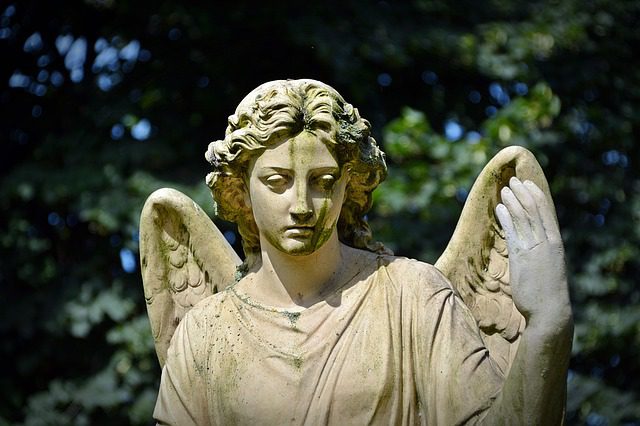
Is there anything more symbolic of religion than miracles? The concept of God intervening in a person(s) life is almost quintessential to the religious experience.
Unfortunately, the secular and skeptical age we live in takes a dim view of miracles, seeing them as unscientific or superstitious. This interpretation is, of course, a misunderstanding of the nature of miracles specifically and causality generally.
In this paper, I will discuss what miracles are (and are not) and enumerate five principles essential to understanding miracles. Finally, I will address some basic objections to the possibility of miracles.
What Are Miracles?
In modern parlance, the word miracle has taken on a connotation that is often utterly divorced from God or religion. We use the word to suggest the occurrence of an event that is considered highly improbable; an upset in sports or our boss giving us a raise can be regarded as a miracle for us moderns.
Within theology, a miracle has very little to do with the improbability of an event. The Latin etymology, to wonder, only begins to suggest what is meant by a miracle. Depending on the phenomenon in question and the predisposition of the observers, many things can cause one to wonder. So, a miracle is more than an improbable event or an occurrence that causes one to wonder.
What then constitutes a miracle? Interestingly, there is not a set definition that encompasses the essence of a miracle.
It is beneficial in any effort to understand the Church’s teaching on a topic by consulting the Catechism of the Catholic Church. On miracles, the Catechism defines it as “a sign or wonder such as a healing, or control of nature, which can only be attributed to divine power.”
Another definition that one may encounter defines miracles as a perceptible effect that surpasses the powers of a thing’s nature and is produced by God. What exactly does this mean, and what does Catholicism understand a miracle to be?
The Essence Of Miracles
To properly understand what Catholicism considers a miracle, we must consider five principles derived from the above definitions.
The first principle is that only God can cause a miracle. This is because a miracle is a suspension or alteration of the laws of nature. Since God is the creator and sustainer of nature, only He can initiate a miracle.
The second principle is that the effect of the miracle must be beyond the power of any created thing. An effect can occur in one of three ways. First, the effect must exceed the essence of the thing affected. For example, the resurrection of one’s body is not natural for a human being. Second, the effect must surpass the power of a created subject to effect a change. For example, producing sight in one with no eyes exceeds the subject’s power. Finally, a miracle may transcend the created powers according to the mode or manner that produces the miraculous effect. In other words, God may cause an effect that nature usually produces but is contrary to how nature produces it. For example, an illness may be cured with time and rest, but if it is cured on command or through prayer, it is miraculous.
This leads to the third principle regarding miracles; they must be beyond the order of creation. This principle helps to distinguish miracles from the creative work of God. That is to say that while the creation of the universe is solely within the purview of God, it is not considered a miracle. The reason for this is that a miracle must occur within the order of an already created nature. As stated above, miracles act on the existing laws of nature.
The fourth principle is simple; a miracle must be extraordinary. The event must be one that is contrary to or supersedes the natural order. For example, in Joshua 10:13, the sun stands still. This seems to suggest that time had stopped. Such an occurrence is beyond the natural order of creation and is extraordinary.
The fifth and final principle regarding miracles is that they must be perceptible to the senses. The reason that miracles must be sensible concerns the purpose of miracles in general. In a sense, miracles are within the genus of divine revelation. While divine revelation can take place for several reasons, at a minimum, they display God’s omnipotence. The First Vatican Council put it this way: “In order that the submission of our faith should be in accordance with reason, it was God’s will that there should be linked to the internal assistance of the Holy Spirit external indications of his revelation, that is to say, divine acts, and first and foremost miracles and prophecies, which clearly demonstrate as they do the omnipotence and infinite knowledge of God, are the most certain signs of revelation and are suited to the understanding of all. (See The Dogmatic Constitution on the Catholic Faith).
Still, it must be kept in mind that divine revelation transcends reason. Therefore, it can not be entirely explicable to science or philosophy. As with all things pertaining to God, there is always the air of mystery.
Objections
It seems prudent to address two objections or misunderstandings about miracles. The first is to dismiss them because they are not subject to scientific scrutiny. While this perspective has some merit, it must be pointed out that matters related to God are, by definition, beyond the purview of science. Nevertheless, it must be admitted that science is predicated upon the existence of the laws of nature. That is to say that science did not create the law of gravity; it simply discovered it. If the one who created the laws of nature sees fit to alter or suspend them temporarily, this in no way contravenes science.
The second objection is to claim that miracles are a type of superstition. From a philosophical perspective, superstition is an error in causal reasoning. If one attributes bad fortune to the fact that one observed a black cat, that individual is said to be superstitious; he has erroneously attributed the cause of his bad fortune to a cat. If, however, one experiences an event that cannot be explained by appealing to the order of nature (for example, a resurrection), one can argue that such an event is a miracle.
Conclusion
Miracles are quintessentially Catholic. They are acts beyond the power of any created being and belong to the domain of God alone.
In the preceding article, I have endeavored to explain what miracles are and are not. I have also sought to articulate five principles essential to understanding miracles. I have also addressed some objections to miracles.
Previous Post

August 14, 2022
Christology
Next Post
August 21, 2022 Communication Of Idioms
Browse Our Archives
Select a Category Abortion Atheism Catholicism. Catholicism. God. Theophany. Christmas Eschatology Faith and Works. God. Holy Spirit Intelligent Design Jesus Christ Justice Law Politics Protestantism Religion Sabbath Salvation. Soteriology. The Bible Theology Uncategorized
Select a Month October 2026 September 2026 August 2026 July 2026 June 2026 May 2026 April 2026 March 2026 February 2026 January 2026 December 2025 November 2025 October 2025 September 2025 August 2025 July 2025 June 2025 May 2025 April 2025 March 2025 February 2025 January 2025 December 2024 November 2024 October 2024 September 2024 August 2024 July 2024 June 2024 May 2024 April 2024 March 2024 February 2024 January 2024 December 2023 November 2023 October 2023 September 2023 August 2023 July 2023 June 2023 May 2023 April 2023 March 2023 February 2023 January 2023 December 2022 November 2022 October 2022 September 2022 August 2022 July 2022 June 2022 May 2022 April 2022 March 2022 February 2022 January 2022 December 2021
Follow Us!
TAKE THE
Religious Wisdom Quiz
What ritual involved ashes of a red heifer?
Select your answer to see how you score.
Marriage Purification Inheritance Harvest
Related posts from Summa Catholic

The Anatomy of Divine Revelation in Catholic Thought

Beyond the Absence of Belief: The Implications of...

Can Catholic Apologetics Survive a Postmodern World?

From Samaria to Sanctity: Analyzing The Woman At...
TRENDING AT PATHEOS Catholic

The Parable Of The Sower And The Word...
One of Christ’s most famous parables is that of the sower who...

Rejecting Doom: Christian Hope And Human Action
Christianity is a religion of hope. We are to have hope and...

Why I Choose the Eucharist Over the Sermon
Choose the Eucharist, Not the Sermon What are we supposed to get...

5 Design Elements Found in Spiritually Rooted Homes
Putting Spirituality Into Home Decor Our homes are more than our living...

Credo: A Story of God Told with the...
About 10 years ago, I began to imagine a personal "Credo" that...

The Anatomy of Divine Revelation in Catholic Thought
The claim that God has made Himself known to human beings is...
view all Catholic blogs
Ad-Free & Subscriber Log-In Subscription Support
- About Us
- 2026 Calendar
- Videos
- Podcasts
- Library of World Religions
- Faith In Media Tracker
- Advertise With Us
- Write for Us
- Privacy Policy
- Terms of Service
- Do Not Sell My Data
- Contact Us
- Radiant Digital
- Manage Newsletter Subscriptions
- Unsubscribe From Notifications
- Sitemap
Copyright 2008-2026, Patheos. All rights reserved.
Subscription Support Ad-Free & Subscriber Log-In
Follow Patheos