
BuddhistCatholicContemplativeEvangelicalGeneral ChristianHinduJewishLatter-day SaintMuslimNew VisionsProgressive Christian
Beliefs
- Buddhist
- Catholic
- Contemplative
- Evangelical
- General Christian
- Hindu
- Jewish
- Latter-day Saint
- More Voices
- Muslim
- New Visions
- Pagan
- Progressive Christian
Topics
- Religion News
- Food and Religion
- Sports and Religion
- Religious Art
- Religious Music and Entertainment
- Religious Events
- History and Religion
- Style and Religion
- Politics and Religion
- Women in Religion
- Recreation Outdoors and Religion
- Business Finance and Religion
- Careers Workplace and Religion
- Education and Religion
- Family Parenting and Religion
- Health Fitness and Religion
- Home and Religion
- Relationships and Religion
- Technology and Religion
- Travel and Religion
Columnists
- Buddhist Columnists
- Business Finance and Religion Columnists
- Careers Workplace and Religion Columnists
- Catholic Columnists
- Contemplative Columnists
- Education and Religion Columnists
- Evangelists Columnists
- Family Parenting and Religion Columnists
- General Christian Columnists
- Health Fitness and Religion Columnists
- Hindu Columnists
- History and Religion Columnists
- Home and Religion Columnists
- Jewish Columnists
- More Voices Columnists
- Latter Day Columnists
- Muslim Columnists
- New Visions Columnists
- Nonreligious Columnists
- Pagan Columnists
- Politics and Religion Columnists
- Progressive Columnists
- Recreation Outdoors and Religion Columnists
- Relationships and Religion Columnists
- Religion News Columnists
- Religious Art Columnists
- Religious Events Columnists
- Religious Music and Entertainment Columnists
- Sports and Religion Columnists
- Style and Religion Columnists
- Technology and Religion Columnists
- Travel and Religion Columnists
- Women in Religion Columnists
Resource Library
- 2026 Calendar
- Library of World Religions
- The 100 Most Holy Places on Earth
- Patheos Answers
- Podcasts
- Videos
- Faith Leaders Database
- Anglican Episcopalian
- Bahai
- Baptist
- Buddhism
- Christianity
- Confucianism
- Eastern Orthodoxy
- Hinduism
- Holiness and Pentecostal
- ISKCON
- Islam
- Judaism
- Lutheran
- Methodist
- The Church of Jesus Christ of Latter-day Saints
- New Age
- Paganism
- Presbytarian and Reformed
- Protestantism
- Religion Behind the Scenes
- Roman Catholic
- Scientology
- Shia Islam
- Sikhism
- Sufism
- Sunni Islam
- Taoism
- Zen
- See all religions
Research Tools
 Ad-Free & Subscriber Log-In Subscription Support
Ad-Free & Subscriber Log-In Subscription Support
Follow Patheos 

- Trending:
- Forgiveness
- |
- Marriage
- |
- Consciousness
- |
- Death Penalty
- |
- Election
- |
- Halloween

- Home
- Catholic
- Coming To Know God
Coming To Know God
Last updated on: August 24, 2022 at 6:16 am by David Schloss
Coming To Know God 2022-08-24T06:16:29-04:00 David Schloss
Patheos Explore the world's faith through different perspectives on religion and spirituality! Patheos has the views of the prevalent religions and spiritualities of the world.
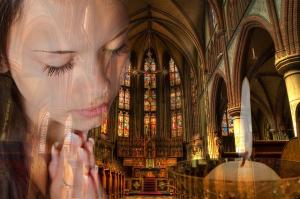
The foundation of the Catholic faith is the belief in God. Yet it seems belief in God presupposes knowledge. One cannot believe in something one is entirely ignorant of. This fact leads to the purpose of this paper, how can one come to know God?
To address this question, I will discuss how human beings come to the knowledge of something and whether it is possible to have knowledge of God.
Epistemology
Epistemology is a term used predominantly to refer to a subset within philosophy that concerns itself with the study of the nature and limitations of human knowledge.
Without getting into some of the issues associated with acquiring knowledge, it suffices to identify two ways in which human beings come to know a thing. The first, and the more common, is through the senses. Much of what we learn relies on obtaining information, which requires using the senses. This type of knowledge falls within what is called a posteriori knowledge, knowledge predicated upon experience.
The second way in which one comes to know something is called a priori knowledge. It is knowledge that is independent of experience. Generally, this falls within matters of mathematics, tautologies, and self-evident logical propositions. I would add to that divine revelation.
Having provided a brief sketch of the nature of epistemology, we can proceed to the question of how one comes to know God.
Knowledge Of God
In accord with the Bible, Catholicism asserts that human beings were intended to have an intimate relationship with God. This relationship is manifested in the Garden of Eden. Then came the Fall, and man’s relationship and knowledge of God were sundered.
So, how can a finite and temporal creature, damaged by sin, come to possess knowledge of an infinite, eternal, and holy God? Thomas Aquinas suggests two ways that human beings can come to know (albeit in a limited way) God. “There is a twofold mode of truth in what we profess about God. Some truths about God exceed all the ability of human reason. Such is the truth that God is triune. But there are some truths that natural reason also is able to reach. Such are the truth that God exists, that he is one, and the like. In fact, such truths about God have been proved demonstratively by the philosophers, guided by the light of natural reason.” (Aquinas, Thomas. Summa Contra Gentiles. University of Notre Dame Press, 1975).
I will discuss Aquinas’ second mode of knowing God first. This mode falls within what is known as natural theology.
Natural theology refers to human beings’ innate capacity to reason about God’s existence and nature. That is to say that “Man’s faculties make him capable of coming to a knowledge of the existence of a personal God. But for man to be able to enter into real intimacy with him, God willed both to reveal himself to man and to give him the grace of being able to welcome this revelation in faith. The proofs of God’s existence, however, can predispose one to faith and help one to see that faith is not opposed to reason.” (Catechism of the Catholic Church, Paragraph 35).
There is evidence of natural theology throughout the Bible. The Psalmist puts it this way, “The heavens declare the glory of God; the firmament proclaims the works of his hands.” (Psalm 19:2).
Saint Paul appears to follow this view, “Ever since the creation of the world, his [God] invisible attributes of eternal power and divinity have been able to be understood and perceived in what he has made.” (Romans 1:20).
Human reasoning under the umbrella of natural theology generally is of the a posteriori variety. One can observe nature, see order and beauty in it, and reason to the cause of this order and beauty. Or one can review the scientific data and conclude that the universe is not eternal and reason that that which is not eternal does not exist necessarily, and that which does not exist necessarily requires a cause.
One of the advantages of natural theology, from the perspective of apologetics or evangelization, is that natural theology begins with human reason. That is, natural theology posits that one can come to some knowledge of the existence and nature of God using logic. Strictly speaking, the arguments for God from a natural theology perspective are independent of faith.
Moreover, the scientific method is predicated upon the order implied in natural theology. Only because there is order and predictability in the universe can we engage in the scientific endeavor.
The second mode (to keep Aquinas’ term) that we can come to have knowledge of God is extrinsic and rather dramatic. It is to that way that I turn next.
Revelation
It is telling that the words revelation and apocalypse have very similar etymologies. Revelation is a translation of the Greek word apokalypsis, which means the removal of a veil so that something can be seen. Both words refer to a revealing or uncovering of the transcendent in the created world. Put in a different way; revelation can be seen as God breaking into our world.
Where natural theology can be viewed as human beings’ search for God, divine revelation can be understood as God’s search for human beings.
Owing to its nature, the truths divulged by divine revelation are beyond human reason. From God speaking to Moses in the burning bush to Saul falling from his horse, one can argue that Scripture is the story of God seeking human beings.
From the Catholic perspective, however, there is no greater example of this – indeed, there can be none greater – than the revelation provided in the person of Jesus Christ. It is in Christ that God “breaks” into our world; that God becomes one of us and, in so doing, saves us from ourselves.
Conclusion
Despite our insistent howling to the contrary, human beings are religious animals. We naturally seek God, and when we fail in this endeavor, we make our own gods (money, pleasure, power). As is to be expected, however, these gods of our own design fail to bring us what we ultimately seek. We are left with Augustine’s insight, *“*You have made us for yourself, O Lord, and our heart is restless until it rests in you.”
Previous Post

August 21, 2022
Communication Of Idioms
Next Post
August 28, 2022 Kenosis
Browse Our Archives
Select a Category Abortion Atheism Catholicism. Catholicism. God. Theophany. Christmas Eschatology Faith and Works. God. Holy Spirit Intelligent Design Jesus Christ Justice Law Politics Protestantism Religion Sabbath Salvation. Soteriology. The Bible Theology Uncategorized
Select a Month October 2026 September 2026 August 2026 July 2026 June 2026 May 2026 April 2026 March 2026 February 2026 January 2026 December 2025 November 2025 October 2025 September 2025 August 2025 July 2025 June 2025 May 2025 April 2025 March 2025 February 2025 January 2025 December 2024 November 2024 October 2024 September 2024 August 2024 July 2024 June 2024 May 2024 April 2024 March 2024 February 2024 January 2024 December 2023 November 2023 October 2023 September 2023 August 2023 July 2023 June 2023 May 2023 April 2023 March 2023 February 2023 January 2023 December 2022 November 2022 October 2022 September 2022 August 2022 July 2022 June 2022 May 2022 April 2022 March 2022 February 2022 January 2022 December 2021
Follow Us!
TAKE THE
Religious Wisdom Quiz
What did Jesus use to heal blind man?
Select your answer to see how you score.
Mud and saliva Oil Water Cloth
Related posts from Summa Catholic

The Anatomy of Divine Revelation in Catholic Thought

Beyond the Absence of Belief: The Implications of...

Can Catholic Apologetics Survive a Postmodern World?

From Samaria to Sanctity: Analyzing The Woman At...
TRENDING AT PATHEOS Catholic

The Parable Of The Sower And The Word...
One of Christ’s most famous parables is that of the sower who...

Rejecting Doom: Christian Hope And Human Action
Christianity is a religion of hope. We are to have hope and...

Why I Choose the Eucharist Over the Sermon
Choose the Eucharist, Not the Sermon What are we supposed to get...

5 Design Elements Found in Spiritually Rooted Homes
Putting Spirituality Into Home Decor Our homes are more than our living...

Credo: A Story of God Told with the...
About 10 years ago, I began to imagine a personal "Credo" that...

The Anatomy of Divine Revelation in Catholic Thought
The claim that God has made Himself known to human beings is...
view all Catholic blogs
Ad-Free & Subscriber Log-In Subscription Support
- About Us
- 2026 Calendar
- Videos
- Podcasts
- Library of World Religions
- Faith In Media Tracker
- Advertise With Us
- Write for Us
- Privacy Policy
- Terms of Service
- Do Not Sell My Data
- Contact Us
- Radiant Digital
- Manage Newsletter Subscriptions
- Unsubscribe From Notifications
- Sitemap
Copyright 2008-2026, Patheos. All rights reserved.
Subscription Support Ad-Free & Subscriber Log-In
Follow Patheos