
BuddhistCatholicContemplativeEvangelicalGeneral ChristianHinduJewishLatter-day SaintMuslimNew VisionsProgressive Christian
Beliefs
- Buddhist
- Catholic
- Contemplative
- Evangelical
- General Christian
- Hindu
- Jewish
- Latter-day Saint
- More Voices
- Muslim
- New Visions
- Pagan
- Progressive Christian
Topics
- Religion News
- Food and Religion
- Sports and Religion
- Religious Art
- Religious Music and Entertainment
- Religious Events
- History and Religion
- Style and Religion
- Politics and Religion
- Women in Religion
- Recreation Outdoors and Religion
- Business Finance and Religion
- Careers Workplace and Religion
- Education and Religion
- Family Parenting and Religion
- Health Fitness and Religion
- Home and Religion
- Relationships and Religion
- Technology and Religion
- Travel and Religion
Columnists
- Buddhist Columnists
- Business Finance and Religion Columnists
- Careers Workplace and Religion Columnists
- Catholic Columnists
- Contemplative Columnists
- Education and Religion Columnists
- Evangelists Columnists
- Family Parenting and Religion Columnists
- General Christian Columnists
- Health Fitness and Religion Columnists
- Hindu Columnists
- History and Religion Columnists
- Home and Religion Columnists
- Jewish Columnists
- More Voices Columnists
- Latter Day Columnists
- Muslim Columnists
- New Visions Columnists
- Nonreligious Columnists
- Pagan Columnists
- Politics and Religion Columnists
- Progressive Columnists
- Recreation Outdoors and Religion Columnists
- Relationships and Religion Columnists
- Religion News Columnists
- Religious Art Columnists
- Religious Events Columnists
- Religious Music and Entertainment Columnists
- Sports and Religion Columnists
- Style and Religion Columnists
- Technology and Religion Columnists
- Travel and Religion Columnists
- Women in Religion Columnists
Resource Library
- 2026 Calendar
- Library of World Religions
- The 100 Most Holy Places on Earth
- Patheos Answers
- Podcasts
- Videos
- Faith Leaders Database
- Anglican Episcopalian
- Bahai
- Baptist
- Buddhism
- Christianity
- Confucianism
- Eastern Orthodoxy
- Hinduism
- Holiness and Pentecostal
- ISKCON
- Islam
- Judaism
- Lutheran
- Methodist
- The Church of Jesus Christ of Latter-day Saints
- New Age
- Paganism
- Presbytarian and Reformed
- Protestantism
- Religion Behind the Scenes
- Roman Catholic
- Scientology
- Shia Islam
- Sikhism
- Sufism
- Sunni Islam
- Taoism
- Zen
- See all religions
Research Tools
 Ad-Free & Subscriber Log-In Subscription Support
Ad-Free & Subscriber Log-In Subscription Support
Follow Patheos 

- Trending:
- Forgiveness
- |
- Marriage
- |
- Consciousness
- |
- Death Penalty
- |
- Election
- |
- Halloween

- Home
- Catholic
- Christology
Christology
Last updated on: August 14, 2022 at 8:31 am by David Schloss
Christology 2022-08-14T08:31:56-04:00 David Schloss
Patheos Explore the world's faith through different perspectives on religion and spirituality! Patheos has the views of the prevalent religions and spiritualities of the world.
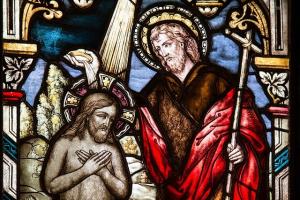
Catholicism is not about doctrine or philosophy or even about the Bible. At its core, Catholicism is about a person, Jesus Christ. The study of that person within Catholic theology is called Christology.
In this paper, I will endeavor to provide a brief introduction to a subject that is exceedingly rich and complex. I will discuss how Christology developed in the Church and the two main types of Christology. Lastly, I will address Christology’s importance in the Catholic faith.
The Development Of Christology
In the years following the Resurrection and Ascension of Christ, the early Church began to address the central question in Christology; who is Christ, and how could He be both a creature and the creator, both man and God?
As Christians began to examine these questions, several controversies, and ultimately heresies, emerged. Of particular note were three such heresies; Ebionism, Docetism, and Arianism.
The Ebionites were a Jewish sect in the late first and early second centuries. They maintained the authority of the Hebrew Bible and held to the necessity of observing the Mosaic law despite the teachings of the apostles that Jesus had fulfilled the Mosaic law and brought forth a new covenant. (See Romans 6:15 and Acts 15).
The Docetists agreed that Jesus is God, but that He only appeared to be a human being. The Arians took the contrary view, arguing that Jesus was just a unique human being with an extraordinary relationship with God.
It was only until the Council of Chalcedon in 451 that the Church rejected these various heresies and affirmed that Jesus possessed two natures, one human and one divine. This teaching, known as the hypostatic union, became the foundation for Christology.
In the period after the Council of Chalcedon, most theologians made no distinction between Jesus as a human being and Jesus as God. That is to say that any systematic study of Jesus took into account both His divine and human natures.
This unified view of Jesus began to change in the eighteenth century as historians, and even biblical scholars began to study Jesus as a historical figure.
The fact that Jesus has two natures has led to a division of sorts within Christology. It is to this division that I turn next.
Types Of Christology
As a subject increases in sophistication, it tends to become ramified, and those who study the subject become increasingly specialized. This is true of Christology as well.
Because of Jesus’ two natures, it is possible to study the person of Jesus in one of two ways. The first is to focus on His divine nature. This is known as high Christology. High, because one commences the study from the perspective of Jesus’ divine nature. The second way to study Jesus is to focus on His human nature. This is low Christology.
A high Christology takes as its starting point and foundation the Logos, Who is the Word and Son of God and the Second Person of the Blessed Trinity. Inherent in the concept of a high Christology is the understanding that God is transcendent and “above” human beings as the creator vis-a-vie His creation. A high Christology descends from the Second Person of the Trinity and moves down to humanity and toward the Incarnation.
The Gospel of John provides the quintessential example of a high Christology, “In the beginning was the Word, and the Word was with God, and the Word was God.” (John 1:1).
A low Christology takes as its starting point and foundation Jesus as a human being and a historical figure. Low Christology utilizes historical data and analysis of the Gospels to create a framework for understanding Jesus as a human being. This type of Christology ascends from Jesus’ human nature toward Heaven and Jesus as the God-man.
It is important to note that high and low Christologies should be only methodological as a theological endeavor. Regardless of how one goes about studying Christ, one must never lose sight of the fact that Jesus is both God and man.
Two additional forms of Christology should be mentioned here. Ontological Christology seeks to study who and what Christ is in Himself. In contrast, a functional Christology will often focus on a particular aspect of Jesus’ work, for example, how Jesus’ redemptive work brings about salvation for mankind.
Having sought to provide a sketch of Christology, we must ask, why is Christology important for Catholics?
Why It Matters
“Jesus said to them, ‘But who do you say that I am?’ Simon Peter said in reply, ‘You are the Messiah, the Son of the living God.”
As indicated above, Christology seeks to address the question, “who is Christ?” How one comes to answer that question is of the greatest importance. If, as is too frequently the case today, one thinks Jesus was a “good” person or a teacher of ethics, then Jesus becomes one among many. If, however, one answers as Peter did, then one’s life becomes about Jesus – and that is what Catholicism asserts. Peter also answers the reason why this is so. After several followers of Jesus abandoned Him, Jesus asked His apostles, “Do you also want to leave?” To which Peter responds, “Master, to whom shall we go? You have the words of eternal life.” (John 6:67-68).
Ultimately, the importance of Christology lies in the question that it asks, “who is Christ”? If Jesus is Who He says He is, if Jesus is God, then we must answer as Peter did, “You are the Messiah, the Son of the living God.”
Conclusion
In this paper, I have sought to provide an introduction to the subject of Christology. As early Christians struggled to understand Jesus, the Church developed its doctrine of Christology by explaining that Jesus is both God and man.
As a topic of study, Christology can focus on the divine nature of Jesus (high Christology) or choose to focus on His human nature (low Christology).
The question that Christology asks, “who is Jesus” is the most important question that Catholics must answer. Only in answering as Peter did, “You are the Messiah, the Son of the living God,” can we hope to understand the Gospel message.
Previous Post

August 10, 2022
Spiritual Desolation
Next Post
August 17, 2022 On Miracles
Browse Our Archives
Select a Category Abortion Atheism Catholicism. Catholicism. God. Theophany. Christmas Eschatology Faith and Works. God. Holy Spirit Intelligent Design Jesus Christ Justice Law Politics Protestantism Religion Sabbath Salvation. Soteriology. The Bible Theology Uncategorized
Select a Month October 2026 September 2026 August 2026 July 2026 June 2026 May 2026 April 2026 March 2026 February 2026 January 2026 December 2025 November 2025 October 2025 September 2025 August 2025 July 2025 June 2025 May 2025 April 2025 March 2025 February 2025 January 2025 December 2024 November 2024 October 2024 September 2024 August 2024 July 2024 June 2024 May 2024 April 2024 March 2024 February 2024 January 2024 December 2023 November 2023 October 2023 September 2023 August 2023 July 2023 June 2023 May 2023 April 2023 March 2023 February 2023 January 2023 December 2022 November 2022 October 2022 September 2022 August 2022 July 2022 June 2022 May 2022 April 2022 March 2022 February 2022 January 2022 December 2021
Follow Us!
TAKE THE
Religious Wisdom Quiz
Who was the Roman emperor when Jesus was crucified?
Select your answer to see how you score.
Nero Augustus Caligula Tiberius
Related posts from Summa Catholic

The Anatomy of Divine Revelation in Catholic Thought

Beyond the Absence of Belief: The Implications of...

Can Catholic Apologetics Survive a Postmodern World?

From Samaria to Sanctity: Analyzing The Woman At...
TRENDING AT PATHEOS Catholic

Rejecting Doom: Christian Hope And Human Action
Christianity is a religion of hope. We are to have hope and...

It’s What Comes From Within Which Matters
One of the most difficult things for us to understand is why...

Why I Choose the Eucharist Over the Sermon
Choose the Eucharist, Not the Sermon What are we supposed to get...

5 Design Elements Found in Spiritually Rooted Homes
Putting Spirituality Into Home Decor Our homes are more than our living...

Credo: A Story of God Told with the...
About 10 years ago, I began to imagine a personal "Credo" that...

The Anatomy of Divine Revelation in Catholic Thought
The claim that God has made Himself known to human beings is...
view all Catholic blogs
Ad-Free & Subscriber Log-In Subscription Support
- About Us
- 2026 Calendar
- Videos
- Podcasts
- Library of World Religions
- Faith In Media Tracker
- Advertise With Us
- Write for Us
- Privacy Policy
- Terms of Service
- Do Not Sell My Data
- Contact Us
- Radiant Digital
- Manage Newsletter Subscriptions
- Unsubscribe From Notifications
- Sitemap
Copyright 2008-2026, Patheos. All rights reserved.
Subscription Support Ad-Free & Subscriber Log-In
Follow Patheos