
BuddhistCatholicContemplativeEvangelicalGeneral ChristianHinduJewishLatter-day SaintMuslimNew VisionsProgressive Christian
Beliefs
- Buddhist
- Catholic
- Contemplative
- Evangelical
- General Christian
- Hindu
- Jewish
- Latter-day Saint
- More Voices
- Muslim
- New Visions
- Pagan
- Progressive Christian
Topics
- Religion News
- Food and Religion
- Sports and Religion
- Religious Art
- Religious Music and Entertainment
- Religious Events
- History and Religion
- Style and Religion
- Politics and Religion
- Women in Religion
- Recreation Outdoors and Religion
- Business Finance and Religion
- Careers Workplace and Religion
- Education and Religion
- Family Parenting and Religion
- Health Fitness and Religion
- Home and Religion
- Relationships and Religion
- Technology and Religion
- Travel and Religion
Columnists
- Buddhist Columnists
- Business Finance and Religion Columnists
- Careers Workplace and Religion Columnists
- Catholic Columnists
- Contemplative Columnists
- Education and Religion Columnists
- Evangelists Columnists
- Family Parenting and Religion Columnists
- General Christian Columnists
- Health Fitness and Religion Columnists
- Hindu Columnists
- History and Religion Columnists
- Home and Religion Columnists
- Jewish Columnists
- More Voices Columnists
- Latter Day Columnists
- Muslim Columnists
- New Visions Columnists
- Nonreligious Columnists
- Pagan Columnists
- Politics and Religion Columnists
- Progressive Columnists
- Recreation Outdoors and Religion Columnists
- Relationships and Religion Columnists
- Religion News Columnists
- Religious Art Columnists
- Religious Events Columnists
- Religious Music and Entertainment Columnists
- Sports and Religion Columnists
- Style and Religion Columnists
- Technology and Religion Columnists
- Travel and Religion Columnists
- Women in Religion Columnists
Resource Library
- 2026 Calendar
- Library of World Religions
- The 100 Most Holy Places on Earth
- Patheos Answers
- Podcasts
- Videos
- Faith Leaders Database
- Anglican Episcopalian
- Bahai
- Baptist
- Buddhism
- Christianity
- Confucianism
- Eastern Orthodoxy
- Hinduism
- Holiness and Pentecostal
- ISKCON
- Islam
- Judaism
- Lutheran
- Methodist
- The Church of Jesus Christ of Latter-day Saints
- New Age
- Paganism
- Presbytarian and Reformed
- Protestantism
- Religion Behind the Scenes
- Roman Catholic
- Scientology
- Shia Islam
- Sikhism
- Sufism
- Sunni Islam
- Taoism
- Zen
- See all religions
Research Tools
 Ad-Free & Subscriber Log-In Subscription Support
Ad-Free & Subscriber Log-In Subscription Support
Follow Patheos 

- Trending:
- Forgiveness
- |
- Marriage
- |
- Consciousness
- |
- Death Penalty
- |
- Election
- |
- Halloween

- Home
- Catholic
- The Seven Lively Virtues
The Seven Lively Virtues
Last updated on: July 31, 2022 at 9:19 am by David Schloss
The Seven Lively Virtues 2022-07-31T09:19:06-04:00 David Schloss
Patheos Explore the world's faith through different perspectives on religion and spirituality! Patheos has the views of the prevalent religions and spiritualities of the world.
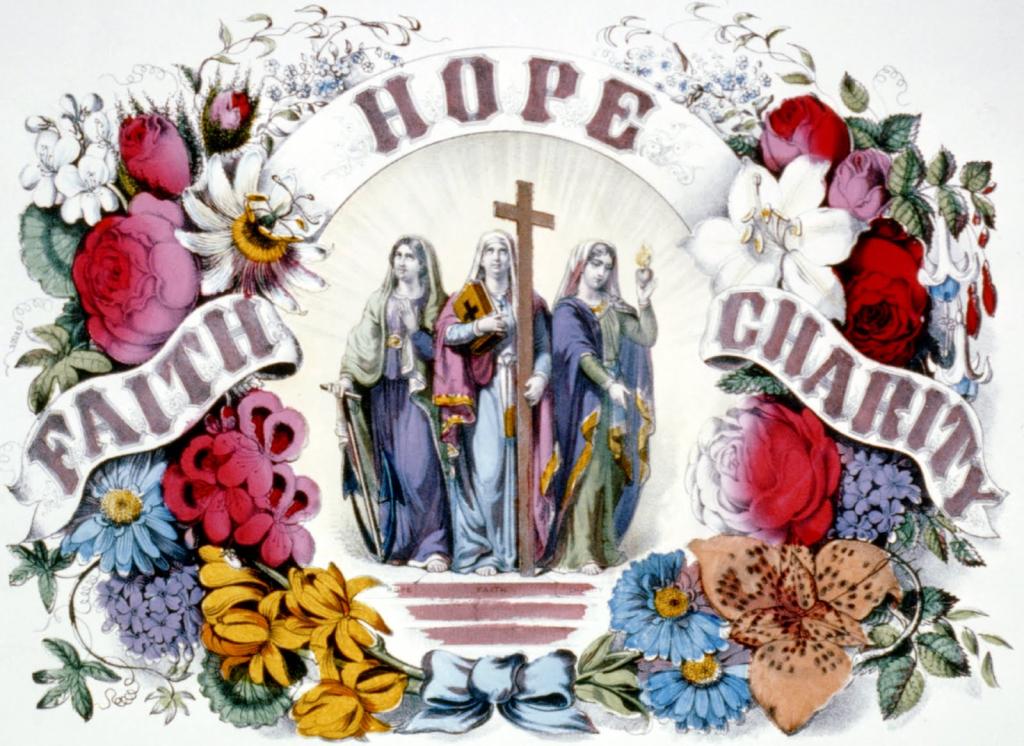
Not without reason, religion – including Catholicism – is often seen as a set of rules and things one is forbidden to do. While sin certainly plays a significant role in Catholic thought, so does virtue.
Virtue may be defined as traits and behaviors that characterize a good person. Put differently, virtue “is a habitual and firm disposition to do the good. It allows the person not only to perform good acts, but to give the best of himself. The virtuous person tends toward the good with all his sensory and spiritual powers; he pursues the good and chooses it in concrete actions” (Catechism of the Catholic Church, paragraph 1803).
In a preceding paper, I had begun a series on the seven deadly sins and the virtues that oppose sin. In this article, I will discuss the seven lively virtues that oppose the deadly sins.
I will discuss the history of the lively virtues and how they came to be. I will then examine each of the virtues individually.
The History And Development Of The Virtues
The concept of virtue and what it means to be a good person dates back to ancient Greece. The great philosophical tradition that includes Socrates, Plato, and Aristotle has had much to say on virtue.
For Socrates, all virtue traced back to the knowledge of eternal truth, what Catholicism calls natural law. It is in knowing God that one becomes virtuous.
It may be beneficial to here distinguish between virtue and ethics. Ethics is the adherence to descriptive norms of behavior. One is deemed ethical if one follows certain rules and actions that society has deemed appropriate. Virtue is acting in a manner that perfects one’s nature, and this requires knowledge of God.
Like Aristotle, Thomas Aquinas thought that ethical understanding comes through virtue and that virtue is a skill that must be developed. Aquinas believed that we learn what is ethical through our reason, which we can use to uncover God’s natural law imbued in creation. By rationally reflecting on what is in accord with nature and our natural inclinations, we can understand the ethical virtues.
The seven heavenly (or holy) virtues that are the subject of this paper appear to have first been developed by a Roman Christian poet named Prudentius. In seeking to contrast and counter the seven deadly sins, Prudentius articulated seven virtues. They are humility, chastity, temperance, generosity, diligence, patience, and charity.
To these seven virtues, I turn next.
The Seven Heavenly Virtues
- Humility. The virtue of humility is not intended to make one feel inferior. Rather, humility is the proper ordering of creatures (in this case, human beings) to their creator, God.
This virtue is the counter to the sin of pride. Humility means acknowledging our shortcomings while reminding us of our need to rely upon God.
- Chastity. Chastity involves the successful integration of sexuality within the person and thus the inner unity of man in his bodily and spiritual being. (Catechism of the Catholic Church, paragraph 2337). As a virtue, chastity opposes the sin of lust. Where lust is a perversion of the natural and good desires that all humans have, chastity seeks to order those desires in the way that God intended.
- Temperance. The virtue of temperance opposes the sin of gluttony by moderating the attraction of pleasures and by providing a balance in the use of created goods. It ensures the will’s mastery over instincts and keeps desires within the limits of what is honorable. The temperate person directs the sensitive appetites toward what is good and maintains a healthy discretion. (Catechism of the Catholic Church, paragraph 1809).
- Generosity. “Freely ye have received, freely give.” In a sense, generosity imitates God, Who is generous in His creation. God, Who gave His Son for our salvation, asks us to give to others as He has given to us. The virtue of generosity acts in opposition to the vice of greed.
- Diligence. The virtue of diligence seeks to counter the sin of sloth by helping us to cultivate and utilize the talents that God has endowed us with. Yet, this virtue is also intended to combat spiritual laziness. As Catholics, we are to cooperate with God to bring about our sanctification. And cooperation requires the virtue of diligence.
- Patience. If the sin of wrath (anger) is the intemperate and uncontrolled feelings of hatred and the desire to avenge, then the virtue of patience is the capacity to bear difficulties and evil with love. In this sense, patience is the virtue that moderates passion and seeks to resolve conflicts and injustice peacefully. Patience also entails being merciful and forgiving those who wrong us.
- Charity. Charity, as it is used in a theological context, does not mean, or at least it is not restricted to benevolent giving. Instead, the virtue of charity is one by which we love God above all things for His own sake and our neighbor as ourselves for the love of God. (Catechism of the Catholic Church 1822). Because charity requires us to love others without condition, it is the virtue that properly opposes the sin of envy.
Conclusion
In this article, I have sought to explain the seven heavenly virtues that stand in opposition to the seven deadly sins.
If sin is an act of disobedience against the will of God as well as an activity contrary to human nature, then virtue is that set of traits that seeks to know and abide by the will of God while at the same time perfecting one’s nature.
In the final article in this series, I will examine the three theological virtues and the four cardinal virtues.
Previous Post

July 27, 2022
The Seven Deadly Sins
Next Post
August 3, 2022 The Theological And Cardinal Virtues
Browse Our Archives
Select a Category Abortion Atheism Catholicism. Catholicism. God. Theophany. Christmas Eschatology Faith and Works. God. Holy Spirit Intelligent Design Jesus Christ Justice Law Politics Protestantism Religion Sabbath Salvation. Soteriology. The Bible Theology Uncategorized
Select a Month October 2026 September 2026 August 2026 July 2026 June 2026 May 2026 April 2026 March 2026 February 2026 January 2026 December 2025 November 2025 October 2025 September 2025 August 2025 July 2025 June 2025 May 2025 April 2025 March 2025 February 2025 January 2025 December 2024 November 2024 October 2024 September 2024 August 2024 July 2024 June 2024 May 2024 April 2024 March 2024 February 2024 January 2024 December 2023 November 2023 October 2023 September 2023 August 2023 July 2023 June 2023 May 2023 April 2023 March 2023 February 2023 January 2023 December 2022 November 2022 October 2022 September 2022 August 2022 July 2022 June 2022 May 2022 April 2022 March 2022 February 2022 January 2022 December 2021
Follow Us!
TAKE THE
Religious Wisdom Quiz
Who anointed Jesus' feet with expensive perfume and her hair?
Select your answer to see how you score.
Mary Magdalene Elizabeth Mary of Bethany Anna
Related posts from Summa Catholic
Creation, Preservation, and Teleology in Catholic Theology

The Anatomy of Divine Revelation in Catholic Thought

Beyond the Absence of Belief: The Implications of...

Can Catholic Apologetics Survive a Postmodern World?
TRENDING AT PATHEOS Catholic

Creation, Preservation, and Teleology in Catholic Theology
As I write this, it is very early Monday morning. Like millions...

The Parable Of The Sower And The Word...
One of Christ’s most famous parables is that of the sower who...

Rejecting Doom: Christian Hope And Human Action
Christianity is a religion of hope. We are to have hope and...

Why I Choose the Eucharist Over the Sermon
Choose the Eucharist, Not the Sermon What are we supposed to get...

5 Design Elements Found in Spiritually Rooted Homes
Putting Spirituality Into Home Decor Our homes are more than our living...

Credo: A Story of God Told with the...
About 10 years ago, I began to imagine a personal "Credo" that...
view all Catholic blogs
Ad-Free & Subscriber Log-In Subscription Support
- About Us
- 2026 Calendar
- Videos
- Podcasts
- Library of World Religions
- Faith In Media Tracker
- Advertise With Us
- Write for Us
- Privacy Policy
- Terms of Service
- Do Not Sell My Data
- Contact Us
- Radiant Digital
- Manage Newsletter Subscriptions
- Unsubscribe From Notifications
- Sitemap
Copyright 2008-2026, Patheos. All rights reserved.
Subscription Support Ad-Free & Subscriber Log-In
Follow Patheos