
BuddhistCatholicContemplativeEvangelicalGeneral ChristianHinduJewishLatter-day SaintMuslimNew VisionsProgressive Christian
Beliefs
- Buddhist
- Catholic
- Contemplative
- Evangelical
- General Christian
- Hindu
- Jewish
- Latter-day Saint
- More Voices
- Muslim
- New Visions
- Pagan
- Progressive Christian
Topics
- Religion News
- Food and Religion
- Sports and Religion
- Religious Art
- Religious Music and Entertainment
- Religious Events
- History and Religion
- Style and Religion
- Politics and Religion
- Women in Religion
- Recreation Outdoors and Religion
- Business Finance and Religion
- Careers Workplace and Religion
- Education and Religion
- Family Parenting and Religion
- Health Fitness and Religion
- Home and Religion
- Relationships and Religion
- Technology and Religion
- Travel and Religion
Columnists
- Buddhist Columnists
- Business Finance and Religion Columnists
- Careers Workplace and Religion Columnists
- Catholic Columnists
- Contemplative Columnists
- Education and Religion Columnists
- Evangelists Columnists
- Family Parenting and Religion Columnists
- General Christian Columnists
- Health Fitness and Religion Columnists
- Hindu Columnists
- History and Religion Columnists
- Home and Religion Columnists
- Jewish Columnists
- More Voices Columnists
- Latter Day Columnists
- Muslim Columnists
- New Visions Columnists
- Nonreligious Columnists
- Pagan Columnists
- Politics and Religion Columnists
- Progressive Columnists
- Recreation Outdoors and Religion Columnists
- Relationships and Religion Columnists
- Religion News Columnists
- Religious Art Columnists
- Religious Events Columnists
- Religious Music and Entertainment Columnists
- Sports and Religion Columnists
- Style and Religion Columnists
- Technology and Religion Columnists
- Travel and Religion Columnists
- Women in Religion Columnists
Resource Library
- 2026 Calendar
- Library of World Religions
- The 100 Most Holy Places on Earth
- Patheos Answers
- Podcasts
- Videos
- Faith Leaders Database
- Anglican Episcopalian
- Bahai
- Baptist
- Buddhism
- Christianity
- Confucianism
- Eastern Orthodoxy
- Hinduism
- Holiness and Pentecostal
- ISKCON
- Islam
- Judaism
- Lutheran
- Methodist
- The Church of Jesus Christ of Latter-day Saints
- New Age
- Paganism
- Presbytarian and Reformed
- Protestantism
- Religion Behind the Scenes
- Roman Catholic
- Scientology
- Shia Islam
- Sikhism
- Sufism
- Sunni Islam
- Taoism
- Zen
- See all religions
Research Tools
 Ad-Free & Subscriber Log-In Subscription Support
Ad-Free & Subscriber Log-In Subscription Support
Follow Patheos 

- Trending:
- Forgiveness
- |
- Marriage
- |
- Consciousness
- |
- Death Penalty
- |
- Election
- |
- Halloween

- Home
- Catholic
- Sacred Mountains
Sacred Mountains
Last updated on: July 10, 2022 at 8:54 am by David Schloss
Sacred Mountains 2022-07-10T08:54:38-04:00 David Schloss
Patheos Explore the world's faith through different perspectives on religion and spirituality! Patheos has the views of the prevalent religions and spiritualities of the world.
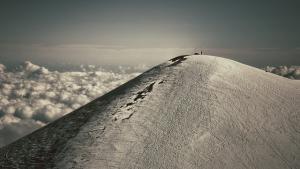
A simple conjuring up of God often entails the sense that God is above. Our prayers are directed to the Heavens which exist “up there.” While the concept of God and Heaven being above the earth is simplistic, the symbolism involved is of great value.
This symbolism is often seen in the significance of mountains in the Bible. At least part of the reason for this lies in the ancient world’s belief that the summit of a mountain was the meeting place of Heaven and earth.
This paper will review several significant events depicted in the Bible that involve mountains. I will also seek to explain the deep religious meaning of the sacred mountain.
Mountains And The Old Testament
Within the Old Testament, it is possible to identify six mountains that are of great significance theologically.
The first mountain of note is Mount Horeb (which is also called Mount Sinai). Here, God reveals Himself (after a fashion) to Moses. The story of the burning bush commences the events leading to the Israelites’ exodus from Egypt. In addition, God calls Himself “I am that I am.” This phrase distinguishes God from the various pagan deities that were often forces of nature that had names by which people could summon them. The God of the Bible is utterly transcendent and the efficient cause of creation itself.
In addition to the burning bush story, Mount Horeb (Sinai) is also notable for another significant event in the Old Testament.
After the exodus from Egypt, God seeks to make a covenant with the Israelites. On Mount Horeb (Sinai), God converses with Moses, and it is there that God gives Moses the Ten Commandments. The Ten Commandments provide the basis for the covenant between God and the Israelites. Significantly, the Commandments provide the foundation for Catholic moral teaching.
Another mountain that is of no small import theologically is Mount Ararat. Traditionally, it is believed that Noah’s ark came to the end of its voyage on this mountain after the great flood. The significance of the flood is seen in several ways.
The ark itself is understood as a prefiguring of the Catholic Church (see Catechism of the Catholic Church, Paragraph 1219). Additionally, the Church has interpreted the flood as a prefiguring of the sacrament of baptism. “The waters of the great flood you made a sign of the waters of Baptism, that make an end of sin and a new beginning of goodness.” (See Catechism of the Catholic Church, Paragraph 845).
One of the most dramatic events of the Old Testament occurs on Mount Moriah. Commanded by God to sacrifice his son Isaac, Abraham climbs to the summit of Mount Moriah. At the last moment, God, seeing Abraham’s faithfulness and obedience to Him, orders Abraham not to kill his son. Owing to Abraham’s willingness to rely on God, Abraham becomes the father of Israel.
While Moses is rightly considered the leader of the Israelites, he never set foot in the Promised Land of Israel. Because Moses had “broken faith” with God (Numbers 20:12), he was only allowed to see Israel from atop Mount Nebo shortly before his death.
Also of great importance is Mount Zion. On this mountain, King Solomon built the Temple that today is the site of the Temple Mount. Because it was believed that God (Yahweh) dwelled in the Temple, it is seen as a foreshadowing of the Kingdom of Heaven. Also of note is that it is thought that Jesus’ Last Supper took place on Mount Zion.
The last mountain of significance depicted in the Old Testament is Mount Carmel. On this mountain, the prophet Elijah vanquished the prophets of Baal by showing the power of the God of Israel. Once more, the God of Israel shows Himself to be the one true God.
Mountains And The New Testament
Mountains play a significant role in the New Testament as well. Of particular importance are Mount Tabor, Mount Olivet, and the Mount of Beatitudes.
It is possible to mark the life of Christ using three events. The first, His baptism, and the last, His ascension. Perhaps, the culmination of His life is the Transfiguration which occurs on Mount Tabor.
The Gospels recount the story of Jesus taking Peter, James, and John up SaMount Tabor. There Jesus was “Transfigured before them, and his clothes became dazzling white, such as no fuller on earth could bleach them. Then Elijah appeared to them along with Moses, and they were conversing with Jesus. Then Peter said to Jesus in reply, ‘Rabbi, it is good that we are here! Let us make three tents: one for you, one for Moses, and one for Elijah.’ He hardly knew what to say; they were so terrified. Then a cloud came, casting a shadow over them; then from the cloud came a voice, “This is my beloved Son. Listen to him.” (Mark 9:2-13).
Perhaps more of a hill than a mountain, the Mount of Beatitudes was the location of the sermon on the mount. Because the sermon constitutes much of the ethical and spiritual foundation of Christ’s teaching, it invokes Moses receiving the Ten Commandments. As the Israelites received the Old Law on Mount Sinai, the New Law was received from the Mount of Beatitudes.
The Mount of Olives is mentioned prominently in the New Testament. This mountain has great significance in the life of Jesus. It was at the foot of Mt. Olivet, in the Garden of Gethsemane, that Jesus went to pray before his crucifixion. It was also here that Jesus ascended into Heaven.
The Meaning And Significance Of The Sacred Mountain
As we have seen, the mountain has great significance in the Bible, and indeed, mountains are mentioned over five hundred times in the Scriptures. While at least part of the reason for this lies in the geography of the various locals of the Bible, mountains also are symbolic. This symbolism begins with the ancient idea that mountain summits were the meeting place of Heaven and earth.
In ascending the mountain, one takes leave of the world and draws nearer to God. The symbolism of being nearer to God, along with the sense that a mountain is a place of isolation or loneliness, make it ideal for encountering the transcendent.
Conclusion
It is no coincidence that mountains are so significant to the stories of Scripture. From God “coming down” the mountain to interact with His creation to the great spiritual value of climbing nearer to God by leaving the world behind, the mountain is indeed sacred.
Previous Post

July 6, 2022
The Place Of Tradition In Catholicism
Next Post
July 13, 2022 Holy Wisdom
Browse Our Archives
Select a Category Abortion Atheism Catholicism. Catholicism. God. Theophany. Christmas Eschatology Faith and Works. God. Holy Spirit Intelligent Design Jesus Christ Justice Law Politics Protestantism Religion Sabbath Salvation. Soteriology. The Bible Theology Uncategorized
Select a Month October 2026 September 2026 August 2026 July 2026 June 2026 May 2026 April 2026 March 2026 February 2026 January 2026 December 2025 November 2025 October 2025 September 2025 August 2025 July 2025 June 2025 May 2025 April 2025 March 2025 February 2025 January 2025 December 2024 November 2024 October 2024 September 2024 August 2024 July 2024 June 2024 May 2024 April 2024 March 2024 February 2024 January 2024 December 2023 November 2023 October 2023 September 2023 August 2023 July 2023 June 2023 May 2023 April 2023 March 2023 February 2023 January 2023 December 2022 November 2022 October 2022 September 2022 August 2022 July 2022 June 2022 May 2022 April 2022 March 2022 February 2022 January 2022 December 2021
Follow Us!
TAKE THE
Religious Wisdom Quiz
What city was Job from?
Select your answer to see how you score.
Uz Susa Shiloh Edom
Related posts from Summa Catholic

The Anatomy of Divine Revelation in Catholic Thought

Beyond the Absence of Belief: The Implications of...

Can Catholic Apologetics Survive a Postmodern World?

From Samaria to Sanctity: Analyzing The Woman At...
TRENDING AT PATHEOS Catholic

Rejecting Doom: Christian Hope And Human Action
Christianity is a religion of hope. We are to have hope and...

It’s What Comes From Within Which Matters
One of the most difficult things for us to understand is why...

Why I Choose the Eucharist Over the Sermon
Choose the Eucharist, Not the Sermon What are we supposed to get...

5 Design Elements Found in Spiritually Rooted Homes
Putting Spirituality Into Home Decor Our homes are more than our living...

Credo: A Story of God Told with the...
About 10 years ago, I began to imagine a personal "Credo" that...

The Anatomy of Divine Revelation in Catholic Thought
The claim that God has made Himself known to human beings is...
view all Catholic blogs
Ad-Free & Subscriber Log-In Subscription Support
- About Us
- 2026 Calendar
- Videos
- Podcasts
- Library of World Religions
- Faith In Media Tracker
- Advertise With Us
- Write for Us
- Privacy Policy
- Terms of Service
- Do Not Sell My Data
- Contact Us
- Radiant Digital
- Manage Newsletter Subscriptions
- Unsubscribe From Notifications
- Sitemap
Copyright 2008-2026, Patheos. All rights reserved.
Subscription Support Ad-Free & Subscriber Log-In
Follow Patheos