
BuddhistCatholicContemplativeEvangelicalGeneral ChristianHinduJewishLatter-day SaintMuslimNew VisionsProgressive Christian
Beliefs
- Buddhist
- Catholic
- Contemplative
- Evangelical
- General Christian
- Hindu
- Jewish
- Latter-day Saint
- More Voices
- Muslim
- New Visions
- Pagan
- Progressive Christian
Topics
- Religion News
- Food and Religion
- Sports and Religion
- Religious Art
- Religious Music and Entertainment
- Religious Events
- History and Religion
- Style and Religion
- Politics and Religion
- Women in Religion
- Recreation Outdoors and Religion
- Business Finance and Religion
- Careers Workplace and Religion
- Education and Religion
- Family Parenting and Religion
- Health Fitness and Religion
- Home and Religion
- Relationships and Religion
- Technology and Religion
- Travel and Religion
Columnists
- Buddhist Columnists
- Business Finance and Religion Columnists
- Careers Workplace and Religion Columnists
- Catholic Columnists
- Contemplative Columnists
- Education and Religion Columnists
- Evangelists Columnists
- Family Parenting and Religion Columnists
- General Christian Columnists
- Health Fitness and Religion Columnists
- Hindu Columnists
- History and Religion Columnists
- Home and Religion Columnists
- Jewish Columnists
- More Voices Columnists
- Latter Day Columnists
- Muslim Columnists
- New Visions Columnists
- Nonreligious Columnists
- Pagan Columnists
- Politics and Religion Columnists
- Progressive Columnists
- Recreation Outdoors and Religion Columnists
- Relationships and Religion Columnists
- Religion News Columnists
- Religious Art Columnists
- Religious Events Columnists
- Religious Music and Entertainment Columnists
- Sports and Religion Columnists
- Style and Religion Columnists
- Technology and Religion Columnists
- Travel and Religion Columnists
- Women in Religion Columnists
Resource Library
- 2026 Calendar
- Library of World Religions
- The 100 Most Holy Places on Earth
- Patheos Answers
- Podcasts
- Videos
- Faith Leaders Database
- Anglican Episcopalian
- Bahai
- Baptist
- Buddhism
- Christianity
- Confucianism
- Eastern Orthodoxy
- Hinduism
- Holiness and Pentecostal
- ISKCON
- Islam
- Judaism
- Lutheran
- Methodist
- The Church of Jesus Christ of Latter-day Saints
- New Age
- Paganism
- Presbytarian and Reformed
- Protestantism
- Religion Behind the Scenes
- Roman Catholic
- Scientology
- Shia Islam
- Sikhism
- Sufism
- Sunni Islam
- Taoism
- Zen
- See all religions
Research Tools
 Ad-Free & Subscriber Log-In Subscription Support
Ad-Free & Subscriber Log-In Subscription Support
Follow Patheos 

- Trending:
- Forgiveness
- |
- Marriage
- |
- Consciousness
- |
- Death Penalty
- |
- Election
- |
- Halloween

- Home
- Catholic
- Do Not Go Quietly Into That Night
Do Not Go Quietly Into That Night
Last updated on: July 20, 2022 at 6:48 am by David Schloss
Do Not Go Quietly Into That Night 2022-07-20T06:48:34-04:00 David Schloss
Patheos Explore the world's faith through different perspectives on religion and spirituality! Patheos has the views of the prevalent religions and spiritualities of the world.
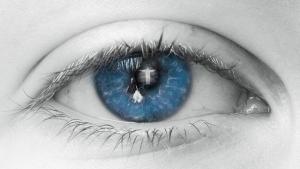
“Life is precious. Life is sacred. And it ought so to be observed.” – Gordon B. Hinckley.
The subject of ending one’s life is, to say the least, a complicated one and one ripe with difficult questions. Such questions must include whether anyone, – the individual or a medical professional – has the right to end a life. This question leads to yet another, what is the difference between euthanasia and suicide?
Broadly speaking, euthanasia involves a physician intentionally ending a patient’s life – at the behest of the patient – in order to relieve suffering and pain. Suicide is the ending of one’s own life – without any assistance – and is often done impulsively.
Having differentiated euthanasia and suicide, one can address the philosophical and theological questions involved. Such questions as at what point does life no longer become worth living? Should the individual make the decision alone, or does society have a right to intervene? Is ending one’s life immoral?
In the following paper, I will discuss what euthanasia and suicide are and their history. I will then explore what the Catholic Church teaches about ending one’s life.
Euthanasia And Its History
Jennifer Ratner-Rosenhagen, a history professor at the University of Wisconsin–Madison, once commented that no contemporary issue exists in a vacuum; every issue has a long history. So it is with euthanasia.
The word itself is of Greek origin and is translated as a good death. Euthanasia appears to have been an issue dealt with (or at least considered) at various levels of ancient Greek culture. Nearly five hundred years before the birth of Christ, the Greek poet Aeschylus wrote, “It were better to die once and for all than to drag out my lingering days in anguish.” (Oates JW, O’Neill E. The Complete Greek Drama. Aeschylus, Sophocles, Euripides. New York: Random House, 1938).
In ancient Rome, the Empire provided means by which one could apply to the Roman Senate for permission to end one’s life. If the Senate deemed the reasons for euthanasia were sound, the individual was given permission to take his own life.
The influence of Judaism and then Catholicism in the Roman Empire would lead to the practice of euthanasia being questioned. Yet, despite the religious objections to euthanasia, the practice would subsist throughout the middle ages and into the modern era.
In the 1870s, it was suggested that doctors use chloroform to bring about the death of a suffering patient. The view that doctors should facilitate the deaths of their patients was vigorously opposed by the American Medical Association, stating that such a policy was “an attempt to make the physician don the robes of an executioner.”
Nevertheless, the arguments for opposing euthanasia and suicide are ultimately arguments predicated on religion and philosophy.
Catholic Teaching On Euthanasia
Historically, Catholicism has opposed euthanasia as inconsistent with the human good and a failure to adhere to the responsibilities owed God.
In the thirteenth century, Thomas Aquinas espoused Catholic teaching about suicide in arguments that would also influence Catholic teaching on euthanasia. Aquinas condemned suicide as an act against the innate desire for self-perpetuation, an action against the nature of human beings.
Moreover, euthanasia and suicide were a rejection of the gift of life and a violation of God’s authority over life. This position exemplified attitudes about suicide that prevailed from the Middle Ages through the Renaissance and Reformation.
In order to understand the Catholic argument against euthanasia and suicide, it is necessary to understand what Catholicism asserts about the nature of human beings and of life itself.
There are two aspects under which this subject can be considered. The first is to accept that human beings are made in the image of God (Genesis 1:26). While this can be said of all living things, human beings are unique in that they can choose to cooperate with God and, by doing so, be “partakers of the Divine nature” (2 Peter 1:4). From the Catholic perspective, God is not only the cause of life but its sustainer (Hebrews 1:3). It is evident, therefore, that both euthanasia and suicide are rejections of God’s desire that human beings cooperate with Him.
Catholicism also asserts that euthanasia and suicide are an affront to human dignity. Human dignity is predicated upon the fact that a thing’s value is directly proportional to a thing’s creator. For example, the value of an art piece is often drawn from the eminence of the artist. As God is infinitely good, His creation is of infinite value.
The second aspect under which to consider euthanasia and suicide is one drawn from natural law. A plain reading of the fifth commandment (thou shalt not kill) seems to include the taking of one’s life within its purview. For these reasons, the Second Vatican Council condemned “all offenses against life itself, such as murder, genocide, abortion, euthanasia, and willful suicide…(Gaudium et Spes, No. 27).
Conclusion
In this work, I have tried to provide a Catholic perspective on the very difficult subject of euthanasia and suicide.
Because all life is created by God, it carries within itself a divine spark. Thus, the sanctity of life, which rests on the human person’s unique relationship with God, is the basis for the Catholic Church’s views on the value of human life.
While modern persons place a great emphasis on freedom, the value of human life is derived from the fact that our lives are not our own. In accord with divine sovereignty, God alone is Lord over life and death, and the end of human life is not subject to a person’s free judgment.
I shall conclude by quoting the Catechism, “Whatever its motives and means, direct euthanasia consists in putting an end to the lives of handicapped, sick, or dying persons. It is morally unacceptable. Thus an act or omission which, of itself or by intention, causes death in order to eliminate suffering constitutes a murder gravely contrary to the dignity of the human person and to the respect due to the living God, his Creator. The error of judgment into which one can fall in good faith does not change the nature of this murderous act, which must always be forbidden and excluded.” (Catechism of the Catholic Church, Paragraph 2277).
Previous Post

July 17, 2022
The Synoptic Gospels
Next Post
July 24, 2022 In God We Trust
Browse Our Archives
Select a Category Abortion Atheism Catholicism. Catholicism. God. Theophany. Christmas Eschatology Faith and Works. God. Holy Spirit Intelligent Design Jesus Christ Justice Law Politics Protestantism Religion Sabbath Salvation. Soteriology. The Bible Theology Uncategorized
Select a Month October 2026 September 2026 August 2026 July 2026 June 2026 May 2026 April 2026 March 2026 February 2026 January 2026 December 2025 November 2025 October 2025 September 2025 August 2025 July 2025 June 2025 May 2025 April 2025 March 2025 February 2025 January 2025 December 2024 November 2024 October 2024 September 2024 August 2024 July 2024 June 2024 May 2024 April 2024 March 2024 February 2024 January 2024 December 2023 November 2023 October 2023 September 2023 August 2023 July 2023 June 2023 May 2023 April 2023 March 2023 February 2023 January 2023 December 2022 November 2022 October 2022 September 2022 August 2022 July 2022 June 2022 May 2022 April 2022 March 2022 February 2022 January 2022 December 2021
Follow Us!
TAKE THE
Religious Wisdom Quiz
Who saw the vision of the valley of dry bones?
Select your answer to see how you score.
Daniel Isaiah Ezekiel Jeremiah
Related posts from Summa Catholic

The Anatomy of Divine Revelation in Catholic Thought

Beyond the Absence of Belief: The Implications of...

Can Catholic Apologetics Survive a Postmodern World?

From Samaria to Sanctity: Analyzing The Woman At...
TRENDING AT PATHEOS Catholic

Rejecting Doom: Christian Hope And Human Action
Christianity is a religion of hope. We are to have hope and...

It’s What Comes From Within Which Matters
One of the most difficult things for us to understand is why...

Why I Choose the Eucharist Over the Sermon
Choose the Eucharist, Not the Sermon What are we supposed to get...

5 Design Elements Found in Spiritually Rooted Homes
Putting Spirituality Into Home Decor Our homes are more than our living...

Credo: A Story of God Told with the...
About 10 years ago, I began to imagine a personal "Credo" that...

The Anatomy of Divine Revelation in Catholic Thought
The claim that God has made Himself known to human beings is...
view all Catholic blogs
Ad-Free & Subscriber Log-In Subscription Support
- About Us
- 2026 Calendar
- Videos
- Podcasts
- Library of World Religions
- Faith In Media Tracker
- Advertise With Us
- Write for Us
- Privacy Policy
- Terms of Service
- Do Not Sell My Data
- Contact Us
- Radiant Digital
- Manage Newsletter Subscriptions
- Unsubscribe From Notifications
- Sitemap
Copyright 2008-2026, Patheos. All rights reserved.
Subscription Support Ad-Free & Subscriber Log-In
Follow Patheos