
BuddhistCatholicContemplativeEvangelicalGeneral ChristianHinduJewishLatter-day SaintMuslimNew VisionsProgressive Christian
Beliefs
- Buddhist
- Catholic
- Contemplative
- Evangelical
- General Christian
- Hindu
- Jewish
- Latter-day Saint
- More Voices
- Muslim
- New Visions
- Pagan
- Progressive Christian
Topics
- Religion News
- Food and Religion
- Sports and Religion
- Religious Art
- Religious Music and Entertainment
- Religious Events
- History and Religion
- Style and Religion
- Politics and Religion
- Women in Religion
- Recreation Outdoors and Religion
- Business Finance and Religion
- Careers Workplace and Religion
- Education and Religion
- Family Parenting and Religion
- Health Fitness and Religion
- Home and Religion
- Relationships and Religion
- Technology and Religion
- Travel and Religion
Columnists
- Buddhist Columnists
- Business Finance and Religion Columnists
- Careers Workplace and Religion Columnists
- Catholic Columnists
- Contemplative Columnists
- Education and Religion Columnists
- Evangelists Columnists
- Family Parenting and Religion Columnists
- General Christian Columnists
- Health Fitness and Religion Columnists
- Hindu Columnists
- History and Religion Columnists
- Home and Religion Columnists
- Jewish Columnists
- More Voices Columnists
- Latter Day Columnists
- Muslim Columnists
- New Visions Columnists
- Nonreligious Columnists
- Pagan Columnists
- Politics and Religion Columnists
- Progressive Columnists
- Recreation Outdoors and Religion Columnists
- Relationships and Religion Columnists
- Religion News Columnists
- Religious Art Columnists
- Religious Events Columnists
- Religious Music and Entertainment Columnists
- Sports and Religion Columnists
- Style and Religion Columnists
- Technology and Religion Columnists
- Travel and Religion Columnists
- Women in Religion Columnists
Resource Library
- 2026 Calendar
- Library of World Religions
- The 100 Most Holy Places on Earth
- Patheos Answers
- Podcasts
- Videos
- Faith Leaders Database
- Anglican Episcopalian
- Bahai
- Baptist
- Buddhism
- Christianity
- Confucianism
- Eastern Orthodoxy
- Hinduism
- Holiness and Pentecostal
- ISKCON
- Islam
- Judaism
- Lutheran
- Methodist
- The Church of Jesus Christ of Latter-day Saints
- New Age
- Paganism
- Presbytarian and Reformed
- Protestantism
- Religion Behind the Scenes
- Roman Catholic
- Scientology
- Shia Islam
- Sikhism
- Sufism
- Sunni Islam
- Taoism
- Zen
- See all religions
Research Tools
 Ad-Free & Subscriber Log-In Subscription Support
Follow Patheos 

- Trending:
- Advent
- |
- Forgiveness
- |
- Thanksgiving
- |
- Election
- |
- Seasonal Holidays
- |
- Marriage

- Home
- Catholic
- Spiritual, But Not Religious?
Spiritual, But Not Religious?
Last updated on: June 5, 2022 at 8:18 am by David Schloss
Spiritual, But Not Religious? 2022-06-05T08:18:59-04:00 David Schloss
Patheos Explore the world's faith through different perspectives on religion and spirituality! Patheos has the views of the prevalent religions and spiritualities of the world.
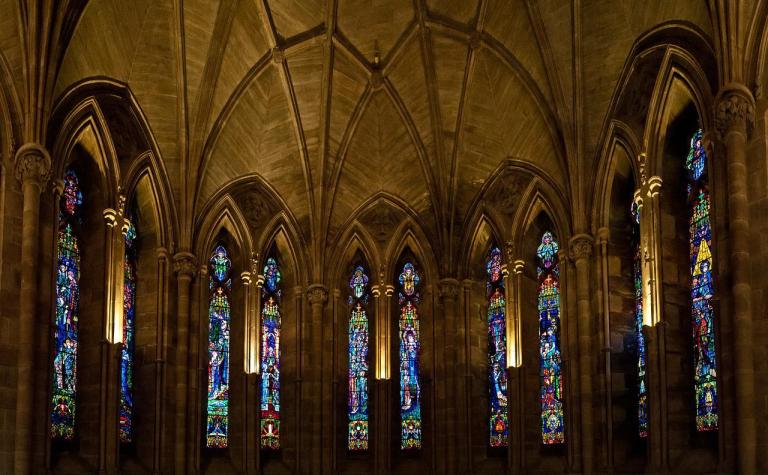
“Do not think that I have come to abolish the law or the prophets. I have come not to abolish but to fulfill.” – Matthew 5:17.
In the three hundred years following the Enlightenment, organized religion has steadily declined in affiliation and popularity. While a rise in atheism has accompanied this decline, there has also been an increase in the nones. The nones are people who do not identify with any religion. Within the category of the nones are those who claim to be spiritual, but not religious.
In the following work, I will examine what it means to be spiritual, but not religious, and inquire into the viability of a spirituality divorced from organized religion, specifically Catholicism. To properly treat this subject, I will discuss spirituality and religion and argue that a spirituality that is disconnected from Catholicism cannot succeed.
On Spirituality
Owing to the personal nature of spirituality, it is all but impossible to provide a definitive definition. This fact impedes any efforts for a systematic study of it.
Nevertheless, any attempt to understand spirituality must take into account the composite nature of human beings. That is to say that human beings are composed of a body and a soul. Suffice, therefore, to say that spirituality is that aspect of human nature that concerns itself with matters of the soul.
Because the soul is not a material substance, spirituality involves matters such as concepts, happiness, and ultimate meaning. Whether one knows it or not, whether one accepts it or not, human beings desire God. When this desire is repressed, it will manifest itself in other ways. Often, being “spiritual, but not religious” is nothing more than a response to this very human desire for God.
As human beings are made in the image of God (as all things are to varying degrees), spirituality should orient the individual toward God. Traditionally, this orientation toward God involved membership in organized religion.
On Religion
In a sense, religion entails the voluntary subjection of oneself to God. It is a systematic and organized attempt to worship God properly.
The Catholic religion includes the faith, worship, and practice of all Christians in communion with the Bishop of Rome, whom they acknowledge as the Vicar of Christ and the visible head of the Church founded by Christ. (See Father John Hardon’s Modern Catholic Dictionary).
Now it is evident that God became man in the person of Jesus to affect human salvation. Salvation being eternal life with God. It is why Jesus says, “I came so that they might have life and have it more abundantly.” It is also evident that Christ created a Church so as to provide a means by which all may partake of the salvation that He made possible. As evidence of this, Jesus anointed Peter as Pope (see Matthew 16:18) and sent the Holy Spirit to create the Catholic Church (See Acts 2:1-4).
In conclusion, it can be said that God became a man to reconcile God and human beings and affect salvation. God also founded the Catholic Church as a means to bring people to Him so that they may be saved.
Why Spirituality Needs Catholicism
A spirituality separated from religion is, by definition, subjective. This can lead to a “faith” that is ego-centric. Denied access to the transcendent (which must be objective), the soul turns inward.
This subjective spirituality means that God becomes a concept or abstraction. A Jesus removed from the Church He founded is a Jesus removed from the Bible, at least partially. The allure of this mistake lies in allowing one to “mold” Jesus so as to fit one’s own will. God becomes whoever the individual wants Him to be. At the extreme, the individual becomes his own god, determining for himself such things as morality and objective meaning.
This, of course, is precisely the wrong course. If Jesus is God, He is the greatest good, and our goal should be union with Him. This union – which is eternal life – can only occur when God is allowed to mold the individual. Such a union with God requires the individual to be obedient to God. Thus, Jesus says, “Whoever has my commandments and observes them is the one who loves me. And whoever loves me will be loved by my Father, and I will love him and reveal myself to him.” (John 14:21).
We love God by worshiping Him and by doing His will, and proper worship requires the liturgy of the Church. The reason lies in the fact that to be followers of Christ means to be grafted onto His mystical body (this occurs at baptism), which is the Catholic Church.
The liturgy allows Catholics to enter into the Trinitarian dialogue by sharing in the Paschal mystery of Christ’s suffering, death, resurrection, and ascension to the Father. In turn, Christ presents his Body (of which we are a part) to the Father in sacrifice on our behalf. Through sharing in Christ’s sacrifice to the Father, we participate in the divine life of the Trinity. God’s intention for us is that we participate in the divine life of God and, in so doing, are made holy like him.
Ultimately, the virtue of being spiritual exists only to approach God in prayer and in living out the Gospel. As I have shown, this cannot occur apart from Catholicism.
Conclusion
The decline of organized religion has not only led to an increase in atheism, but also the advent of the nones, people who do not identify with any religion. Yet, human beings are religious creatures by nature, and any effort to denude humanity of its transcendent sensibilities will often lead to religion appearing in another form. One such form is composed of people who consider themselves spiritual, but not religious.
In the preceding work, I have endeavored to examine what it means to be spiritual, but not religious. I have treated both spirituality and religion. Finally, I have suggested that any form of spirituality divorced from Catholicism fails to allow the individual to obtain a proper relationship with God.
Previous Post

June 1, 2022
Beauty, Art, and Image in Catholic Thought
Next Post
June 8, 2022 The Holy Trinity
Browse Our Archives
Select a Category Abortion Atheism Catholicism. Catholicism. God. Theophany. Christmas Eschatology Faith and Works. God. Holy Spirit Intelligent Design Jesus Christ Justice Law Politics Protestantism Religion Sabbath Salvation. Soteriology. The Bible Theology Uncategorized
Select a Month November 2026 October 2026 September 2026 August 2026 July 2026 June 2026 May 2026 April 2026 March 2026 February 2026 January 2026 December 2025 November 2025 October 2025 September 2025 August 2025 July 2025 June 2025 May 2025 April 2025 March 2025 February 2025 January 2025 December 2024 November 2024 October 2024 September 2024 August 2024 July 2024 June 2024 May 2024 April 2024 March 2024 February 2024 January 2024 December 2023 November 2023 October 2023 September 2023 August 2023 July 2023 June 2023 May 2023 April 2023 March 2023 February 2023 January 2023 December 2022 November 2022 October 2022 September 2022 August 2022 July 2022 June 2022 May 2022 April 2022 March 2022 February 2022 January 2022 December 2021
Follow Us!
TAKE THE
Religious Wisdom Quiz
What year did Martin Luther post his 95 Theses?
Select your answer to see how you score.
1600 1517 1401 1492
Related posts from Summa Catholic
If Baptism Washes Away Sin, Why Do Catholics...
Is Catholicism The Fulfillment Of The Old Testament?
Why Is Catholicism Centered on an Instrument of...
Is Faith Really Blind? What Skeptics Get Wrong
TRENDING AT PATHEOS Catholic

Bad Survey Questions Distort Eucharistic Theology
It seems to be the newest thing: someone conducts a bad survey...

If Baptism Washes Away Sin, Why Do Catholics...
The seven sacraments stand as the foundation of Catholic ecclesial life. The...

Far from promoting indifference, inaction, or quietism, Paul consistently tells us to...

The Power of Setting a Good Example
Remember last August when the Chicago White Sox hosted a "Pope Hat...

A Catholic Critique of Biblical Unitarianism
If the statistics are to be believed, Unitarianism is rising worldwide. Although...

How Grandma Tourism Helps Grandparents Live Their Vocation
Grandma, The New Travel Influencer What started as a nostalgia-inspired social media...
view all Catholic blogs
Ad-Free & Subscriber Log-In Subscription Support
- About Us
- 2026 Calendar
- Videos
- Podcasts
- Library of World Religions
- Faith In Media Tracker
- Advertise With Us
- Write for Us
- Privacy Policy
- Terms of Service
- Do Not Sell My Data
- Contact Us
- Radiant Digital
- Manage Newsletter Subscriptions
- Unsubscribe From Notifications
- Sitemap
Copyright 2008-2026, Patheos. All rights reserved.
Subscription Support Ad-Free & Subscriber Log-In
Follow Patheos