
BuddhistCatholicContemplativeEvangelicalGeneral ChristianHinduJewishLatter-day SaintMuslimNew VisionsProgressive Christian
Beliefs
- Buddhist
- Catholic
- Contemplative
- Evangelical
- General Christian
- Hindu
- Jewish
- Latter-day Saint
- More Voices
- Muslim
- New Visions
- Pagan
- Progressive Christian
Topics
- Religion News
- Food and Religion
- Sports and Religion
- Religious Art
- Religious Music and Entertainment
- Religious Events
- History and Religion
- Style and Religion
- Politics and Religion
- Women in Religion
- Recreation Outdoors and Religion
- Business Finance and Religion
- Careers Workplace and Religion
- Education and Religion
- Family Parenting and Religion
- Health Fitness and Religion
- Home and Religion
- Relationships and Religion
- Technology and Religion
- Travel and Religion
Columnists
- Buddhist Columnists
- Business Finance and Religion Columnists
- Careers Workplace and Religion Columnists
- Catholic Columnists
- Contemplative Columnists
- Education and Religion Columnists
- Evangelists Columnists
- Family Parenting and Religion Columnists
- General Christian Columnists
- Health Fitness and Religion Columnists
- Hindu Columnists
- History and Religion Columnists
- Home and Religion Columnists
- Jewish Columnists
- More Voices Columnists
- Latter Day Columnists
- Muslim Columnists
- New Visions Columnists
- Nonreligious Columnists
- Pagan Columnists
- Politics and Religion Columnists
- Progressive Columnists
- Recreation Outdoors and Religion Columnists
- Relationships and Religion Columnists
- Religion News Columnists
- Religious Art Columnists
- Religious Events Columnists
- Religious Music and Entertainment Columnists
- Sports and Religion Columnists
- Style and Religion Columnists
- Technology and Religion Columnists
- Travel and Religion Columnists
- Women in Religion Columnists
Resource Library
- 2026 Calendar
- Library of World Religions
- The 100 Most Holy Places on Earth
- Patheos Answers
- Podcasts
- Videos
- Faith Leaders Database
- Anglican Episcopalian
- Bahai
- Baptist
- Buddhism
- Christianity
- Confucianism
- Eastern Orthodoxy
- Hinduism
- Holiness and Pentecostal
- ISKCON
- Islam
- Judaism
- Lutheran
- Methodist
- The Church of Jesus Christ of Latter-day Saints
- New Age
- Paganism
- Presbytarian and Reformed
- Protestantism
- Religion Behind the Scenes
- Roman Catholic
- Scientology
- Shia Islam
- Sikhism
- Sufism
- Sunni Islam
- Taoism
- Zen
- See all religions
Research Tools
 Ad-Free & Subscriber Log-In Subscription Support
Ad-Free & Subscriber Log-In Subscription Support
Follow Patheos 

- Trending:
- Forgiveness
- |
- Marriage
- |
- Consciousness
- |
- Death Penalty
- |
- Election
- |
- Halloween

- Home
- Catholic
- I Believe (The Nicene Creed)
I Believe (The Nicene Creed)
Last updated on: June 15, 2022 at 6:14 am by David Schloss
I Believe (The Nicene Creed) 2022-06-15T06:14:22-04:00 David Schloss
Patheos Explore the world's faith through different perspectives on religion and spirituality! Patheos has the views of the prevalent religions and spiritualities of the world.
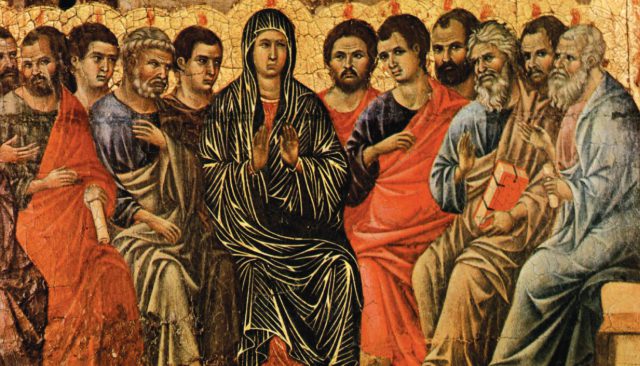
In my previous paper, I commenced a series on the Creeds of the Catholic Church. Having treated the Apostles Creed, I now turn to the Nicene Creed.
I will begin by reviewing the history of the Nicene Creed. I will include the Creed in the text and, finally, analyze the Creed.
History And Controversy
The Nicene Creed (or the Niceno-Constantinopolitan Creed) appears to have been a product of the Council of Constantinople in 381. However, it would not be officially stated until the Council of Chalcedon in 451.
The Creed was a response to several heresies promulgated in the early Church. Of particular concern is what came to be known as the Arian heresy. This heresy believed there was a “time” (the word time must be understood analogously since God exists outside of time) before Jesus existed, before He was begotten of the Father. Thus the Arian heresy taught that Jesus was the first-born of all creation, but only a creature – a godlike creature, but not God.
Ultimately, the Council of Nicea condemned the Arian Heresy and confirmed that Jesus was of the same substance (and essence) as God the Father. Still, the Nicene Creed would not be without controversy. The source of the dispute is what is known as the Filioque clause. The Filioque is a Latin term meaning “and the Son.”
The term is intended to express the procession of the Holy Spirit from the Father and the Son. While a complex issue, the Filioque controversy revolves around whether the Holy Spirit proceeds from the Father alone or from the Father and the Son. It is the teaching of the Catholic Church that the Holy Spirit proceeds from the Father and the Son.
Now, to the formulation of the Nicene Creed.
The Nicene Creed
“I believe in one God, the Father almighty, maker of Heaven and earth, of all things visible and invisible. I believe in one Lord Jesus Christ, the Only Begotten Son of God, born of the Father before all ages. God from God, Light from Light, true God from true God, begotten, not made, consubstantial with the Father; through him, all things were made. For us men and for our salvation, he came down from Heaven, and by the Holy Spirit was incarnate of the Virgin Mary, and became man. For our sake, he was crucified under Pontius Pilate, he suffered death and was buried, and rose again on the third day in accordance with the Scriptures. He ascended into Heaven and is seated at the right hand of the Father. He will come again in glory to judge the living and the dead, and his kingdom will have no end. I believe in the Holy Spirit, the Lord, the giver of life, who proceeds from the Father and the Son, who with the Father and the Son is adored and glorified, who has spoken through the prophets. I believe in one holy, catholic, and apostolic Church. I confess one Baptism for the forgiveness of sins, and I look forward to the resurrection of the dead and the life of the world to come. Amen.”
Analysis Of The Creed
For the purpose of analyzing the Nicene Creed, it is helpful to divide it into six articles.
Article 1. “I believe in one God, the Father almighty, maker of Heaven and earth, of all things visible and invisible.”
Article one confirms the Catholic belief in monotheism and establishes God as the Father of creation. Like the Apostles Creed, it was necessary to argue against the polytheism of paganism. The use of the Father to refer to the first Person of the Triune God is reflective of how Jesus refers to God (Matthew 6:9) as well as an indication of the personal nature of God.
Article 2. “I believe in one Lord Jesus Christ, the Only Begotten Son of God, born of the Father before all ages. God from God, Light from Light, true God from true God, begotten, not made, consubstantial with the Father; through him all things were made. For us men and for our salvation, he came down from Heaven.”
Jesus Christ, as the Son of God, is the Second Person of the Blessed Trinity. Jesus proceeds eternally from the Father and is one substance with God the Father. By stating that Jesus is “begotten, not made, consubstantial with the Father,” this article directly refutes the Arian heresy.
Article 3. “and by the Holy Spirit was incarnate of the Virgin Mary, and became man.”
God the Son became incarnate in the Person of Jesus of Nazareth. By virtue of being conceived by the Holy Spirit and being born of a virgin, God became a human being in Jesus. This article has ramifications concerning the economy of salvation, and it also serves to refute the Docetist heresy. Docetism claimed that Jesus was God but that He only appeared to become human and have a physical body. Catholicism teaches that Jesus was truly human.
Article 4. “For our sake, he was crucified under Pontius Pilate; He suffered death and was buried, and rose again on the third day in accordance with the Scriptures. He ascended into Heaven and is seated at the right hand of the Father. He will come again in glory to judge the living and the dead, and his kingdom will have no end.”
This article emphasizes that Jesus died for the sins of humanity. It also places Jesus’ suffering, crucifixion, and death into a historical context by referencing the Roman governor, Pontius Pilate.
Significant also is the claim that Jesus not only rose from the dead, but He did so of His own power. This, too, makes clear His Divinity. Moreover, Jesus rose in a physical and glorified body. By stating that Jesus rose in accordance with the Scriptures (e.g., Hosea 6:1-2 and Daniel 12:2), the Creed states that Jesus is the Messiah foretold of in the Old Testament.
Jesus’ ascension is even more evidence of His Divinity. In the ancient world, to be seated at the right hand of the King was not only a seat of honor but also meant that one was equal to the King. By stating that Jesus is seated at the right hand of the Father, the Creed again confirms Jesus as God.
Finally, the article predicates the Second Coming of Christ, the general judgment, and the ushering in of the Kingdom of God.
Article 5.“I believe in the Holy Spirit, the Lord, the giver of life, who proceeds from the Father and the Son, who with the Father and the Son is adored and glorified, who has spoken through the prophets.”
As the third Person of the Trinity, the Holy Spirit is correctly called Lord and the giver of life. The Holy Spirit is the breath of God that gives life and sustains life. The Holy Spirit is properly glorified and loved as God, along with the Father and the Son.
As mentioned above, the Filioque clause (and the Son) is intended to combat the Arian heresy. The Holy Spirit proceeds from the Father and the Son, but not in a generative sense. Instead, the Holy Spirit precedes as a spiration. Spiration means spirit or breath of God. The Father knows Himself (knowledge is logos in Greek). The Logos is the Son. As the Father knows Himself, He loves Himself, and that is the Holy Spirit.
Finally, this love of God as the Holy Spirit has spoken through the prophets of old and continues to speak through the Church today.
Article 6. “I believe in one, holy, catholic and apostolic Church. I confess one Baptism for the forgiveness of sins, and I look forward to the resurrection of the dead and the life of the world to come.”
The Creed concludes by referencing the four marks of the Church: that it is one, holy, catholic, and apostolic. Jesus founded one Church (Matthew 16:18). The Church is holy because Jesus is holy. The Church is catholic because its liturgy and teachings are uniform worldwide. The Church is apostolic because its origins and teachings date to the apostles. Moreover, there has been an unbroken line of Catholic bishops proclaiming the gospel.
Baptism is the sacrament whereby original sin is forgiven (Mark 16:15-16). As the sacrament leaves an indelible mark, it can only be done once.
The Creed reiterates the Biblical teaching of the resurrection of the body (2 Maccabees 7:9 and 1 Corinthians 15:13). Finally, the Creed professes our hope of eternal life in Heaven (i.e., the world to come).
Conclusion
In this work, I have sought to explain one of the Catholic Church’s most foundational statements of faith and a summary of orthodox belief, the Nicene Creed.
Not only does the Creed express the mystery of the Holy Trinity, but it is also a potent tool against heresy.
Previous Post

June 12, 2022
I Believe (The Apostles Creed)
Next Post
June 19, 2022 I Believe (The Athanasian Creed)
Browse Our Archives
Select a Category Abortion Atheism Catholicism. Catholicism. God. Theophany. Christmas Eschatology Faith and Works. God. Holy Spirit Intelligent Design Jesus Christ Justice Law Politics Protestantism Religion Sabbath Salvation. Soteriology. The Bible Theology Uncategorized
Select a Month October 2026 September 2026 August 2026 July 2026 June 2026 May 2026 April 2026 March 2026 February 2026 January 2026 December 2025 November 2025 October 2025 September 2025 August 2025 July 2025 June 2025 May 2025 April 2025 March 2025 February 2025 January 2025 December 2024 November 2024 October 2024 September 2024 August 2024 July 2024 June 2024 May 2024 April 2024 March 2024 February 2024 January 2024 December 2023 November 2023 October 2023 September 2023 August 2023 July 2023 June 2023 May 2023 April 2023 March 2023 February 2023 January 2023 December 2022 November 2022 October 2022 September 2022 August 2022 July 2022 June 2022 May 2022 April 2022 March 2022 February 2022 January 2022 December 2021
Follow Us!
TAKE THE
Religious Wisdom Quiz
How many chapters are in the Book of Romans?
Select your answer to see how you score.
18 16 12 14
Related posts from Summa Catholic

The Anatomy of Divine Revelation in Catholic Thought

Beyond the Absence of Belief: The Implications of...

Reclaiming Objective Faith in an Individualistic World

Soul and Species: Catholic Theology Meets Evolution
TRENDING AT PATHEOS Catholic

The Parable Of The Sower And The Word...
One of Christ’s most famous parables is that of the sower who...

Rejecting Doom: Christian Hope And Human Action
Christianity is a religion of hope. We are to have hope and...

Why I Choose the Eucharist Over the Sermon
Choose the Eucharist, Not the Sermon What are we supposed to get...

5 Design Elements Found in Spiritually Rooted Homes
Putting Spirituality Into Home Decor Our homes are more than our living...

Credo: A Story of God Told with the...
About 10 years ago, I began to imagine a personal "Credo" that...

The Anatomy of Divine Revelation in Catholic Thought
The claim that God has made Himself known to human beings is...
view all Catholic blogs
Ad-Free & Subscriber Log-In Subscription Support
- About Us
- 2026 Calendar
- Videos
- Podcasts
- Library of World Religions
- Faith In Media Tracker
- Advertise With Us
- Write for Us
- Privacy Policy
- Terms of Service
- Do Not Sell My Data
- Contact Us
- Radiant Digital
- Manage Newsletter Subscriptions
- Unsubscribe From Notifications
- Sitemap
Copyright 2008-2026, Patheos. All rights reserved.
Subscription Support Ad-Free & Subscriber Log-In
Follow Patheos