
BuddhistCatholicContemplativeEvangelicalGeneral ChristianHinduJewishLatter-day SaintMuslimNew VisionsProgressive Christian
Beliefs
- Buddhist
- Catholic
- Contemplative
- Evangelical
- General Christian
- Hindu
- Jewish
- Latter-day Saint
- More Voices
- Muslim
- New Visions
- Pagan
- Progressive Christian
Topics
- Religion News
- Food and Religion
- Sports and Religion
- Religious Art
- Religious Music and Entertainment
- Religious Events
- History and Religion
- Style and Religion
- Politics and Religion
- Women in Religion
- Recreation Outdoors and Religion
- Business Finance and Religion
- Careers Workplace and Religion
- Education and Religion
- Family Parenting and Religion
- Health Fitness and Religion
- Home and Religion
- Relationships and Religion
- Technology and Religion
- Travel and Religion
Columnists
- Buddhist Columnists
- Business Finance and Religion Columnists
- Careers Workplace and Religion Columnists
- Catholic Columnists
- Contemplative Columnists
- Education and Religion Columnists
- Evangelists Columnists
- Family Parenting and Religion Columnists
- General Christian Columnists
- Health Fitness and Religion Columnists
- Hindu Columnists
- History and Religion Columnists
- Home and Religion Columnists
- Jewish Columnists
- More Voices Columnists
- Latter Day Columnists
- Muslim Columnists
- New Visions Columnists
- Nonreligious Columnists
- Pagan Columnists
- Politics and Religion Columnists
- Progressive Columnists
- Recreation Outdoors and Religion Columnists
- Relationships and Religion Columnists
- Religion News Columnists
- Religious Art Columnists
- Religious Events Columnists
- Religious Music and Entertainment Columnists
- Sports and Religion Columnists
- Style and Religion Columnists
- Technology and Religion Columnists
- Travel and Religion Columnists
- Women in Religion Columnists
Resource Library
- 2026 Calendar
- Library of World Religions
- The 100 Most Holy Places on Earth
- Patheos Answers
- Podcasts
- Videos
- Faith Leaders Database
- Anglican Episcopalian
- Bahai
- Baptist
- Buddhism
- Christianity
- Confucianism
- Eastern Orthodoxy
- Hinduism
- Holiness and Pentecostal
- ISKCON
- Islam
- Judaism
- Lutheran
- Methodist
- The Church of Jesus Christ of Latter-day Saints
- New Age
- Paganism
- Presbytarian and Reformed
- Protestantism
- Religion Behind the Scenes
- Roman Catholic
- Scientology
- Shia Islam
- Sikhism
- Sufism
- Sunni Islam
- Taoism
- Zen
- See all religions
Research Tools
 Ad-Free & Subscriber Log-In Subscription Support
Ad-Free & Subscriber Log-In Subscription Support
Follow Patheos 

- Trending:
- Forgiveness
- |
- Marriage
- |
- Consciousness
- |
- Death Penalty
- |
- Election
- |
- Halloween

- Home
- Catholic
- Thou Shall Not Kill
Thou Shall Not Kill
Last updated on: May 8, 2022 at 10:04 am by David Schloss
Thou Shall Not Kill 2022-05-08T10:04:21-04:00 David Schloss
Patheos Explore the world's faith through different perspectives on religion and spirituality! Patheos has the views of the prevalent religions and spiritualities of the world.
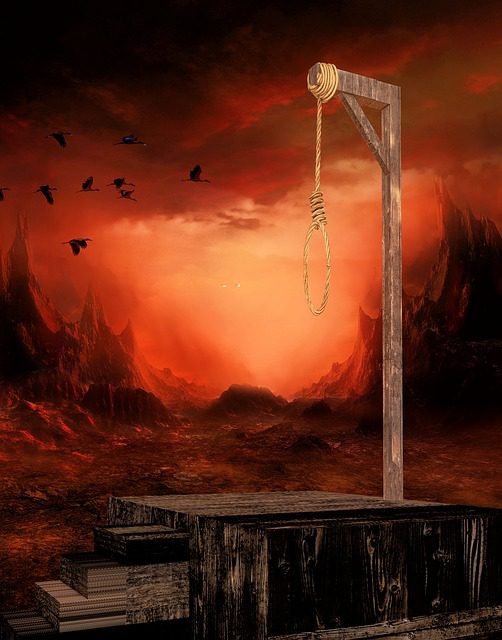
“Capital punishment is society’s final assertion that it will not forgive.” – Martin Luther King.
With the possible exception of abortion, there may not be a more controversial practice than the death penalty.
This work aims to provide an overview of the death penalty’s history, including the Biblical view of the practice. I will also review the evolution of Catholic teaching on the death penalty and conclude by suggesting that the Catholic Church’s contemporary teaching is at last consistent with its pro-life history.
History of the Death Penalty
The ancient Babylonian Code of King Hammurabi appears to have been the first legal system to codify the death penalty. This would have occurred around the Eighteenth Century B.C. The death penalty was also part of the Hittite Code and played a significant role in the justice systems of ancient Greece and Rome. The means by which the death penalty was carried out included crucifixion, drowning, beating to death, burning alive, and impalement.
About a thousand years after the death of Christ by crucifixion, hanging became the standard method. However, under the reign of Henry VIII, the means of execution became increasingly cruel. Methods such as boiling, burning at the stake, beheading, and drawing and quartering became common.
The death penalty in the United States was heavily influenced by its use in Great Britain. When European settlers came to the new world, they brought the practice of capital punishment. In 1612, Virginia Governor Sir Thomas Dale enacted the Divine, Moral and Martial Laws, which provided the death penalty for even minor offenses such as stealing grapes, killing chickens, and trading with Indians. (King, Laura Randa. Society’s Final Solution. University Press of America, 1997).
The Bible has quite a bit to say about putting people to death and, for the most part, suggests that the death penalty has a place in society. In Genesis 9:6, God commands that “Whoever sheds human blood, by humans shall their blood be shed.” Taken together with Romans 13:4, it seems that the Bible allows a government the authority to utilize the death penalty.
Yet, one can also find Biblical evidence to the contrary. The Fifth Commandment commands that “You shall not kill.” Yet, this commandment has often been translated as “You shall not murder.” The distinction is that murder is an unlawful killing. Using this interpretation, killing is licit if it is done under the color of the law.
Today, about a quarter of the world’s nations utilize the death penalty. According to a study conducted by Amnesty International, of the one hundred and ninety-five nations, some fifty-five countries retain the death penalty as part of their legal system.
Catholic Teaching on Capital Punishment
Before reviewing how Catholicism addresses the issue, it is prudent to ask whether capital punishment is even within the purview of religion. At least in the West, the basis for such an objection lies in the separation of Church and state. Since the state conducts capital punishment without the input of any religion, let alone Catholicism, it can be argued that the question of capital punishment is strictly a legal and political one.
However, if there is such a thing as objective human rights, then they must be derived from God and not the government. And since taking a life is the ultimate impingement on human rights, the question of whether the government should be carrying out the death penalty is indeed a religious one.
The Catholic Church’s view of the death penalty is a history of change. The belief that capital punishment is a power granted to the state by God was given voice by Pope Innocent I, “It must be remembered that power was granted by God, and to avenge crime the sword was permitted; he who carries out this vengeance is God’s minister (Romans 13:1–4). What motive have we for condemning a practice that all hold to be permitted by God? We uphold, therefore, what has been observed until now, in order not to alter the discipline and so that we may not appear to act contrary to God’s authority.” (See Migne, Jacques-Paul. Patrologiae Cursus Completus: Series Latina. 1845).
No lesser authorities than Saint Augustine and Thomas Aquinas also thought that natural law – as the manifestation of the mind of God – permitted the death penalty to be used by the proper authorities. (See Saint Augustine. The City of God. Xist Publishing, 2016, and Aquinas, Thomas. Summa Contra Gentiles. University of Notre Dame Press, 1975).
The Church’s teaching that the death penalty was an acceptable form of punishment remained virtually unchanged and unopposed until recently.
Using the Second Vatican Council’s stress on the dignity and value of all human life as an impetus, Pope Paul VI removed capital punishment from the Vatican’s code of laws. In addition, the Church began to speak out against the death penalty.
In 1992, the Catechism of the Catholic Church was revised to state that “If bloodless means are sufficient to defend human lives against an aggressor and to protect public order and the safety of persons, public authority should limit itself to such means, because they better correspond to the concrete conditions of the common good and are more in conformity to the dignity of the human person.”
In his 1995 encyclical, Evangelium Gaudium (The Gospel of Life), Pope John Paul II argued that the modern state has sufficient means to protect its citizens without resorting to capital punishment. In 2020, Pope Francis issued his encyclical Fratelli Tutti (On Fraternity and Social Friendship). In it, the Pope stated that “the church is firmly committed to calling for its [the death penalty] abolition worldwide.”
Despite some objections, today, the Catholic Church views the death penalty as an anachronism. The contention is that the dignity of human life is so great, and the modern nation’s capacity to protect itself sufficiently strong, that there is no longer a need for putting people to death.
Conclusion
In the preceding work, I have endeavored to provide an understanding of one of the most controversial topics in modern society. I have delineated the death penalty’s history and the Catholic Church’s stances on capital punishment.
Driven by the understanding that all life is precious, the Catholic Church’s current teaching on the subject is now consistent with its pro-life stance on topics such as abortion.
Previous Post

May 4, 2022
In The Service of God
Next Post
May 11, 2022 The Two Risings
Browse Our Archives
Select a Category Abortion Atheism Catholicism. Catholicism. God. Theophany. Christmas Eschatology Faith and Works. God. Holy Spirit Intelligent Design Jesus Christ Justice Law Politics Protestantism Religion Sabbath Salvation. Soteriology. The Bible Theology Uncategorized
Select a Month October 2026 September 2026 August 2026 July 2026 June 2026 May 2026 April 2026 March 2026 February 2026 January 2026 December 2025 November 2025 October 2025 September 2025 August 2025 July 2025 June 2025 May 2025 April 2025 March 2025 February 2025 January 2025 December 2024 November 2024 October 2024 September 2024 August 2024 July 2024 June 2024 May 2024 April 2024 March 2024 February 2024 January 2024 December 2023 November 2023 October 2023 September 2023 August 2023 July 2023 June 2023 May 2023 April 2023 March 2023 February 2023 January 2023 December 2022 November 2022 October 2022 September 2022 August 2022 July 2022 June 2022 May 2022 April 2022 March 2022 February 2022 January 2022 December 2021
Follow Us!
TAKE THE
Religious Wisdom Quiz
What fruit did Adam and Eve eat in the Garden of Eden?
Select your answer to see how you score.
Lemon Grape Banana Forbidden fruit
Related posts from Summa Catholic

The Anatomy of Divine Revelation in Catholic Thought

Beyond the Absence of Belief: The Implications of...

Reclaiming Objective Faith in an Individualistic World

Soul and Species: Catholic Theology Meets Evolution
TRENDING AT PATHEOS Catholic

Rejecting Doom: Christian Hope And Human Action
Christianity is a religion of hope. We are to have hope and...

It’s What Comes From Within Which Matters
One of the most difficult things for us to understand is why...

Why I Choose the Eucharist Over the Sermon
Choose the Eucharist, Not the Sermon What are we supposed to get...

5 Design Elements Found in Spiritually Rooted Homes
Putting Spirituality Into Home Decor Our homes are more than our living...

Credo: A Story of God Told with the...
About 10 years ago, I began to imagine a personal "Credo" that...

The Anatomy of Divine Revelation in Catholic Thought
The claim that God has made Himself known to human beings is...
view all Catholic blogs
Ad-Free & Subscriber Log-In Subscription Support
- About Us
- 2026 Calendar
- Videos
- Podcasts
- Library of World Religions
- Faith In Media Tracker
- Advertise With Us
- Write for Us
- Privacy Policy
- Terms of Service
- Do Not Sell My Data
- Contact Us
- Radiant Digital
- Manage Newsletter Subscriptions
- Unsubscribe From Notifications
- Sitemap
Copyright 2008-2026, Patheos. All rights reserved.
Subscription Support Ad-Free & Subscriber Log-In
Follow Patheos