
BuddhistCatholicContemplativeEvangelicalGeneral ChristianHinduJewishLatter-day SaintMuslimNew VisionsProgressive Christian
Beliefs
- Buddhist
- Catholic
- Contemplative
- Evangelical
- General Christian
- Hindu
- Jewish
- Latter-day Saint
- More Voices
- Muslim
- New Visions
- Pagan
- Progressive Christian
Topics
- Religion News
- Food and Religion
- Sports and Religion
- Religious Art
- Religious Music and Entertainment
- Religious Events
- History and Religion
- Style and Religion
- Politics and Religion
- Women in Religion
- Recreation Outdoors and Religion
- Business Finance and Religion
- Careers Workplace and Religion
- Education and Religion
- Family Parenting and Religion
- Health Fitness and Religion
- Home and Religion
- Relationships and Religion
- Technology and Religion
- Travel and Religion
Columnists
- Buddhist Columnists
- Business Finance and Religion Columnists
- Careers Workplace and Religion Columnists
- Catholic Columnists
- Contemplative Columnists
- Education and Religion Columnists
- Evangelists Columnists
- Family Parenting and Religion Columnists
- General Christian Columnists
- Health Fitness and Religion Columnists
- Hindu Columnists
- History and Religion Columnists
- Home and Religion Columnists
- Jewish Columnists
- More Voices Columnists
- Latter Day Columnists
- Muslim Columnists
- New Visions Columnists
- Nonreligious Columnists
- Pagan Columnists
- Politics and Religion Columnists
- Progressive Columnists
- Recreation Outdoors and Religion Columnists
- Relationships and Religion Columnists
- Religion News Columnists
- Religious Art Columnists
- Religious Events Columnists
- Religious Music and Entertainment Columnists
- Sports and Religion Columnists
- Style and Religion Columnists
- Technology and Religion Columnists
- Travel and Religion Columnists
- Women in Religion Columnists
Resource Library
- 2026 Calendar
- Library of World Religions
- The 100 Most Holy Places on Earth
- Patheos Answers
- Podcasts
- Videos
- Faith Leaders Database
- Anglican Episcopalian
- Bahai
- Baptist
- Buddhism
- Christianity
- Confucianism
- Eastern Orthodoxy
- Hinduism
- Holiness and Pentecostal
- ISKCON
- Islam
- Judaism
- Lutheran
- Methodist
- The Church of Jesus Christ of Latter-day Saints
- New Age
- Paganism
- Presbytarian and Reformed
- Protestantism
- Religion Behind the Scenes
- Roman Catholic
- Scientology
- Shia Islam
- Sikhism
- Sufism
- Sunni Islam
- Taoism
- Zen
- See all religions
Research Tools
 Ad-Free & Subscriber Log-In Subscription Support
Ad-Free & Subscriber Log-In Subscription Support
Follow Patheos 

- Trending:
- Forgiveness
- |
- Marriage
- |
- Consciousness
- |
- Death Penalty
- |
- Election
- |
- Halloween

- Home
- Catholic
- In The Service of God
In The Service of God
Last updated on: May 4, 2022 at 6:59 am by David Schloss
In The Service of God 2022-05-04T06:59:41-04:00 David Schloss
Patheos Explore the world's faith through different perspectives on religion and spirituality! Patheos has the views of the prevalent religions and spiritualities of the world.
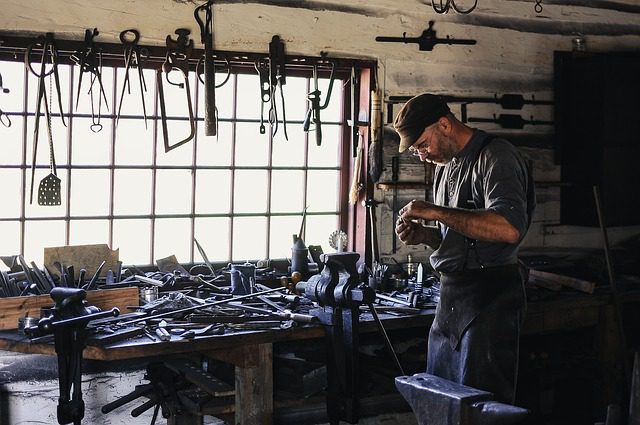
“Whatever you do, do from the heart, as for the Lord and not for others, knowing that you will receive from the Lord the due payment of the inheritance; be slaves of the Lord Christ.” – Colossians 3:23-24.
The impetus for this article is a comment that I came across a remark on social media. An atheist was asking why God needs people to do His work. While atheists rarely ask serious theological questions, I think that the question is worth pursuing, and I shall attempt to do so in this paper.
To adequately address the question, I will begin by discussing whether God has a need for anything. I will then discuss work as a product of being in God’s image. Finally, I will treat what it means to do God’s work.
The God That Doesn’t Need Us
Catholicism understands that God does not need anything from human beings. God is not one cause among many proximate causes, nor is He a being in the universe. Rather, God is the unconditioned ground of existence itself. This implies that God is a necessary being that exists eternally.
Of course, non-contingency does not extend to anything created. The universe is not only reliant upon God for its cause, but also for the means by which it is sustained in existence. (Does God Exist, Part Three). Once this is understood about God, it becomes evident that the answer to the question of why God needs us to do His work becomes clear. He doesn’t.
Having established that God needs nothing, we can proceed to discuss the place of work in relation to God and His creation.
Work and Imago Dei
For most of us, work is a necessary evil. Yet as human beings are made in the image of God, work is to be imitative of God’s creative power. To be in God’s image also means responsibility. In Genesis 1:26, God gives human beings dominion over animals. A Hebrew definition of dominion includes governance. As such, dominion should be understood as stewardship. As God cares for human beings, so too are we to care for God’s creatures.
So not only are humans to work because God has commanded it, but also because of human nature. To be sure, work provides us with the means to support ourselves and others. Yet we all are endowed with certain gifts that allow us to cooperate with God’s creation and further bring about God’s Kingdom. Work is a good thing for our humanity because, through work, human beings adapt nature to their needs while also obtaining fulfillment as human beings. (See Saint John Paul II, On Human Work [Laborem Exercens], no. 9).
Thus, to be in the image of God means that humans are to both cooperate with and be in the service of God. Moreover, human work is a further stage of God’s creative work; it is the process that completes the act of creation. God conceived the world to give human beings the power to take the act of creation one stage further toward that degree of perfection that He had in mind. Although God’s actions are perfect in themselves, it is necessary to prepare them for their own proper use if they are to be properly utilized. And here, there is room for human beings to share in further shaping God’s activity.
In a sense, work is the honor bestowed on human beings to allow them to cooperate with God.
Working for God
Thus far, having addressed the non-contingent nature of God and having described the nature of work as cooperating with God, the question arises as to whether work has a spiritual component.
If being in the image of God means that human beings have the capacity to cooperate with God, it must also mean that human beings must possess the ability to act in such a manner that makes such cooperation meaningful.
God has provided for this fact as well in that He has given each of us certain gifts which we are to use in the furtherment of other people and for the care of God’s creation. As is evident in other aspects of the spiritual life, free will determines whether we will use those talents properly. This cooperation with God and the proper use of the gifts He has given us is explained in the parable of the talents.
Matthew 25:14-30 tells the story of a master who leaves his estate to travel. He entrusts his property to workers and gives each of the workers a certain number of talents (a talent was a sum of money. The term is used equivocally to mean both money and a skill). Of course, the “master” in the parable is God, and human beings are the workers entrusted to care for His property (i.e., creation).
In the parable, when the master returns, he praises some for their work and condemns others for failing to make good use of their talents. While the parable can be interpreted along eschatological lines, it can also be interpreted to mean that God wants us to use the gifts that we have to help others and bring about God’s Kingdom.
Conclusion
I have endeavored to show that while God needs nothing from us, He has given us work as a means of cooperating with Him as creatures who have been made in His image.
Without question, the idea that work has significance for our spiritual lives is a difficult concept to accept. Yet our work does not belong to us wholly, for we are called to do our tasks for God, and the skills and strength with which we do our work are ultimately a gift from God.
It is a principle of spiritual metaphysics that what is received must be given away. The gifts we have been endowed with are to be used in God’s service. When God says to us, “Fill the earth, and subdue it” (Genesis 1:28), He is, in this way, binding us to the earth and at the same time asking us to work and cooperate with Him, so that the earth will be subject to human beings, and through human beings, to God.
Previous Post

May 1, 2022
Catholicism and The Limits of Science
Next Post
May 8, 2022 Thou Shall Not Kill
Browse Our Archives
Select a Category Abortion Atheism Catholicism. Catholicism. God. Theophany. Christmas Eschatology Faith and Works. God. Holy Spirit Intelligent Design Jesus Christ Justice Law Politics Protestantism Religion Sabbath Salvation. Soteriology. The Bible Theology Uncategorized
Select a Month October 2026 September 2026 August 2026 July 2026 June 2026 May 2026 April 2026 March 2026 February 2026 January 2026 December 2025 November 2025 October 2025 September 2025 August 2025 July 2025 June 2025 May 2025 April 2025 March 2025 February 2025 January 2025 December 2024 November 2024 October 2024 September 2024 August 2024 July 2024 June 2024 May 2024 April 2024 March 2024 February 2024 January 2024 December 2023 November 2023 October 2023 September 2023 August 2023 July 2023 June 2023 May 2023 April 2023 March 2023 February 2023 January 2023 December 2022 November 2022 October 2022 September 2022 August 2022 July 2022 June 2022 May 2022 April 2022 March 2022 February 2022 January 2022 December 2021
Follow Us!
TAKE THE
Religious Wisdom Quiz
Who was called by God to leave his home and go to a land God would show him?
Select your answer to see how you score.
Moses Abram Jacob Noah
Related posts from Summa Catholic

The Anatomy of Divine Revelation in Catholic Thought

Beyond the Absence of Belief: The Implications of...

Reclaiming Objective Faith in an Individualistic World

Soul and Species: Catholic Theology Meets Evolution
TRENDING AT PATHEOS Catholic

Rejecting Doom: Christian Hope And Human Action
Christianity is a religion of hope. We are to have hope and...

It’s What Comes From Within Which Matters
One of the most difficult things for us to understand is why...

Why I Choose the Eucharist Over the Sermon
Choose the Eucharist, Not the Sermon What are we supposed to get...

5 Design Elements Found in Spiritually Rooted Homes
Putting Spirituality Into Home Decor Our homes are more than our living...

Credo: A Story of God Told with the...
About 10 years ago, I began to imagine a personal "Credo" that...

The Anatomy of Divine Revelation in Catholic Thought
The claim that God has made Himself known to human beings is...
view all Catholic blogs
Ad-Free & Subscriber Log-In Subscription Support
- About Us
- 2026 Calendar
- Videos
- Podcasts
- Library of World Religions
- Faith In Media Tracker
- Advertise With Us
- Write for Us
- Privacy Policy
- Terms of Service
- Do Not Sell My Data
- Contact Us
- Radiant Digital
- Manage Newsletter Subscriptions
- Unsubscribe From Notifications
- Sitemap
Copyright 2008-2026, Patheos. All rights reserved.
Subscription Support Ad-Free & Subscriber Log-In
Follow Patheos