
BuddhistCatholicContemplativeEvangelicalGeneral ChristianHinduJewishLatter-day SaintMuslimNew VisionsProgressive Christian
Beliefs
- Buddhist
- Catholic
- Contemplative
- Evangelical
- General Christian
- Hindu
- Jewish
- Latter-day Saint
- More Voices
- Muslim
- New Visions
- Pagan
- Progressive Christian
Topics
- Religion News
- Food and Religion
- Sports and Religion
- Religious Art
- Religious Music and Entertainment
- Religious Events
- History and Religion
- Style and Religion
- Politics and Religion
- Women in Religion
- Recreation Outdoors and Religion
- Business Finance and Religion
- Careers Workplace and Religion
- Education and Religion
- Family Parenting and Religion
- Health Fitness and Religion
- Home and Religion
- Relationships and Religion
- Technology and Religion
- Travel and Religion
Columnists
- Buddhist Columnists
- Business Finance and Religion Columnists
- Careers Workplace and Religion Columnists
- Catholic Columnists
- Contemplative Columnists
- Education and Religion Columnists
- Evangelists Columnists
- Family Parenting and Religion Columnists
- General Christian Columnists
- Health Fitness and Religion Columnists
- Hindu Columnists
- History and Religion Columnists
- Home and Religion Columnists
- Jewish Columnists
- More Voices Columnists
- Latter Day Columnists
- Muslim Columnists
- New Visions Columnists
- Nonreligious Columnists
- Pagan Columnists
- Politics and Religion Columnists
- Progressive Columnists
- Recreation Outdoors and Religion Columnists
- Relationships and Religion Columnists
- Religion News Columnists
- Religious Art Columnists
- Religious Events Columnists
- Religious Music and Entertainment Columnists
- Sports and Religion Columnists
- Style and Religion Columnists
- Technology and Religion Columnists
- Travel and Religion Columnists
- Women in Religion Columnists
Resource Library
- 2026 Calendar
- Library of World Religions
- The 100 Most Holy Places on Earth
- Patheos Answers
- Podcasts
- Videos
- Faith Leaders Database
- Anglican Episcopalian
- Bahai
- Baptist
- Buddhism
- Christianity
- Confucianism
- Eastern Orthodoxy
- Hinduism
- Holiness and Pentecostal
- ISKCON
- Islam
- Judaism
- Lutheran
- Methodist
- The Church of Jesus Christ of Latter-day Saints
- New Age
- Paganism
- Presbytarian and Reformed
- Protestantism
- Religion Behind the Scenes
- Roman Catholic
- Scientology
- Shia Islam
- Sikhism
- Sufism
- Sunni Islam
- Taoism
- Zen
- See all religions
Research Tools
 Ad-Free & Subscriber Log-In Subscription Support
Ad-Free & Subscriber Log-In Subscription Support
Follow Patheos 

- Trending:
- Forgiveness
- |
- Marriage
- |
- Consciousness
- |
- Death Penalty
- |
- Election
- |
- Halloween

- Home
- Catholic
- The Appearances of God
The Appearances of God
Last updated on: March 30, 2022 at 8:14 am by David Schloss
The Appearances of God 2022-03-30T08:14:12-04:00 David Schloss
Patheos Explore the world's faith through different perspectives on religion and spirituality! Patheos has the views of the prevalent religions and spiritualities of the world.
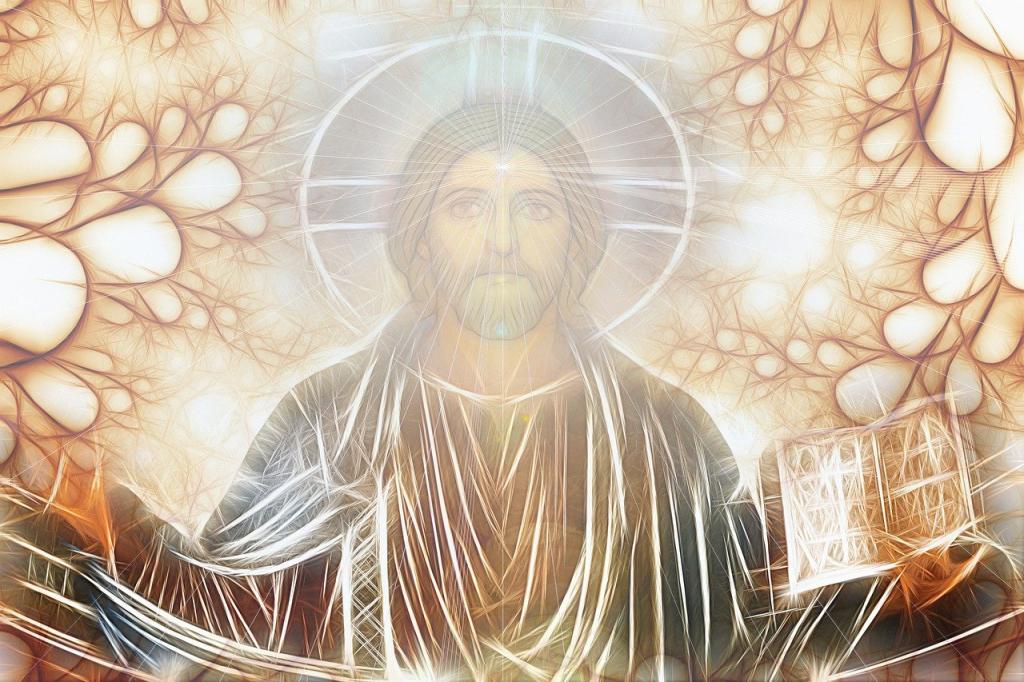
Perhaps the most dramatic and poignant verses in the Bible occur when God appears to a human being. These appearances, known as theophanies, are of great interest to theology and play a significant role in understanding Catholicism.
What follows is an introduction to this most fascinating subject. Upon defining the subject, I will explore theophany in relation to Christophany and revelation. I will examine several passages from the New and the Old Testaments that can be categorized as theophanies. Finally, I will inquire as to what purpose(s) theophanies may have.
What is a Theophany?
A combination of two Greek words, theophany means an appearance of God. Strictly speaking, theophany occurs when God appears in an observable way to human beings. Thus, theophany should not be confused with an allusion or dream, but rather theophany is a visible manifestation that communicates the character and presence of God.
Within Christianity, there is a subset of theophanies known as Christophanies. These are the appearances of Christ. As such, Christophanies are at the heart of the New Testament.
While theophany is very similar to Divine revelation, there are substantial differences. Divine revelation is itself divided into natural and supernatural revelation. Natural revelation refers to God communicating Himself by way of the created world. The Psalmist puts it this way, “The heavens declare the glory of God; the firmament [sky or heavens] proclaims the works of his hands.” (Psalm 19:2). The beauty and sophistication of the natural world speak to the power of the Divine intellect.
Supernatural revelation refers to God communicating aspects of His nature that are not assessable to human reason. An example of supernatural revelation would be the Holy Trinity. The teaching that God is three Persons in one Essence would not be known to human beings were it not for supernatural revelation.
It is now possible to distinguish between revelation and theophany if we understand revelation as any form of God communicating Himself to human beings and theophany as God physically appearing (in some form) to human beings.
Having inquired into what theophany is and how it differs from Divine revelation, I turn to theophany in Scripture.
Theophany in the Old Testament
The appearances of God in the Bible take several forms. At times, God appears in human form, and at other times, He appears in non-human form or as a force of nature. I will briefly review examples of each.
Before preceding, a brief note about biblical language. It is necessary to distinguish “an angel” from “the angel of the Lord.” An angel is a spiritual being who often acts as a messenger of God. “The angel of the Lord” is used as a synonym for God.
Perhaps the most famous manifestation of God in a non-human form (and as the angel of the Lord) occurs in the third chapter of Exodus. In this most remarkable of theophanies, God appears to Moses as a burning bush (see Exodus 3:1-14). Another well-known theophany involving Moses occurs on Mount Sinai. (See Exodus 19:1-25).
The Israelites would also encounter God in the form of a pillar of clouds during the day. At night, God appeared as a pillar of fire. This theophany would guide the Israelites during their Exodus from Egypt. Elijah, too, would encounter God in nature, in this case, a small voice (see 1 Kings 19:12).
In one appearance, God makes the startling demand of Abraham that he sacrifice his son, Isaac. Once it is evident that Abraham trusts God, the angel of the Lord appears to him as he is about to kill Isaac and commands Abraham not to go forward with the sacrifice, thus sparing Isaac (see Genesis 22:11-12).
Within the Old Testament, perhaps the most remarkable appearance of God in a human form occurs in Genesis 32:24-30. Here God is depicted as “wrestling” with Jacob. What this event is meant to imply is beyond the scope of this paper, but perhaps one interpretation is to view this event as exemplifying humanity struggling against the will of God.
While God’s appearances in the Old Testament are remarkable, the most significant theophany occurs in the New Testament.
Jesus is the Consummate Theophany
If one accepts Jesus’ claims of divinity (e.g., John 10:30; Mark 14:60-63) and the claims of others regarding His divinity, then the theophany par excellence are the depictions of Jesus in the New Testament.
There are at least two instances where it is evident that Jesus appears as God (thus fulfilling the definition of a theophany). The first instance is the Transfiguration. During the Transfiguration, Jesus’ appearance is radically changed, and He is seen conversing with two ancient figures, Moses and Elijah (see Matthew 17:1-9).
The second instance occurs after the Resurrection. In Luke 24:36-48, Jesus appears to the apostles in a locked room. It becomes clear to the apostles, and particularly to Thomas, that Jesus is indeed God.
After having reviewed a number of theophanies, a question arises. What purpose do these Divine appearances have? To that subject, I turn to next.
The Purposes of Theophanies
It is, of course, presumptuous to claim to know the mind of God. Nevertheless, it is possible to speculate why God appeared to people in these various forms.
As has been shown, God has appeared for the purpose of leading people (i.e., the Israelites), at other times to test people’s faith (think of Abraham), and at times to anoint a King, as in David (see 1 Samuel 16:4-13). Yet, the underlying principle of theophanies appears to be in relation to creating a covenant relationship between God and man. God first establishes a covenant with Abraham, which is later renewed with Moses on Mount Sinai.
Within the Catholic tradition, God’s covenant with His people Israel comes into completion in the person of Jesus Christ. For it is in Jesus that the covenants of old are fulfilled.
These covenants, too, have a purpose that can be understood within the context of the economy of salvation. Within these covenants, God establishes the relationship necessary to save humanity.
Conclusion
In the preceding work, I have endeavored to introduce an essential yet underdeveloped subject within theology, that of theophanies; the physical manifestations of God.
As I have shown, these appearances of God have taken several forms and have occurred for various purposes. However, I have suggested that theophanies should ultimately be understood as means by which God has established a covenant relationship with human beings to affect our salvation. Moreover, since God became a human being for precisely the purpose of bringing about our salvation, the incarnation of Christ may be seen as the completion and fulfillment of divine manifestation in a whole spectrum of theophanies.
Previous Post

March 27, 2022
On Happiness
Next Post
April 3, 2022 A Happy Death
Browse Our Archives
Select a Category Abortion Atheism Catholicism. Catholicism. God. Theophany. Christmas Eschatology Faith and Works. God. Holy Spirit Intelligent Design Jesus Christ Justice Law Politics Protestantism Religion Sabbath Salvation. Soteriology. The Bible Theology Uncategorized
Select a Month October 2026 September 2026 August 2026 July 2026 June 2026 May 2026 April 2026 March 2026 February 2026 January 2026 December 2025 November 2025 October 2025 September 2025 August 2025 July 2025 June 2025 May 2025 April 2025 March 2025 February 2025 January 2025 December 2024 November 2024 October 2024 September 2024 August 2024 July 2024 June 2024 May 2024 April 2024 March 2024 February 2024 January 2024 December 2023 November 2023 October 2023 September 2023 August 2023 July 2023 June 2023 May 2023 April 2023 March 2023 February 2023 January 2023 December 2022 November 2022 October 2022 September 2022 August 2022 July 2022 June 2022 May 2022 April 2022 March 2022 February 2022 January 2022 December 2021
Follow Us!
TAKE THE
Religious Wisdom Quiz
What happened to the first stone tablets of the Ten Commandments?
Select your answer to see how you score.
Moses broke them Pharaoh destroyed them They were lost in battle They were placed in the Ark
Related posts from Summa Catholic

The Anatomy of Divine Revelation in Catholic Thought

Beyond the Absence of Belief: The Implications of...

Reclaiming Objective Faith in an Individualistic World

Soul and Species: Catholic Theology Meets Evolution
TRENDING AT PATHEOS Catholic

The Parable Of The Sower And The Word...
One of Christ’s most famous parables is that of the sower who...

Rejecting Doom: Christian Hope And Human Action
Christianity is a religion of hope. We are to have hope and...

Why I Choose the Eucharist Over the Sermon
Choose the Eucharist, Not the Sermon What are we supposed to get...

5 Design Elements Found in Spiritually Rooted Homes
Putting Spirituality Into Home Decor Our homes are more than our living...

Credo: A Story of God Told with the...
About 10 years ago, I began to imagine a personal "Credo" that...

The Anatomy of Divine Revelation in Catholic Thought
The claim that God has made Himself known to human beings is...
view all Catholic blogs
Ad-Free & Subscriber Log-In Subscription Support
- About Us
- 2026 Calendar
- Videos
- Podcasts
- Library of World Religions
- Faith In Media Tracker
- Advertise With Us
- Write for Us
- Privacy Policy
- Terms of Service
- Do Not Sell My Data
- Contact Us
- Radiant Digital
- Manage Newsletter Subscriptions
- Unsubscribe From Notifications
- Sitemap
Copyright 2008-2026, Patheos. All rights reserved.
Subscription Support Ad-Free & Subscriber Log-In
Follow Patheos