
BuddhistCatholicContemplativeEvangelicalGeneral ChristianHinduJewishLatter-day SaintMuslimNew VisionsProgressive Christian
Beliefs
- Buddhist
- Catholic
- Contemplative
- Evangelical
- General Christian
- Hindu
- Jewish
- Latter-day Saint
- More Voices
- Muslim
- New Visions
- Pagan
- Progressive Christian
Topics
- Religion News
- Food and Religion
- Sports and Religion
- Religious Art
- Religious Music and Entertainment
- Religious Events
- History and Religion
- Style and Religion
- Politics and Religion
- Women in Religion
- Recreation Outdoors and Religion
- Business Finance and Religion
- Careers Workplace and Religion
- Education and Religion
- Family Parenting and Religion
- Health Fitness and Religion
- Home and Religion
- Relationships and Religion
- Technology and Religion
- Travel and Religion
Columnists
- Buddhist Columnists
- Business Finance and Religion Columnists
- Careers Workplace and Religion Columnists
- Catholic Columnists
- Contemplative Columnists
- Education and Religion Columnists
- Evangelists Columnists
- Family Parenting and Religion Columnists
- General Christian Columnists
- Health Fitness and Religion Columnists
- Hindu Columnists
- History and Religion Columnists
- Home and Religion Columnists
- Jewish Columnists
- More Voices Columnists
- Latter Day Columnists
- Muslim Columnists
- New Visions Columnists
- Nonreligious Columnists
- Pagan Columnists
- Politics and Religion Columnists
- Progressive Columnists
- Recreation Outdoors and Religion Columnists
- Relationships and Religion Columnists
- Religion News Columnists
- Religious Art Columnists
- Religious Events Columnists
- Religious Music and Entertainment Columnists
- Sports and Religion Columnists
- Style and Religion Columnists
- Technology and Religion Columnists
- Travel and Religion Columnists
- Women in Religion Columnists
Resource Library
- 2026 Calendar
- Library of World Religions
- The 100 Most Holy Places on Earth
- Patheos Answers
- Podcasts
- Videos
- Faith Leaders Database
- Anglican Episcopalian
- Bahai
- Baptist
- Buddhism
- Christianity
- Confucianism
- Eastern Orthodoxy
- Hinduism
- Holiness and Pentecostal
- ISKCON
- Islam
- Judaism
- Lutheran
- Methodist
- The Church of Jesus Christ of Latter-day Saints
- New Age
- Paganism
- Presbytarian and Reformed
- Protestantism
- Religion Behind the Scenes
- Roman Catholic
- Scientology
- Shia Islam
- Sikhism
- Sufism
- Sunni Islam
- Taoism
- Zen
- See all religions
Research Tools
 Ad-Free & Subscriber Log-In Subscription Support
Ad-Free & Subscriber Log-In Subscription Support
Follow Patheos 

- Trending:
- Forgiveness
- |
- Marriage
- |
- Consciousness
- |
- Death Penalty
- |
- Election
- |
- Halloween

- Home
- Catholic
- Lent in the Desert
Lent in the Desert
Last updated on: March 17, 2022 at 7:29 am by David Schloss
Lent in the Desert 2022-03-17T07:29:34-04:00 David Schloss
Patheos Explore the world's faith through different perspectives on religion and spirituality! Patheos has the views of the prevalent religions and spiritualities of the world.
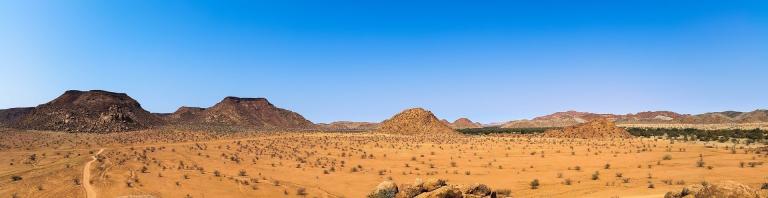
“God takes everyone he loves through a desert. It is his cure for our wandering hearts, restlessly searching for a new Eden.” – Paul E. Miller.
For most, the desert rarely conjures up images of God or Heaven. Yet the desert plays a significant role in the Bible and has provided a wealth of spiritual treasure within the Catholic tradition.
The following article will discuss how the Bible portrays the desert. I will review some of the significant passages that involve the desert and discuss what spiritual interpretations may be gleaned from the text. I will discuss the metaphorical connection between the season of Lent and the desert. Finally, I will consider the importance of the desert on the Church Fathers and in monasticism in the Catholic tradition.
A note about language; the Hebrew word “midbar” can be translated as “wilderness” or “desert.” Also used to connote the desert is the word “arabah.” For the purposes of this work, I will use wilderness and desert synonymously.
The Desert in Scripture
At various points in the Bible, the desert signifies Divine judgment, penance, purification, and preparation. It is possible to see all of these elements in the events following the Israelites’ escape from slavery in Egypt.
The exodus from Egypt depicts how Moses led the people of Israel as they wandered in the desert. God cares for the Israelites, providing for their food and water. Yet, despite this, the Israelites complain, often drawing Divine judgment. (Exodus 16:3).
God’s wrath finds its culmination in the Book of Numbers. In it, we read how the Israelites were punished for their failures to believe in the promises of God. (See Numbers 14:23 and Numbers 14:34). This punishment included wandering in the wilderness for forty years.
While it is impossible to divorce the forty years in the desert from the punishment for disbelief, the period in the wilderness should also be considered a process of penance, purification, and preparation. Indeed, this motif appears at various points in the Bible.
Perhaps nowhere else is this process of purification and preparation more on display than in the account of Jesus’ forty days in the desert.
In each of the synoptic Gospels is the story of the Temptations of Christ. After His baptism, Jesus is led into the desert by the Holy Spirit. Here He is confronted with the great temptations of this world; things of the flesh and the temptations of pride and of power. It is only after resisting these temptations in the desert that Jesus is ready to begin His ministry.
It can be seen from the Gospel accounts the significance that the desert has on spiritual life. Within the biblical worldview, time spent in the desert is time for penance, purification, and preparation. For Catholicism, these practices are foundational to the season of Lent.
Lent In The Desert – Penance, Purification, and Preparation.
In many ways, the season of Lent is meant to be the time when the Catholic follows Christ into the desert. Of course, this need not be understood literally. One can enter into a spiritual desert without ever traveling to a physical desert.
Nevertheless, during the Lenten season, Catholics are to enter into the “desert” to offer penance and cleanse themselves of worldly attachments. In doing so, one prepares to meet the resurrected Jesus in the Easter celebration.
The first effect of entering the desert, whether literal or metaphorical, is to offer penance. Penance begins with seeking forgiveness. This often entails partaking of the sacrament of reconciliation. Traditionally, penance includes fasting, praying, and giving to the poor (almsgiving).
Once accomplished, the process of purification can begin. In the austerity of the desert, those attachments that keep us from God can be slowly stripped away. Things like money, sex, and power that bind us to this world must be rooted out. Only then can one be open to hearing God. Yet to hear God, we must be silent enough to listen to that still small voice of God. (1 Kings 19:11-13). We must be willing to detach ourselves from the world and do so in silence.
For this reason, the monks of the early Church sought out the solitude and silence of the desert.
The desert and the Church Fathers/Monasticism
Sometime in the second century AD, monks began to inhabit portions of the desert in the Middle East. These monks would later become known as the “Desert Fathers.”
The desert fathers left civilization behind for several reasons. As Thomas Merton points out, the desert fathers saw civilization as a sinking ship. (Merton, Thomas. The Wisdom of the Desert. New Directions Publishing. 1970). To flee to the desert was to survive a shipwreck. Yet more critical to the desert fathers was committing themselves totally to being disciples.
To be a disciple means following Jesus, which required these men to sell their possessions and give their money to the poor. (Matthew 19:21). In so doing, the desert fathers sought most of all to experience union with God in the quiet of the desert and in the silence of their hearts. The desert environment allows for the solitude necessary to purify the soul, while silence allows one the possibility to converse with God. Additionally, the sparsity of the desert required the desert fathers to “become like children,” wholly dependent upon God.
In time, the desert fathers developed a process that would become foundational to Catholic mysticism. This process involved three steps: the Purgative, the Illuminative, and the Unitive.
During the purgative stage, monks sought to control the desires of the flesh, such as lust or the desire for possessions. This stage could take several years.
Once completed, the monks entered the illuminative stage. At this time, the monks practiced the holiness articulated in the Sermon on the Mount. This stage involved the monks teaching and caring for the poor.
The last stage developed by the desert fathers was unitive. During this stage, the monks were to grow in union with God. The unitive stage often led the monks to remove themselves entirely from human contact, living alone in the desert or wilderness. This stage was meant to allow the monk to identify with the transfigured Christ.
Conclusion
The desert, both as a physical location and as a metaphor for a kind spiritually, has played a unique role in the Bible and in Catholic theology and mysticism.
The asceticism necessary to live in such a harsh environment leads to the stripping away of anything and everything that keeps one from God. And isn’t that what Lent is all about?
Previous Post

March 9, 2022
Does God Exist? Part Five
Next Post
March 16, 2022 The Purpose of Pain
Browse Our Archives
Select a Category Abortion Atheism Catholicism. Catholicism. God. Theophany. Christmas Eschatology Faith and Works. God. Holy Spirit Intelligent Design Jesus Christ Justice Law Politics Protestantism Religion Sabbath Salvation. Soteriology. The Bible Theology Uncategorized
Select a Month October 2026 September 2026 August 2026 July 2026 June 2026 May 2026 April 2026 March 2026 February 2026 January 2026 December 2025 November 2025 October 2025 September 2025 August 2025 July 2025 June 2025 May 2025 April 2025 March 2025 February 2025 January 2025 December 2024 November 2024 October 2024 September 2024 August 2024 July 2024 June 2024 May 2024 April 2024 March 2024 February 2024 January 2024 December 2023 November 2023 October 2023 September 2023 August 2023 July 2023 June 2023 May 2023 April 2023 March 2023 February 2023 January 2023 December 2022 November 2022 October 2022 September 2022 August 2022 July 2022 June 2022 May 2022 April 2022 March 2022 February 2022 January 2022 December 2021
Follow Us!
TAKE THE
Religious Wisdom Quiz
What Christian group believes in baptism for the dead?
Select your answer to see how you score.
Pentecostals Latter-day Saints Anglicans Presbyterians
Related posts from Summa Catholic

The Anatomy of Divine Revelation in Catholic Thought

Beyond the Absence of Belief: The Implications of...

Reclaiming Objective Faith in an Individualistic World

Soul and Species: Catholic Theology Meets Evolution
TRENDING AT PATHEOS Catholic

The Parable Of The Sower And The Word...
One of Christ’s most famous parables is that of the sower who...

Rejecting Doom: Christian Hope And Human Action
Christianity is a religion of hope. We are to have hope and...

Why I Choose the Eucharist Over the Sermon
Choose the Eucharist, Not the Sermon What are we supposed to get...

5 Design Elements Found in Spiritually Rooted Homes
Putting Spirituality Into Home Decor Our homes are more than our living...

Credo: A Story of God Told with the...
About 10 years ago, I began to imagine a personal "Credo" that...

The Anatomy of Divine Revelation in Catholic Thought
The claim that God has made Himself known to human beings is...
view all Catholic blogs
Ad-Free & Subscriber Log-In Subscription Support
- About Us
- 2026 Calendar
- Videos
- Podcasts
- Library of World Religions
- Faith In Media Tracker
- Advertise With Us
- Write for Us
- Privacy Policy
- Terms of Service
- Do Not Sell My Data
- Contact Us
- Radiant Digital
- Manage Newsletter Subscriptions
- Unsubscribe From Notifications
- Sitemap
Copyright 2008-2026, Patheos. All rights reserved.
Subscription Support Ad-Free & Subscriber Log-In
Follow Patheos