
BuddhistCatholicContemplativeEvangelicalGeneral ChristianHinduJewishLatter-day SaintMuslimNew VisionsProgressive Christian
Beliefs
- Buddhist
- Catholic
- Contemplative
- Evangelical
- General Christian
- Hindu
- Jewish
- Latter-day Saint
- More Voices
- Muslim
- New Visions
- Pagan
- Progressive Christian
Topics
- Religion News
- Food and Religion
- Sports and Religion
- Religious Art
- Religious Music and Entertainment
- Religious Events
- History and Religion
- Style and Religion
- Politics and Religion
- Women in Religion
- Recreation Outdoors and Religion
- Business Finance and Religion
- Careers Workplace and Religion
- Education and Religion
- Family Parenting and Religion
- Health Fitness and Religion
- Home and Religion
- Relationships and Religion
- Technology and Religion
- Travel and Religion
Columnists
- Buddhist Columnists
- Business Finance and Religion Columnists
- Careers Workplace and Religion Columnists
- Catholic Columnists
- Contemplative Columnists
- Education and Religion Columnists
- Evangelists Columnists
- Family Parenting and Religion Columnists
- General Christian Columnists
- Health Fitness and Religion Columnists
- Hindu Columnists
- History and Religion Columnists
- Home and Religion Columnists
- Jewish Columnists
- More Voices Columnists
- Latter Day Columnists
- Muslim Columnists
- New Visions Columnists
- Nonreligious Columnists
- Pagan Columnists
- Politics and Religion Columnists
- Progressive Columnists
- Recreation Outdoors and Religion Columnists
- Relationships and Religion Columnists
- Religion News Columnists
- Religious Art Columnists
- Religious Events Columnists
- Religious Music and Entertainment Columnists
- Sports and Religion Columnists
- Style and Religion Columnists
- Technology and Religion Columnists
- Travel and Religion Columnists
- Women in Religion Columnists
Resource Library
- 2026 Calendar
- Library of World Religions
- The 100 Most Holy Places on Earth
- Patheos Answers
- Podcasts
- Videos
- Faith Leaders Database
- Anglican Episcopalian
- Bahai
- Baptist
- Buddhism
- Christianity
- Confucianism
- Eastern Orthodoxy
- Hinduism
- Holiness and Pentecostal
- ISKCON
- Islam
- Judaism
- Lutheran
- Methodist
- The Church of Jesus Christ of Latter-day Saints
- New Age
- Paganism
- Presbytarian and Reformed
- Protestantism
- Religion Behind the Scenes
- Roman Catholic
- Scientology
- Shia Islam
- Sikhism
- Sufism
- Sunni Islam
- Taoism
- Zen
- See all religions
Research Tools
 Ad-Free & Subscriber Log-In Subscription Support
Ad-Free & Subscriber Log-In Subscription Support
Follow Patheos 

- Trending:
- Forgiveness
- |
- Marriage
- |
- Consciousness
- |
- Death Penalty
- |
- Election
- |
- Halloween

- Home
- Catholic
- Does God Exist, Part Three
Does God Exist, Part Three
Last updated on: March 2, 2022 at 6:56 am by David Schloss
Does God Exist, Part Three 2022-03-02T06:56:57-05:00 David Schloss
Patheos Explore the world's faith through different perspectives on religion and spirituality! Patheos has the views of the prevalent religions and spiritualities of the world.
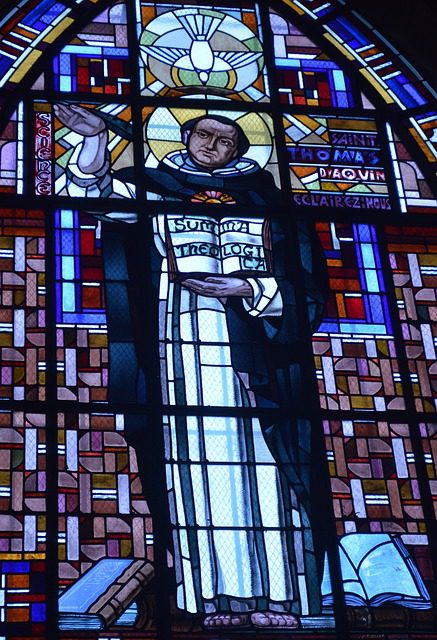
In continuing my series on Thomas Aquinas’s Five Ways for the existence of God, I now turn to Aquinas’s third way. This particular argument is a type of cosmological argument in that it is based on the contingency and necessity of the universe.
I will begin by introducing Aquinas’s third way. I will then provide the argument itself and provide an analysis of the third way. Lastly, I will discuss whether Aquinas is justified in his conclusion that God must be the first cause of the universe.
The Third Way
The third way begins by observing that everything in the universe comes into existence and passes from existence. From this, Aquinas infers that everything in the universe, and indeed, the universe itself, does not exist necessarily. Therefore, the universe requires a cause which Aquinas calls God.
Here is how Aquinas frames his third way:
“The third way is taken from possibility and necessity. We find in nature things that are possible to be and not to be, since they are found to be generated and to be corrupted, and consequently, they are possible to be and not to be. But it is impossible for these always to exist, for that which is possible not to be at some time is not. Therefore, if everything is possible not to be, then there could have been nothing in existence at one time. Now, if this were true, even now there would be nothing in existence because that which does not exist only begins to exist by something already existing.
Therefore, if nothing were in existence at one time, it would have been impossible for anything to have begun to exist; thus, even now, nothing would be in existence — which is absurd. Therefore, not all beings are merely possible, but there must exist something the existence of which is necessary. But every necessary thing either has its necessity caused by another or not. Now it is impossible to go on to infinity in necessary things which have their necessity caused by another, as has been already proved concerning efficient causes. Therefore we cannot but postulate the existence of some being having of itself its own necessity, and not receiving it from another, but rather causing in others their necessity. This all men speak of as God.” (Aquinas, Thomas. Summa Theologica Complete in a Single Volume. 2018).
Analyzing Aquinas’s Third Way
Since Aquinas’s third way is rather complex, I will try to explain each premise and conclusion in the order they appear in Aquinas’s argument.
At the heart of the third way is the conclusion that the universe is not a necessary entity. Aquinas begins by observing that things come into existence, are subject to corruption (a modern term would be entropy), and cease to exist. The fact that things come into existence and pass from existence (generation and corruption) proves that these things are contingent. Put another way, contingent beings are not the cause of their existence. As such, contingent beings do exist necessarily.
Because the universe is subject to generation and corruption, Aquinas argues that the universe does need to exist. He then states that what does not need to exist did not always exist. The reasoning is that if the universe existed necessarily, it would be eternal. However, it is evident that the universe is not eternal. Thus, it does not exist necessarily.
Moreover, if those things that do not exist of necessity did not exist at one time, they would not exist now. Of course, the universe (and everything in it) does exist now. The explanation for this aspect of the argument is that everything that comes into existence is dependent on its existence on another. As with the first and second ways, Aquinas dismisses the possibility of an infinite regress of contingent causes.
An infinite regress of contingent causes is illogical because such a regression would mean that no initial cause of contingent things exists. Without an initial cause, there would be no subsequent causes and effects. Therefore, Aquinas infers the existence of a being that exists necessarily and is the cause of existence for contingent beings. This being Aquinas calls God.
This particular argument has spawned what is known as the cosmological argument. The cosmological argument itself has taken a number of iterations, but at the core, the cosmological arguments are inferences made from causality. The arguments can be framed in this way: Whatever begins to exist requires a cause. The universe began to exist. Therefore, the universe requires a cause.
The cosmological argument is a philosophical one. As such, it does not necessarily confirm the existence of a personal God or even a God resembling the God of the Bible. Nevertheless, it provides a philosophical foundation to build on, which is what theology (owing much to Aquinas) does.
Still, one may question Aquinas’s conclusion. Even if we accept Aquinas’s argument for the need for a necessary first cause, is Aquinas justified in calling this first cause “God”?
In order to understand Aquinas’s conclusion, we must make inferences regarding the first cause of existence. A being that exists necessarily is a being that exists in pure act. That is to say, a being whose essence is to exist. A being in pure act is a being who possesses every perfection of existence, and every perfection must include existing eternally. In addition, a being who possesses every perfection of being must possess certain qualities such as omniscience, omnipotence, and omnibenevolence.
Since that which creates must have perfect knowledge of its creation, the first cause must be omniscient (have a complete understanding of what it has created). Additionally, as the first cause exists eternally, it must know everything that has existed, is existing, and will exist.
As the first cause is the ground for the universe’s existence, the first cause cannot be a being within the universe. That which does not exist within the universe cannot be bound by the laws governing the universe. Therefore, the first cause can do anything logically possible, which is the definition of omnipotence.
Finally, since evil is a privation of good and the first cause cannot lack any perfection of being (as existing in pure act), the first cause must be free of any privation. Thus, the first cause must be goodness itself (omnibenevolent).
It is these three qualities of omniscience, omnipotence, and omnibenevolence that the Bible ascribes to God.
God is omniscient in that, “Nothing in all creation is hidden from God’s sight. Everything is uncovered and laid bare before the eyes of him to whom we must give account.” God is omnipotent, for “With God all things are possible.” Finally, the Bible tells us that God is omnibenevolent, for “God is love.”
So we can see that Aquinas is biblically justified in inferring that the philosophical first cause of his third way is the God of the Bible.
Conclusion
In the preceding work, I have submitted Aquinas’s third way for the existence of God. I have provided an analysis of the argument. Finally, I have shown that Aquinas is justified in concluding that the first cause of existence as posited in his cosmological argument is the God of the Bible.
Previous Post

February 27, 2022
Does God Exist, Part Two
Next Post
March 6, 2022 Does God Exist? Part Four
Browse Our Archives
Select a Category Abortion Atheism Catholicism. Catholicism. God. Theophany. Christmas Eschatology Faith and Works. God. Holy Spirit Intelligent Design Jesus Christ Justice Law Politics Protestantism Religion Sabbath Salvation. Soteriology. The Bible Theology Uncategorized
Select a Month October 2026 September 2026 August 2026 July 2026 June 2026 May 2026 April 2026 March 2026 February 2026 January 2026 December 2025 November 2025 October 2025 September 2025 August 2025 July 2025 June 2025 May 2025 April 2025 March 2025 February 2025 January 2025 December 2024 November 2024 October 2024 September 2024 August 2024 July 2024 June 2024 May 2024 April 2024 March 2024 February 2024 January 2024 December 2023 November 2023 October 2023 September 2023 August 2023 July 2023 June 2023 May 2023 April 2023 March 2023 February 2023 January 2023 December 2022 November 2022 October 2022 September 2022 August 2022 July 2022 June 2022 May 2022 April 2022 March 2022 February 2022 January 2022 December 2021
Follow Us!
TAKE THE
Religious Wisdom Quiz
I prayed while serving wine to the king, and my sad face led to permission for my mission. Who am I?
Select your answer to see how you score.
Mordecai Ezra Daniel Nehemiah
Related posts from Summa Catholic
The Incarnation: Why Only Christ Took Human Form
The Grammar of Faith: Why Catholicism Needs Metaphysics
Balancing Rationality And Mysticism In Catholic Theology
The Pillars Of Catholic Theology
TRENDING AT PATHEOS Catholic

The Parable Of The Sower And The Word...
One of Christ’s most famous parables is that of the sower who...

Rejecting Doom: Christian Hope And Human Action
Christianity is a religion of hope. We are to have hope and...

Why I Choose the Eucharist Over the Sermon
Choose the Eucharist, Not the Sermon What are we supposed to get...

5 Design Elements Found in Spiritually Rooted Homes
Putting Spirituality Into Home Decor Our homes are more than our living...

Credo: A Story of God Told with the...
About 10 years ago, I began to imagine a personal "Credo" that...

The Anatomy of Divine Revelation in Catholic Thought
The claim that God has made Himself known to human beings is...
view all Catholic blogs
Ad-Free & Subscriber Log-In Subscription Support
- About Us
- 2026 Calendar
- Videos
- Podcasts
- Library of World Religions
- Faith In Media Tracker
- Advertise With Us
- Write for Us
- Privacy Policy
- Terms of Service
- Do Not Sell My Data
- Contact Us
- Radiant Digital
- Manage Newsletter Subscriptions
- Unsubscribe From Notifications
- Sitemap
Copyright 2008-2026, Patheos. All rights reserved.
Subscription Support Ad-Free & Subscriber Log-In
Follow Patheos