
BuddhistCatholicContemplativeEvangelicalGeneral ChristianHinduJewishLatter-day SaintMuslimNew VisionsProgressive Christian
Beliefs
- Buddhist
- Catholic
- Contemplative
- Evangelical
- General Christian
- Hindu
- Jewish
- Latter-day Saint
- More Voices
- Muslim
- New Visions
- Pagan
- Progressive Christian
Topics
- Religion News
- Food and Religion
- Sports and Religion
- Religious Art
- Religious Music and Entertainment
- Religious Events
- History and Religion
- Style and Religion
- Politics and Religion
- Women in Religion
- Recreation Outdoors and Religion
- Business Finance and Religion
- Careers Workplace and Religion
- Education and Religion
- Family Parenting and Religion
- Health Fitness and Religion
- Home and Religion
- Relationships and Religion
- Technology and Religion
- Travel and Religion
Columnists
- Buddhist Columnists
- Business Finance and Religion Columnists
- Careers Workplace and Religion Columnists
- Catholic Columnists
- Contemplative Columnists
- Education and Religion Columnists
- Evangelists Columnists
- Family Parenting and Religion Columnists
- General Christian Columnists
- Health Fitness and Religion Columnists
- Hindu Columnists
- History and Religion Columnists
- Home and Religion Columnists
- Jewish Columnists
- More Voices Columnists
- Latter Day Columnists
- Muslim Columnists
- New Visions Columnists
- Nonreligious Columnists
- Pagan Columnists
- Politics and Religion Columnists
- Progressive Columnists
- Recreation Outdoors and Religion Columnists
- Relationships and Religion Columnists
- Religion News Columnists
- Religious Art Columnists
- Religious Events Columnists
- Religious Music and Entertainment Columnists
- Sports and Religion Columnists
- Style and Religion Columnists
- Technology and Religion Columnists
- Travel and Religion Columnists
- Women in Religion Columnists
Resource Library
- 2026 Calendar
- Library of World Religions
- The 100 Most Holy Places on Earth
- Patheos Answers
- Podcasts
- Videos
- Faith Leaders Database
- Anglican Episcopalian
- Bahai
- Baptist
- Buddhism
- Christianity
- Confucianism
- Eastern Orthodoxy
- Hinduism
- Holiness and Pentecostal
- ISKCON
- Islam
- Judaism
- Lutheran
- Methodist
- The Church of Jesus Christ of Latter-day Saints
- New Age
- Paganism
- Presbytarian and Reformed
- Protestantism
- Religion Behind the Scenes
- Roman Catholic
- Scientology
- Shia Islam
- Sikhism
- Sufism
- Sunni Islam
- Taoism
- Zen
- See all religions
Research Tools
 Ad-Free & Subscriber Log-In Subscription Support
Ad-Free & Subscriber Log-In Subscription Support
Follow Patheos 

- Trending:
- Forgiveness
- |
- Marriage
- |
- Consciousness
- |
- Death Penalty
- |
- Election
- |
- Halloween

- Home
- Catholic
- Is It Possible To Be Holy?
Is It Possible To Be Holy?
Last updated on: February 16, 2022 at 6:53 am by David Schloss
Is It Possible To Be Holy? 2022-02-16T06:53:39-05:00 David Schloss
Patheos Explore the world's faith through different perspectives on religion and spirituality! Patheos has the views of the prevalent religions and spiritualities of the world.
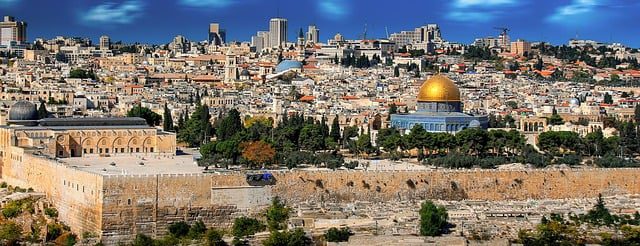
“I have no faith in human perfectibility. I think that human exertion will have no appreciable effect upon humanity. Man is now only more active – not more happy – nor more wise, than he was 6000 years ago.” – Edgar Allan Poe
Perhaps one of the most intriguing and challenging sayings of Christ is His commandment to be perfect. (Matthew 5:48). As Catholics, we are to follow Christ, but is it possible for human beings to be perfect?
This paper will proffer an interpretation and explanation of Matthew 5:48. I will define holiness and develop three subsets of holiness. I will then treat the subject of sanctification and show why becoming holy is a process. Finally, I will conclude by providing two examples of holiness in the Catholic tradition.
Be Perfect
In the fifth chapter of Matthew, Christ seems to command the impossible. “Be perfect, therefore, as your Heavenly Father is perfect.”
To understand the meaning of “be perfect,” it is necessary to realize that much of the New Testament comes to English from Greek. The Greek word for perfect is teleios. Teleios refers to the end for which something is created. It is the reason that a thing is created or completed. For example, an acorn seed’s teleios is to become an oak tree, and the purpose of a chair is to provide a person with a place to sit.
Understood this way, Matthew 5:48 refers to a person’s purpose or fulfillment. This purpose entails the perfecting of one’s nature. Moreover, since human beings are made for God, we can only be perfected when we are as God intended us to be. Since God intends us to be holy (1 Thessalonians 4:7), it follows from this that Matthew 5:48 should be interpreted as an appeal to perfect our nature by being holy.
Holiness
Holiness is the pinnacle of Catholic life. It consists in imitating Christ and the virtues He lived and taught during his life on earth. As Saint Josemaria states, holiness is being an alter Christus, ipse Christus (other Christ, Christ himself). Whether a Catholic is single, married, young, or old; all are called to be holy.
Within this definition of holiness, it is possible to identify three subsets; moral, ritual, and ontological.
Moral holiness is, “A state of goodness in which a person – with the help of God’s grace, the action of the Holy Spirit, and a life of prayer–is freed from sin and evil.” This type of holiness involves how a person lives their lives and how they treat others.
Ritual holiness refers to how people, things, or places are consecrated to God. For example, the consecration of a church involves anointing the altar with chrism and includes a sacerdotal (priestly) blessing.
Ontological holiness is a being whose very existence is holy. This refers to God alone. To the extent that a person participates in the life of God, he is considered holy. To participate in the life of God requires one to adhere to the teachings of the Church, which is the mystical body of Christ.
Holiness itself is composed of two different elements; sanctification and separation. And though both are necessary for holiness to exist, it is helpful to treat each aspect separately.
Sanctification and Becoming Holy
Sanctification is the process whereby one becomes pure and devoid of sin. This is understood as a lifelong process whereby one grows in and becomes holy.
Catholic theology asserts that sanctification begins to occur when the love of God infuses a person. (Romans 5:5). This process begins at baptism, where one is cleansed of sin and made pleasing to God.
Throughout a person’s life, he is to grow in holiness by partaking in the sacraments. Yet the growth of holiness is manifested when the person obeys the commandments of the new law. “Love the Lord your God with all your heart and with all your soul and with all your mind and with all your strength. And Love your neighbor as yourself.”
Still, it is impossible to be sanctified in one’s earthly life. It is only upon entry into Heaven that one is said to be truly sanctified.
The second element of holiness entails separation. To be holy is to be unique, to be set apart from what is ordinary, imperfect, or wicked. (1 John 2:15-16). Often, this type of holiness exists in those who have consecrated themselves to God. Consecration of this kind would include priests by their ordination, religious by their vows, and sacred places, vessels, and vestments by the blessing they receive.
While holiness is reliant on the grace of God, it also requires one to cooperate with that grace by living appropriately. Of great benefit then in becoming holy is to imitate those who have typified holiness. It is to those models of purity and righteousness that I discuss next.
Models of Holiness
As in all things in theology, there is a danger of seeing holiness as an abstraction. Since human beings are meant for holiness, viewing holiness as an abstraction is particularly harmful.
Fortunately, the Catholic tradition has seen many individuals who provide us with real-world models of what holiness looks like and how it can be achieved. To be sure, an exhaustive treatment of individuals who have exhibited holiness is beyond the scope of this work. Nevertheless, I will discuss two; one from the early Church and one from the “modern” era.
Saint Anthony of the great was born in Egypt around 254AD. Despite being born into a wealthy family, Anthony decided to follow Christ by giving his wealth to the poor and living in the harsh conditions of the Egyptian desert. Saint Anthony overcame the temptations of lust, boredom, and laziness solely by prayer.
In his charity and commitment to prayer, Saint Anthony exemplifies the ascetic holiness and reminds Catholics that we are “to be in the world, but not of the world.” (John 17:11).
Unlike Saint Anthony, Francesco Forgione, more commonly known as Padre Pio, was not a man of means. Born in 1887 to farmers, he suffered from numerous health issues throughout his life. Despite these challenges, a five-year-old Francesco Forgione decided to give his life to God. (Bernard Ruffin [1991], Padre Pio: The True Story).
While made famous by his stigmata (exhibiting wounds suffered by Christ on the Cross), his contributions to spiritual growth are significant. Padre Pio’s five rules of spiritual growth; weekly confession, daily Communion, spiritual reading, meditation, and examination of conscience remain a model for Catholic holiness.
Conclusion
In the preceding work, I have sought to define holiness within the context of Matthew 5:48. I have explained sanctification and shown it to be a life-long process. Finally, I have drawn on the lives of Saints Anthony and Padre Pio to provide examples of holiness.
Previous Post

February 13, 2022
The Problem of Predestination
Next Post
February 20, 2022 The Senses of Scripture
Browse Our Archives
Select a Category Abortion Atheism Catholicism. Catholicism. God. Theophany. Christmas Eschatology Faith and Works. God. Holy Spirit Intelligent Design Jesus Christ Justice Law Politics Protestantism Religion Sabbath Salvation. Soteriology. The Bible Theology Uncategorized
Select a Month October 2026 September 2026 August 2026 July 2026 June 2026 May 2026 April 2026 March 2026 February 2026 January 2026 December 2025 November 2025 October 2025 September 2025 August 2025 July 2025 June 2025 May 2025 April 2025 March 2025 February 2025 January 2025 December 2024 November 2024 October 2024 September 2024 August 2024 July 2024 June 2024 May 2024 April 2024 March 2024 February 2024 January 2024 December 2023 November 2023 October 2023 September 2023 August 2023 July 2023 June 2023 May 2023 April 2023 March 2023 February 2023 January 2023 December 2022 November 2022 October 2022 September 2022 August 2022 July 2022 June 2022 May 2022 April 2022 March 2022 February 2022 January 2022 December 2021
Follow Us!
TAKE THE
Religious Wisdom Quiz
How many days between resurrection and Pentecost?
Select your answer to see how you score.
40 days 30 days 50 days 60 days
Related posts from Summa Catholic

The Anatomy of Divine Revelation in Catholic Thought

Beyond the Absence of Belief: The Implications of...

Reclaiming Objective Faith in an Individualistic World

Soul and Species: Catholic Theology Meets Evolution
TRENDING AT PATHEOS Catholic

Creation, Preservation, and Teleology in Catholic Theology
As I write this, it is very early Monday morning. Like millions...

The Parable Of The Sower And The Word...
One of Christ’s most famous parables is that of the sower who...

Rejecting Doom: Christian Hope And Human Action
Christianity is a religion of hope. We are to have hope and...

Why I Choose the Eucharist Over the Sermon
Choose the Eucharist, Not the Sermon What are we supposed to get...

5 Design Elements Found in Spiritually Rooted Homes
Putting Spirituality Into Home Decor Our homes are more than our living...

Credo: A Story of God Told with the...
About 10 years ago, I began to imagine a personal "Credo" that...
view all Catholic blogs
Ad-Free & Subscriber Log-In Subscription Support
- About Us
- 2026 Calendar
- Videos
- Podcasts
- Library of World Religions
- Faith In Media Tracker
- Advertise With Us
- Write for Us
- Privacy Policy
- Terms of Service
- Do Not Sell My Data
- Contact Us
- Radiant Digital
- Manage Newsletter Subscriptions
- Unsubscribe From Notifications
- Sitemap
Copyright 2008-2026, Patheos. All rights reserved.
Subscription Support Ad-Free & Subscriber Log-In
Follow Patheos