
BuddhistCatholicContemplativeEvangelicalGeneral ChristianHinduJewishLatter-day SaintMuslimNew VisionsProgressive Christian
Beliefs
- Buddhist
- Catholic
- Contemplative
- Evangelical
- General Christian
- Hindu
- Jewish
- Latter-day Saint
- More Voices
- Muslim
- New Visions
- Pagan
- Progressive Christian
Topics
- Religion News
- Food and Religion
- Sports and Religion
- Religious Art
- Religious Music and Entertainment
- Religious Events
- History and Religion
- Style and Religion
- Politics and Religion
- Women in Religion
- Recreation Outdoors and Religion
- Business Finance and Religion
- Careers Workplace and Religion
- Education and Religion
- Family Parenting and Religion
- Health Fitness and Religion
- Home and Religion
- Relationships and Religion
- Technology and Religion
- Travel and Religion
Columnists
- Buddhist Columnists
- Business Finance and Religion Columnists
- Careers Workplace and Religion Columnists
- Catholic Columnists
- Contemplative Columnists
- Education and Religion Columnists
- Evangelists Columnists
- Family Parenting and Religion Columnists
- General Christian Columnists
- Health Fitness and Religion Columnists
- Hindu Columnists
- History and Religion Columnists
- Home and Religion Columnists
- Jewish Columnists
- More Voices Columnists
- Latter Day Columnists
- Muslim Columnists
- New Visions Columnists
- Nonreligious Columnists
- Pagan Columnists
- Politics and Religion Columnists
- Progressive Columnists
- Recreation Outdoors and Religion Columnists
- Relationships and Religion Columnists
- Religion News Columnists
- Religious Art Columnists
- Religious Events Columnists
- Religious Music and Entertainment Columnists
- Sports and Religion Columnists
- Style and Religion Columnists
- Technology and Religion Columnists
- Travel and Religion Columnists
- Women in Religion Columnists
Resource Library
- 2026 Calendar
- Library of World Religions
- The 100 Most Holy Places on Earth
- Patheos Answers
- Podcasts
- Videos
- Faith Leaders Database
- Anglican Episcopalian
- Bahai
- Baptist
- Buddhism
- Christianity
- Confucianism
- Eastern Orthodoxy
- Hinduism
- Holiness and Pentecostal
- ISKCON
- Islam
- Judaism
- Lutheran
- Methodist
- The Church of Jesus Christ of Latter-day Saints
- New Age
- Paganism
- Presbytarian and Reformed
- Protestantism
- Religion Behind the Scenes
- Roman Catholic
- Scientology
- Shia Islam
- Sikhism
- Sufism
- Sunni Islam
- Taoism
- Zen
- See all religions
Research Tools
 Ad-Free & Subscriber Log-In Subscription Support
Ad-Free & Subscriber Log-In Subscription Support
Follow Patheos 

- Trending:
- Forgiveness
- |
- Marriage
- |
- Consciousness
- |
- Death Penalty
- |
- Election
- |
- Halloween

- Home
- Catholic
- A broken world
A broken world
Last updated on: January 10, 2022 at 7:10 am by David Schloss
A broken world 2022-01-10T07:10:17-05:00 David Schloss
Patheos Explore the world's faith through different perspectives on religion and spirituality! Patheos has the views of the prevalent religions and spiritualities of the world.
“If only there were evil people somewhere insidiously committing evil deeds, and it were necessary only to separate them from the rest of us and destroy them. But the line dividing good and evil cuts through the heart of every human being. And who is willing to destroy a piece of his own heart?” – Aleksandr Solzhenitsyn, The Gulag Archipelago.
Perhaps no other question in theology is more troubling than the problem of evil. The question may be formulated in one of two ways, depending on one’s belief system. In the first way, “If God exists, why is there suffering?”. In the second way, “If God is all good and all-knowing, why is there so much suffering in the world?”.
In this exposition, I hope to provide an overview of theodicy. I will define the two kinds of evil and ask whether evil exists. Finally, I will review how the Bible and Catholicism understand sin and evil.
What is theodicy?
The word comes from the Greek, “theos” meaning God, and “dikē” translated as justice.
Frequently, theodicy refers to the apparent contradiction between the existence of an all-good God and a world beset by evil. However, within theology, theodicy is an effort to defend or justify the existence of a good God in the presence of an evil world. In this sense, it is an apologia or defense of God in the face of a fallen world.
Evil does not exist
What does it mean for someone or something to be evil? Following Catholic philosophy, evil is a privation of the good that ought to be. As an example, illness is a lack of health, envy a lack of gratitude. Understood this way, evil does not exist as a subsistent being or entity. (See Thomas Aquinas’ Summa Theologica, First Part, Question Forty-nine).
Having defined evil as a privation of good, we can categorize evil into two categories. The first being moral evil and the second being natural or physical evil.
Moral evil
Moral evil is much better known as sin. Sin is “An offense against reason, truth, and right conscience; it is a failure in genuine love for God and neighbor caused by a perverse attachment to certain goods. It wounds the nature of man and injures human solidarity.” More succinctly, sin is “an utterance, a deed, or a desire contrary to the eternal law.” (Catholic Church. Catechism of the Catholic Church, Article 8, Section 1849).
Since the eternal law is the mind of God (Thomas Aquinas’ Summa Theologica, First part of the second part, Question 93), sin is an act against the will of God.
Free will
The capacity to sin is born of man’s free will. To be in the image of God (Genesis 1:27) is, among other things, to possess free will. Free will, in turn, is, “The power, rooted in reason and will, to act or not to act, to do this or that, and so to perform deliberate actions on one’s own responsibility.” (Catholic Church. Catechism of the Catholic Church, Section 1, Chapter 1, Article 3).
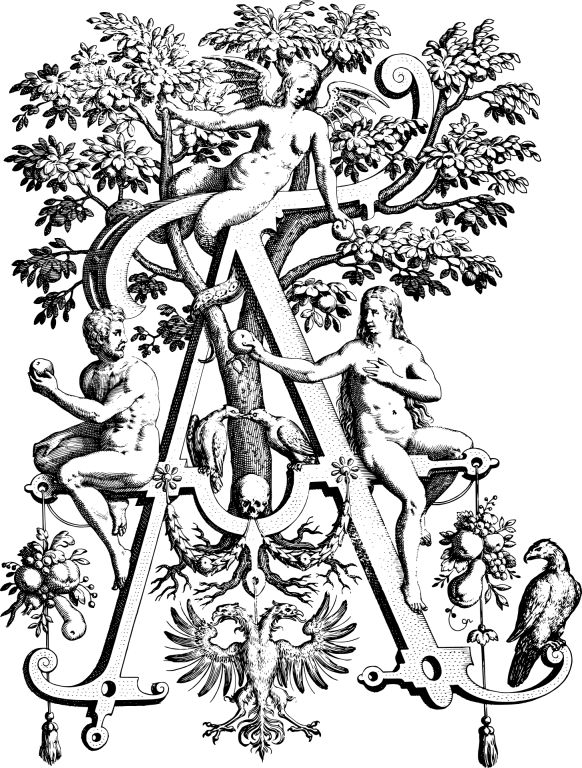
Since free will gives man the capacity to act independently, man is capable of violating the will of God. Indeed, this is what occurs in the Garden of Eden; an act against the will of God is what gave rise to original sin.
The belief that free will leads to the capacity for sin begs the question, why would God create beings that could act against Him? The answer seems to be that to be made in the image of God (as all creatures are to varying degrees) is to possess the capacity for free will. Put another way; God values freedom even if that freedom means we act against Him.
Still, if moral evil comes from man’s free will, why does man choose evil?
Now it must be that all things seek the good. However, since man’s intellect is fallible and finite (and damaged by original sin), man often errors by thinking something good when it is evil. This error usually involves passion or selfishness. Often too, we mistake a means for an end. Too quickly, we equate sex with love or money with happiness. Both are good, but only when placed within the proper context.
So much then for moral sin. I turn next to a more complicated form of evil, natural evil.
A broken world
From the perspective of theology, natural evil is even more vexing than moral evil. Natural evil encompasses such diverse events as earthquakes and disease.
While moral evil is the result of choice, natural evil is beyond the control of human beings. Indeed, one cannot attribute natural disasters and disease to sin. Or can we?
The Bible tells us that God created everything, and it was good (Genesis 1:18). Moreover, God made a universe that operates in accord with natural processes. The same wind that aids ocean currents and allows plants to spread their seeds is the same wind that causes a tree to fall on a house.
A universe of natural processes allows for free will and for intelligibility. If the universe did not operate according to natural processes, it would mean that there would be no discernable cause and effect. The universe we inhabit would be entirely random, and a random universe would make science impossible.
So far, so good. Yet we are left with another question. Why would an all-good, all-knowing God create a “good” universe capable of causing natural disasters?
All of creation groans
Original sin is often understood to affect human beings and their relationship to God. While this is undoubtedly part of original sin, it does not tell the whole story.
The Bible provides the rest of the story. In Genesis 3:17, we read that an effect of original sin was a “curse on the ground.” Ground in this sense may be interpreted as the earth or even all of creation.
This understanding that original sin has damaged the universe is given voice by Saint Paul, “We know that the whole creation has been groaning as in the pains of childbirth right up to the present time.” (Romans 8:22).
Drawing upon the biblical view that original sin has distorted God’s creation, we may infer that even such things as earthquakes and cancer result from humanity’s disobedience to God. In a world damaged by sin, nature itself has become corrupted.
In this article, I have endeavored to provide an overview of one of the most challenging subjects in theology and philosophy. We have seen that evil is a privation of the good that God intended. I have also suggested that this lack of good results from man’s original sin, a catastrophic event that has damaged man’s nature and corrupted the universe that he inhabits.
Nevertheless, we must not be without hope. God is light (1 John 1:5), and we look forward to a time when God, “Will wipe away every tear from our eyes, and death shall be no more, neither shall there be mourning, nor crying, nor pain anymore.”
Previous Post

January 6, 2022
The mystery of God.
Next Post
January 13, 2022 On the Souls of Animals, Part One
Browse Our Archives
Select a Category Abortion Atheism Catholicism. Catholicism. God. Theophany. Christmas Eschatology Faith and Works. God. Holy Spirit Intelligent Design Jesus Christ Justice Law Politics Protestantism Religion Sabbath Salvation. Soteriology. The Bible Theology Uncategorized
Select a Month October 2026 September 2026 August 2026 July 2026 June 2026 May 2026 April 2026 March 2026 February 2026 January 2026 December 2025 November 2025 October 2025 September 2025 August 2025 July 2025 June 2025 May 2025 April 2025 March 2025 February 2025 January 2025 December 2024 November 2024 October 2024 September 2024 August 2024 July 2024 June 2024 May 2024 April 2024 March 2024 February 2024 January 2024 December 2023 November 2023 October 2023 September 2023 August 2023 July 2023 June 2023 May 2023 April 2023 March 2023 February 2023 January 2023 December 2022 November 2022 October 2022 September 2022 August 2022 July 2022 June 2022 May 2022 April 2022 March 2022 February 2022 January 2022 December 2021
Follow Us!
TAKE THE
Religious Wisdom Quiz
Who carried Jesus' cross after He could no longer?
Select your answer to see how you score.
Peter Pilate Simon of Cyrene John
Related posts from Summa Catholic

The Anatomy of Divine Revelation in Catholic Thought

Beyond the Absence of Belief: The Implications of...

Reclaiming Objective Faith in an Individualistic World

Soul and Species: Catholic Theology Meets Evolution
TRENDING AT PATHEOS Catholic

The Parable Of The Sower And The Word...
One of Christ’s most famous parables is that of the sower who...

Rejecting Doom: Christian Hope And Human Action
Christianity is a religion of hope. We are to have hope and...

Why I Choose the Eucharist Over the Sermon
Choose the Eucharist, Not the Sermon What are we supposed to get...

5 Design Elements Found in Spiritually Rooted Homes
Putting Spirituality Into Home Decor Our homes are more than our living...

Credo: A Story of God Told with the...
About 10 years ago, I began to imagine a personal "Credo" that...

The Anatomy of Divine Revelation in Catholic Thought
The claim that God has made Himself known to human beings is...
view all Catholic blogs
Ad-Free & Subscriber Log-In Subscription Support
- About Us
- 2026 Calendar
- Videos
- Podcasts
- Library of World Religions
- Faith In Media Tracker
- Advertise With Us
- Write for Us
- Privacy Policy
- Terms of Service
- Do Not Sell My Data
- Contact Us
- Radiant Digital
- Manage Newsletter Subscriptions
- Unsubscribe From Notifications
- Sitemap
Copyright 2008-2026, Patheos. All rights reserved.
Subscription Support Ad-Free & Subscriber Log-In
Follow Patheos