
BuddhistCatholicContemplativeEvangelicalGeneral ChristianHinduJewishLatter-day SaintMuslimNew VisionsProgressive Christian
Beliefs
- Buddhist
- Catholic
- Contemplative
- Evangelical
- General Christian
- Hindu
- Jewish
- Latter-day Saint
- More Voices
- Muslim
- New Visions
- Pagan
- Progressive Christian
Topics
- Religion News
- Food and Religion
- Sports and Religion
- Religious Art
- Religious Music and Entertainment
- Religious Events
- History and Religion
- Style and Religion
- Politics and Religion
- Women in Religion
- Recreation Outdoors and Religion
- Business Finance and Religion
- Careers Workplace and Religion
- Education and Religion
- Family Parenting and Religion
- Health Fitness and Religion
- Home and Religion
- Relationships and Religion
- Technology and Religion
- Travel and Religion
Columnists
- Buddhist Columnists
- Business Finance and Religion Columnists
- Careers Workplace and Religion Columnists
- Catholic Columnists
- Contemplative Columnists
- Education and Religion Columnists
- Evangelists Columnists
- Family Parenting and Religion Columnists
- General Christian Columnists
- Health Fitness and Religion Columnists
- Hindu Columnists
- History and Religion Columnists
- Home and Religion Columnists
- Jewish Columnists
- More Voices Columnists
- Latter Day Columnists
- Muslim Columnists
- New Visions Columnists
- Nonreligious Columnists
- Pagan Columnists
- Politics and Religion Columnists
- Progressive Columnists
- Recreation Outdoors and Religion Columnists
- Relationships and Religion Columnists
- Religion News Columnists
- Religious Art Columnists
- Religious Events Columnists
- Religious Music and Entertainment Columnists
- Sports and Religion Columnists
- Style and Religion Columnists
- Technology and Religion Columnists
- Travel and Religion Columnists
- Women in Religion Columnists
Resource Library
- 2026 Calendar
- Library of World Religions
- The 100 Most Holy Places on Earth
- Patheos Answers
- Podcasts
- Videos
- Faith Leaders Database
- Anglican Episcopalian
- Bahai
- Baptist
- Buddhism
- Christianity
- Confucianism
- Eastern Orthodoxy
- Hinduism
- Holiness and Pentecostal
- ISKCON
- Islam
- Judaism
- Lutheran
- Methodist
- The Church of Jesus Christ of Latter-day Saints
- New Age
- Paganism
- Presbytarian and Reformed
- Protestantism
- Religion Behind the Scenes
- Roman Catholic
- Scientology
- Shia Islam
- Sikhism
- Sufism
- Sunni Islam
- Taoism
- Zen
- See all religions
Research Tools
 Ad-Free & Subscriber Log-In Subscription Support
Ad-Free & Subscriber Log-In Subscription Support
Follow Patheos 

- Trending:
- Forgiveness
- |
- Marriage
- |
- Consciousness
- |
- Death Penalty
- |
- Election
- |
- Halloween

- Home
- Catholic
- The Divine Doctor
The Divine Doctor
Last updated on: December 29, 2021 at 10:55 am by David Schloss
The Divine Doctor 2021-12-29T10:55:55-05:00 David Schloss
Patheos Explore the world's faith through different perspectives on religion and spirituality! Patheos has the views of the prevalent religions and spiritualities of the world.
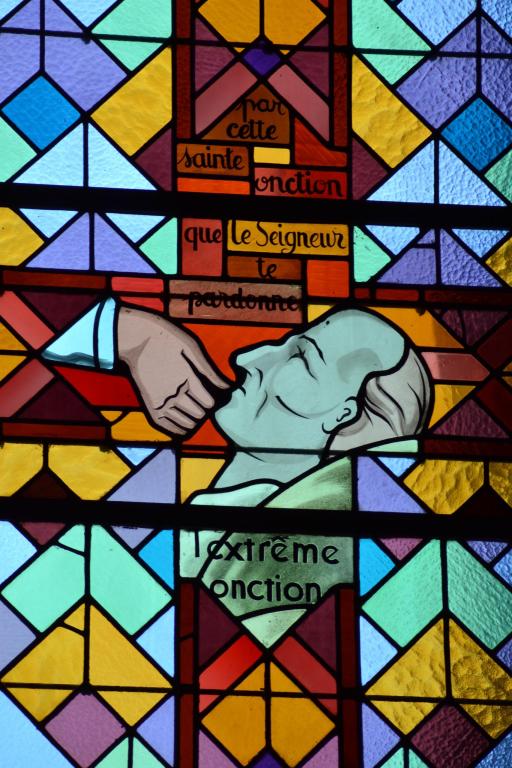
“Pain and suffering have come into your life, but remember pain, sorrow, and suffering are but the kiss of Jesus – a sign that you have come so close to Him that He can kiss you.” – Mother Teresa.
Perhaps the most remarkable events depicted in the Gospel are those of miraculous healing. Scripture is replete with occasions of Jesus healing the sick and the dying and even raising the dead. While it is convenient to focus on the physical aspect of healing, in the exposition that follows, I would like to discuss how anointing the sick heals what ails the soul.
Is anyone among you sick?
The purpose of sacraments, among other things, is the ordering and building up of the Body of Christ as well as for the sanctification of all people. (See Sacrosanctum Concilium 59). This is true of the sacrament of Anointing the Sick as well. This point is made in Exodus 30:29, “You shall consecrate them, so that they may be most holy; whatever touches them will become holy.” (https://bible.usccb.org/bible/exodus/30)
The principal purpose of the sacrament is to heal the soul by conferring or increasing the sanctifying Grace of God. Sanctification takes on even greater importance if one is ill or in danger of death. It is because of this, that the sacrament of Anointing the Sick exists.
Is Extreme Unction the same as the Anointing of the Sick?
It is significant to distinguish between Extreme Unction and Anointing of the Sick. Extreme unction comes from two Latin words, extremis, which is translated as “at the point of death” and unction, which means “to anoint”.
Extreme Unction or last rites is that part of the sacrament that concerns itself with the sanctification of those near death. This would include viaticum or the final reception of Holy Communion. If the individual has indicated an interest in becoming a Catholic but has not yet been baptized, the last rites will also include Baptism and Confirmation. After this, the individual may participate in Confession before finally receiving the Eucharist.
The ultimate purpose of extreme unction is to give health and strength to the soul, and sometimes to the body when we are in danger of death.
While the Anointing of the Sick is inclusive of Extreme Unction, it can also be performed for any individual who is suffering from a chronic illness. Often, the Anointing of the Sick does not include Holy Communion.
The process of the sacrament
The sacrament of anointing the sick is divided into three parts: the prayer of faith, the laying on of hands, and the anointing with oil.
While a priest usually conducts the sacrament, the Catholic Church allows a deacon or even a layperson to perform the sacrament, so long as the celebrant follows the rites and prayers designated for a lay minister. While maintaining the structure and chief elements of the rite, the minister should adapt the celebration to the circumstances of the place and the people involved. (Order for the Blessing of the Sick).
The sacraments are physical and outward manifestations of God’s Grace (See Saint Augustine’s Homily on Common Prayer and Sacraments, pp. 298-300; http://anglicanhistory.org/tracts/tract90/section7.html). The sacrament takes into account that humans are composite beings; composed of body and soul. Therefore, the physical acts of praying, laying on of hands, and anointing the body with oil are meant to be visible signs of God’s Grace.
Prayer
The prayer of faith is usually predicated on James 5:14-15, “Is anyone among you sick? Let them call the elders of the church to pray over them and anoint them with oil in the name of the Lord. And the prayer offered in faith will make the sick person well; the Lord will raise them up. If they have sinned, they will be forgiven.” (https://bible.usccb.org/bible/james/5).
As is the case with prayer in general, the purpose is to unite the will of the individual with the will of God.
Laying on of hands
The second part of the sacrament involves the laying on of hands. This practice has a diverse history in scripture. In the Old Testament, the laying on of hands infers blessings, sacrifices, and the transmission of authority on the recipient. This includes the ordination of Rabbis, which is called “semikhah*“,* a Hebrew word meaning “laying on the hands.”
In the New Testament, the practice is often associated with the reception of the Holy Spirit (e.g., https://bible.usccb.org/bible/acts/19). However, in Luke 4:40, the laying on of hands is used by Christ to heal. This motif is seen again in Matthew 9:18, where it is requested that Jesus lay His hands on a woman who had just died (https://bible.usccb.org/bible/matthew/9).
While the phrase “laying on of hands” occasionally takes a negative connotation in the New Testament (see Luke 20:19; 21:12; 22:53), with Jesus, we see the practice take on a positive use as well when Jesus lays his hands on people to bless and to heal. This act of using touch to heal is seen at various points in Jesus’ ministry (see Matthew 9:18; Mark 5:23; 6:5; 7:32; 8:22–25; Luke 13:13). For this reason, laying on of hands takes on a significant role in the sacrament of healing.
Oil
The last part of the sacrament involves anointing the individual with oil (often olive oil that has been blessed by the Bishop). This practice is one with a rich biblical history. In the Old Testament, we read of kings, prophets, and priests, being anointed with oil to symbolize their divine appointment in the service of God (see Exodus 29:21; https://bible.usccb.org/bible/exodus/29; and 1 Kings 19:16; ttps://bible.usccb.org/bible/1kings/19). The dead may be anointed as well. (see Exodus 30:29; https://bible.usccb.org/bible/exodus/30).
Historically, this aspect of the sacrament involved the anointing of the organs responsible for the senses, to wit, the eyes, ears, nose, lips, and hands. However, this process often takes a significant amount of time, a fact that does not lend itself to the often critical time restraints that illness or death impose. For this reason, it is sufficient to anoint just the forehead. (See Holy Office decree on Extreme Unction, dated April 25, 1906; https://www.newadvent.org/cathen/05716a.htm).
In the sacrament of Anointing the Sick, the priest, acting in the person of Christ, becomes Christ the Divine Physician. The One who had brought sight to the blind and the One who raised Lazarus from the dead now acts through His priest to heal that which ails us.
Previous Post

December 25, 2021
Marriage and Sacrament
Next Post
January 2, 2022 In persona Christi
Browse Our Archives
Select a Category Abortion Atheism Catholicism. Catholicism. God. Theophany. Christmas Eschatology Faith and Works. God. Holy Spirit Intelligent Design Jesus Christ Justice Law Politics Protestantism Religion Sabbath Salvation. Soteriology. The Bible Theology Uncategorized
Select a Month October 2026 September 2026 August 2026 July 2026 June 2026 May 2026 April 2026 March 2026 February 2026 January 2026 December 2025 November 2025 October 2025 September 2025 August 2025 July 2025 June 2025 May 2025 April 2025 March 2025 February 2025 January 2025 December 2024 November 2024 October 2024 September 2024 August 2024 July 2024 June 2024 May 2024 April 2024 March 2024 February 2024 January 2024 December 2023 November 2023 October 2023 September 2023 August 2023 July 2023 June 2023 May 2023 April 2023 March 2023 February 2023 January 2023 December 2022 November 2022 October 2022 September 2022 August 2022 July 2022 June 2022 May 2022 April 2022 March 2022 February 2022 January 2022 December 2021
Follow Us!
TAKE THE
Religious Wisdom Quiz
Which parable tells of a shrewd manager who is commended for his cleverness?
Select your answer to see how you score.
The Good Samaritan The Unjust Steward The Wise Virgins The Lost Sheep
Related posts from Summa Catholic

The Anatomy of Divine Revelation in Catholic Thought

Beyond the Absence of Belief: The Implications of...

Reclaiming Objective Faith in an Individualistic World

Soul and Species: Catholic Theology Meets Evolution
TRENDING AT PATHEOS Catholic

The Parable Of The Sower And The Word...
One of Christ’s most famous parables is that of the sower who...

Rejecting Doom: Christian Hope And Human Action
Christianity is a religion of hope. We are to have hope and...

Why I Choose the Eucharist Over the Sermon
Choose the Eucharist, Not the Sermon What are we supposed to get...

5 Design Elements Found in Spiritually Rooted Homes
Putting Spirituality Into Home Decor Our homes are more than our living...

Credo: A Story of God Told with the...
About 10 years ago, I began to imagine a personal "Credo" that...

The Anatomy of Divine Revelation in Catholic Thought
The claim that God has made Himself known to human beings is...
view all Catholic blogs
Ad-Free & Subscriber Log-In Subscription Support
- About Us
- 2026 Calendar
- Videos
- Podcasts
- Library of World Religions
- Faith In Media Tracker
- Advertise With Us
- Write for Us
- Privacy Policy
- Terms of Service
- Do Not Sell My Data
- Contact Us
- Radiant Digital
- Manage Newsletter Subscriptions
- Unsubscribe From Notifications
- Sitemap
Copyright 2008-2026, Patheos. All rights reserved.
Subscription Support Ad-Free & Subscriber Log-In
Follow Patheos