
BuddhistCatholicContemplativeEvangelicalGeneral ChristianHinduJewishLatter-day SaintMuslimNew VisionsProgressive Christian
Beliefs
- Buddhist
- Catholic
- Contemplative
- Evangelical
- General Christian
- Hindu
- Jewish
- Latter-day Saint
- More Voices
- Muslim
- New Visions
- Pagan
- Progressive Christian
Topics
- Religion News
- Food and Religion
- Sports and Religion
- Religious Art
- Religious Music and Entertainment
- Religious Events
- History and Religion
- Style and Religion
- Politics and Religion
- Women in Religion
- Recreation Outdoors and Religion
- Business Finance and Religion
- Careers Workplace and Religion
- Education and Religion
- Family Parenting and Religion
- Health Fitness and Religion
- Home and Religion
- Relationships and Religion
- Technology and Religion
- Travel and Religion
Columnists
- Buddhist Columnists
- Business Finance and Religion Columnists
- Careers Workplace and Religion Columnists
- Catholic Columnists
- Contemplative Columnists
- Education and Religion Columnists
- Evangelists Columnists
- Family Parenting and Religion Columnists
- General Christian Columnists
- Health Fitness and Religion Columnists
- Hindu Columnists
- History and Religion Columnists
- Home and Religion Columnists
- Jewish Columnists
- More Voices Columnists
- Latter Day Columnists
- Muslim Columnists
- New Visions Columnists
- Nonreligious Columnists
- Pagan Columnists
- Politics and Religion Columnists
- Progressive Columnists
- Recreation Outdoors and Religion Columnists
- Relationships and Religion Columnists
- Religion News Columnists
- Religious Art Columnists
- Religious Events Columnists
- Religious Music and Entertainment Columnists
- Sports and Religion Columnists
- Style and Religion Columnists
- Technology and Religion Columnists
- Travel and Religion Columnists
- Women in Religion Columnists
Resource Library
- 2026 Calendar
- Library of World Religions
- The 100 Most Holy Places on Earth
- Patheos Answers
- Podcasts
- Videos
- Faith Leaders Database
- Anglican Episcopalian
- Bahai
- Baptist
- Buddhism
- Christianity
- Confucianism
- Eastern Orthodoxy
- Hinduism
- Holiness and Pentecostal
- ISKCON
- Islam
- Judaism
- Lutheran
- Methodist
- The Church of Jesus Christ of Latter-day Saints
- New Age
- Paganism
- Presbytarian and Reformed
- Protestantism
- Religion Behind the Scenes
- Roman Catholic
- Scientology
- Shia Islam
- Sikhism
- Sufism
- Sunni Islam
- Taoism
- Zen
- See all religions
Research Tools
 Ad-Free & Subscriber Log-In Subscription Support
Ad-Free & Subscriber Log-In Subscription Support
Follow Patheos 

- Trending:
- Forgiveness
- |
- Marriage
- |
- Consciousness
- |
- Death Penalty
- |
- Election
- |
- Halloween

- Home
- Catholic
- Confirmation
Confirmation
Last updated on: December 13, 2021 at 10:02 am by David Schloss
Confirmation 2021-12-13T10:02:41-05:00 David Schloss
Patheos Explore the world's faith through different perspectives on religion and spirituality! Patheos has the views of the prevalent religions and spiritualities of the world.
“When the day of Pentecost came, they were all together in one place. Suddenly a sound like the blowing of a violent wind came from heaven and filled the whole house where they were sitting. They saw what seemed to be tongues of fire that separated and came to rest on each of them. All of them were filled with the Holy Spirit and began to speak in other tongues as the Spirit enabled them.” – Acts 2:1-4
I suspect that you may be wondering why an article on confirmation has begun with a quote about Pentecost. I hope that the connection will become evident as I proceed.
In my previous article, I had begun a discussion of the sacraments of the Catholic Church, starting with baptism. I now turn to the second of the three sacraments of initiation, confirmation.
From baptism to confirmation
Where baptism frees us from the bonds of original sin and makes us members of the body of Christ, which is the Catholic Church, confirmation is intended to strengthen and deepen the effects of baptism. I will begin by defining the Sacrament of Confirmation, the biblical basis for it, the history of confirmation, and finally, the significance and necessity of confirmation in the life of the Catholic.
The Catechism of the Catholic Church tells us that the sacrament of confirmation is “the special outpouring of the Holy Spirit as once granted to the apostles on the day of Pentecost”, and “brings an increase and deepening of baptismal grace.”
I hope now we can see the connection between Pentecost and confirmation. For just as the apostles received the Holy Spirit at Pentecost, so to do we receive the Holy Spirit at confirmation, and in so receiving, build upon the Graces received by baptism.
The word confirmation comes from Latin and is defined as making firm or establishing. Indeed, confirmation makes firm and establishes that which began in baptism. Confirmation is said to mark the individual as a witness of Christ and seals us with gifts of the Holy Spirit. Those gifts are counsel, fortitude, knowledge, piety, wisdom, understanding, and fear of the Lord. These gifts are meant to be used by Catholics to glorify God. In baptism, we are ushered into a new life in Christ. In confirmation, that new life is strengthened and perfected.
Confirmation in the Bible
I would like to touch here on the tradition of taking a confirmation name. At various points throughout the Bible, God renames individuals. Think of Abram becoming Abraham (Genesis 17:5), Jacob becoming Israel (Genesis 32:28), or Simon becoming Peter (Matthew 16:17-18). Do not think that receiving a confirmation name comes without a price. The biblical figures whom God renamed were also sent on mission. So it is with us.
The Bible provides several references related to confirmation. We read in Hebrews 6:2 of “the laying on of hands,” a practice intended to invoke the Holy Spirit. Most explicitly, we read in the Acts of the Apostles, “When the apostles in Jerusalem heard that Samaria had accepted the word of God, they sent Peter and John to Samaria. When they arrived, they prayed for the new believers there to receive the Holy Spirit because the Holy Spirit had not yet come on any of them; they had simply been baptized in the name of the Lord Jesus. Then Peter and John placed their hands on them, and they received the Holy Spirit”.
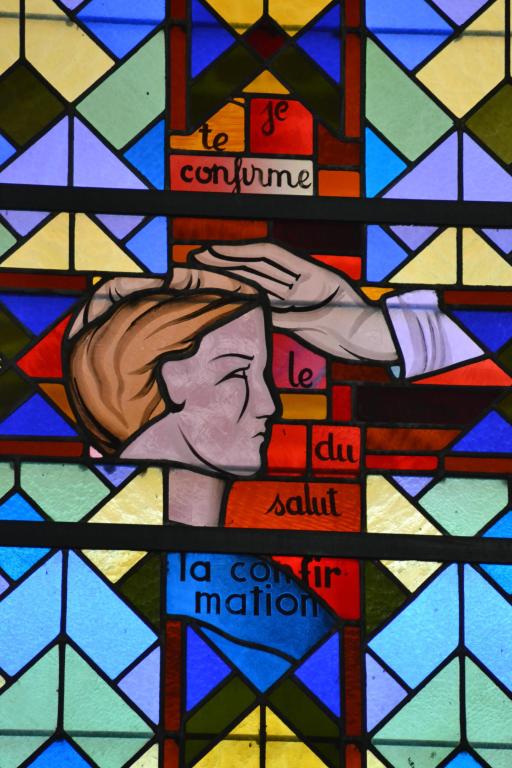
The placing of hands on the one to be confirmed remains significant today. During the confirmation process, a bishop will extend his hands over those who are to be confirmed, pray that they may receive the Holy Ghost, and anoint the forehead of each confirmand with holy chrism in the form of a cross. Chrism or oil has a special place in Biblical history. The Old Testament describes rituals in which priests, prophets, and kings are anointed with oil.
More than a symbol
Lest we mistake the anointing as simply symbolic, Saint Cyril of Jerusalem reminds us that, “For just as the bread of the Eucharist after the invocation of the Holy Spirit is simple bread no longer, but the body of Christ, so also this ointment is no longer plain ointment, nor, so to speak, common, after the invocation. Further, it is the gracious gift of Christ, and it is made fit for the imparting of his Godhead by the coming of the Holy Spirit. This ointment is symbolically applied to your forehead and to your other senses; while your body is anointed with the visible ointment, your soul is sanctified by the holy and life-giving Spirit. Just as Christ, after his baptism, and the coming upon him of the Holy Spirit, went forth and defeated the adversary, so also with you after holy baptism and the mystical chrism, having put on the panoply of the Holy Spirit, you are to withstand the power of the adversary and defeat him, saying, ‘I am able to do all things in Christ, who strengthens me.”(Catechetical Lectures, 21:1, 3–4 [A.D. 350]).
It was common during the early church to celebrate the three sacraments of initiation during the same ceremony. This practice began to change in the fourth century as more and more people were being baptized, and it became impossible for bishops to preside at every baptism. Over time, bishops began delegating baptisms to priests. The bishops retained the function of the laying on of hands and the anointing of the oil, which would be done separately from baptism.
Graces received are meant to be Graces rendered. The metaphysics of God’s Grace increases in the measure that we give it away. Having been consecrated by the chrism of confirmation and given the gifts of the Holy Spirit, we are now to give that Grace away so as to bring others to God.
Previous Post

December 11, 2021
The Sacraments
Next Post
December 17, 2021 GOD IN OUR MIDST.
Browse Our Archives
Select a Category Abortion Atheism Catholicism. Catholicism. God. Theophany. Christmas Eschatology Faith and Works. God. Holy Spirit Intelligent Design Jesus Christ Justice Law Politics Protestantism Religion Sabbath Salvation. Soteriology. The Bible Theology Uncategorized
Select a Month October 2026 September 2026 August 2026 July 2026 June 2026 May 2026 April 2026 March 2026 February 2026 January 2026 December 2025 November 2025 October 2025 September 2025 August 2025 July 2025 June 2025 May 2025 April 2025 March 2025 February 2025 January 2025 December 2024 November 2024 October 2024 September 2024 August 2024 July 2024 June 2024 May 2024 April 2024 March 2024 February 2024 January 2024 December 2023 November 2023 October 2023 September 2023 August 2023 July 2023 June 2023 May 2023 April 2023 March 2023 February 2023 January 2023 December 2022 November 2022 October 2022 September 2022 August 2022 July 2022 June 2022 May 2022 April 2022 March 2022 February 2022 January 2022 December 2021
Follow Us!
TAKE THE
Religious Wisdom Quiz
Which Christian season is marked by purple, penance, and preparation before Easter?
Select your answer to see how you score.
Epiphany Advent Feast of All Saints Lent
Related posts from Summa Catholic

The Anatomy of Divine Revelation in Catholic Thought

Beyond the Absence of Belief: The Implications of...

Reclaiming Objective Faith in an Individualistic World

Soul and Species: Catholic Theology Meets Evolution
TRENDING AT PATHEOS Catholic

Rejecting Doom: Christian Hope And Human Action
Christianity is a religion of hope. We are to have hope and...

It’s What Comes From Within Which Matters
One of the most difficult things for us to understand is why...

Why I Choose the Eucharist Over the Sermon
Choose the Eucharist, Not the Sermon What are we supposed to get...

5 Design Elements Found in Spiritually Rooted Homes
Putting Spirituality Into Home Decor Our homes are more than our living...

Credo: A Story of God Told with the...
About 10 years ago, I began to imagine a personal "Credo" that...

The Anatomy of Divine Revelation in Catholic Thought
The claim that God has made Himself known to human beings is...
view all Catholic blogs
Ad-Free & Subscriber Log-In Subscription Support
- About Us
- 2026 Calendar
- Videos
- Podcasts
- Library of World Religions
- Faith In Media Tracker
- Advertise With Us
- Write for Us
- Privacy Policy
- Terms of Service
- Do Not Sell My Data
- Contact Us
- Radiant Digital
- Manage Newsletter Subscriptions
- Unsubscribe From Notifications
- Sitemap
Copyright 2008-2026, Patheos. All rights reserved.
Subscription Support Ad-Free & Subscriber Log-In
Follow Patheos