
BuddhistCatholicContemplativeEvangelicalGeneral ChristianHinduJewishLatter-day SaintMuslimNew VisionsProgressive Christian
Beliefs
- Buddhist
- Catholic
- Contemplative
- Evangelical
- General Christian
- Hindu
- Jewish
- Latter-day Saint
- More Voices
- Muslim
- New Visions
- Pagan
- Progressive Christian
Topics
- Religion News
- Food and Religion
- Sports and Religion
- Religious Art
- Religious Music and Entertainment
- Religious Events
- History and Religion
- Style and Religion
- Politics and Religion
- Women in Religion
- Recreation Outdoors and Religion
- Business Finance and Religion
- Careers Workplace and Religion
- Education and Religion
- Family Parenting and Religion
- Health Fitness and Religion
- Home and Religion
- Relationships and Religion
- Technology and Religion
- Travel and Religion
Columnists
- Buddhist Columnists
- Business Finance and Religion Columnists
- Careers Workplace and Religion Columnists
- Catholic Columnists
- Contemplative Columnists
- Education and Religion Columnists
- Evangelists Columnists
- Family Parenting and Religion Columnists
- General Christian Columnists
- Health Fitness and Religion Columnists
- Hindu Columnists
- History and Religion Columnists
- Home and Religion Columnists
- Jewish Columnists
- More Voices Columnists
- Latter Day Columnists
- Muslim Columnists
- New Visions Columnists
- Nonreligious Columnists
- Pagan Columnists
- Politics and Religion Columnists
- Progressive Columnists
- Recreation Outdoors and Religion Columnists
- Relationships and Religion Columnists
- Religion News Columnists
- Religious Art Columnists
- Religious Events Columnists
- Religious Music and Entertainment Columnists
- Sports and Religion Columnists
- Style and Religion Columnists
- Technology and Religion Columnists
- Travel and Religion Columnists
- Women in Religion Columnists
Resource Library
- 2026 Calendar
- Library of World Religions
- The 100 Most Holy Places on Earth
- Patheos Answers
- Podcasts
- Videos
- Faith Leaders Database
- Anglican Episcopalian
- Bahai
- Baptist
- Buddhism
- Christianity
- Confucianism
- Eastern Orthodoxy
- Hinduism
- Holiness and Pentecostal
- ISKCON
- Islam
- Judaism
- Lutheran
- Methodist
- The Church of Jesus Christ of Latter-day Saints
- New Age
- Paganism
- Presbytarian and Reformed
- Protestantism
- Religion Behind the Scenes
- Roman Catholic
- Scientology
- Shia Islam
- Sikhism
- Sufism
- Sunni Islam
- Taoism
- Zen
- See all religions
Research Tools
 Ad-Free & Subscriber Log-In Subscription Support
Ad-Free & Subscriber Log-In Subscription Support
Follow Patheos 

- Trending:
- Forgiveness
- |
- Marriage
- |
- Consciousness
- |
- Death Penalty
- |
- Election
- |
- Halloween
 Summa
Summa
- Home
- Catholic
- Can Anyone Really Be an Empiricist?
Can Anyone Really Be an Empiricist?
Last updated on: December 15, 2012 at 4:48 pm by Summa Dan
Can Anyone Really Be an Empiricist? 2012-12-15T16:48:50-08:00 Summa Dan
Patheos Explore the world's faith through different perspectives on religion and spirituality! Patheos has the views of the prevalent religions and spiritualities of the world.
To be an atheist, one must deny the existence of God, any God. When pressed as to why they don’t believe in God, any god, not even the ones that allow them to throw crazy parties, ie Bacchus, many atheists reply that they don’t believe in God because there is no scientific evidence to prove that there is such a thing as God. And thus, whether he knows it or not, the atheist has killed science.
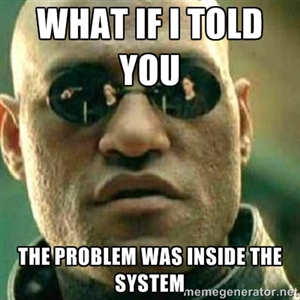
“Speak, Christian. But do it fast, or else.”
Perhaps I should back up a little. First of all I should explain that this particular brand of atheists also tend to refer to themselves as Empiricists. And if they don’t refer to themselves as such, I believe that they ought to. The empiricist holds that nothing which cannot be demonstrated to them, that is to say, nothing which cannot be scientifically proven, is true. And there you have it, nice and neat, there is no proof that there is God, and thus there is no God. But what else might one cut out of the picture by claiming, and holding to, empiricism as the basis of all knowledge?
For an answer to this we have to look to perhaps the most famous of all empiricists, Scottish Enlightenment philosopher and proto-troll, David Hume.
The first of Hume’s explanations that needs to be addressed is his theory of man’s interaction with reality, since that’s what’s being discussed here. Hume’s theory of human understanding of reality is called “Bundle Theory.” Bundle Theory relies on the empiricist dogma that nothing which cannot be demonstrated can be believed and explains to us that there is no “thing-in-itself,” a fixed metaphysical reality or driving purpose, there is only a bundle of attributes (thus the term Bundle Theory). To prove this, Hume challenges anyone to think of an apple, without thinking about the attributes of an apple. Can’t do it, can yah? Well, there you have it, if we can only know empirically, then there is no thing-in-itself, there are just attributes. But, if this is true, then there’s no such thing as friendship, love, or anything else that isn’t physically or mathematically demonstrable. This is something that almost no one (aside from a few very honest and depressed denizens of the internet, most of whom are convinced that we are all living in a computer simulation), would agree to. But all proof of these things boils down to emotion, inclination, or intuition, none of which constitutes empirical, and thus scientific validity.
Thought Experiment:
You are an empiricist, and have a degree in robotics and computer programming. Your family sucks. Your father’s an alcoholic, your mother’s passive aggressive and has never approved of anything you’ve done with your life. Your spouse has fallen out of love with you, grown cold and distant, and is probably cheating on you. You discover a way to create very complicated and lifelike simulations of human behavior, as well as robots who would look, sound and move like people.
Do you break ties with your family and replace them with robots who do a better job?
But, back to science!
Hume also relates to us that since we there are no things-in-themselves there is also no direct knowledge of causation. Instead, we see patterns. I drop the ball and see that it falls; after doing this enough times I become convinced that the ball will always drop. This however brings us back to the classic problem of Induction. The problem of induction is that there is no way of proving, empirically, that an event will always happen. If you have only ever seen green apples, and thus conclude that apples are always green, you’ll be pretty shaken up when someone hands you a red apple. And so, induction, or concluding that things viewed are always going to be that way, is against the most basic tenant of empiricism, that we can only know what is demonstrated to us. However this, the belief that we can indeed know things for certain, is the foundation of science. As such, the empiricist cannot allow science. And if he does than he is not abiding by his own logic. This is how Hume dealt with the problem, to ignore the problem, and simply play a lot of cards.
Previous Post

December 11, 2012
Ecce Homo
Next Post
December 18, 2012 A Case for Camus
Browse Our Archives
Select a Category Art Atheism Catholicism Christmas Death Despair Femininity Icons Introductions Judaism Manhood Masturbation Moral Relativism Nature Orthodoxy Paganism Pascha Philosophy Planned Parenthood Protestantism Reformation Resurrection Scripture Secularization Society Spiritualism Spring Superpowers Tradition Uncategorized Women's Health
Select a Month December 2013 November 2013 October 2013 August 2013 July 2013 June 2013 May 2013 March 2013 February 2013 January 2013 December 2012 October 2012 September 2012 July 2012 June 2012 May 2012 February 2012 January 2012 December 2011
Follow Us!
TAKE THE
Religious Wisdom Quiz
I am twelve men sent to explore the Promised Land, but only two gave a good report. Who are we?
Select your answer to see how you score.
The twelve spies Explorers Messengers Leaders of Israel
Related posts from Summa


“I AM” is not “Is”: Problems in Scholasticism
"I AM" is Not "Is": An Introduction to...

How Your Work-Out Might Be Destroying Your Destiny
TRENDING AT PATHEOS Catholic

Rejecting Doom: Christian Hope And Human Action
Christianity is a religion of hope. We are to have hope and...

It’s What Comes From Within Which Matters
One of the most difficult things for us to understand is why...

Why I Choose the Eucharist Over the Sermon
Choose the Eucharist, Not the Sermon What are we supposed to get...

5 Design Elements Found in Spiritually Rooted Homes
Putting Spirituality Into Home Decor Our homes are more than our living...

Credo: A Story of God Told with the...
About 10 years ago, I began to imagine a personal "Credo" that...

The Anatomy of Divine Revelation in Catholic Thought
The claim that God has made Himself known to human beings is...
view all Catholic blogs
Ad-Free & Subscriber Log-In Subscription Support
- About Us
- 2026 Calendar
- Videos
- Podcasts
- Library of World Religions
- Faith In Media Tracker
- Advertise With Us
- Write for Us
- Privacy Policy
- Terms of Service
- Do Not Sell My Data
- Contact Us
- Radiant Digital
- Manage Newsletter Subscriptions
- Unsubscribe From Notifications
- Sitemap
Copyright 2008-2026, Patheos. All rights reserved.
Subscription Support Ad-Free & Subscriber Log-In
Follow Patheos