
BuddhistCatholicContemplativeEvangelicalGeneral ChristianHinduJewishLatter-day SaintMuslimNew VisionsProgressive Christian
Beliefs
- Buddhist
- Catholic
- Contemplative
- Evangelical
- General Christian
- Hindu
- Jewish
- Latter-day Saint
- More Voices
- Muslim
- New Visions
- Pagan
- Progressive Christian
Topics
- Religion News
- Food and Religion
- Sports and Religion
- Religious Art
- Religious Music and Entertainment
- Religious Events
- History and Religion
- Style and Religion
- Politics and Religion
- Women in Religion
- Recreation Outdoors and Religion
- Business Finance and Religion
- Careers Workplace and Religion
- Education and Religion
- Family Parenting and Religion
- Health Fitness and Religion
- Home and Religion
- Relationships and Religion
- Technology and Religion
- Travel and Religion
Columnists
- Buddhist Columnists
- Business Finance and Religion Columnists
- Careers Workplace and Religion Columnists
- Catholic Columnists
- Contemplative Columnists
- Education and Religion Columnists
- Evangelists Columnists
- Family Parenting and Religion Columnists
- General Christian Columnists
- Health Fitness and Religion Columnists
- Hindu Columnists
- History and Religion Columnists
- Home and Religion Columnists
- Jewish Columnists
- More Voices Columnists
- Latter Day Columnists
- Muslim Columnists
- New Visions Columnists
- Nonreligious Columnists
- Pagan Columnists
- Politics and Religion Columnists
- Progressive Columnists
- Recreation Outdoors and Religion Columnists
- Relationships and Religion Columnists
- Religion News Columnists
- Religious Art Columnists
- Religious Events Columnists
- Religious Music and Entertainment Columnists
- Sports and Religion Columnists
- Style and Religion Columnists
- Technology and Religion Columnists
- Travel and Religion Columnists
- Women in Religion Columnists
Resource Library
- 2026 Calendar
- Library of World Religions
- The 100 Most Holy Places on Earth
- Patheos Answers
- Podcasts
- Videos
- Faith Leaders Database
- Anglican Episcopalian
- Bahai
- Baptist
- Buddhism
- Christianity
- Confucianism
- Eastern Orthodoxy
- Hinduism
- Holiness and Pentecostal
- ISKCON
- Islam
- Judaism
- Lutheran
- Methodist
- The Church of Jesus Christ of Latter-day Saints
- New Age
- Paganism
- Presbytarian and Reformed
- Protestantism
- Religion Behind the Scenes
- Roman Catholic
- Scientology
- Shia Islam
- Sikhism
- Sufism
- Sunni Islam
- Taoism
- Zen
- See all religions
Research Tools
 Ad-Free & Subscriber Log-In Subscription Support
Ad-Free & Subscriber Log-In Subscription Support
Follow Patheos 

- Trending:
- Forgiveness
- |
- Marriage
- |
- Consciousness
- |
- Death Penalty
- |
- Election
- |
- Halloween

- Home
- General Christian
- Religious Music and Entertainment
- Butterflies Are Free and True Liberation
Butterflies Are Free and True Liberation
Last updated on: February 3, 2025 at 10:30 pm by Zachary Miller
Butterflies Are Free and True Liberation 2025-02-03T22:30:43-06:00 Zachary Miller
Patheos Explore the world's faith through different perspectives on religion and spirituality! Patheos has the views of the prevalent religions and spiritualities of the world.
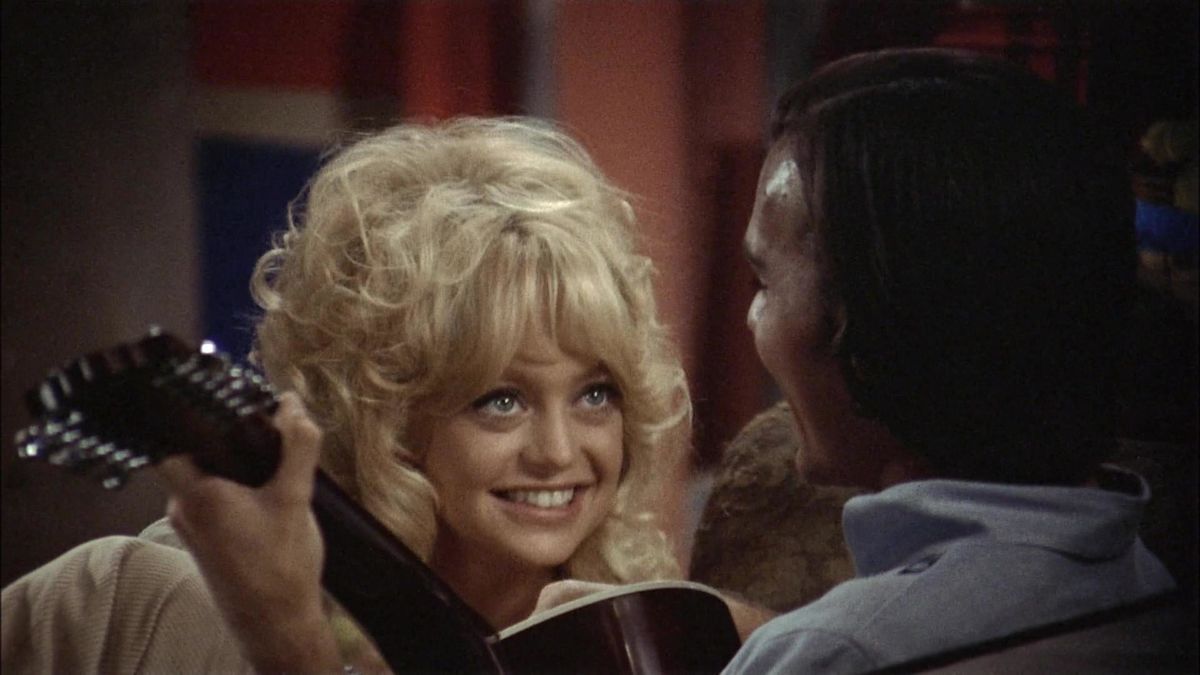
Columbia Pictures via “Wordpress”
“I could love you if you’d let me.” So sings Don Baker, one of the protagonists of 1972’s Butterflies are Free.
Despite flying mostly under the radar, the film has a lot going for it. Like a lot of films adapted from stage plays, the narrative is very dialogue driven, which makes for a lot of really sharp, entertaining banter. There are maybe three locations and four or five speaking roles, with a healthy majority of the dialogue seated between the two leads. By nature, the film progresses through their conversations as the film’s young lovebirds get to know, and get to change, one another.
Both of them are free spirits in their own way. Jill is fleeing from her failed marriage of six days while Don is fleeing from the grip of his mother, who loves Don but does not believe he can live on his own with his blindness. Though both Don and Jill pride themselves on being liberated, their mutual bids for independence reveals a deep sense of longing. Maybe they both wish they could belong to something. Perhaps even to each other.
One thing that makes this film especially relevant in the modern discussion that it is the rare film to have a disabled character in a lead role (even more impressive for a film from over fifty years ago). Don sets out to live on his own to prove to his mother that he need not live under her umbrella all his life. Indeed, we see that Don is capable, but not invulnerable. He can make do without his sight just fine, but he can’t stand to have his heart broken. The leading irony, though, is that while Don in theory should be the more vulnerable of the two, the film reveals that Jill is much more fragile.
Jill creates her own self-fulfilling prophecies where her fear of her own flightiness keeps her from forming meaningful relationships. In constantly trying to preserve her unattached state, Jill resists, and is even actively repelled by, any situation in which she might be bound, not only financially or legally, but emotionally. This makes the prospect of a romance with the charming and insightful Don so terrifying. Isn’t it her destiny as an eternally free spirit to eventually break the heart of someone as tender as he? What future could they possibly have together? She tries to recast this as her simply being independent, but the lie is unsustainable. And so the film captures a commonplace but dangerous fallacy: conflating being untethered with being liberated.
So it is with many of us in our own pursuits of happiness. We might imagine that by opting out of a relationship or an institution, we are somehow exempting ourselves from vulnerability, but neutrality is also a stance, and it has consequences of its own. We run the risk of missing out on fruits reserved specially for those who let their guard down.
The film naturally tracks this within the context of a romantic relationship, and there is a lot of wisdom there. But this is perhaps even more insightful through the lens of religious institutions. As always, our friends who decline participation in such establishments deserve our love and respect, but the larger conversation does tend to create a false dichotomy. Opting out of religious living or belief is often done under the pretense of keeping oneself “free,” but it is also fair to ask oneself what one might miss out on by denying oneself the opportunity to interact regularly with God. The chance to discern and refine spirituality across a lifetime? The community that comes with worshipping alongside likeminded believers? The opportunity to be cultivated and cleansed, the way you only can as you drop your own safeguards and impositions and allow God to assist you in your perfection?
Perhaps God also tells us, “I could love you, if you’d let me.”

Columbia Pictures via “IMDb”
General Christian
Previous Post

October 10, 2023
War of the Worlds and Turmoil
Next Post

December 23, 2023 Klaus and Goodness
Browse Our Archives
Select a Category Action Movies Animated Christ Classical Film Divinity Faith Finding God Goodness Happiness Heaven Horror Films International Film Judging Love Ministering Mortality Movies Musicals Religion Repentence Rom-Coms Sin Trials Truth TV Shows Uncategorized Valiance Worth
Select a Month October 2026 September 2026 August 2026 July 2026 August 2025 July 2025 June 2025 March 2025 January 2025 December 2024 November 2024 October 2024 September 2024 August 2024 July 2024 June 2024 May 2024 April 2024 March 2024 February 2024 January 2024 December 2023 October 2023 August 2023 April 2023 March 2023 February 2023 January 2023 December 2022 November 2022 October 2022 September 2022 August 2022 July 2022 June 2022 May 2022 April 2022 February 2022 January 2022 December 2021 November 2021 October 2021 September 2021 August 2021 July 2021 June 2021
TAKE THE
Religious Wisdom Quiz
Who took Jesus’ body and placed it in a tomb?
Select your answer to see how you score.
Joseph of Arimathea John Nicodemus Peter
Related posts from Sublime Cinema

"Les Diabolique" and Transgression

"L'avventura" and Human Weakness

"Dungeons and Dragons: Honor Among Thieves" and ......

TRENDING AT PATHEOS Religious Music and Entertainment

"Les Diabolique" and Transgression
Alongside something like Arrival, Vertigo, or Charade, Les Diaboliques is a...

"The Plague Dogs" and Mortality
So, flashback to the late 70s, early 80s. Walt Disney Studios is...

With the recent and highly successful release of Christopher Nolan’s epic film,...

"L'avventura" and Human Weakness
Today's piece is going to be a little different for a few...

I first want to apologize for not posting or writing anything. I'm...

I've engaged in the multi-year project of reading through the Church Fathers,...
view all Religious Music and Entertainment blogs
Ad-Free & Subscriber Log-In Subscription Support
- About Us
- 2026 Calendar
- Videos
- Podcasts
- Library of World Religions
- Faith In Media Tracker
- Advertise With Us
- Write for Us
- Privacy Policy
- Terms of Service
- Do Not Sell My Data
- Contact Us
- Radiant Digital
- Manage Newsletter Subscriptions
- Unsubscribe From Notifications
- Sitemap
Copyright 2008-2026, Patheos. All rights reserved.
Subscription Support Ad-Free & Subscriber Log-In
Follow Patheos