
BuddhistCatholicContemplativeEvangelicalGeneral ChristianHinduJewishLatter-day SaintMuslimNew VisionsProgressive Christian
Beliefs
- Buddhist
- Catholic
- Contemplative
- Evangelical
- General Christian
- Hindu
- Jewish
- Latter-day Saint
- More Voices
- Muslim
- New Visions
- Pagan
- Progressive Christian
Topics
- Religion News
- Food and Religion
- Sports and Religion
- Religious Art
- Religious Music and Entertainment
- Religious Events
- History and Religion
- Style and Religion
- Politics and Religion
- Women in Religion
- Recreation Outdoors and Religion
- Business Finance and Religion
- Careers Workplace and Religion
- Education and Religion
- Family Parenting and Religion
- Health Fitness and Religion
- Home and Religion
- Relationships and Religion
- Technology and Religion
- Travel and Religion
Columnists
- Buddhist Columnists
- Business Finance and Religion Columnists
- Careers Workplace and Religion Columnists
- Catholic Columnists
- Contemplative Columnists
- Education and Religion Columnists
- Evangelists Columnists
- Family Parenting and Religion Columnists
- General Christian Columnists
- Health Fitness and Religion Columnists
- Hindu Columnists
- History and Religion Columnists
- Home and Religion Columnists
- Jewish Columnists
- More Voices Columnists
- Latter Day Columnists
- Muslim Columnists
- New Visions Columnists
- Nonreligious Columnists
- Pagan Columnists
- Politics and Religion Columnists
- Progressive Columnists
- Recreation Outdoors and Religion Columnists
- Relationships and Religion Columnists
- Religion News Columnists
- Religious Art Columnists
- Religious Events Columnists
- Religious Music and Entertainment Columnists
- Sports and Religion Columnists
- Style and Religion Columnists
- Technology and Religion Columnists
- Travel and Religion Columnists
- Women in Religion Columnists
Resource Library
- 2026 Calendar
- Library of World Religions
- The 100 Most Holy Places on Earth
- Patheos Answers
- Podcasts
- Videos
- Faith Leaders Database
- Anglican Episcopalian
- Bahai
- Baptist
- Buddhism
- Christianity
- Confucianism
- Eastern Orthodoxy
- Hinduism
- Holiness and Pentecostal
- ISKCON
- Islam
- Judaism
- Lutheran
- Methodist
- The Church of Jesus Christ of Latter-day Saints
- New Age
- Paganism
- Presbytarian and Reformed
- Protestantism
- Religion Behind the Scenes
- Roman Catholic
- Scientology
- Shia Islam
- Sikhism
- Sufism
- Sunni Islam
- Taoism
- Zen
- See all religions
Research Tools
 Ad-Free & Subscriber Log-In Subscription Support
Ad-Free & Subscriber Log-In Subscription Support
Follow Patheos 

- Trending:
- Forgiveness
- |
- Marriage
- |
- Consciousness
- |
- Death Penalty
- |
- Election
- |
- Halloween
 Strategic Monk
-
About
-
Services
- Home
- Contemplative
- Relationships and Religion
- Practicing Community: How Do We Connect?
Practicing Community: How Do We Connect?
Last updated on: April 16, 2024 at 3:42 am by Greg Richardson
Practicing Community: How Do We Connect? 2024-04-16T03:42:25-08:00 Greg Richardson
Patheos Explore the world's faith through different perspectives on religion and spirituality! Patheos has the views of the prevalent religions and spiritualities of the world.
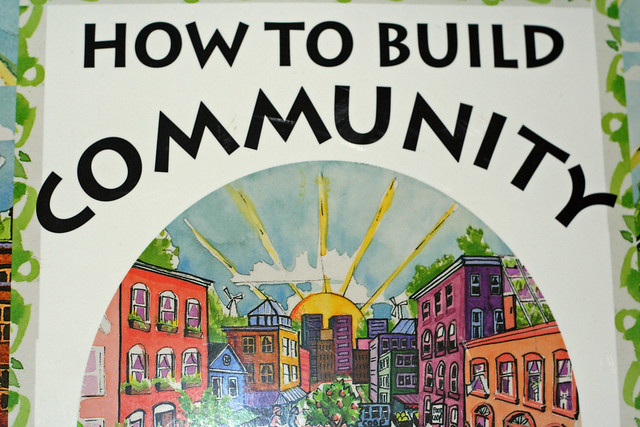
How Are We Practicing Community?
We all thirst for community, yet we are each practicing community in our own ways.
There have been times in my experience when I sought community based on shared interests. I learned community is more than just being interested in the same things. Even when our opinions or habits or ideas bring us together, we might not be practicing community.
Some people would like to define community based on our family background. They try to make predictions by analyzing the African American community or the Latino community. I have found I do not necessarily share community with only the people who look like me.
Community is more than sharing experiences or background, or having similar perspectives. We do not always practice community by agreeing about things.
In fact, I often practice community with people with whom I disagree.
We practice community when we share our stories, respecting and listening to other people.
My life seems like a trial and error series of lessons in practicing community. We need to exercise patience as we explore whether to practice community together.
How do we practice community? Do we practice community as an exclusive privilege we grant, or a gift we share generously? How do we understand community and how do we encourage others to practice it?
My experience has taught me true community is based in the ways we share our values. We may have different styles or disagree about specific questions. As we discover our own core values and explore other people’s, we build community.
Community does not last forever. It can be elusive, and is a challenge to build and maintain. As we discover the ways we contribute to community, we can help other people explore for themselves.
How Do We Help Others Practice Community?
We help other people practice community by practicing it ourselves and sharing what we learn.
Like any other spiritual practice, it is not our responsibility to become perfect at it. Practicing community is an opportunity to apply the questions and insights we gain from reflection.
Clarity
We see community more clearly as we continue to reflect and apply what we learn. We practice community the same way we follow a prayer practice or practice hospitality. It is the same as when we practice a sport or playing a musical instrument. We reflect and we apply what we learn to our practice.
As we see community more clearly we share with the people around us. We translate when there is confusion, resolve conflicts, and put our deep truths into action.
Listening
It is easy for us to forget practicing community is about listening.
There are people who believe practicing community is all about talking, writing, expressing themselves. They believe we need to spread the word to practice community.
We can forget listening is at least half of communication.
When we listen we practice community and recognize other people have value. We create opportunities for people to listen to each other.
Listening to someone pays them respect. We can forget what it feels like when someone listens to us deeply and honestly.
Listening may be the most intimate thing we can do with another person in public.
Recognizing Potential
We practice community when we appreciate other people have potential. Community is not about controlling every aspect of every part of every person’s every action. We build community when we allow people to do things for themselves.
Community does not depend on what we do on our own. We practice community when we work together.
How Can We Practice Community More Effectively?
We develop our ability to practice community as we practice.
Our first step is toward ourselves. We develop understanding as we discover and explore our own values. Spending time reflecting and discerning our values helps us share them with other people.
Other people can help us explore our values, but no one can tell us what our values are.
As we get to know and understand ourselves more deeply we become more able to practice community. Recognizing and appreciating our true selves and our core values makes community possible.
We learn more about the significance of community as we practice it. Like any other spiritual practice, it becomes part of us as we spend our time doing it. We do not learn how to practice community by reading about it or studying it. Our approach is more practical than analytical.
The most effective way to learn about community is by practicing.
Community, like most spiritual practices, is a relationship. We build the strongest, deepest relationships when we relate at the deepest level. When we understand ourselves well it enables us to share ourselves and connect to others deeply.
Community grows as we grow in ourselves and closer to each other. Each time we practice community we learn and apply new lessons. Our community grows stronger.
We Explore How We Practice Community
Like any spiritual practice, we learn and grow and share ourselves with others.
We watch ourselves practice, not to evaluate our practice, but to see how we could grow stronger. Remembering and reflecting, we ask ourselves what was good and what could have been better.
Listening to others, we recognize ways we can strengthen how we practice community. We ask people for ideas or direction in strengthening our practice.
As we dig more deeply into our own personal ways of practicing community, we learn. We continue to draw lessons from our past to apply in the present and the future.
Our own values shape how we practice community in our own unique ways. As we discover and explore we build community based on the values we share.
I often find myself practicing community online, with people I have never met in real life. More and more my communities stretch to encompass people who live far from me. My computer and my phone introduce me to new ways of practicing community every day.
How are we practicing community this week?
Where is our practice of community growing today?
[Image by niallkennedy]
Greg Richardson is a spiritual director in Southern California. He is a recovering assistant district attorney and associate university professor and is a lay Oblate with New Camaldoli Hermitage near Big Sur, California. Greg’s website is http://StrategicMonk.com and his email address is [email protected].
Relationships and Religion
Home and Religion
Previous Post

April 11, 2024
A Matter of Life and Death: Which Are We Choosing?
Next Post

April 18, 2024 Seeking Peace in a Time of Conflict: Where Do We Turn?
Recent Comments
"Thus wrote Mahatma Gandhi: "Each night, when I go to sleep, I die. And the ..."
A Matter of Life and Death: ..."
"It's a Gandhian model of on-going-ness and togetherness. Day after day, week after week, month ..."
Practicing Community: How Do We Connect?
"Human beings love to experience uninterrupted and unending on-going-ness and togetherness. Easter offers that and ..."
"Friday in Holy Week is known as Good Friday. On Good Friday we remember the ..."
Is This a Particularly Holy Week?
Browse Our Archives
Select a Category Blog Book Reviews Everything Else Guest Posts Leadership Monastic Strategies Neighborhood Pilgrimages Sacred Stillness Spiritual Direction Spiritual Practices Work
Select a Month May 2024 April 2024 March 2024 February 2024 January 2024 December 2023 November 2023 October 2023 September 2023 August 2023 July 2023 June 2023 May 2023 April 2023 March 2023 February 2023 January 2023 December 2022 November 2022 October 2022 September 2022 August 2022 July 2022 June 2022 May 2022 April 2022 March 2022 February 2022 January 2022 December 2021 November 2021 October 2021 September 2021 August 2021 July 2021 June 2021 May 2021 April 2021 March 2021 February 2021 January 2021 December 2020 November 2020 October 2020 April 2020 March 2020 February 2020 January 2020 December 2019 November 2019 October 2019 September 2019 August 2019 July 2019 June 2019 May 2019 April 2019 March 2019 February 2019 January 2019 December 2018 November 2018 October 2018 September 2018 August 2018 July 2018 June 2018 May 2018 April 2018 March 2018 February 2018 January 2018 December 2017 November 2017 October 2017 September 2017 August 2017 July 2017 June 2017 May 2017 April 2017 March 2017 February 2017 January 2017 December 2016 November 2016 October 2016 September 2016 August 2016 July 2016 June 2016 May 2016 April 2016 March 2016 February 2016 January 2016 December 2015 November 2015 October 2015 September 2015 August 2015 July 2015 June 2015 May 2015 April 2015 March 2015 February 2015 January 2015 December 2014 November 2014 October 2014 September 2014 August 2014 July 2014 June 2014 May 2014 April 2014 March 2014 February 2014 January 2014 December 2013 November 2013 October 2013 September 2013 August 2013 July 2013 June 2013 May 2013 April 2013 March 2013 February 2013 January 2013 December 2012 November 2012 October 2012 September 2012 August 2012 July 2012 June 2012 May 2012 April 2012 March 2012 February 2012 January 2012 December 2011 November 2011 October 2011 September 2011 August 2011 July 2011 June 2011 May 2011 April 2011 March 2011 February 2011 January 2011 December 2010
Follow Us!
TAKE THE
Religious Wisdom Quiz
I told my daughter-in-law to uncover a man's feet and lie down at the threshing floor. Who am I?
Select your answer to see how you score.
Rebekah Naomi Ruth Bathsheba
Related posts from Strategic Monk

How Are We Called to Live?: More About...

A Spiritual Practice of Reading: Join Us Online

Taking a Deep Breath, and Another: Finding Time...

Listening to Our Own Rhythms: When Will We...
TRENDING AT PATHEOS Contemplative

Handy Contemplative Practices for Political Spaces
A Spiritually Grounded Presence In order to bring a spiritually grounded presence...

Halloween: The Holiday of Loving Your Neighbor
All Hallows Eve Is Halloween the least Christian holiday in America, or...

Can Love Be Saved? Some Thoughts on the...
Happy Valentine's Day! I recently published a post on Patreon called Can...

"This Loving, Uniting Embrace": the Holy Ordinary
Today's guest post is by Mark Longhurst, author of The Holy Ordinary:...

How Are We Called to Live?: More About...
How Are We Called to Live? Many of us struggle with discerning...

A Spiritual Practice of Reading: Join Us Online
A Spiritual Practice of Reading A healthy spiritual practice of reading is...
view all Contemplative blogs
Ad-Free & Subscriber Log-In Subscription Support
- About Us
- 2026 Calendar
- Videos
- Podcasts
- Library of World Religions
- Faith In Media Tracker
- Advertise With Us
- Write for Us
- Privacy Policy
- Terms of Service
- Do Not Sell My Data
- Contact Us
- Radiant Digital
- Manage Newsletter Subscriptions
- Unsubscribe From Notifications
- Sitemap
Copyright 2008-2026, Patheos. All rights reserved.
Subscription Support Ad-Free & Subscriber Log-In
Follow Patheos