
BuddhistCatholicContemplativeEvangelicalGeneral ChristianHinduJewishLatter-day SaintMuslimNew VisionsProgressive Christian
Beliefs
- Buddhist
- Catholic
- Contemplative
- Evangelical
- General Christian
- Hindu
- Jewish
- Latter-day Saint
- More Voices
- Muslim
- New Visions
- Pagan
- Progressive Christian
Topics
- Religion News
- Food and Religion
- Sports and Religion
- Religious Art
- Religious Music and Entertainment
- Religious Events
- History and Religion
- Style and Religion
- Politics and Religion
- Women in Religion
- Recreation Outdoors and Religion
- Business Finance and Religion
- Careers Workplace and Religion
- Education and Religion
- Family Parenting and Religion
- Health Fitness and Religion
- Home and Religion
- Relationships and Religion
- Technology and Religion
- Travel and Religion
Columnists
- Buddhist Columnists
- Business Finance and Religion Columnists
- Careers Workplace and Religion Columnists
- Catholic Columnists
- Contemplative Columnists
- Education and Religion Columnists
- Evangelists Columnists
- Family Parenting and Religion Columnists
- General Christian Columnists
- Health Fitness and Religion Columnists
- Hindu Columnists
- History and Religion Columnists
- Home and Religion Columnists
- Jewish Columnists
- More Voices Columnists
- Latter Day Columnists
- Muslim Columnists
- New Visions Columnists
- Nonreligious Columnists
- Pagan Columnists
- Politics and Religion Columnists
- Progressive Columnists
- Recreation Outdoors and Religion Columnists
- Relationships and Religion Columnists
- Religion News Columnists
- Religious Art Columnists
- Religious Events Columnists
- Religious Music and Entertainment Columnists
- Sports and Religion Columnists
- Style and Religion Columnists
- Technology and Religion Columnists
- Travel and Religion Columnists
- Women in Religion Columnists
Resource Library
- 2026 Calendar
- Library of World Religions
- The 100 Most Holy Places on Earth
- Patheos Answers
- Podcasts
- Videos
- Faith Leaders Database
- Anglican Episcopalian
- Bahai
- Baptist
- Buddhism
- Christianity
- Confucianism
- Eastern Orthodoxy
- Hinduism
- Holiness and Pentecostal
- ISKCON
- Islam
- Judaism
- Lutheran
- Methodist
- The Church of Jesus Christ of Latter-day Saints
- New Age
- Paganism
- Presbytarian and Reformed
- Protestantism
- Religion Behind the Scenes
- Roman Catholic
- Scientology
- Shia Islam
- Sikhism
- Sufism
- Sunni Islam
- Taoism
- Zen
- See all religions
Research Tools
 Ad-Free & Subscriber Log-In Subscription Support
Ad-Free & Subscriber Log-In Subscription Support
Follow Patheos 

- Trending:
- Forgiveness
- |
- Marriage
- |
- Consciousness
- |
- Death Penalty
- |
- Election
- |
- Halloween
 Strategic Monk
-
About
-
Services
- Home
- Contemplative
- Health, Fitness and Religion
- Paying Attention Like a Monk
Paying Attention Like a Monk
Last updated on: September 21, 2023 at 3:47 am by Greg Richardson
Paying Attention Like a Monk 2023-09-21T03:47:22-08:00 Greg Richardson
Patheos Explore the world's faith through different perspectives on religion and spirituality! Patheos has the views of the prevalent religions and spiritualities of the world.
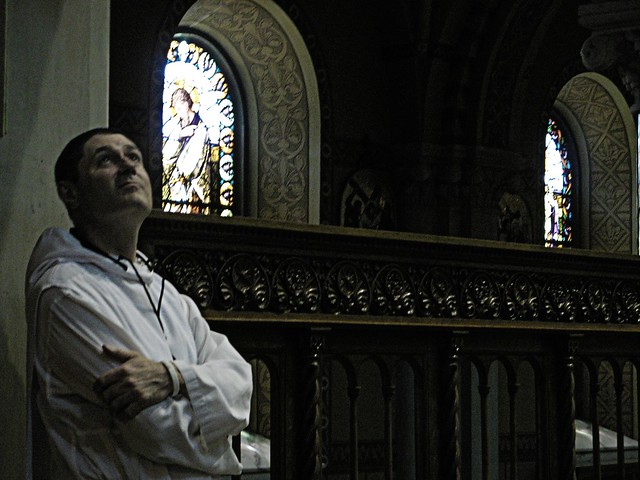
Paying Attention Like a Monk
Focus is one of my strengths. Concentrating is not generally difficult for me. Some people describe me as having “attention surplus disorder.” But am I paying attention like a monk?
The ability to focus and concentrate can give people significant benefits. I may not be particularly detail oriented, though paying attention helped me do well in school and practice law. My skill in concentrating was important in remembering facts and dealing with witnesses. We tend to rely on our abilities to pay attention as we analyze and think our way through questions.
Focusing is not perfect. It tends to see specific components or pieces and not necessarily the big picture. We often focus as we analyze and not recognize how paying attention helps us spend time in reflection.
Concentrating on solving a specific problem can be a way to distract myself from something else.
Contemplative life and spirituality have helped me grow beyond the limitations of my focused attention. When I was becoming a spiritual life mentor, I needed to learn how not to cross-examining people.
The Power of Paying Attention
When I get focused, I tend to become less aware of what is going on around me. My mind, my eyes become fixated on what I am working on. Whether I am reading, watching a video, or wrapped up in my thoughts, I lose touch with other things.
Monastic life has helped teach me how to pay attention in new ways.
We tend to feel we can deal fairly well with matters on the surface of life. Making decisions about what to eat, where we want to go, and other tasks is not so difficult. These are the questions to which we pay attention in our everyday lives. We are thinking about one thing when someone asks us about something else. Life teaches us to become adept at moving back and forth along the surface.
It is easy to function without really being aware beneath the surface. Our bodies develop memories of their own and we follow the patterns of our habits. We may be able to drive to a familiar place without really paying attention to each turn. Expected patterns of behavior wrap themselves around us, welcoming us.
The monks who inspire me use the power of habits to remind themselves to be aware.
Monastic schedules are organized around specific reminders. Each day includes set times for reflection, for prayer, for work, for rest. The practices are designed to remind monks to take time to be aware, to pay attention.
Monastic Days
Monastic days are not scheduled arbitrarily. Each day is spent reminding people to go below the surface. Even time spent on manual labor is intended to draw monks deeper.
Not being distracted by the surface of things is basic to monastic life and practices.
Each task, each interaction, each meal, each thought is a reflection of something deeper. There is more to life than its surface. Monks are committed to exploring life’s depths. Their commitment grows out of an awareness that many of us skim along life’s surface.
Focused Attention
It is not because the monks I know are more cosmic, more spiritual, or more mystical. They take practical steps to develop awareness and pay attention beneath the surface.
The community in which they live and work encourages them to remember. Despite their own distractions, members of monastic communities organize their lives to foster awareness.
For one thing, their days flow from time spent with others to time spent alone. They build time for reflection and for praying into their schedules. Recognizing the centrality of awareness to their lives, they make it a clear priority.
In addition to developing their own awareness, monks help develop awareness in others. They serve as examples to inspire people, and as reminders of the power of awareness.
Everyday Awareness
It is one thing to live in a community which develops and encourages us to be aware. What about the rest of us who apparently live in a society determined to distract us?
There are steps we can take to strengthen awareness in our everyday lives.
We can follow the example of monks and find people to help us. Communities of people and regular, scheduled conversations remind us to live in awareness, paying attention. We can include time in our own schedules for reflection, for rest, and other awareness practices.
There are people who take regular walks to give themselves time to remember. Some people find specific visual cues, including art, to help them practice awareness. I even know people who choose to listen to specific music or podcasts as they commute.
Many people find practicing stillness, even for short periods of time, helps them get beneath the surface. It is helpful for some to practice taking deep breaths, and listen to their own breathing.
Some find a specific place, even sitting in a particular chair, helps them practice awareness. Others are encouraged by practicing at set times every day, like monks.
Overcoming Obstacles
Challenges are part of practicing awareness. People experience obstacles and challenges whenever they practice.
For some our expectations of what will happen become obstacles to awareness. It is not really the nature of awareness to meet our expectations. We are much more likely to encounter something more than we hope to receive.
Other people are concerned about the return they will receive on their investment. They would like a guarantee the time they spend will gain awareness for them. We do not earn awareness by practicing, though it helps us discover new ways of paying attention.
Some people have a fear of practicing awareness. There are those who are afraid to fail and those who are afraid to succeed. They may fear what new awareness will do to them, or they will not be able to do it.
The only way to find out for sure what will happen is to try practicing, perhaps with some help.
How will we begin paying attention like a monk in new ways this week?
When will we practice paying attention like a monk today?
[Image by Randy OHC]
Greg Richardson is a spiritual director in Southern California. He is a recovering assistant district attorney and associate university professor and is a lay Oblate with New Camaldoli Hermitage near Big Sur, California. Greg’s website is http://StrategicMonk.com and his email address is [email protected].
Health, Fitness and Religion
Education and Religion
Previous Post

September 19, 2023
Preparing for Autumn
Next Post

September 26, 2023 Relying On Our Uncertainty
Recent Comments
"Thus wrote Mahatma Gandhi: "Each night, when I go to sleep, I die. And the ..."
A Matter of Life and Death: ..."
"It's a Gandhian model of on-going-ness and togetherness. Day after day, week after week, month ..."
Practicing Community: How Do We Connect?
"Human beings love to experience uninterrupted and unending on-going-ness and togetherness. Easter offers that and ..."
"Friday in Holy Week is known as Good Friday. On Good Friday we remember the ..."
Is This a Particularly Holy Week?
Browse Our Archives
Select a Category Blog Book Reviews Everything Else Guest Posts Leadership Monastic Strategies Neighborhood Pilgrimages Sacred Stillness Spiritual Direction Spiritual Practices Work
Select a Month May 2024 April 2024 March 2024 February 2024 January 2024 December 2023 November 2023 October 2023 September 2023 August 2023 July 2023 June 2023 May 2023 April 2023 March 2023 February 2023 January 2023 December 2022 November 2022 October 2022 September 2022 August 2022 July 2022 June 2022 May 2022 April 2022 March 2022 February 2022 January 2022 December 2021 November 2021 October 2021 September 2021 August 2021 July 2021 June 2021 May 2021 April 2021 March 2021 February 2021 January 2021 December 2020 November 2020 October 2020 April 2020 March 2020 February 2020 January 2020 December 2019 November 2019 October 2019 September 2019 August 2019 July 2019 June 2019 May 2019 April 2019 March 2019 February 2019 January 2019 December 2018 November 2018 October 2018 September 2018 August 2018 July 2018 June 2018 May 2018 April 2018 March 2018 February 2018 January 2018 December 2017 November 2017 October 2017 September 2017 August 2017 July 2017 June 2017 May 2017 April 2017 March 2017 February 2017 January 2017 December 2016 November 2016 October 2016 September 2016 August 2016 July 2016 June 2016 May 2016 April 2016 March 2016 February 2016 January 2016 December 2015 November 2015 October 2015 September 2015 August 2015 July 2015 June 2015 May 2015 April 2015 March 2015 February 2015 January 2015 December 2014 November 2014 October 2014 September 2014 August 2014 July 2014 June 2014 May 2014 April 2014 March 2014 February 2014 January 2014 December 2013 November 2013 October 2013 September 2013 August 2013 July 2013 June 2013 May 2013 April 2013 March 2013 February 2013 January 2013 December 2012 November 2012 October 2012 September 2012 August 2012 July 2012 June 2012 May 2012 April 2012 March 2012 February 2012 January 2012 December 2011 November 2011 October 2011 September 2011 August 2011 July 2011 June 2011 May 2011 April 2011 March 2011 February 2011 January 2011 December 2010
Follow Us!
TAKE THE
Religious Wisdom Quiz
What punishment did God send after David counted the fighting men of Israel?
Select your answer to see how you score.
Defeat in battle Plague Flood Famine
Related posts from Strategic Monk

How Are We Called to Live?: More About...

A Spiritual Practice of Reading: Join Us Online

Taking a Deep Breath, and Another: Finding Time...

Listening to Our Own Rhythms: When Will We...
TRENDING AT PATHEOS Contemplative

Handy Contemplative Practices for Political Spaces
A Spiritually Grounded Presence In order to bring a spiritually grounded presence...

Halloween: The Holiday of Loving Your Neighbor
All Hallows Eve Is Halloween the least Christian holiday in America, or...

Can Love Be Saved? Some Thoughts on the...
Happy Valentine's Day! I recently published a post on Patreon called Can...

"This Loving, Uniting Embrace": the Holy Ordinary
Today's guest post is by Mark Longhurst, author of The Holy Ordinary:...

How Are We Called to Live?: More About...
How Are We Called to Live? Many of us struggle with discerning...

A Spiritual Practice of Reading: Join Us Online
A Spiritual Practice of Reading A healthy spiritual practice of reading is...
view all Contemplative blogs
Ad-Free & Subscriber Log-In Subscription Support
- About Us
- 2026 Calendar
- Videos
- Podcasts
- Library of World Religions
- Faith In Media Tracker
- Advertise With Us
- Write for Us
- Privacy Policy
- Terms of Service
- Do Not Sell My Data
- Contact Us
- Radiant Digital
- Manage Newsletter Subscriptions
- Unsubscribe From Notifications
- Sitemap
Copyright 2008-2026, Patheos. All rights reserved.
Subscription Support Ad-Free & Subscriber Log-In
Follow Patheos