
BuddhistCatholicContemplativeEvangelicalGeneral ChristianHinduJewishLatter-day SaintMuslimNew VisionsProgressive Christian
Beliefs
- Buddhist
- Catholic
- Contemplative
- Evangelical
- General Christian
- Hindu
- Jewish
- Latter-day Saint
- More Voices
- Muslim
- New Visions
- Pagan
- Progressive Christian
Topics
- Religion News
- Food and Religion
- Sports and Religion
- Religious Art
- Religious Music and Entertainment
- Religious Events
- History and Religion
- Style and Religion
- Politics and Religion
- Women in Religion
- Recreation Outdoors and Religion
- Business Finance and Religion
- Careers Workplace and Religion
- Education and Religion
- Family Parenting and Religion
- Health Fitness and Religion
- Home and Religion
- Relationships and Religion
- Technology and Religion
- Travel and Religion
Columnists
- Buddhist Columnists
- Business Finance and Religion Columnists
- Careers Workplace and Religion Columnists
- Catholic Columnists
- Contemplative Columnists
- Education and Religion Columnists
- Evangelists Columnists
- Family Parenting and Religion Columnists
- General Christian Columnists
- Health Fitness and Religion Columnists
- Hindu Columnists
- History and Religion Columnists
- Home and Religion Columnists
- Jewish Columnists
- More Voices Columnists
- Latter Day Columnists
- Muslim Columnists
- New Visions Columnists
- Nonreligious Columnists
- Pagan Columnists
- Politics and Religion Columnists
- Progressive Columnists
- Recreation Outdoors and Religion Columnists
- Relationships and Religion Columnists
- Religion News Columnists
- Religious Art Columnists
- Religious Events Columnists
- Religious Music and Entertainment Columnists
- Sports and Religion Columnists
- Style and Religion Columnists
- Technology and Religion Columnists
- Travel and Religion Columnists
- Women in Religion Columnists
Resource Library
- 2026 Calendar
- Library of World Religions
- The 100 Most Holy Places on Earth
- Patheos Answers
- Podcasts
- Videos
- Faith Leaders Database
- Anglican Episcopalian
- Bahai
- Baptist
- Buddhism
- Christianity
- Confucianism
- Eastern Orthodoxy
- Hinduism
- Holiness and Pentecostal
- ISKCON
- Islam
- Judaism
- Lutheran
- Methodist
- The Church of Jesus Christ of Latter-day Saints
- New Age
- Paganism
- Presbytarian and Reformed
- Protestantism
- Religion Behind the Scenes
- Roman Catholic
- Scientology
- Shia Islam
- Sikhism
- Sufism
- Sunni Islam
- Taoism
- Zen
- See all religions
Research Tools
 Ad-Free & Subscriber Log-In Subscription Support
Follow Patheos 

- Trending:
- Advent
- |
- Forgiveness
- |
- Thanksgiving
- |
- Election
- |
- Seasonal Holidays
- |
- Marriage
 Strategic Monk
-
About
-
Services
- Home
- Contemplative
- History and Religion
- The Wandering Mind
The Wandering Mind
Last updated on: July 11, 2023 at 3:54 am by Greg Richardson
The Wandering Mind 2023-07-11T03:54:14-08:00 Greg Richardson
Patheos Explore the world's faith through different perspectives on religion and spirituality! Patheos has the views of the prevalent religions and spiritualities of the world.
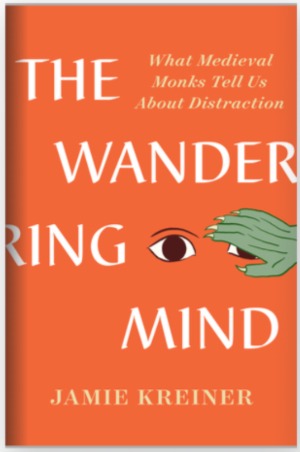
The Wandering Mind
The Wandering Mind is a book about distraction and paying attention.
Some of us assume people living monastic life, particularly in history, were people who knew how to pay attention. We tend to see ourselves as distracted by technology and surrounded by screens. Though we spend time thinking about mindfulness and contemplation, we fill our lives with distractions and entertainments.
We may see the men and women who were early monks as examples of people who had mastered paying focused attention. How challenging could it have been to be contemplative with no Internet or even television to distract us?
I look forward with anticipation to spending time at New Camaldoli Hermitage, beyond the reach of telephones and email. Spending time in stillness gives rest to my own wandering mind. Even there, in the quiet of a monastery, it can be difficult to pay attention.
Monastic life can seem like a network of contemplative practices which we struggle to learn and remember. Whee did they come up with all these different disciplines? How are we supposed to tame our wandering thoughts?
In The Wandering Mind, Jamie Kreiner, professor of history at the University of Georgia, describes the struggles of these monks. Though the world of the Middle Ages may appear to be completely different from ours, the struggle with distractions continues.
One significant distraction for Medieval monks was preoccupation with the problem of distraction.
They tried to pinpoint the causes of distraction and develop practical tactics to combat it. One of the central goals of monastic life was, and remains, connecting the mind to God and sustaining unshakable concentration. Contemplation allows us to see panoramic vistas, to find calm above the chaos.
These stories of challenges, successes and failures, give us questions and insights to apply in our own lives.
Experiencing Distraction
The Wandering Mind explores how Medieval monks struggled to avoid distraction. It explores the framework of methods which monks employed to sustain contemplation and focus.
It is easy for us to hold the world around us or our culture responsible when we are distracted. People who enter monastic life take intentional steps away from the rest of the world into communities designed to promote contemplation. The principles and values of monastic communities are reflected in the minds and bodies of the people who live in them.
One technological innovation which shaped monastic life during the Middle Ages was the development of the book. Monks were interested in the potential of books to strengthen their cognitive skills, but also concerned about their potential for distraction.
Monks eventually took up the technology of books enthusiastically. Almost every monastic community owned and shared books. Solitary monks were included in the circulation of monastic books. Books were integral elements in the spiritual, physical, and intellectual development of monastic communities.
In addition to books, the fire of monastic reflection was fueled with memory. Medieval monks saw memory differently than we do today. Rather than a box in which we store individual memories, our memory is a tool for contemplation. The Wandering Mind describes how the memory, like a monastery itself, helped monks reflect and gan new questions and insights.
Medieval monastic life appealed to the senses in ways we might assume would be distracting today. For example, illuminated manuscripts produced in Medieval monasteries reflect their use of color and texture.
These monastic strategies worked like a set of concentric circles centered on the target of the mind. It became more difficult to recognize distraction as distinct from revelation.
Monks develop the habit of observing their own thoughts.
Paying Attention
Each of us has challenges with paying attention. Our distractions may be physical or intellectual, emotional or spiritual.
Some of us are too deprived of sleep to pay focused attention. Others of us are distracted by emotional struggles or spiritual questions.
While Medieval monks did not have social media or cellphones, their distractions were like ours in many ways. They struggled to find ways to pay attention, to open their hearts and minds in new ways.
We may not want to follow their methods like checklists; we can gain insights from them and consider the questions they asked.
The monks described in The Wandering Mind were intent on opening their minds and hearts to new ways of understanding. They were not seeking the one true path or the single right answer. Paying attention was not their approach to solving a problem or developing a theological theory.
They were paying attention to see what was there, all around them and within them.
It was important to pay attention because it was the only way to appreciate as much of the truth as they could.
Their quest was not to win an argument or go down in history as being on the winning side.
An Expanding Horizon
The Wandering Mind describes men and women who were working to transform their world and themselves. Through paying attention and reflecting, they gained new questions and insights which fueled their further reflection.
They were not trying to deliver the answers to their questions, or God, in a box. Each day raised fresh questions and expanded their horizons.
Their struggles and the insights from their reflection continue to encourage us today.
The Wandering Mind is a book which opens windows and doors to help us explore in new ways. It helps us appreciate monastic practices as innovative methods to grapple with distractions.
Some people find contemplative practices boring. They have little patience with reflection, and can be intimidated by stillness. These practices are not about setting new personal records for sitting still and being quiet as long as we can. Each one is a method for paying attention to the presence of spiritual life.
We are not competing for God’s attention or favor. Our practice is about paying attention to what is sacred in our everyday lives.
How will we focus our wandering mind without limiting our horizon today?
When will we practice new ways to tame our wandering mind this week?
[Image by wwnorton.com]
Greg Richardson is a spiritual director in Southern California. He is a recovering assistant district attorney and associate university professor, and is a lay Oblate with New Camaldoli Hermitage near Big Sur, California. Greg’s website is http://StrategicMonk.com and his email address is [email protected].
History and Religion
Previous Post

July 6, 2023
Resting in Warm Summer Stillness
Next Post

July 13, 2023 A Spiritual Practice of Doing Nothing
Recent Comments
"Thus wrote Mahatma Gandhi: "Each night, when I go to sleep, I die. And the ..."
A Matter of Life and Death: ..."
"It's a Gandhian model of on-going-ness and togetherness. Day after day, week after week, month ..."
Practicing Community: How Do We Connect?
"Human beings love to experience uninterrupted and unending on-going-ness and togetherness. Easter offers that and ..."
"Friday in Holy Week is known as Good Friday. On Good Friday we remember the ..."
Is This a Particularly Holy Week?
Browse Our Archives
Select a Category Blog Book Reviews Everything Else Guest Posts Leadership Monastic Strategies Neighborhood Pilgrimages Sacred Stillness Spiritual Direction Spiritual Practices Work
Select a Month May 2024 April 2024 March 2024 February 2024 January 2024 December 2023 November 2023 October 2023 September 2023 August 2023 July 2023 June 2023 May 2023 April 2023 March 2023 February 2023 January 2023 December 2022 November 2022 October 2022 September 2022 August 2022 July 2022 June 2022 May 2022 April 2022 March 2022 February 2022 January 2022 December 2021 November 2021 October 2021 September 2021 August 2021 July 2021 June 2021 May 2021 April 2021 March 2021 February 2021 January 2021 December 2020 November 2020 October 2020 April 2020 March 2020 February 2020 January 2020 December 2019 November 2019 October 2019 September 2019 August 2019 July 2019 June 2019 May 2019 April 2019 March 2019 February 2019 January 2019 December 2018 November 2018 October 2018 September 2018 August 2018 July 2018 June 2018 May 2018 April 2018 March 2018 February 2018 January 2018 December 2017 November 2017 October 2017 September 2017 August 2017 July 2017 June 2017 May 2017 April 2017 March 2017 February 2017 January 2017 December 2016 November 2016 October 2016 September 2016 August 2016 July 2016 June 2016 May 2016 April 2016 March 2016 February 2016 January 2016 December 2015 November 2015 October 2015 September 2015 August 2015 July 2015 June 2015 May 2015 April 2015 March 2015 February 2015 January 2015 December 2014 November 2014 October 2014 September 2014 August 2014 July 2014 June 2014 May 2014 April 2014 March 2014 February 2014 January 2014 December 2013 November 2013 October 2013 September 2013 August 2013 July 2013 June 2013 May 2013 April 2013 March 2013 February 2013 January 2013 December 2012 November 2012 October 2012 September 2012 August 2012 July 2012 June 2012 May 2012 April 2012 March 2012 February 2012 January 2012 December 2011 November 2011 October 2011 September 2011 August 2011 July 2011 June 2011 May 2011 April 2011 March 2011 February 2011 January 2011 December 2010
Follow Us!
TAKE THE
Religious Wisdom Quiz
Which letter emphasizes faith without works is dead?
Select your answer to see how you score.
1 Peter James Hebrews Titus
Related posts from Strategic Monk

How Are We Called to Live?: More About...

A Spiritual Practice of Reading: Join Us Online

Taking a Deep Breath, and Another: Finding Time...

Listening to Our Own Rhythms: When Will We...
TRENDING AT PATHEOS Contemplative

Handy Contemplative Practices for Political Spaces
A Spiritually Grounded Presence In order to bring a spiritually grounded presence...

Halloween: The Holiday of Loving Your Neighbor
All Hallows Eve Is Halloween the least Christian holiday in America, or...

Can Love Be Saved? Some Thoughts on the...
Happy Valentine's Day! I recently published a post on Patreon called Can...
"This Loving, Uniting Embrace": the Holy Ordinary
Today's guest post is by Mark Longhurst, author of The Holy Ordinary:...

How Are We Called to Live?: More About...
How Are We Called to Live? Many of us struggle with discerning...

A Spiritual Practice of Reading: Join Us Online
A Spiritual Practice of Reading A healthy spiritual practice of reading is...
view all Contemplative blogs
Ad-Free & Subscriber Log-In Subscription Support
- About Us
- 2026 Calendar
- Videos
- Podcasts
- Library of World Religions
- Faith In Media Tracker
- Advertise With Us
- Write for Us
- Privacy Policy
- Terms of Service
- Do Not Sell My Data
- Contact Us
- Radiant Digital
- Manage Newsletter Subscriptions
- Unsubscribe From Notifications
- Sitemap
Copyright 2008-2026, Patheos, part of the Radiant Digital network of media brands. All rights reserved.
Subscription Support Ad-Free & Subscriber Log-In
Follow Patheos