
BuddhistCatholicContemplativeEvangelicalGeneral ChristianHinduJewishLatter-day SaintMuslimNew VisionsProgressive Christian
Beliefs
- Buddhist
- Catholic
- Contemplative
- Evangelical
- General Christian
- Hindu
- Jewish
- Latter-day Saint
- More Voices
- Muslim
- New Visions
- Pagan
- Progressive Christian
Topics
- Religion News
- Food and Religion
- Sports and Religion
- Religious Art
- Religious Music and Entertainment
- Religious Events
- History and Religion
- Style and Religion
- Politics and Religion
- Women in Religion
- Recreation Outdoors and Religion
- Business Finance and Religion
- Careers Workplace and Religion
- Education and Religion
- Family Parenting and Religion
- Health Fitness and Religion
- Home and Religion
- Relationships and Religion
- Technology and Religion
- Travel and Religion
Columnists
- Buddhist Columnists
- Business Finance and Religion Columnists
- Careers Workplace and Religion Columnists
- Catholic Columnists
- Contemplative Columnists
- Education and Religion Columnists
- Evangelists Columnists
- Family Parenting and Religion Columnists
- General Christian Columnists
- Health Fitness and Religion Columnists
- Hindu Columnists
- History and Religion Columnists
- Home and Religion Columnists
- Jewish Columnists
- More Voices Columnists
- Latter Day Columnists
- Muslim Columnists
- New Visions Columnists
- Nonreligious Columnists
- Pagan Columnists
- Politics and Religion Columnists
- Progressive Columnists
- Recreation Outdoors and Religion Columnists
- Relationships and Religion Columnists
- Religion News Columnists
- Religious Art Columnists
- Religious Events Columnists
- Religious Music and Entertainment Columnists
- Sports and Religion Columnists
- Style and Religion Columnists
- Technology and Religion Columnists
- Travel and Religion Columnists
- Women in Religion Columnists
Resource Library
- 2026 Calendar
- Library of World Religions
- The 100 Most Holy Places on Earth
- Patheos Answers
- Podcasts
- Videos
- Faith Leaders Database
- Anglican Episcopalian
- Bahai
- Baptist
- Buddhism
- Christianity
- Confucianism
- Eastern Orthodoxy
- Hinduism
- Holiness and Pentecostal
- ISKCON
- Islam
- Judaism
- Lutheran
- Methodist
- The Church of Jesus Christ of Latter-day Saints
- New Age
- Paganism
- Presbytarian and Reformed
- Protestantism
- Religion Behind the Scenes
- Roman Catholic
- Scientology
- Shia Islam
- Sikhism
- Sufism
- Sunni Islam
- Taoism
- Zen
- See all religions
Research Tools
 Ad-Free & Subscriber Log-In Subscription Support
Ad-Free & Subscriber Log-In Subscription Support
Follow Patheos 

- Trending:
- Forgiveness
- |
- Marriage
- |
- Consciousness
- |
- Death Penalty
- |
- Election
- |
- Halloween
 Strategic Monk
-
About
-
Services
- Home
- Contemplative
- Practices From the Inside Out: Voting as a Form of Prayer
Practices From the Inside Out: Voting as a Form of Prayer
Last updated on: November 8, 2022 at 4:56 am by Greg Richardson
Practices From the Inside Out: Voting as a Form of Prayer 2022-11-08T04:56:51-08:00 Greg Richardson
Patheos Explore the world's faith through different perspectives on religion and spirituality! Patheos has the views of the prevalent religions and spiritualities of the world.
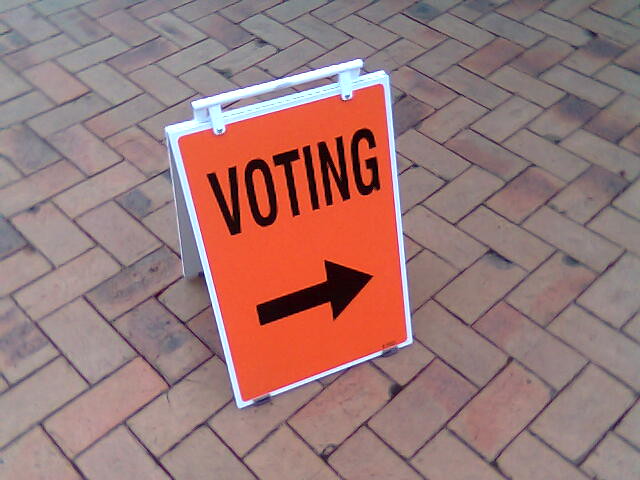
Voting as a Form of Prayer
Some of us have a difficult time thinking about voting as a form of prayer.
We may have a particularly partisan approach to life. Our decisions about voting do not necessarily involve any reflection of contemplation. We know what we think and how we want to vote to support our ideas.
Others of us do not experience voting as a form of prayer because we do not vote. We are disillusioned and do not believe politics is worth the time it takes.
Some of us believe voting is complicated and we do not have time to think about it. The process is hard to understand. We know we probably should vote, but thinking about it just gives us a headache. Why does it have to be so complicated?
We may know people who get intense when they talk about voting, and we certainly do not want to be like them. Everyone is already divided. All the intensity only divides us more.
I believe politics and voting is another opportunity to practice contemplative spiritual life. Like other forms of prayer, listening and openness are crucial to contemplative voting. We listen and discern where spiritual life is drawing us as we consider how to vote.
There are times when listening to the stillness between the words is the most significant aspect of politics.
Like spiritual life, we can approach voting without enmeshing ourselves in a particular ideology or political philosophy. How we vote is not simply a matter of competing metaphors, or a contest between parties. Voting as a form of prayer can help open our eyes to aspects of politics we have ignored.
The way we approach voting can help change how we understand the rest of life, including spiritual life.
Voting can become a place of peace.
Why Experience Voting as a Form of Prayer?
Some of us are passionate about politics. We may connect strongly to candidates and policies which appeal to our own deepest feelings. Some of us might express our political ideals in strong language and memes on social media. We are not trying to persuade other people to agree with us. Our political ideas and involvement might express our strongest, most personal emotions. We might view politics as a struggle, a conflict, and are campaigning for what we believe is right.
There have been times when I have been politically passionate. I studied political science, law, and public administration, and worked on political campaigns. The candidates and issues I support are ones in which I believe. I have tasted the thrill of political victory and the agony of defeat.
The people I support do not always embody what is wise, nor do their political rivals embody disaster. We can be certain, though, someone will win each election, and someone will be defeated. This will be as true for today’s election, and the next one, as it was for those in the past.
We can also be certain everyone who participates in elections needs our support. The one thing I know I can do to help is pray for them.
We can begin now to pray they will find wisdom and discernment, and pray they will be able to work together.
It may be a wise use of our time and effort to pray for the people who will be elected. It is also wise for us to pray for those who will not be elected.
How we pray could be more significant than how we vote.
How Do We Approach Voting as a Form of Prayer?
For me, the first step is a healthy distance and skepticism about the game of politics.
I grew up with a belief politics was a contest between right and wrong, good and evil. One party or position was what was best for our society, and the other was a path to the end of what we value. Each election was all about defeating the forces which wanted to destroy what we hold dear and supporting what was right and good.
My understanding of politics and voting reflected the way I saw most of the rest of the world.
As much as I appreciate the tactical and strategic parts of politics, I have grown into seeing politics in new ways.
Contemplative spirituality and practices have shaped my perspective and helped me see things in new ways. While I still enjoy winning more than losing, I have learned about what is won and lost.
Contemplative spirituality guides me into deeper, more reflective understanding. Becoming contemplative has shown me how to release things I have held onto for years and see them in new ways.
Each of us needs to learn how to see some things in new ways and to release what we have held tightly for so long.
When We Practice Voting as a Form of Prayer
Voting as a form of prayer helps me understand and approach politics and voting from a more comprehensive perspective.
Combining thinking about politics and contemplation reminds me of everything I forget or ignore by doing them separately. I remember as I watch the news to pray for the people experiencing the disasters. It helps me remember issues and incidents are part of the same story, woven into the same tapestry.
Voting as a form of prayer allows spiritual life to shape my politics, and public affairs to make my spirituality more practical. What I believe and how I behave flow together and strengthen each other.
I believe voting is a form of prayer and praying is a political act. We can pray for each other even when we disagree about specific issues and questions. What we think does not necessarily get in the way of what we believe, and what we believe does not necessarily divide us.
We listen and are open, and practice voting as a form of prayer.
How will we practice voting as a form of prayer today?
What would voting as a form of prayer be like for us this week?
[Image by mandamonium]
Greg Richardson is a spiritual director in Southern California. He is a recovering assistant district attorney and associate university professor, and is a lay Oblate with New Camaldoli Hermitage near Big Sur, California. Greg’s website is StrategicMonk.com and his email address is [email protected].
Previous Post

November 3, 2022
Spiritual Direction: What Happens When We Choose to Give Up?
Next Post

November 10, 2022 Book Review: Building Our Main Street by Kristian James
Browse Our Archives
Select a Category Blog Book Reviews Everything Else Guest Posts Leadership Monastic Strategies Neighborhood Pilgrimages Sacred Stillness Spiritual Direction Spiritual Practices Work
Select a Month May 2024 April 2024 March 2024 February 2024 January 2024 December 2023 November 2023 October 2023 September 2023 August 2023 July 2023 June 2023 May 2023 April 2023 March 2023 February 2023 January 2023 December 2022 November 2022 October 2022 September 2022 August 2022 July 2022 June 2022 May 2022 April 2022 March 2022 February 2022 January 2022 December 2021 November 2021 October 2021 September 2021 August 2021 July 2021 June 2021 May 2021 April 2021 March 2021 February 2021 January 2021 December 2020 November 2020 October 2020 April 2020 March 2020 February 2020 January 2020 December 2019 November 2019 October 2019 September 2019 August 2019 July 2019 June 2019 May 2019 April 2019 March 2019 February 2019 January 2019 December 2018 November 2018 October 2018 September 2018 August 2018 July 2018 June 2018 May 2018 April 2018 March 2018 February 2018 January 2018 December 2017 November 2017 October 2017 September 2017 August 2017 July 2017 June 2017 May 2017 April 2017 March 2017 February 2017 January 2017 December 2016 November 2016 October 2016 September 2016 August 2016 July 2016 June 2016 May 2016 April 2016 March 2016 February 2016 January 2016 December 2015 November 2015 October 2015 September 2015 August 2015 July 2015 June 2015 May 2015 April 2015 March 2015 February 2015 January 2015 December 2014 November 2014 October 2014 September 2014 August 2014 July 2014 June 2014 May 2014 April 2014 March 2014 February 2014 January 2014 December 2013 November 2013 October 2013 September 2013 August 2013 July 2013 June 2013 May 2013 April 2013 March 2013 February 2013 January 2013 December 2012 November 2012 October 2012 September 2012 August 2012 July 2012 June 2012 May 2012 April 2012 March 2012 February 2012 January 2012 December 2011 November 2011 October 2011 September 2011 August 2011 July 2011 June 2011 May 2011 April 2011 March 2011 February 2011 January 2011 December 2010
Follow Us!
TAKE THE
Religious Wisdom Quiz
What city is known as the birthplace of Jesus?
Select your answer to see how you score.
Nazareth Bethlehem Galilee Jerusalem
Related posts from Strategic Monk

How Are We Called to Live?: More About...

A Spiritual Practice of Reading: Join Us Online

Taking a Deep Breath, and Another: Finding Time...

Listening to Our Own Rhythms: When Will We...
TRENDING AT PATHEOS Contemplative

Handy Contemplative Practices for Political Spaces
A Spiritually Grounded Presence In order to bring a spiritually grounded presence...

Halloween: The Holiday of Loving Your Neighbor
All Hallows Eve Is Halloween the least Christian holiday in America, or...

Can Love Be Saved? Some Thoughts on the...
Happy Valentine's Day! I recently published a post on Patreon called Can...

"This Loving, Uniting Embrace": the Holy Ordinary
Today's guest post is by Mark Longhurst, author of The Holy Ordinary:...

How Are We Called to Live?: More About...
How Are We Called to Live? Many of us struggle with discerning...

A Spiritual Practice of Reading: Join Us Online
A Spiritual Practice of Reading A healthy spiritual practice of reading is...
view all Contemplative blogs
Ad-Free & Subscriber Log-In Subscription Support
- About Us
- 2026 Calendar
- Videos
- Podcasts
- Library of World Religions
- Faith In Media Tracker
- Advertise With Us
- Write for Us
- Privacy Policy
- Terms of Service
- Do Not Sell My Data
- Contact Us
- Radiant Digital
- Manage Newsletter Subscriptions
- Unsubscribe From Notifications
- Sitemap
Copyright 2008-2026, Patheos. All rights reserved.
Subscription Support Ad-Free & Subscriber Log-In
Follow Patheos