
BuddhistCatholicContemplativeEvangelicalGeneral ChristianHinduJewishLatter-day SaintMuslimNew VisionsProgressive Christian
Beliefs
- Buddhist
- Catholic
- Contemplative
- Evangelical
- General Christian
- Hindu
- Jewish
- Latter-day Saint
- More Voices
- Muslim
- New Visions
- Pagan
- Progressive Christian
Topics
- Religion News
- Food and Religion
- Sports and Religion
- Religious Art
- Religious Music and Entertainment
- Religious Events
- History and Religion
- Style and Religion
- Politics and Religion
- Women in Religion
- Recreation Outdoors and Religion
- Business Finance and Religion
- Careers Workplace and Religion
- Education and Religion
- Family Parenting and Religion
- Health Fitness and Religion
- Home and Religion
- Relationships and Religion
- Technology and Religion
- Travel and Religion
Columnists
- Buddhist Columnists
- Business Finance and Religion Columnists
- Careers Workplace and Religion Columnists
- Catholic Columnists
- Contemplative Columnists
- Education and Religion Columnists
- Evangelists Columnists
- Family Parenting and Religion Columnists
- General Christian Columnists
- Health Fitness and Religion Columnists
- Hindu Columnists
- History and Religion Columnists
- Home and Religion Columnists
- Jewish Columnists
- More Voices Columnists
- Latter Day Columnists
- Muslim Columnists
- New Visions Columnists
- Nonreligious Columnists
- Pagan Columnists
- Politics and Religion Columnists
- Progressive Columnists
- Recreation Outdoors and Religion Columnists
- Relationships and Religion Columnists
- Religion News Columnists
- Religious Art Columnists
- Religious Events Columnists
- Religious Music and Entertainment Columnists
- Sports and Religion Columnists
- Style and Religion Columnists
- Technology and Religion Columnists
- Travel and Religion Columnists
- Women in Religion Columnists
Resource Library
- 2026 Calendar
- Library of World Religions
- The 100 Most Holy Places on Earth
- Patheos Answers
- Podcasts
- Videos
- Faith Leaders Database
- Anglican Episcopalian
- Bahai
- Baptist
- Buddhism
- Christianity
- Confucianism
- Eastern Orthodoxy
- Hinduism
- Holiness and Pentecostal
- ISKCON
- Islam
- Judaism
- Lutheran
- Methodist
- The Church of Jesus Christ of Latter-day Saints
- New Age
- Paganism
- Presbytarian and Reformed
- Protestantism
- Religion Behind the Scenes
- Roman Catholic
- Scientology
- Shia Islam
- Sikhism
- Sufism
- Sunni Islam
- Taoism
- Zen
- See all religions
Research Tools
 Ad-Free & Subscriber Log-In Subscription Support
Ad-Free & Subscriber Log-In Subscription Support
Follow Patheos 

- Trending:
- Forgiveness
- |
- Marriage
- |
- Consciousness
- |
- Death Penalty
- |
- Election
- |
- Halloween
 Strategic Monk
-
About
-
Services
- Home
- Contemplative
- Monastic Strategies: Refugees From Spiritual Drought
Monastic Strategies: Refugees From Spiritual Drought
Last updated on: August 25, 2022 at 3:54 am by Greg Richardson
Monastic Strategies: Refugees From Spiritual Drought 2022-08-25T03:54:39-08:00 Greg Richardson
Patheos Explore the world's faith through different perspectives on religion and spirituality! Patheos has the views of the prevalent religions and spiritualities of the world.
Refugees From Spiritual Drought
Next week I will be on a trip to find refuge from spiritual drought. I plan to drive north through the dry and thirsty state of California to New Camaldoli Hermitage near Big Sur.
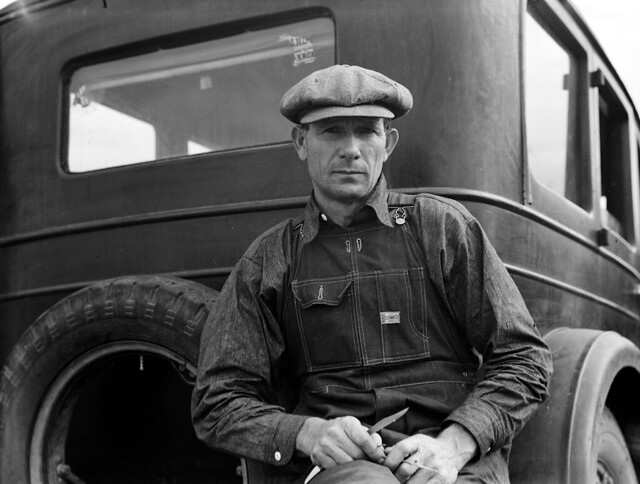
The person in this photo came to the area where I will be driving as a drought refugee 86 years ago. People from parts of the country where dry and windy weather removed the topsoil came to California seeking refuge. They wanted lives with more opportunity and more security.
My trip up to Big Sur will, I hope, be easier than their trips to California. I will follow freeways in a car with air conditioning. I can stop, if I need, to purchase fuel or fast food.
They were trying to find an oasis from dust storms and financial hardships. My goal is to spend some time recovering from spiritual drought.
I plan to drive up the coast each summer to spend time on retreat at New Camaldoli. One summer I was not able to go because a winter storm had washed out the highway both north and south of the hermitage. Another summer I was not able to go because the monastery was surrounded by fire. Most of the monks were evacuated and it became a staging area for firefighters.
Some of us have our own theories about what causes the spiritual drought we experience. We may believe in a spiritual equivalent of climate change, pushing us into spiritual drought. Others of us see a prolonged period of pandemic, war, famine, and death as the cause of our drought. Our struggling has exhausted us.
The places where we are accustomed to going to find a refreshing drink are shrinking.
Where can we go to save ourselves and satisfy our thirst?
The Roots of Our Spiritual Drought
What brings on our spiritual drought? Are there causes we can recognize and understand?
Some people blame the Internet or cellphones or social media. They are convinced we are losing our ability to be open to spiritual life because our electronic devises distract us. We can no longer listen to the sacred stillness we need to resolve our spiritual drought.
I believe stillness was a challenge for us even before we had access to the Internet and electronic devices. There were people who felt television was a distraction before the Internet, and radio before television.
For me, the roots of spiritual drought are within us, not in anything electronic.
My experience tells me our minds do not perceive stillness as helpful. We see the world as filled with potentially dangerous threats and our minds need to be vigilant to keep us safe.
Listening to sacred stillness could mean we miss some potentially devastating threat to us.
Our minds are focused on solving problems, and threats are particularly challenging problems. When we try to practice contemplation and reflection, our minds experience it as a lack of problems. Our brains try to solve the problem of not focusing on problems by generating problems to solve.
Some people have particular difficulty beginning contemplative practices. Their minds might be particuarly adept at solving problems and reluctant to take any time away from problem solving.
They may not perceive a spiritual drought as a problem which needs our focused attention.
The first step in addressing spiritual drought is training our minds to recognize its importance.
Our society’s overall spiritual drought is rooted in our own personal droughts. Each of us can take steps which will help relieve our society’s drought.
How can we begin to address our spiritual drought and find the relief we need?
Spiritual Drought Relief
One of the most effective ways to relieve our spiritual drought is to start a practice of listening to sacred stillness. We can each set aside a specific period of time each day to spend in stillness.
Some of us are comfortable sitting still and listening to the stillness within us. Other people may prefer to take a walk or listen to stillness in a particular place.
One of the challenges we face is people are so thirsty in our society our stillness makes them curious. When we listen to stillness in a public place other people tend to want to interrupt us and ask questions.
If you are comfortable with people’s questions, places like parks or gardens can be great places to practice stillness.
I know people who seek out quiet places to practice stillness. They find empty places of worship during the week in their neighborhoods and slip in to spend time listening.
I am going up to Big Sur next week to spend some time listening, to relieve spiritual drought.
We each play our own part in spiritual drought relief in our own ways.
Healing the Wounds of Spiritual Drought
We may find, as we develop a contemplative practice, the benefits go beyond restoring our supply of stillness.
Our spiritual drought drains our ability to listen and pay attention. When we do not spend enough time in stillness and contemplation we begin to see every situation as urgent. Our minds pull us into emergency and stress which drains us further.
Ironically, our focus on solving problems keeps us from seeing our deeper challenges.
A drought turns our lives into dust and ashes. Our days are arid and filled with dry winds and brush fires. Our nights do not bring relief.
We try to entertain and distract ourselves, but cannot find the cleansing nourishment for which we thirst.
Next week, I will follow the paths other drought refugees have followed and seek relief. Please pray we will learn the lessons this drought has to teach us, and for spiritual life in a dry and challenging time.
Closing our eyes, we tilt our heads to the sky waiting for the first drops of water.
Where are we experiencing spiritual drought today?
How will we help relieve our spiritual drought this week?
[Image by exit78 & Dorothea Lange]
Greg Richardson is a spiritual director in Southern California. He is a recovering assistant district attorney and associate university professor, and is a lay Oblate with New Camaldoli Hermitage near Big Sur, California. Greg’s website is StrategicMonk.com and his email address is [email protected].
Previous Post

August 23, 2022
Listening to Sacred Stillness: Discovering Light in the Dark
Next Post

September 6, 2022 Practices For Each Day, Week, Month & Year
Browse Our Archives
Select a Category Blog Book Reviews Everything Else Guest Posts Leadership Monastic Strategies Neighborhood Pilgrimages Sacred Stillness Spiritual Direction Spiritual Practices Work
Select a Month May 2024 April 2024 March 2024 February 2024 January 2024 December 2023 November 2023 October 2023 September 2023 August 2023 July 2023 June 2023 May 2023 April 2023 March 2023 February 2023 January 2023 December 2022 November 2022 October 2022 September 2022 August 2022 July 2022 June 2022 May 2022 April 2022 March 2022 February 2022 January 2022 December 2021 November 2021 October 2021 September 2021 August 2021 July 2021 June 2021 May 2021 April 2021 March 2021 February 2021 January 2021 December 2020 November 2020 October 2020 April 2020 March 2020 February 2020 January 2020 December 2019 November 2019 October 2019 September 2019 August 2019 July 2019 June 2019 May 2019 April 2019 March 2019 February 2019 January 2019 December 2018 November 2018 October 2018 September 2018 August 2018 July 2018 June 2018 May 2018 April 2018 March 2018 February 2018 January 2018 December 2017 November 2017 October 2017 September 2017 August 2017 July 2017 June 2017 May 2017 April 2017 March 2017 February 2017 January 2017 December 2016 November 2016 October 2016 September 2016 August 2016 July 2016 June 2016 May 2016 April 2016 March 2016 February 2016 January 2016 December 2015 November 2015 October 2015 September 2015 August 2015 July 2015 June 2015 May 2015 April 2015 March 2015 February 2015 January 2015 December 2014 November 2014 October 2014 September 2014 August 2014 July 2014 June 2014 May 2014 April 2014 March 2014 February 2014 January 2014 December 2013 November 2013 October 2013 September 2013 August 2013 July 2013 June 2013 May 2013 April 2013 March 2013 February 2013 January 2013 December 2012 November 2012 October 2012 September 2012 August 2012 July 2012 June 2012 May 2012 April 2012 March 2012 February 2012 January 2012 December 2011 November 2011 October 2011 September 2011 August 2011 July 2011 June 2011 May 2011 April 2011 March 2011 February 2011 January 2011 December 2010
Follow Us!
TAKE THE
Religious Wisdom Quiz
What material was used to make Moses' basket waterproof?
Select your answer to see how you score.
Linen and clay Tar and pitch Camel hide Palm leaves
Related posts from Strategic Monk

How Are We Called to Live?: More About...

A Spiritual Practice of Reading: Join Us Online

Taking a Deep Breath, and Another: Finding Time...

Listening to Our Own Rhythms: When Will We...
TRENDING AT PATHEOS Contemplative

Handy Contemplative Practices for Political Spaces
A Spiritually Grounded Presence In order to bring a spiritually grounded presence...

Halloween: The Holiday of Loving Your Neighbor
All Hallows Eve Is Halloween the least Christian holiday in America, or...

Can Love Be Saved? Some Thoughts on the...
Happy Valentine's Day! I recently published a post on Patreon called Can...

"This Loving, Uniting Embrace": the Holy Ordinary
Today's guest post is by Mark Longhurst, author of The Holy Ordinary:...

How Are We Called to Live?: More About...
How Are We Called to Live? Many of us struggle with discerning...

A Spiritual Practice of Reading: Join Us Online
A Spiritual Practice of Reading A healthy spiritual practice of reading is...
view all Contemplative blogs
Ad-Free & Subscriber Log-In Subscription Support
- About Us
- 2026 Calendar
- Videos
- Podcasts
- Library of World Religions
- Faith In Media Tracker
- Advertise With Us
- Write for Us
- Privacy Policy
- Terms of Service
- Do Not Sell My Data
- Contact Us
- Radiant Digital
- Manage Newsletter Subscriptions
- Unsubscribe From Notifications
- Sitemap
Copyright 2008-2026, Patheos. All rights reserved.
Subscription Support Ad-Free & Subscriber Log-In
Follow Patheos