
BuddhistCatholicContemplativeEvangelicalGeneral ChristianHinduJewishLatter-day SaintMuslimNew VisionsProgressive Christian
Beliefs
- Buddhist
- Catholic
- Contemplative
- Evangelical
- General Christian
- Hindu
- Jewish
- Latter-day Saint
- More Voices
- Muslim
- New Visions
- Pagan
- Progressive Christian
Topics
- Religion News
- Food and Religion
- Sports and Religion
- Religious Art
- Religious Music and Entertainment
- Religious Events
- History and Religion
- Style and Religion
- Politics and Religion
- Women in Religion
- Recreation Outdoors and Religion
- Business Finance and Religion
- Careers Workplace and Religion
- Education and Religion
- Family Parenting and Religion
- Health Fitness and Religion
- Home and Religion
- Relationships and Religion
- Technology and Religion
- Travel and Religion
Columnists
- Buddhist Columnists
- Business Finance and Religion Columnists
- Careers Workplace and Religion Columnists
- Catholic Columnists
- Contemplative Columnists
- Education and Religion Columnists
- Evangelists Columnists
- Family Parenting and Religion Columnists
- General Christian Columnists
- Health Fitness and Religion Columnists
- Hindu Columnists
- History and Religion Columnists
- Home and Religion Columnists
- Jewish Columnists
- More Voices Columnists
- Latter Day Columnists
- Muslim Columnists
- New Visions Columnists
- Nonreligious Columnists
- Pagan Columnists
- Politics and Religion Columnists
- Progressive Columnists
- Recreation Outdoors and Religion Columnists
- Relationships and Religion Columnists
- Religion News Columnists
- Religious Art Columnists
- Religious Events Columnists
- Religious Music and Entertainment Columnists
- Sports and Religion Columnists
- Style and Religion Columnists
- Technology and Religion Columnists
- Travel and Religion Columnists
- Women in Religion Columnists
Resource Library
- 2026 Calendar
- Library of World Religions
- The 100 Most Holy Places on Earth
- Patheos Answers
- Podcasts
- Videos
- Faith Leaders Database
- Anglican Episcopalian
- Bahai
- Baptist
- Buddhism
- Christianity
- Confucianism
- Eastern Orthodoxy
- Hinduism
- Holiness and Pentecostal
- ISKCON
- Islam
- Judaism
- Lutheran
- Methodist
- The Church of Jesus Christ of Latter-day Saints
- New Age
- Paganism
- Presbytarian and Reformed
- Protestantism
- Religion Behind the Scenes
- Roman Catholic
- Scientology
- Shia Islam
- Sikhism
- Sufism
- Sunni Islam
- Taoism
- Zen
- See all religions
Research Tools
 Ad-Free & Subscriber Log-In Subscription Support
Ad-Free & Subscriber Log-In Subscription Support
Follow Patheos 

- Trending:
- Forgiveness
- |
- Marriage
- |
- Consciousness
- |
- Death Penalty
- |
- Election
- |
- Halloween
 Strategic Monk
-
About
-
Services
- Home
- Contemplative
- Monastic Strategies: Crying Peace When There is No Peace
Monastic Strategies: Crying Peace When There is No Peace
Last updated on: February 22, 2022 at 9:45 am by Greg Richardson
Monastic Strategies: Crying Peace When There is No Peace 2022-02-22T09:45:07-08:00 Greg Richardson
Patheos Explore the world's faith through different perspectives on religion and spirituality! Patheos has the views of the prevalent religions and spiritualities of the world.
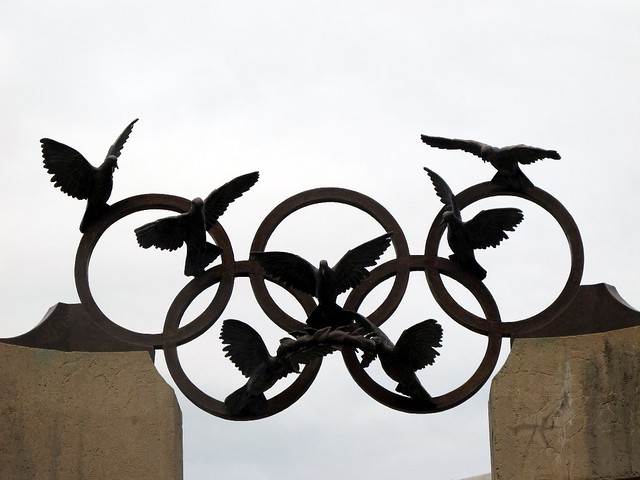
Crying Peace When There is No Peace
We live in a world where peace is elusive and difficult to find.
Our world is one of conflict and aggression, full of wars and rumors of wars. We hear news several times each day about how someone is pushing someone else around. Even when we get together and try to work things out, our efforts often end in pain and grievance and frustration.
It feels like those of us who want peace are powerless to make it happen, while those of us who use force will stop at nothing.
Some of us can become frustrated with people who pray for peace. They believe praying and reflecting is a waste of time when we need to be out working to make things happen.
Each of us needs to make our own decisions about putting ourselves on the line to peacefully resolve conflicts. Some of us are called to use our bodies to stop tanks, while others are not.
It is easy for us to assume we are not asked to put ourselves at risk, or make any real changes, to support peace.
The monks I know are praying for peace. They are not only praying for the peaceful resolution of conflicts between armies or countries, and between individuals. What they seek is more than solving conflicts without bloodshed.
They believe the conflicts between us grow our of the conflicts within us. Our lives are full of strife because we do not know how to find peace within ourselves.
We pay attention to conflict and strife, and rumors of war draw us more deeply into argument and frustration. They are so loud in our minds and hearts we cannot remember the power of sacred stillness.
It is easy for us to lose track of spiritual life working in us.
Paying Attention to Peace
We become accustomed to living in a world of aggression and conflict. Some of us believe the only way to get what we deserve, our fair share, is to intimidate other people. It is easy for us to assume we need to act in accordance with the way the world works.
When we focus our attention on wars and rumors of wars they begin to shape our attitudes and behavior. We grow more comfortable with aggression, and often become more aggressive.
If we pay attention to peace we become more comfortable with acting peacefully. We appreciate peace in the sacred stillness within us and in the world all around us.
Many of us find ourselves reflecting and sharing peace with people around us. We become instruments of peace in the world.
I am not prescribing specific solutions to particular problems and situations. Taking time to reflect and listen will not solve all our problems. We will, though, over time, become more peaceful people.
When we pay attention to peace we gain insights into how it works. We begin to see its power and adaptability. Our first reactions change from aggression to sharing peace.
While it is not easy and it takes time, we gradually grow into the rhythms of grace and peace.
We learn how spiritual life lives and works in us, and through us in the world.
It grows in us as we grow into more peaceful people. We practice regularly paying attention to it and it grows within us, shaping who we are becoming.
Like the monks I know, we start to recognize there is more to peace than we have noticed before. It is not merely avoiding conflict, but a calm balance which holds us and our lives together.
Peace Which Passes Understanding
We are paying attention in a new way.
Our practice is not about becoming experts or mastering special knowledge about peace. We are learning how to open ourselves and allow it to embrace us in its arms.
It is not about analyzing and applying peace in the world. We listen and pay attention, and are transformed in ways beyond our understanding.
The calm balance seeks us and embraces us even when we have forgotten how it feels. It is beyond our abilities to analyze and measure it. We forget how we found it and where to return to it.
It is easy for us to get caught up in the struggle to find the right balance and disregard the calm it gives us.
Many of us put all our time and energy in trying to understand. We fail to appreciate how balanced our peace can be.
While we may learn lessons from other people’s experience, they cannot give us the peace we seek. We find it on our own, often when we stop struggling, stop searching, strop trying.
It is a challenge for us to recognize the calm balance which has been waiting patiently for us all along.
Sharing Peace In the World
Some of us want to share peace with other people as aggressively as we can. We believe it is important and feel it is urgent. It may be the most significant thing we can share with anyone, and we want them to know it.
People may not appreciate it when we are tempted to try to force it down their throat. It indicates we may not have learned as much about peace as we think we have.
We need to take time to practice acting peacefully. The world has taught us about force and aggression, but we need to learn how to act peacefully.
Each of us must find our own way to live peacefully. We cannot require anyone else to follow our path, but need to help them follow their own.
Some of us assume it would be easier, or quicker, to put it all in a checklist or a chart. We could then measure and assess our progress.
It is not for us to prescribe how other people receive or share peace.
How will we recognize the peace within us today?
When will we share peace in our world this week?
[Image by frankieleon]
Greg Richardson is a spiritual director in Southern California. He is a recovering assistant district attorney and associate university professor, and is a lay Oblate with New Camaldoli Hermitage near Big Sur, California. Greg’s website is StrategicMonk.com and his email address is [email protected].
Previous Post

February 17, 2022
Spiritual Direction: Facing the Secret Darkness Within Us
Next Post

February 24, 2022 Listening to Sacred Stillness: Discerning Guidance in the Stillness
Browse Our Archives
Select a Category Blog Book Reviews Everything Else Guest Posts Leadership Monastic Strategies Neighborhood Pilgrimages Sacred Stillness Spiritual Direction Spiritual Practices Work
Select a Month May 2024 April 2024 March 2024 February 2024 January 2024 December 2023 November 2023 October 2023 September 2023 August 2023 July 2023 June 2023 May 2023 April 2023 March 2023 February 2023 January 2023 December 2022 November 2022 October 2022 September 2022 August 2022 July 2022 June 2022 May 2022 April 2022 March 2022 February 2022 January 2022 December 2021 November 2021 October 2021 September 2021 August 2021 July 2021 June 2021 May 2021 April 2021 March 2021 February 2021 January 2021 December 2020 November 2020 October 2020 April 2020 March 2020 February 2020 January 2020 December 2019 November 2019 October 2019 September 2019 August 2019 July 2019 June 2019 May 2019 April 2019 March 2019 February 2019 January 2019 December 2018 November 2018 October 2018 September 2018 August 2018 July 2018 June 2018 May 2018 April 2018 March 2018 February 2018 January 2018 December 2017 November 2017 October 2017 September 2017 August 2017 July 2017 June 2017 May 2017 April 2017 March 2017 February 2017 January 2017 December 2016 November 2016 October 2016 September 2016 August 2016 July 2016 June 2016 May 2016 April 2016 March 2016 February 2016 January 2016 December 2015 November 2015 October 2015 September 2015 August 2015 July 2015 June 2015 May 2015 April 2015 March 2015 February 2015 January 2015 December 2014 November 2014 October 2014 September 2014 August 2014 July 2014 June 2014 May 2014 April 2014 March 2014 February 2014 January 2014 December 2013 November 2013 October 2013 September 2013 August 2013 July 2013 June 2013 May 2013 April 2013 March 2013 February 2013 January 2013 December 2012 November 2012 October 2012 September 2012 August 2012 July 2012 June 2012 May 2012 April 2012 March 2012 February 2012 January 2012 December 2011 November 2011 October 2011 September 2011 August 2011 July 2011 June 2011 May 2011 April 2011 March 2011 February 2011 January 2011 December 2010
Follow Us!
TAKE THE
Religious Wisdom Quiz
What city is known as the birthplace of Jesus?
Select your answer to see how you score.
Nazareth Bethlehem Galilee Jerusalem
Related posts from Strategic Monk

How Are We Called to Live?: More About...

A Spiritual Practice of Reading: Join Us Online

Taking a Deep Breath, and Another: Finding Time...

Listening to Our Own Rhythms: When Will We...
TRENDING AT PATHEOS Contemplative

Handy Contemplative Practices for Political Spaces
A Spiritually Grounded Presence In order to bring a spiritually grounded presence...

Halloween: The Holiday of Loving Your Neighbor
All Hallows Eve Is Halloween the least Christian holiday in America, or...

Can Love Be Saved? Some Thoughts on the...
Happy Valentine's Day! I recently published a post on Patreon called Can...

"This Loving, Uniting Embrace": the Holy Ordinary
Today's guest post is by Mark Longhurst, author of The Holy Ordinary:...

How Are We Called to Live?: More About...
How Are We Called to Live? Many of us struggle with discerning...

A Spiritual Practice of Reading: Join Us Online
A Spiritual Practice of Reading A healthy spiritual practice of reading is...
view all Contemplative blogs
Ad-Free & Subscriber Log-In Subscription Support
- About Us
- 2026 Calendar
- Videos
- Podcasts
- Library of World Religions
- Faith In Media Tracker
- Advertise With Us
- Write for Us
- Privacy Policy
- Terms of Service
- Do Not Sell My Data
- Contact Us
- Radiant Digital
- Manage Newsletter Subscriptions
- Unsubscribe From Notifications
- Sitemap
Copyright 2008-2026, Patheos. All rights reserved.
Subscription Support Ad-Free & Subscriber Log-In
Follow Patheos