
BuddhistCatholicContemplativeEvangelicalGeneral ChristianHinduJewishLatter-day SaintMuslimNew VisionsProgressive Christian
Beliefs
- Buddhist
- Catholic
- Contemplative
- Evangelical
- General Christian
- Hindu
- Jewish
- Latter-day Saint
- More Voices
- Muslim
- New Visions
- Pagan
- Progressive Christian
Topics
- Religion News
- Food and Religion
- Sports and Religion
- Religious Art
- Religious Music and Entertainment
- Religious Events
- History and Religion
- Style and Religion
- Politics and Religion
- Women in Religion
- Recreation Outdoors and Religion
- Business Finance and Religion
- Careers Workplace and Religion
- Education and Religion
- Family Parenting and Religion
- Health Fitness and Religion
- Home and Religion
- Relationships and Religion
- Technology and Religion
- Travel and Religion
Columnists
- Buddhist Columnists
- Business Finance and Religion Columnists
- Careers Workplace and Religion Columnists
- Catholic Columnists
- Contemplative Columnists
- Education and Religion Columnists
- Evangelists Columnists
- Family Parenting and Religion Columnists
- General Christian Columnists
- Health Fitness and Religion Columnists
- Hindu Columnists
- History and Religion Columnists
- Home and Religion Columnists
- Jewish Columnists
- More Voices Columnists
- Latter Day Columnists
- Muslim Columnists
- New Visions Columnists
- Nonreligious Columnists
- Pagan Columnists
- Politics and Religion Columnists
- Progressive Columnists
- Recreation Outdoors and Religion Columnists
- Relationships and Religion Columnists
- Religion News Columnists
- Religious Art Columnists
- Religious Events Columnists
- Religious Music and Entertainment Columnists
- Sports and Religion Columnists
- Style and Religion Columnists
- Technology and Religion Columnists
- Travel and Religion Columnists
- Women in Religion Columnists
Resource Library
- 2026 Calendar
- Library of World Religions
- The 100 Most Holy Places on Earth
- Patheos Answers
- Podcasts
- Videos
- Faith Leaders Database
- Anglican Episcopalian
- Bahai
- Baptist
- Buddhism
- Christianity
- Confucianism
- Eastern Orthodoxy
- Hinduism
- Holiness and Pentecostal
- ISKCON
- Islam
- Judaism
- Lutheran
- Methodist
- The Church of Jesus Christ of Latter-day Saints
- New Age
- Paganism
- Presbytarian and Reformed
- Protestantism
- Religion Behind the Scenes
- Roman Catholic
- Scientology
- Shia Islam
- Sikhism
- Sufism
- Sunni Islam
- Taoism
- Zen
- See all religions
Research Tools
 Ad-Free & Subscriber Log-In Subscription Support
Ad-Free & Subscriber Log-In Subscription Support
Follow Patheos 

- Trending:
- Forgiveness
- |
- Marriage
- |
- Consciousness
- |
- Death Penalty
- |
- Election
- |
- Halloween
 Strategic Monk
-
About
-
Services
- Home
- Contemplative
- Monastic Strategies: Why Do We Pray for People?
Monastic Strategies: Why Do We Pray for People?
Last updated on: January 26, 2021 at 4:42 am by Greg Richardson
Monastic Strategies: Why Do We Pray for People? 2021-01-26T04:42:09-08:00 Greg Richardson
Patheos Explore the world's faith through different perspectives on religion and spirituality! Patheos has the views of the prevalent religions and spiritualities of the world.
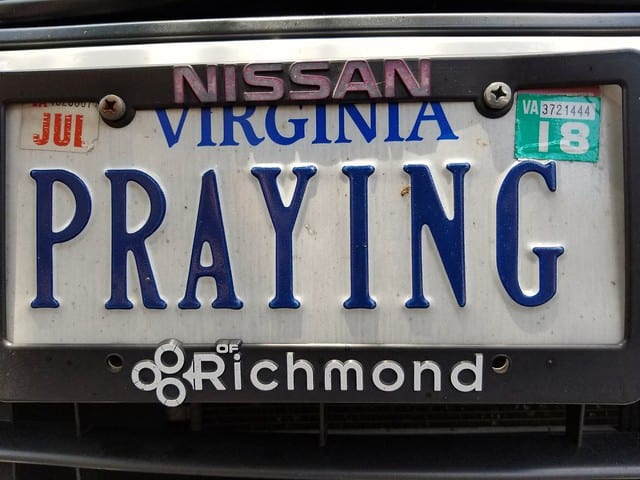
Why Do We Pray For People?
It often feels like my social media screens overflow with requests asking me to pray for people.
The pandemic and all of its accompanying stresses are obvious sources of people asking for prayer. I know quite a few people who deal with parents who are growing older and other health challenges. A friend of mine who has stage-four cancer just lost his wife, the love of his life, to her own fight with cancer.
People are losing their jobs, not only their livelihoods but the careers they had dreamed about all their lives. Work is becoming more difficult.
There is a loss of hope and a growing sense of despair. More of us are willing to ask each other to pray for us.
A couple of weeks ago someone in one of the groups I frequent on Facebook asked for people to pray for them. I said I would, and received a response from someone else in the group which provoked my thinking.
“Why do we pray for people?” they asked. They explained their question in a reasonable, researched way. As far as they could tell, there is no evidence at all for circumstances changing because we pray for people. To their mind, praying for other people, no matter how empathetic we might be, does not do them any good.
They asked whether, instead of praying for people, there might be something we could do to actually help them.
Do we pray for people? If we do, why do we? Do we believe we are doing something effective to help them when we pray for them?
Is there a difference between praying for someone and offering our “thoughts and prayers?”
How does prayer work, and what exactly changes when we pray?
When We Pray for People
What are we doing when we pray for people?
When we pray we are not trying to persuade or influence God. It is not as if we see things God might have missed or need to make sure nothing gets lost.
Praying is not a celestial customer service number we can call when we need help, a last resort or Hail Mary(in several ways) when nothing else works.
Prayer is about recognizing when we are aligned with spiritual life. We bring our concerns and loves, our ideas and anxieties into the light. Praying helps us develop and sustain our spiritual perspective.
We look and listen, discerning how our desires fit into spiritual life.
When we read about or watch some tragedy happening somewhere in the world we pray. It is not because we expect, somehow magically, the damage will not have happened. We bring the situation and the people directly affected by it into the sacred light of truth.
Prayer is a recognition we want to do what we can. We are paying attention and sharing our time and energy.
Our prayer is not about influencing God, but about how spiritual life influences us. We open ourselves to its healing, loving presence. Praying is how we remember spiritual life within us and in the world so we can put our trust into it.
When we pray for people it is not a magic spell or a formula to get what we want. My prayer is most often about recognizing and remembering I cannot control what happens.
We do not wield spiritual life like a wand or a light saber. It flows through us when we allow ourselves to be open and honest.
When we pray for people it is an opportunity to practice spiritual life in our everyday lives.
How We Pray for People
Some of us set aside particular times each day to pray for people.
It is not because those times are more spiritual or make our prayer more effective. Some of us who practice praying at regular times need reminders to pray scheduled throughout our days.
Our lives are filled with responsibilities and distractions. We hope to develop an attitude of prayer we can practice throughout our everyday lives. It is easy to get caught up in other things and forget how much we would like to be praying.
If it is helpful, we can set times in our daily calendars which remind us to pray for people. Some of us pray in the morning and in the evening.
We do not need to go to a special place or say particular words. Our prayer may be simply taking time each day to listen to sacred stillness within us and around us.
Some people practice praying while they walk and others while they are sitting down. We may pray with our eyes closed or with them open.
Praying is not about following rules, but about being open and aware.
The key is finding what works for us.
It Makes a Difference When We Pray For People
No matter when or how we pray, praying for people changes how we experience our lives.
Praying is not an attempt to change our circumstances, but how we experience them. We take time to be open to the presence of spiritual life within us and around us.
Praying is not a substitute for taking action. We pray and listen to sacred stillness to discern how we will act. Our practice of prayer makes differences within us. The differences change how we live our everyday lives.
Our praying is not a search for the answers. As we pray we listen for new questions and new insights to shape how we live our lives.
We do not pray to change the way things are, but to change the ways we experience ourselves and our lives.
Like any spiritual practice, praying becomes integrated into our lives over time. As we practice prayer we experience it helping us learn and grow. Praying is part of our lifelong journey into becoming who we can be.
Praying for people is more than an immediate moment. Our practice of prayer builds over time.
When will we take time to pray for people today?
Why will we pray for people this week?
[Image by Gamma Man]
Greg Richardson is a spiritual life coach in Southern California. He has served as an assistant district attorney, an associate university professor, and is a lay Oblate with New Camaldoli Hermitage near Big Sur, California. Greg’s website is StrategicMonk.com and his email address is [email protected].
Previous Post

January 21, 2021
Practices From the Inside Out: Becoming Our True Selves
Next Post

January 28, 2021 Listening to Sacred Stillness: Wrapping Ourselves in Stillness
Browse Our Archives
Select a Category Blog Book Reviews Everything Else Guest Posts Leadership Monastic Strategies Neighborhood Pilgrimages Sacred Stillness Spiritual Direction Spiritual Practices Work
Select a Month May 2024 April 2024 March 2024 February 2024 January 2024 December 2023 November 2023 October 2023 September 2023 August 2023 July 2023 June 2023 May 2023 April 2023 March 2023 February 2023 January 2023 December 2022 November 2022 October 2022 September 2022 August 2022 July 2022 June 2022 May 2022 April 2022 March 2022 February 2022 January 2022 December 2021 November 2021 October 2021 September 2021 August 2021 July 2021 June 2021 May 2021 April 2021 March 2021 February 2021 January 2021 December 2020 November 2020 October 2020 April 2020 March 2020 February 2020 January 2020 December 2019 November 2019 October 2019 September 2019 August 2019 July 2019 June 2019 May 2019 April 2019 March 2019 February 2019 January 2019 December 2018 November 2018 October 2018 September 2018 August 2018 July 2018 June 2018 May 2018 April 2018 March 2018 February 2018 January 2018 December 2017 November 2017 October 2017 September 2017 August 2017 July 2017 June 2017 May 2017 April 2017 March 2017 February 2017 January 2017 December 2016 November 2016 October 2016 September 2016 August 2016 July 2016 June 2016 May 2016 April 2016 March 2016 February 2016 January 2016 December 2015 November 2015 October 2015 September 2015 August 2015 July 2015 June 2015 May 2015 April 2015 March 2015 February 2015 January 2015 December 2014 November 2014 October 2014 September 2014 August 2014 July 2014 June 2014 May 2014 April 2014 March 2014 February 2014 January 2014 December 2013 November 2013 October 2013 September 2013 August 2013 July 2013 June 2013 May 2013 April 2013 March 2013 February 2013 January 2013 December 2012 November 2012 October 2012 September 2012 August 2012 July 2012 June 2012 May 2012 April 2012 March 2012 February 2012 January 2012 December 2011 November 2011 October 2011 September 2011 August 2011 July 2011 June 2011 May 2011 April 2011 March 2011 February 2011 January 2011 December 2010
Follow Us!
TAKE THE
Religious Wisdom Quiz
What was the name of the King who made Esther his queen?
Select your answer to see how you score.
Hezekiah Ahasuerus Jeremiah Barnabas
Related posts from Strategic Monk

How Are We Called to Live?: More About...

A Spiritual Practice of Reading: Join Us Online

Taking a Deep Breath, and Another: Finding Time...

Listening to Our Own Rhythms: When Will We...
TRENDING AT PATHEOS Contemplative

Handy Contemplative Practices for Political Spaces
A Spiritually Grounded Presence In order to bring a spiritually grounded presence...

Halloween: The Holiday of Loving Your Neighbor
All Hallows Eve Is Halloween the least Christian holiday in America, or...

Can Love Be Saved? Some Thoughts on the...
Happy Valentine's Day! I recently published a post on Patreon called Can...

"This Loving, Uniting Embrace": the Holy Ordinary
Today's guest post is by Mark Longhurst, author of The Holy Ordinary:...

How Are We Called to Live?: More About...
How Are We Called to Live? Many of us struggle with discerning...

A Spiritual Practice of Reading: Join Us Online
A Spiritual Practice of Reading A healthy spiritual practice of reading is...
view all Contemplative blogs
Ad-Free & Subscriber Log-In Subscription Support
- About Us
- 2026 Calendar
- Videos
- Podcasts
- Library of World Religions
- Faith In Media Tracker
- Advertise With Us
- Write for Us
- Privacy Policy
- Terms of Service
- Do Not Sell My Data
- Contact Us
- Radiant Digital
- Manage Newsletter Subscriptions
- Unsubscribe From Notifications
- Sitemap
Copyright 2008-2026, Patheos. All rights reserved.
Subscription Support Ad-Free & Subscriber Log-In
Follow Patheos