
BuddhistCatholicContemplativeEvangelicalGeneral ChristianHinduJewishLatter-day SaintMuslimNew VisionsProgressive Christian
Beliefs
- Buddhist
- Catholic
- Contemplative
- Evangelical
- General Christian
- Hindu
- Jewish
- Latter-day Saint
- More Voices
- Muslim
- New Visions
- Pagan
- Progressive Christian
Topics
- Religion News
- Food and Religion
- Sports and Religion
- Religious Art
- Religious Music and Entertainment
- Religious Events
- History and Religion
- Style and Religion
- Politics and Religion
- Women in Religion
- Recreation Outdoors and Religion
- Business Finance and Religion
- Careers Workplace and Religion
- Education and Religion
- Family Parenting and Religion
- Health Fitness and Religion
- Home and Religion
- Relationships and Religion
- Technology and Religion
- Travel and Religion
Columnists
- Buddhist Columnists
- Business Finance and Religion Columnists
- Careers Workplace and Religion Columnists
- Catholic Columnists
- Contemplative Columnists
- Education and Religion Columnists
- Evangelists Columnists
- Family Parenting and Religion Columnists
- General Christian Columnists
- Health Fitness and Religion Columnists
- Hindu Columnists
- History and Religion Columnists
- Home and Religion Columnists
- Jewish Columnists
- More Voices Columnists
- Latter Day Columnists
- Muslim Columnists
- New Visions Columnists
- Nonreligious Columnists
- Pagan Columnists
- Politics and Religion Columnists
- Progressive Columnists
- Recreation Outdoors and Religion Columnists
- Relationships and Religion Columnists
- Religion News Columnists
- Religious Art Columnists
- Religious Events Columnists
- Religious Music and Entertainment Columnists
- Sports and Religion Columnists
- Style and Religion Columnists
- Technology and Religion Columnists
- Travel and Religion Columnists
- Women in Religion Columnists
Resource Library
- 2026 Calendar
- Library of World Religions
- The 100 Most Holy Places on Earth
- Patheos Answers
- Podcasts
- Videos
- Faith Leaders Database
- Anglican Episcopalian
- Bahai
- Baptist
- Buddhism
- Christianity
- Confucianism
- Eastern Orthodoxy
- Hinduism
- Holiness and Pentecostal
- ISKCON
- Islam
- Judaism
- Lutheran
- Methodist
- The Church of Jesus Christ of Latter-day Saints
- New Age
- Paganism
- Presbytarian and Reformed
- Protestantism
- Religion Behind the Scenes
- Roman Catholic
- Scientology
- Shia Islam
- Sikhism
- Sufism
- Sunni Islam
- Taoism
- Zen
- See all religions
Research Tools
 Ad-Free & Subscriber Log-In Subscription Support
Ad-Free & Subscriber Log-In Subscription Support
Follow Patheos 

- Trending:
- Forgiveness
- |
- Marriage
- |
- Consciousness
- |
- Death Penalty
- |
- Election
- |
- Halloween
 Strategic Monk
-
About
-
Services
- Home
- Contemplative
- Monastic Strategies: Money is How We Keep Score
Monastic Strategies: Money is How We Keep Score
Last updated on: October 11, 2019 at 7:04 pm by Greg Richardson
Monastic Strategies: Money is How We Keep Score 2019-10-11T19:04:02-08:00 Greg Richardson
Patheos Explore the world's faith through different perspectives on religion and spirituality! Patheos has the views of the prevalent religions and spiritualities of the world.
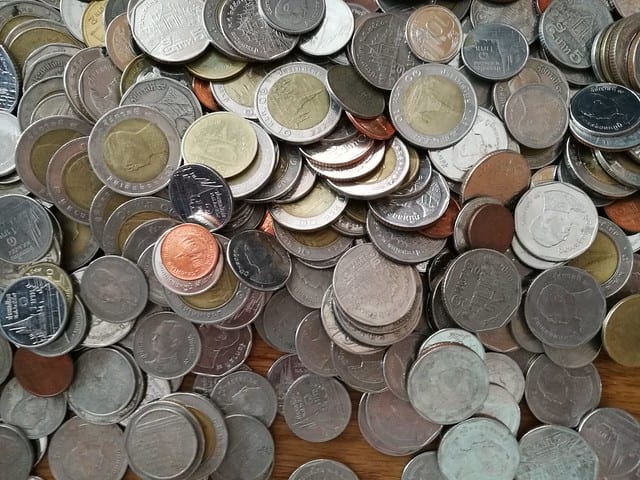
Money is How We Keep Score
I believe Ted Turner said, “Life is a game. Money is how we keep score.”
A couple of months ago I bought a new laptop computer. Actually my wife and I traded in our two iPads and my desktop Mac and each bought a new laptop. I remember reflecting on the purchase and thinking about having money sure makes life easier.
There are many things I enjoy about my new laptop. I am writing this post on it right now. My desktop Mac was about eight years old and it took me time and effort to understand this new machine. I had many questions and I am growing to appreciate the answers.
Each of our new laptops has more memory than my desktop did. They are faster and do more. I am growing accustomed to using a trackpad instead of a mouse. Life is getting better and the relationship between me and my laptop is becoming a friendship.
I am glad we were able to figure out a way to buy our laptops. There are times, though, when I wonder whether we could have used that money in other ways.
It seems easy for most of us to justify spending our money to buy things for ourselves. Many of us are generous to others in times of crisis, but we tend to be more generous with ourselves.
I do not believe there is much good in making ourselves suffer, denying ourselves what we need. Some of us, though, believe we can keep score in the game of life without merely counting our money.
Is life a contest to purchase the most interesting possessions? Does the person with the most toys at the end win?
Can our bank accounts and credit card balances tell us who is winning the game?
Monks and Money
The monks I know seem to be playing a different game.
I am an Oblate at a Benedictine hermitage. Benedictine monastic communities follow the Rule of Benedict, written over 1,500 years ago. The Rule guides almost every aspect of a community’s life.
In one short, direct chapter of the Rule Benedict describes how monks view private property. His approach may be as far from Ted Turner’s, and our culture’s, as it is possible to be.
Benedict says, “Let no one presume . . . to have anything of his own — anything whatever, whether book or tablets or pen or whatever it may be . . . Let all things be common to all, as it is written, and let no one say or assume anything is his own.”
As far as Benedict is concerned, it is not money which makes the world go around.
He includes descriptions of the kinds of clothing and beds communities aught to provide for monks. Monastic life is not about monks being willing to accept substandard treatment.
Obviously, monastic communities have financial concerns like any other kind of community. Benedict also envisions monasteries being financially independent. Many monastic communities face significant financial struggles.
New Camaldoli Hermitage is on a hill overlooking the Pacific Ocean in Big Sur, California. There are regular challenges, whether from brushfires in the area or erosion caused by storms. The hermitage has needed to pay regular attention to the driveway which allows access from Highway 1. Construction, and reconstruction, costs are a responsibility the community needs to bear.
Monastic communities are not groups of idealistic people living in a fantasy world. They face specific financial challenges and struggles.
The difference for them is they do not measure their significance or value by the amount of money they have. They believe life is more than money.
What Does Our Money Do?
I do not believe how much money we have is an accurate way to measure the quality of our lives. It is more important to me to ask what our money is doing, or what are we doing with our money?
Many of us worry about whether we have enough money, and whether we will run out. We are concerned by economic difficulties and depend on a good return from our investments. Some of us try to find jobs which will pay us as much as possible so we can wrap ourselves in the luxuries money can buy**.**
There is noting wrong with wanting to be rewarded for what we do and how we contribute. Not all contributions, though, are financially rewarding.
It can be more challenging to measure the quality of our lives without relying on money. Other ways of measuring may more accurately reflect our values and priorities.
We can easily be caught up in how it feels to have the power money can give us. It is important for us not to lose sight of the difference between having value and being able to buy things.
How We Choose to Relate to Our Money
We have a choice to make. Some of us will decide we see money like Ted Turner, our way of measuring where we are in life’s competition. Others of us will choose to view money and property more like Benedict and the men and women who follow his Rule.
It is not an all or nothing, once for ever decision for us. We make an ongoing series of decisions each day.
Most of us do not have a community on which we can rely to meet our basic needs like monks do. We probably do not have the financial resources of Ted Turner, either. Compared to the population of the world, though, we are probably winning the financial game of life.
Each of us has decisions to make. Our relationship to our money is a complex one.
It is easy for us to assume we have our money under control. We do what we can to plan and prepare for the future, to behave generously, to be wise.
Money has a way of working its way around our choices.
How will we decide to relate to our money today?
Who will influence the ways we understand our money this week?
[Image by pockethifi]
Greg Richardson is a spiritual life mentor and coach in Southern California. He is a recovering attorney and a lay Oblate with New Camaldoli Hermitage near Big Sur, California. Greg’s website is StrategicMonk.com and his email address is [email protected].
Previous Post

October 1, 2019
Listening to Sacred Stillness: Listening in Online Stillness
Next Post

October 5, 2019 Practices From the Inside Out: Our Spiritual Practice of Taking Naps
Browse Our Archives
Select a Category Blog Book Reviews Everything Else Guest Posts Leadership Monastic Strategies Neighborhood Pilgrimages Sacred Stillness Spiritual Direction Spiritual Practices Work
Select a Month May 2024 April 2024 March 2024 February 2024 January 2024 December 2023 November 2023 October 2023 September 2023 August 2023 July 2023 June 2023 May 2023 April 2023 March 2023 February 2023 January 2023 December 2022 November 2022 October 2022 September 2022 August 2022 July 2022 June 2022 May 2022 April 2022 March 2022 February 2022 January 2022 December 2021 November 2021 October 2021 September 2021 August 2021 July 2021 June 2021 May 2021 April 2021 March 2021 February 2021 January 2021 December 2020 November 2020 October 2020 April 2020 March 2020 February 2020 January 2020 December 2019 November 2019 October 2019 September 2019 August 2019 July 2019 June 2019 May 2019 April 2019 March 2019 February 2019 January 2019 December 2018 November 2018 October 2018 September 2018 August 2018 July 2018 June 2018 May 2018 April 2018 March 2018 February 2018 January 2018 December 2017 November 2017 October 2017 September 2017 August 2017 July 2017 June 2017 May 2017 April 2017 March 2017 February 2017 January 2017 December 2016 November 2016 October 2016 September 2016 August 2016 July 2016 June 2016 May 2016 April 2016 March 2016 February 2016 January 2016 December 2015 November 2015 October 2015 September 2015 August 2015 July 2015 June 2015 May 2015 April 2015 March 2015 February 2015 January 2015 December 2014 November 2014 October 2014 September 2014 August 2014 July 2014 June 2014 May 2014 April 2014 March 2014 February 2014 January 2014 December 2013 November 2013 October 2013 September 2013 August 2013 July 2013 June 2013 May 2013 April 2013 March 2013 February 2013 January 2013 December 2012 November 2012 October 2012 September 2012 August 2012 July 2012 June 2012 May 2012 April 2012 March 2012 February 2012 January 2012 December 2011 November 2011 October 2011 September 2011 August 2011 July 2011 June 2011 May 2011 April 2011 March 2011 February 2011 January 2011 December 2010
Follow Us!
TAKE THE
Religious Wisdom Quiz
What did the Israelites eat in the wilderness?
Select your answer to see how you score.
Manna Bread and fish Grapes and figs Honey and milk
Related posts from Strategic Monk

How Are We Called to Live?: More About...

A Spiritual Practice of Reading: Join Us Online

Taking a Deep Breath, and Another: Finding Time...

Listening to Our Own Rhythms: When Will We...
TRENDING AT PATHEOS Contemplative

Handy Contemplative Practices for Political Spaces
A Spiritually Grounded Presence In order to bring a spiritually grounded presence...

Halloween: The Holiday of Loving Your Neighbor
All Hallows Eve Is Halloween the least Christian holiday in America, or...

Can Love Be Saved? Some Thoughts on the...
Happy Valentine's Day! I recently published a post on Patreon called Can...

"This Loving, Uniting Embrace": the Holy Ordinary
Today's guest post is by Mark Longhurst, author of The Holy Ordinary:...

How Are We Called to Live?: More About...
How Are We Called to Live? Many of us struggle with discerning...

A Spiritual Practice of Reading: Join Us Online
A Spiritual Practice of Reading A healthy spiritual practice of reading is...
view all Contemplative blogs
Ad-Free & Subscriber Log-In Subscription Support
- About Us
- 2026 Calendar
- Videos
- Podcasts
- Library of World Religions
- Faith In Media Tracker
- Advertise With Us
- Write for Us
- Privacy Policy
- Terms of Service
- Do Not Sell My Data
- Contact Us
- Radiant Digital
- Manage Newsletter Subscriptions
- Unsubscribe From Notifications
- Sitemap
Copyright 2008-2026, Patheos. All rights reserved.
Subscription Support Ad-Free & Subscriber Log-In
Follow Patheos