
BuddhistCatholicContemplativeEvangelicalGeneral ChristianHinduJewishLatter-day SaintMuslimNew VisionsProgressive Christian
Beliefs
- Buddhist
- Catholic
- Contemplative
- Evangelical
- General Christian
- Hindu
- Jewish
- Latter-day Saint
- More Voices
- Muslim
- New Visions
- Pagan
- Progressive Christian
Topics
- Religion News
- Food and Religion
- Sports and Religion
- Religious Art
- Religious Music and Entertainment
- Religious Events
- History and Religion
- Style and Religion
- Politics and Religion
- Women in Religion
- Recreation Outdoors and Religion
- Business Finance and Religion
- Careers Workplace and Religion
- Education and Religion
- Family Parenting and Religion
- Health Fitness and Religion
- Home and Religion
- Relationships and Religion
- Technology and Religion
- Travel and Religion
Columnists
- Buddhist Columnists
- Business Finance and Religion Columnists
- Careers Workplace and Religion Columnists
- Catholic Columnists
- Contemplative Columnists
- Education and Religion Columnists
- Evangelists Columnists
- Family Parenting and Religion Columnists
- General Christian Columnists
- Health Fitness and Religion Columnists
- Hindu Columnists
- History and Religion Columnists
- Home and Religion Columnists
- Jewish Columnists
- More Voices Columnists
- Latter Day Columnists
- Muslim Columnists
- New Visions Columnists
- Nonreligious Columnists
- Pagan Columnists
- Politics and Religion Columnists
- Progressive Columnists
- Recreation Outdoors and Religion Columnists
- Relationships and Religion Columnists
- Religion News Columnists
- Religious Art Columnists
- Religious Events Columnists
- Religious Music and Entertainment Columnists
- Sports and Religion Columnists
- Style and Religion Columnists
- Technology and Religion Columnists
- Travel and Religion Columnists
- Women in Religion Columnists
Resource Library
- 2026 Calendar
- Library of World Religions
- The 100 Most Holy Places on Earth
- Patheos Answers
- Podcasts
- Videos
- Faith Leaders Database
- Anglican Episcopalian
- Bahai
- Baptist
- Buddhism
- Christianity
- Confucianism
- Eastern Orthodoxy
- Hinduism
- Holiness and Pentecostal
- ISKCON
- Islam
- Judaism
- Lutheran
- Methodist
- The Church of Jesus Christ of Latter-day Saints
- New Age
- Paganism
- Presbytarian and Reformed
- Protestantism
- Religion Behind the Scenes
- Roman Catholic
- Scientology
- Shia Islam
- Sikhism
- Sufism
- Sunni Islam
- Taoism
- Zen
- See all religions
Research Tools
 Ad-Free & Subscriber Log-In Subscription Support
Ad-Free & Subscriber Log-In Subscription Support
Follow Patheos 

- Trending:
- Forgiveness
- |
- Marriage
- |
- Consciousness
- |
- Death Penalty
- |
- Election
- |
- Halloween
 Strategic Monk
-
About
-
Services
- Home
- Contemplative
- Practices From the Inside Out: Is Lent a Contemplative Practice?
Practices From the Inside Out: Is Lent a Contemplative Practice?
Last updated on: March 2, 2019 at 7:18 pm by Greg Richardson
Practices From the Inside Out: Is Lent a Contemplative Practice? 2019-03-02T19:18:48-08:00 Greg Richardson
Patheos Explore the world's faith through different perspectives on religion and spirituality! Patheos has the views of the prevalent religions and spiritualities of the world.
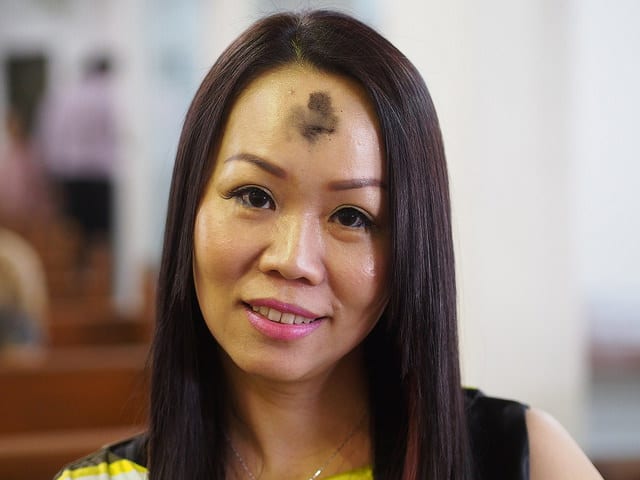
Is Lent a Contemplative Practice?
I am a member of a church where one liturgical season ends and another begins next week. Wednesday is Ash Wednesday, the first day of the liturgical season we call Lent.
Lent is not about giving things up. It is not a liturgical second chance for people who do not follow through on their New Year’s resolutions. Lent is not primarily about chocolate, caffeine, alcohol, or social media.
We are beginning a season about being honest with ourselves, with other people, with spiritual life. During Lent, we take an honest, insightful look at who we really are. Lent is about reflecting on what we hold onto which holds us back from becoming our truest selves. We look ourselves in the eye and recognize what we do not truly need.
Lent is a time for us to be intimately personal in public.
We prepare ourselves and anticipate the new life of Easter.
The night before Ash Wednesday is, in some ways, the Eve of Lent, the threshold of the new season. Some people take the opportunity to get ready before they begin Lent. Tuesday we begin to open our tightly gripping fingers and let go. We assert our freedom from these habits and things, lifting what we do not need and tossing it aside. Tuesday we take our first step into Lent.
On Wednesday we take our next step. The ashes placed on our foreheads remind us we are tied to the earth. We come from the earth, and to the earth we will return. Our physical life will not last forever, and there are things beyond us.
There are things beyond our reach even though our spirits may soar. What of this finite life will live on when our bodies are no longer here?
Can Lent Be a Contemplative Practice?
Many people assume Lent is about some action we take or stop taking.
Some people decide to either break free from a habit or cultivate a new habit during Lent. They may decide to stop smoking or eating red meat or drinking alcohol between Ash Wednesday and Easter.
It is easy for us to get caught up in our expectations about what we are doing. We forget why we are doing it. Some people intentionally choose to break a habit which will not be too challenging for them to break. We might focus so much attention on meeting our own expectations we miss the point of Lent.
Lent is a season about remembering who we are and who we are becoming.
The time we spend reflecting reminds us of our true selves and our deepest values. We put distractions and obstacles out of our minds so we can remember where we are headed. Of all the things we would like to make different, we choose one on which to concentrate.
Each step we take can be a contemplative practice.
We say goodbye to everything weighing us down or holding us back. Setting aside habits and relationships, possessions and expectations, we move forward.
Each Lent is an opportunity to excavate at a new level. Some years are a step further, some years are a new beginning. It can be difficult for us to know which is which at the time.
How will we transcend our rules and expectations to remind ourselves of Lent as a contemplative practice? Can a contemplative practice of Lent free us from feelings of guilt or stress? Would Lent as a contemplative practice change how we understand what Lent is about?
What needs to change in us for Lent to be a contemplative practice?
Beginning a Contemplative Practice of Lent
For me a contemplative practice of Lent begins with setting aside my own assumptions and expectations.
We get caught up in what we have heard, or think we remember we heard, about what Lent should be. Some people assume certain things are appropriate as Lent disciplines and others are not. It is as if there is a list of approved practices we are supposed to follow. There is not.
The ways we practice Lent are up to each of us as individual people. Our practice is personal. Each of us can take some time before Wednesday and discern what our practice will be.
One year I gave up fear for Lent. Another year I gave up Netflix. There was a job I gave up for Lent.
Each of us chooses our own contemplative practice of Lent. There are no rules we need to follow, no standards we need to meet.
Some people choose a practice they want to begin rather than one they would like to end.
It can also be helpful to set a time each day to remind ourselves about our practice. It can be easy for us to lose track.
Sharing a Contemplative Practice of Lent With Other People
I feel support when I am surrounded with other people who have a contemplative practice of Lent.
We are not compelled to share the details of our practices even while encouraging and praying for each other. It is enough for us to know we each intend to practice.
It can be helpful, for some people, to share honestly about our practices with one other person. They need to be someone we trust to keep our confidences and trust to have our best interests at heart.
One of the most attractive and supportive aspects of a contemplative practice of Lent is having a network. Even though I may not know any details, I know I am part of a large network of contemplative practice.
Beginning on Wednesday, people around the world will begin their contemplative practice of Lent. There is never a time throughout the day when there is not someone practicing Lent.
Each of us is an encouragement and inspiration to other people with a contemplative practice of Lent this year.
How will we choose a contemplative practice of Lent today?
What contemplative practice of Lent will we begin this week?
[Image by Johnragai-Moment Catcher]
Greg Richardson is a spiritual life mentor and coach in Southern California. He is a recovering attorney and a lay Oblate with New Camaldoli Hermitage near Big Sur, California. Greg’s website is StrategicMonk.com, and his email address is [email protected].
Previous Post

February 27, 2019
Monastic Strategies: Watching Movies With Monks
Next Post

March 5, 2019 Listening to Sacred Stillness: The Stillness of Today
Browse Our Archives
Select a Category Blog Book Reviews Everything Else Guest Posts Leadership Monastic Strategies Neighborhood Pilgrimages Sacred Stillness Spiritual Direction Spiritual Practices Work
Select a Month May 2024 April 2024 March 2024 February 2024 January 2024 December 2023 November 2023 October 2023 September 2023 August 2023 July 2023 June 2023 May 2023 April 2023 March 2023 February 2023 January 2023 December 2022 November 2022 October 2022 September 2022 August 2022 July 2022 June 2022 May 2022 April 2022 March 2022 February 2022 January 2022 December 2021 November 2021 October 2021 September 2021 August 2021 July 2021 June 2021 May 2021 April 2021 March 2021 February 2021 January 2021 December 2020 November 2020 October 2020 April 2020 March 2020 February 2020 January 2020 December 2019 November 2019 October 2019 September 2019 August 2019 July 2019 June 2019 May 2019 April 2019 March 2019 February 2019 January 2019 December 2018 November 2018 October 2018 September 2018 August 2018 July 2018 June 2018 May 2018 April 2018 March 2018 February 2018 January 2018 December 2017 November 2017 October 2017 September 2017 August 2017 July 2017 June 2017 May 2017 April 2017 March 2017 February 2017 January 2017 December 2016 November 2016 October 2016 September 2016 August 2016 July 2016 June 2016 May 2016 April 2016 March 2016 February 2016 January 2016 December 2015 November 2015 October 2015 September 2015 August 2015 July 2015 June 2015 May 2015 April 2015 March 2015 February 2015 January 2015 December 2014 November 2014 October 2014 September 2014 August 2014 July 2014 June 2014 May 2014 April 2014 March 2014 February 2014 January 2014 December 2013 November 2013 October 2013 September 2013 August 2013 July 2013 June 2013 May 2013 April 2013 March 2013 February 2013 January 2013 December 2012 November 2012 October 2012 September 2012 August 2012 July 2012 June 2012 May 2012 April 2012 March 2012 February 2012 January 2012 December 2011 November 2011 October 2011 September 2011 August 2011 July 2011 June 2011 May 2011 April 2011 March 2011 February 2011 January 2011 December 2010
Follow Us!
TAKE THE
Religious Wisdom Quiz
Which king asked Elijah for help against the armies of Moab and Edom?
Select your answer to see how you score.
Joram Joash Jehoram Jehoshaphat
Related posts from Strategic Monk

How Are We Called to Live?: More About...

A Spiritual Practice of Reading: Join Us Online

Taking a Deep Breath, and Another: Finding Time...

Listening to Our Own Rhythms: When Will We...
TRENDING AT PATHEOS Contemplative

Handy Contemplative Practices for Political Spaces
A Spiritually Grounded Presence In order to bring a spiritually grounded presence...

Halloween: The Holiday of Loving Your Neighbor
All Hallows Eve Is Halloween the least Christian holiday in America, or...

Can Love Be Saved? Some Thoughts on the...
Happy Valentine's Day! I recently published a post on Patreon called Can...

"This Loving, Uniting Embrace": the Holy Ordinary
Today's guest post is by Mark Longhurst, author of The Holy Ordinary:...

How Are We Called to Live?: More About...
How Are We Called to Live? Many of us struggle with discerning...

A Spiritual Practice of Reading: Join Us Online
A Spiritual Practice of Reading A healthy spiritual practice of reading is...
view all Contemplative blogs
Ad-Free & Subscriber Log-In Subscription Support
- About Us
- 2026 Calendar
- Videos
- Podcasts
- Library of World Religions
- Faith In Media Tracker
- Advertise With Us
- Write for Us
- Privacy Policy
- Terms of Service
- Do Not Sell My Data
- Contact Us
- Radiant Digital
- Manage Newsletter Subscriptions
- Unsubscribe From Notifications
- Sitemap
Copyright 2008-2026, Patheos. All rights reserved.
Subscription Support Ad-Free & Subscriber Log-In
Follow Patheos