
BuddhistCatholicContemplativeEvangelicalGeneral ChristianHinduJewishLatter-day SaintMuslimNew VisionsProgressive Christian
Beliefs
- Buddhist
- Catholic
- Contemplative
- Evangelical
- General Christian
- Hindu
- Jewish
- Latter-day Saint
- More Voices
- Muslim
- New Visions
- Pagan
- Progressive Christian
Topics
- Religion News
- Food and Religion
- Sports and Religion
- Religious Art
- Religious Music and Entertainment
- Religious Events
- History and Religion
- Style and Religion
- Politics and Religion
- Women in Religion
- Recreation Outdoors and Religion
- Business Finance and Religion
- Careers Workplace and Religion
- Education and Religion
- Family Parenting and Religion
- Health Fitness and Religion
- Home and Religion
- Relationships and Religion
- Technology and Religion
- Travel and Religion
Columnists
- Buddhist Columnists
- Business Finance and Religion Columnists
- Careers Workplace and Religion Columnists
- Catholic Columnists
- Contemplative Columnists
- Education and Religion Columnists
- Evangelists Columnists
- Family Parenting and Religion Columnists
- General Christian Columnists
- Health Fitness and Religion Columnists
- Hindu Columnists
- History and Religion Columnists
- Home and Religion Columnists
- Jewish Columnists
- More Voices Columnists
- Latter Day Columnists
- Muslim Columnists
- New Visions Columnists
- Nonreligious Columnists
- Pagan Columnists
- Politics and Religion Columnists
- Progressive Columnists
- Recreation Outdoors and Religion Columnists
- Relationships and Religion Columnists
- Religion News Columnists
- Religious Art Columnists
- Religious Events Columnists
- Religious Music and Entertainment Columnists
- Sports and Religion Columnists
- Style and Religion Columnists
- Technology and Religion Columnists
- Travel and Religion Columnists
- Women in Religion Columnists
Resource Library
- 2026 Calendar
- Library of World Religions
- The 100 Most Holy Places on Earth
- Patheos Answers
- Podcasts
- Videos
- Faith Leaders Database
- Anglican Episcopalian
- Bahai
- Baptist
- Buddhism
- Christianity
- Confucianism
- Eastern Orthodoxy
- Hinduism
- Holiness and Pentecostal
- ISKCON
- Islam
- Judaism
- Lutheran
- Methodist
- The Church of Jesus Christ of Latter-day Saints
- New Age
- Paganism
- Presbytarian and Reformed
- Protestantism
- Religion Behind the Scenes
- Roman Catholic
- Scientology
- Shia Islam
- Sikhism
- Sufism
- Sunni Islam
- Taoism
- Zen
- See all religions
Research Tools
 Ad-Free & Subscriber Log-In Subscription Support
Ad-Free & Subscriber Log-In Subscription Support
Follow Patheos 

- Trending:
- Forgiveness
- |
- Marriage
- |
- Consciousness
- |
- Death Penalty
- |
- Election
- |
- Halloween
 Strategic Monk
-
About
-
Services
- Home
- Contemplative
- Monastic Strategies: Expressing Our Lives in Words
Monastic Strategies: Expressing Our Lives in Words
Last updated on: January 25, 2019 at 12:44 pm by Greg Richardson
Monastic Strategies: Expressing Our Lives in Words 2019-01-25T12:44:40-08:00 Greg Richardson
Patheos Explore the world's faith through different perspectives on religion and spirituality! Patheos has the views of the prevalent religions and spiritualities of the world.
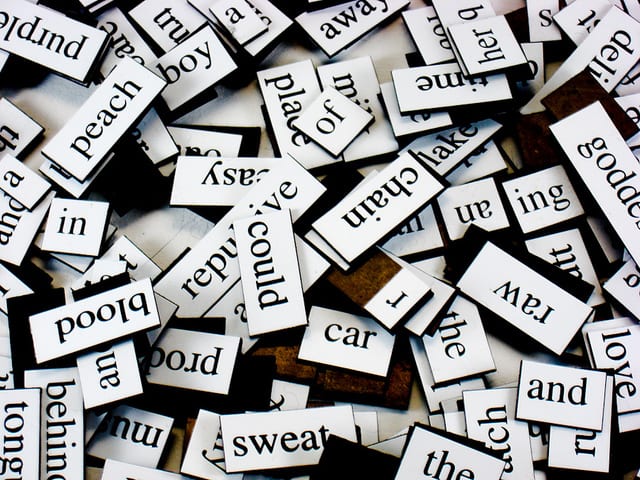
Expressing Our Lives in Words
Many of us have two distinct images of monks and monastic life.
When we think of or spend time with monks it is often in periods of time without words. Some of us take silent retreats at monasteries when we might not talk to anyone for days at a time. The experiences we have of monastic life are full of quiet, calm people with whom we do not share small talk.
Our second image of monastic life is more traditional or historical than from our own experience. We think of monks hundreds of years ago practicing calligraphy and illuminating manuscripts. Though they might not spend time speaking, monks are often communicating through words.
Their words are carefully chosen and reveal their reflection and contemplation. We may know monks today who have written or are writing new books. Some of us read books by contemporary monastic authors.
My sense is people in monastic life have a perspective on words significantly different from the rest of us. The conversations I have with monks seem to resonate more deeply than my typical everyday exchanges.
It is not that monks value words more than the rest of us. I know people who are in love with words.
I think it more that those of us in monastic life put more emphasis on preparing our words. The monks I know do not tend to speak off the top of their heads. Their words, both spoken and written, grow from their contemplation and reflection.
When monks communicate it helps to listen to the words and the stillness between them. When we read monastic writing we read the words and the spaces on the pages.
Monks do not talk because they enjoy the sounds of their own voices. Monastic words are intended to express their lives in words.
Our Stories Are Our Lives in Words
I was talking with someone recently about something particularly painful and difficult they had experienced. At one of the more challenging parts of their story they paused and said, “Saying it out loud makes it more real.”
We believe the stories we tell ourselves. They help us grasp and understand our lives and the world around us. The people closest to us, who we trust the most, are those who listen to our words. We say things out loud and our words become more real. We hold onto our stories, protecting them from efforts to change them.
Our stories are important to us; they express who we see ourselves to be. They can be painful and difficult, or sharing them can be an extremely joyful experience. Each time we share part of our own true story it becomes more real to us.
Whenever I tell my story out loud I understand the experience of living it in new ways. Speaking it into the lives of other people helps me recognize and appreciate who I am more deeply. Telling my story, and finding people who will listen, builds community and deepens my sense of who I am.
Our stories are how we express our lives in words.
You tell me your story and I listen. Together we explore our deeper selves, working things to the surface and making them more real. As we explore our core values we transform them into our actions. We turn our memories of the past and our hopes for the future into something we experience in the present moment.
Some of us live lives of poetry and some live epic novels. We choose how we tell our stories, even when it feels like our stories have chosen us.
Painting the Pictures of Our Lives in Words
We may feel words are too limiting, too small to do our stories justice. It may be we are not sure expressing our lives in words will communicate everything we want to share.
Some of us are not sure we can find enough words to fill a page. We may not be certain anyone else wants to hear our story. Our perceptions of our lives in words are shaped by our fears, anxiety, or feelings of inadequacy.
It may be we find communicating our lives in words in black and white is too stark, too dualistic. We experience our lives in color, in photographs and paintings and video, in three dimensions. Telling the stories of our lives in words on a page feels too flat to satisfy us.
The beauty and joy of words is they are more than ink on a page or sounds in the air. In addition to the markings and the white space, the sound and the stillness, words carry meaning.
Our ability to paint the pictures of our lives in words is limited only by our imaginations. We have so many words from which to choose.
Finding Ways to Express Our Lives in Words
There are times when we feel our options for expressing our lives in words are shrinking. Some of us grieve for the words we have lost as the world becomes encircled by texting. We are comfortable using smaller and smaller ways to communicate.
The fact is, words we feel we have lost continue to sustain us. We reflect, choosing our words carefully, contemplating how we will express our lives in words. Each sentence, each word, is an expression of our own unique lives and the life we share.
The monks I know understand the value of words. They spend long periods of time in stillness listening to the words within them. When they speak and when they write they express their lives in words. They create sacred spaces for the rest of us to find rest from the torrent of words within us and around us.
Words we remember and repeat shape us and we take on their power. We are working together to build our lives in words.
How are we expressing our lives in words today?
When will we expand the ways we express our lives in words this week?
[Image by Steve A Johnson]
Greg Richardson is a spiritual life mentor and coach in Southern California. He is a recovering attorney and a lay Oblate with New Camaldoli Hermitage near Big Sur, California. Greg’s website is StrategicMonk.com, and his email address is [email protected].
Previous Post

January 22, 2019
Listening to Sacred Stillness: Why Are We Listening?
Next Post

January 26, 2019 Practices From the Inside Out: Waking Up to Spiritual Life
Browse Our Archives
Select a Category Blog Book Reviews Everything Else Guest Posts Leadership Monastic Strategies Neighborhood Pilgrimages Sacred Stillness Spiritual Direction Spiritual Practices Work
Select a Month May 2024 April 2024 March 2024 February 2024 January 2024 December 2023 November 2023 October 2023 September 2023 August 2023 July 2023 June 2023 May 2023 April 2023 March 2023 February 2023 January 2023 December 2022 November 2022 October 2022 September 2022 August 2022 July 2022 June 2022 May 2022 April 2022 March 2022 February 2022 January 2022 December 2021 November 2021 October 2021 September 2021 August 2021 July 2021 June 2021 May 2021 April 2021 March 2021 February 2021 January 2021 December 2020 November 2020 October 2020 April 2020 March 2020 February 2020 January 2020 December 2019 November 2019 October 2019 September 2019 August 2019 July 2019 June 2019 May 2019 April 2019 March 2019 February 2019 January 2019 December 2018 November 2018 October 2018 September 2018 August 2018 July 2018 June 2018 May 2018 April 2018 March 2018 February 2018 January 2018 December 2017 November 2017 October 2017 September 2017 August 2017 July 2017 June 2017 May 2017 April 2017 March 2017 February 2017 January 2017 December 2016 November 2016 October 2016 September 2016 August 2016 July 2016 June 2016 May 2016 April 2016 March 2016 February 2016 January 2016 December 2015 November 2015 October 2015 September 2015 August 2015 July 2015 June 2015 May 2015 April 2015 March 2015 February 2015 January 2015 December 2014 November 2014 October 2014 September 2014 August 2014 July 2014 June 2014 May 2014 April 2014 March 2014 February 2014 January 2014 December 2013 November 2013 October 2013 September 2013 August 2013 July 2013 June 2013 May 2013 April 2013 March 2013 February 2013 January 2013 December 2012 November 2012 October 2012 September 2012 August 2012 July 2012 June 2012 May 2012 April 2012 March 2012 February 2012 January 2012 December 2011 November 2011 October 2011 September 2011 August 2011 July 2011 June 2011 May 2011 April 2011 March 2011 February 2011 January 2011 December 2010
Follow Us!
TAKE THE
Religious Wisdom Quiz
Who did God ask to sacrifice his only son as a test?
Select your answer to see how you score.
Moses David Abraham Jacob
Related posts from Strategic Monk

How Are We Called to Live?: More About...

A Spiritual Practice of Reading: Join Us Online

Taking a Deep Breath, and Another: Finding Time...

Listening to Our Own Rhythms: When Will We...
TRENDING AT PATHEOS Contemplative

Handy Contemplative Practices for Political Spaces
A Spiritually Grounded Presence In order to bring a spiritually grounded presence...

Halloween: The Holiday of Loving Your Neighbor
All Hallows Eve Is Halloween the least Christian holiday in America, or...

Can Love Be Saved? Some Thoughts on the...
Happy Valentine's Day! I recently published a post on Patreon called Can...

"This Loving, Uniting Embrace": the Holy Ordinary
Today's guest post is by Mark Longhurst, author of The Holy Ordinary:...

How Are We Called to Live?: More About...
How Are We Called to Live? Many of us struggle with discerning...

A Spiritual Practice of Reading: Join Us Online
A Spiritual Practice of Reading A healthy spiritual practice of reading is...
view all Contemplative blogs
Ad-Free & Subscriber Log-In Subscription Support
- About Us
- 2026 Calendar
- Videos
- Podcasts
- Library of World Religions
- Faith In Media Tracker
- Advertise With Us
- Write for Us
- Privacy Policy
- Terms of Service
- Do Not Sell My Data
- Contact Us
- Radiant Digital
- Manage Newsletter Subscriptions
- Unsubscribe From Notifications
- Sitemap
Copyright 2008-2026, Patheos. All rights reserved.
Subscription Support Ad-Free & Subscriber Log-In
Follow Patheos