
BuddhistCatholicContemplativeEvangelicalGeneral ChristianHinduJewishLatter-day SaintMuslimNew VisionsProgressive Christian
Beliefs
- Buddhist
- Catholic
- Contemplative
- Evangelical
- General Christian
- Hindu
- Jewish
- Latter-day Saint
- More Voices
- Muslim
- New Visions
- Pagan
- Progressive Christian
Topics
- Religion News
- Food and Religion
- Sports and Religion
- Religious Art
- Religious Music and Entertainment
- Religious Events
- History and Religion
- Style and Religion
- Politics and Religion
- Women in Religion
- Recreation Outdoors and Religion
- Business Finance and Religion
- Careers Workplace and Religion
- Education and Religion
- Family Parenting and Religion
- Health Fitness and Religion
- Home and Religion
- Relationships and Religion
- Technology and Religion
- Travel and Religion
Columnists
- Buddhist Columnists
- Business Finance and Religion Columnists
- Careers Workplace and Religion Columnists
- Catholic Columnists
- Contemplative Columnists
- Education and Religion Columnists
- Evangelists Columnists
- Family Parenting and Religion Columnists
- General Christian Columnists
- Health Fitness and Religion Columnists
- Hindu Columnists
- History and Religion Columnists
- Home and Religion Columnists
- Jewish Columnists
- More Voices Columnists
- Latter Day Columnists
- Muslim Columnists
- New Visions Columnists
- Nonreligious Columnists
- Pagan Columnists
- Politics and Religion Columnists
- Progressive Columnists
- Recreation Outdoors and Religion Columnists
- Relationships and Religion Columnists
- Religion News Columnists
- Religious Art Columnists
- Religious Events Columnists
- Religious Music and Entertainment Columnists
- Sports and Religion Columnists
- Style and Religion Columnists
- Technology and Religion Columnists
- Travel and Religion Columnists
- Women in Religion Columnists
Resource Library
- 2026 Calendar
- Library of World Religions
- The 100 Most Holy Places on Earth
- Patheos Answers
- Podcasts
- Videos
- Faith Leaders Database
- Anglican Episcopalian
- Bahai
- Baptist
- Buddhism
- Christianity
- Confucianism
- Eastern Orthodoxy
- Hinduism
- Holiness and Pentecostal
- ISKCON
- Islam
- Judaism
- Lutheran
- Methodist
- The Church of Jesus Christ of Latter-day Saints
- New Age
- Paganism
- Presbytarian and Reformed
- Protestantism
- Religion Behind the Scenes
- Roman Catholic
- Scientology
- Shia Islam
- Sikhism
- Sufism
- Sunni Islam
- Taoism
- Zen
- See all religions
Research Tools
 Ad-Free & Subscriber Log-In Subscription Support
Ad-Free & Subscriber Log-In Subscription Support
Follow Patheos 

- Trending:
- Forgiveness
- |
- Marriage
- |
- Consciousness
- |
- Death Penalty
- |
- Election
- |
- Halloween
 Strategic Monk
-
About
-
Services
- Home
- Contemplative
- Leading Like a Monk: How Do We Find Time for Thinking?
Leading Like a Monk: How Do We Find Time for Thinking?
Last updated on: August 3, 2018 at 7:03 am by Greg Richardson
Leading Like a Monk: How Do We Find Time for Thinking? 2018-08-03T07:03:00-08:00 Greg Richardson
Patheos Explore the world's faith through different perspectives on religion and spirituality! Patheos has the views of the prevalent religions and spiritualities of the world.
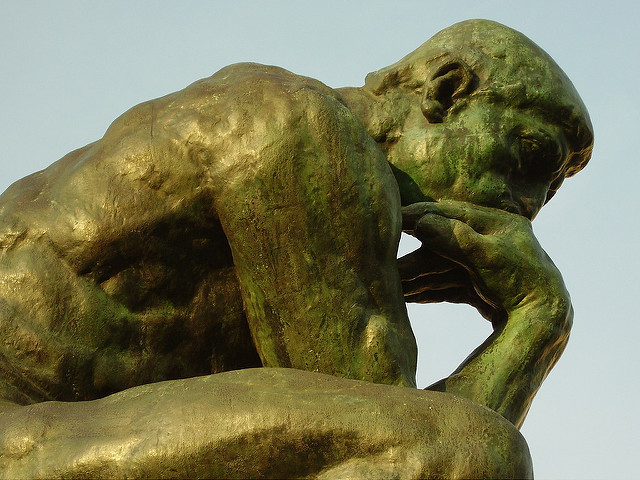
How Do We Find Time for Thinking?
We live our lives at the speed of leadership. Whether we have leadership responsibilities or are trying to keep up with someone else, we are moving. Sometimes we feel we do not have time even to catch our breath.
How do we find time we need for thinking?
For a long time I believed strong leaders did not really need time to think. I was convinced being a leader meant living a life of action in motion, not stopping to think. It was almost as if leaders had already taken their time for thinking and were now prepared for doing.
Leadership, after all, was about getting things done and moving forward. People who took too much time for thinking could fall into “analysis paralysis.”
Time for thinking may be an important part of preparing to lead. Now it is time to get moving.
The way I understand leadership has changed, particularly as I experience monastic leadership.
The leaders who inspire me find time to do their thinking. They remember their own core values and the values of their organizations. Inspiring leaders spend time reflecting on their values and how to put them into practice. They invest their thinking time in understanding what they have done and learning lessons for the future.
Leaders who inspire me recognize the value of finding time for thinking. They appreciate their thinking is more essential to them than planning or communication.
Time for thinking is essential to us as leaders. If we see the value of thinking, especially when life moves so quickly, how do we find time for thinking? How can we be thoughtful leaders when so many things demand our attention all at the same time?
Why Do We Need Time for Thinking?
Part of our difficulty in finding time for thinking is we mean several different things when we say “thinking.”
We may say, “I need to think about it” as a way to buy more time for ourselves before we answer.
Some of us tend to see people as either thinkers or feelers. We may need to experience our way into what we think or think our way through what we experience. When someone asks me how I feel about something I often respond by saying, “I think . . . ”
I often need time for thinking about how I feel.
Some of us believe thinking is primarily analytical. We need time for thinking to solve problems and sort through complicated information. When we spend time thinking we are trying to find the pieces of the puzzle and see how they fit together. Our thinking can be how we put ideas into categories so we can understand and remember them. Much of our thinking is immediate or short term. We want to analyze and understand as much as we can as quickly as possible.
Another kind of thinking is more reflective. We are not trying to find an objective answer or solution as much as decide how we see things. Reflective thinking is not the same as processing or interpreting information efficiently. We reflect almost by allowing thoughts and feelings to sort themselves out and tell us what they have to say.
Reflecting is not so much mastering information as it is letting it master us.
Many of us have little practical experience with reflecting. It takes us time to learn how to reflect and time to practice reflecting. There is a rhythm to reflection we cannot force or control.
Some of us think creatively, putting familiar ideas and concepts together in new ways.
The Practice of Taking Time For Thinking
It is not unusual for us to get ahead of ourselves. When we are asked to take on a project we want to jump in right away. We may forget about taking to for thinking before we get started.
The practice of taking time for thinking is as essential as planning or budgeting. We need to give ourselves the time we need to examine all the pieces and see the larger picture into which they fit. Taking time for thinking will help us foresee challenges and save time down the road.
Our taking time for thinking is an aspect of putting our values into practice. We recognize how important it is for us to think things through so we can do our best work.
Some of us prefer to take time for thinking by ourselves while others want to talk things over as a team. There may be particular people with whom we like to take time for thinking.
The leaders I know each have their own methods for thinking. Some want to raise all the questions they can. Others have developed their own ways to structure their time for thinking.
Leaders who inspire me appreciate the value time for thinking can add to their leadership.
Taking Time for Thinking Like a Monk
I will be driving back up to New Camaldoli in a couple of weeks. Each time I take a retreat there I am impressed by how monks take time for thinking.
Monastic days are scheduled to include time for analytical thinking as well as reflection. Benedictine monks follow a schedule based in Benedict’s Rule which recognizes the value of thinking.
Our work, whether community worship, individual projects, or manual labor, benefits from taking time for thinking. We listen, consider, ask questions, and come to a common understanding. Each step is important and the thinking of each person involved sheds light for all of us.
We seek a balance of analysis, reflection, creativity, and other kinds of thinking. We take time for thinking and learn the lessons each aspect has to teach us.
Our leadership is not merely about getting things done, but also how we value working together and the lessons it teaches us.
When we take time for thinking we are able to see past what usually distracts us.
When will we take time for thinking this week?
How will we practice taking time for thinking today?
[Image by Mark B. Schlemmer]
Greg Richardson is a spiritual life mentor and leadership coach in Southern California. He is a recovering attorney and university professor, and a lay Oblate with New Camaldoli Hermitage near Big Sur, California. Greg’s website is StrategicMonk.com, and his email address is [email protected].
Previous Post

July 31, 2018
Listening to Sacred Stillness: The Stillness of Dark Spaces
Next Post

August 4, 2018 Practices From the Inside Out: Asking Questions Out Loud
Browse Our Archives
Select a Category Blog Book Reviews Everything Else Guest Posts Leadership Monastic Strategies Neighborhood Pilgrimages Sacred Stillness Spiritual Direction Spiritual Practices Work
Select a Month May 2024 April 2024 March 2024 February 2024 January 2024 December 2023 November 2023 October 2023 September 2023 August 2023 July 2023 June 2023 May 2023 April 2023 March 2023 February 2023 January 2023 December 2022 November 2022 October 2022 September 2022 August 2022 July 2022 June 2022 May 2022 April 2022 March 2022 February 2022 January 2022 December 2021 November 2021 October 2021 September 2021 August 2021 July 2021 June 2021 May 2021 April 2021 March 2021 February 2021 January 2021 December 2020 November 2020 October 2020 April 2020 March 2020 February 2020 January 2020 December 2019 November 2019 October 2019 September 2019 August 2019 July 2019 June 2019 May 2019 April 2019 March 2019 February 2019 January 2019 December 2018 November 2018 October 2018 September 2018 August 2018 July 2018 June 2018 May 2018 April 2018 March 2018 February 2018 January 2018 December 2017 November 2017 October 2017 September 2017 August 2017 July 2017 June 2017 May 2017 April 2017 March 2017 February 2017 January 2017 December 2016 November 2016 October 2016 September 2016 August 2016 July 2016 June 2016 May 2016 April 2016 March 2016 February 2016 January 2016 December 2015 November 2015 October 2015 September 2015 August 2015 July 2015 June 2015 May 2015 April 2015 March 2015 February 2015 January 2015 December 2014 November 2014 October 2014 September 2014 August 2014 July 2014 June 2014 May 2014 April 2014 March 2014 February 2014 January 2014 December 2013 November 2013 October 2013 September 2013 August 2013 July 2013 June 2013 May 2013 April 2013 March 2013 February 2013 January 2013 December 2012 November 2012 October 2012 September 2012 August 2012 July 2012 June 2012 May 2012 April 2012 March 2012 February 2012 January 2012 December 2011 November 2011 October 2011 September 2011 August 2011 July 2011 June 2011 May 2011 April 2011 March 2011 February 2011 January 2011 December 2010
Follow Us!
TAKE THE
Religious Wisdom Quiz
Who said, "I am not worthy to untie the strap of his sandals"?
Select your answer to see how you score.
Thomas Paul Peter John the Baptist
Related posts from Strategic Monk

How Are We Called to Live?: More About...

A Spiritual Practice of Reading: Join Us Online

Taking a Deep Breath, and Another: Finding Time...

Listening to Our Own Rhythms: When Will We...
TRENDING AT PATHEOS Contemplative

Handy Contemplative Practices for Political Spaces
A Spiritually Grounded Presence In order to bring a spiritually grounded presence...

Halloween: The Holiday of Loving Your Neighbor
All Hallows Eve Is Halloween the least Christian holiday in America, or...

Can Love Be Saved? Some Thoughts on the...
Happy Valentine's Day! I recently published a post on Patreon called Can...

"This Loving, Uniting Embrace": the Holy Ordinary
Today's guest post is by Mark Longhurst, author of The Holy Ordinary:...

How Are We Called to Live?: More About...
How Are We Called to Live? Many of us struggle with discerning...

A Spiritual Practice of Reading: Join Us Online
A Spiritual Practice of Reading A healthy spiritual practice of reading is...
view all Contemplative blogs
Ad-Free & Subscriber Log-In Subscription Support
- About Us
- 2026 Calendar
- Videos
- Podcasts
- Library of World Religions
- Faith In Media Tracker
- Advertise With Us
- Write for Us
- Privacy Policy
- Terms of Service
- Do Not Sell My Data
- Contact Us
- Radiant Digital
- Manage Newsletter Subscriptions
- Unsubscribe From Notifications
- Sitemap
Copyright 2008-2026, Patheos. All rights reserved.
Subscription Support Ad-Free & Subscriber Log-In
Follow Patheos