
BuddhistCatholicContemplativeEvangelicalGeneral ChristianHinduJewishLatter-day SaintMuslimNew VisionsProgressive Christian
Beliefs
- Buddhist
- Catholic
- Contemplative
- Evangelical
- General Christian
- Hindu
- Jewish
- Latter-day Saint
- More Voices
- Muslim
- New Visions
- Pagan
- Progressive Christian
Topics
- Religion News
- Food and Religion
- Sports and Religion
- Religious Art
- Religious Music and Entertainment
- Religious Events
- History and Religion
- Style and Religion
- Politics and Religion
- Women in Religion
- Recreation Outdoors and Religion
- Business Finance and Religion
- Careers Workplace and Religion
- Education and Religion
- Family Parenting and Religion
- Health Fitness and Religion
- Home and Religion
- Relationships and Religion
- Technology and Religion
- Travel and Religion
Columnists
- Buddhist Columnists
- Business Finance and Religion Columnists
- Careers Workplace and Religion Columnists
- Catholic Columnists
- Contemplative Columnists
- Education and Religion Columnists
- Evangelists Columnists
- Family Parenting and Religion Columnists
- General Christian Columnists
- Health Fitness and Religion Columnists
- Hindu Columnists
- History and Religion Columnists
- Home and Religion Columnists
- Jewish Columnists
- More Voices Columnists
- Latter Day Columnists
- Muslim Columnists
- New Visions Columnists
- Nonreligious Columnists
- Pagan Columnists
- Politics and Religion Columnists
- Progressive Columnists
- Recreation Outdoors and Religion Columnists
- Relationships and Religion Columnists
- Religion News Columnists
- Religious Art Columnists
- Religious Events Columnists
- Religious Music and Entertainment Columnists
- Sports and Religion Columnists
- Style and Religion Columnists
- Technology and Religion Columnists
- Travel and Religion Columnists
- Women in Religion Columnists
Resource Library
- 2026 Calendar
- Library of World Religions
- The 100 Most Holy Places on Earth
- Patheos Answers
- Podcasts
- Videos
- Faith Leaders Database
- Anglican Episcopalian
- Bahai
- Baptist
- Buddhism
- Christianity
- Confucianism
- Eastern Orthodoxy
- Hinduism
- Holiness and Pentecostal
- ISKCON
- Islam
- Judaism
- Lutheran
- Methodist
- The Church of Jesus Christ of Latter-day Saints
- New Age
- Paganism
- Presbytarian and Reformed
- Protestantism
- Religion Behind the Scenes
- Roman Catholic
- Scientology
- Shia Islam
- Sikhism
- Sufism
- Sunni Islam
- Taoism
- Zen
- See all religions
Research Tools
 Ad-Free & Subscriber Log-In Subscription Support
Ad-Free & Subscriber Log-In Subscription Support
Follow Patheos 

- Trending:
- Forgiveness
- |
- Marriage
- |
- Consciousness
- |
- Death Penalty
- |
- Election
- |
- Halloween
 Strategic Monk
-
About
-
Services
- Home
- Contemplative
- Practices From the Inside Out: What is Saint Patrick’s Day All About?
Practices From the Inside Out: What is Saint Patrick’s Day All About?
Last updated on: March 17, 2018 at 3:52 am by Greg Richardson
Practices From the Inside Out: What is Saint Patrick’s Day All About? 2018-03-17T03:52:14-08:00 Greg Richardson
Patheos Explore the world's faith through different perspectives on religion and spirituality! Patheos has the views of the prevalent religions and spiritualities of the world.
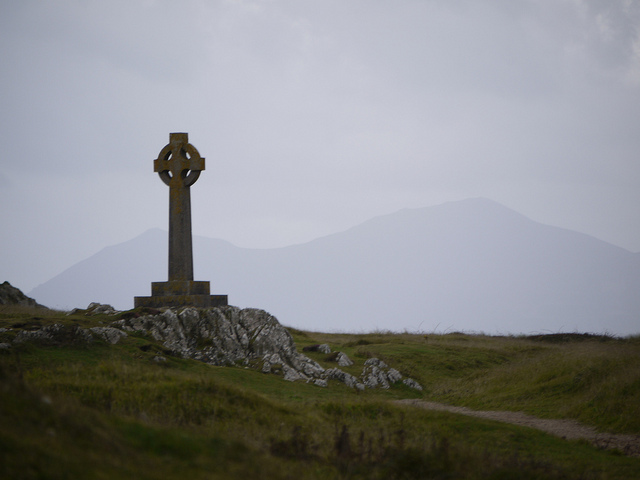
What is Saint Patrick’s Day All About?
Why do we celebrate Saint Patrick’s Day? Is Saint Patrick’s Day a day for revelry and drinking green beer? What are the deeper reasons for Saint Patrick’s Day?
Is there more to Saint Patrick’s Day than recognizing people who have Irish heritage?
Saint Patrick’s Day begins with the story of a real person, the Patrick who became Saint Patrick.
We do not have a lot of independent information about Patrick. Most of what we think we know about Patrick is from what we wrote himself.
Patrick was born in the fourth century in Roman Britain. His father and grandfather were both active in the Christian church. When Patrick was sixteen years old he was kidnapped by Irish traders and taken as a slave to Ireland. He spent six years in Ireland working as a shepherd, during which time Patrick “found God.” Patrick believed God told him to flee to the Irish coast where a ship would be waiting to take him home to Britain. After traveling home, Patrick subsequently became a priest in the church.
According to tradition, Patrick returned to Ireland to preach Christianity to the Irish.
Saint Patrick’s Day is a cultural and religious celebration on the date of Patrick’s death.
We do not celebrate Saint Patrick’s Day to recognize the work and life of one person. Patrick was not the only, or even the first, person to take Christianity to Ireland. His work was, in many ways, planting seeds and get things started. Patrick worked with others and others continued working after Patrick’s death.
Spiritual life in Ireland shaped religious communities which combined organization and organic strength. On Saint Patrick’s Day we celebrate the unique path of Celtic spirituality.
What Are We Celebrating on Saint Patrick’s Day?
We celebrate Irish culture and Celtic spirituality on Saint Patrick’s Day. Many of us are aware of aspects of Irish history, Irish music and literature, and the beauty of Ireland. We may have less of a clear understanding of what makes Celtic spirituality unique.
There are many resources through which we can explore Celtic spirituality. The story of the Celts and Celtic spirituality is filled with beautiful prayers and music. Colorful, distinctive people with memorable ideas and personalities populate the story.
Today we tend to think of Ireland as a Roman Catholic country. Christianity was most likely introduced into Ireland by Roman Catholics. Ireland’s remoteness from Rome, though, allowed Celtic spirituality to continue developing in unique ways. The mixture of imported Christianity and Irish traditions and culture shaped Celtic spirituality.
We Celebrate the Spiritual Life of Nature
One way Celtic spirituality shaped Christianity in Ireland is toward the goodness of nature.
Much of what we think of as Western Christianity emphasized how far we fall from God. There was, and is, a focus on the power of evil in the world. The church in Ireland developed a different perspective.
It is not that Celtic spirituality does not recognize the realities of the world. Celtic spirituality is more centered on the goodness of creation than on the evil in the world. God is alive in the world and revealed in the natural world.
Celtic Christians lived close to nature and took time to reflect on its variety and beauty. They drew deep spiritual lessons from the natural world all around them. Celtic spirituality was able to integrate Biblical teaching with the Druidic heritage of Ireland.
We Celebrate The Spiritual Life of Imagination
Celtic spiritual life values the imagination.
A reflective, contemplative understanding of the natural world encourages imagination. When we look at the world around us we see God in imaginative ways. Celtic spirituality recognizes the power of spiritual life all around us, and within us.
Celtic spirituality relies on the senses to recognize and appreciate spiritual life. What our senses tell us is experienced with imagination.
Celtic imagination produces a wide variety of art and artifacts. Imagination is evident in poetry and other writing, weaving and metalwork, carving and architecture.
An imaginative approach to the world feeds the continued growth of Celtic spirituality.
As we follow the example of Celtic spirituality the world opens to our imagination. We begin to see spiritual life shaping and undergirding the world around us.
We are not physical beings who happen to have spiritual experiences. Our lives are as spiritual beings who are interpreting physical experiences.
Celtic spiritual life is more imaginative than conceptual or theoretical.
We Celebrate the Spiritual Life of Real People
Celtic spiritual life is not primarily a story of educated, certified men. It is more a story of Celtic communities, men and women, reflecting on their experiences.
While some key figures in Celtic spiritual life have been scholars, many have not. Celtic Christianity has a much stronger sense of growing organically from a community. The structure of the church is less hierarchical and less centralized.
Individual people experience the goodness of the natural world. They use their imaginations to interpret it. There is less dependence on analytical thinking and more on reflective imagining. Each member of the community is qualified to understand the world for themselves. Spiritual life is accessible to all of us.
We Celebrate Celtic Spiritual Life
Today is not merely a day of green beer and Irish revelry. We celebrate not only one person but the accomplishments of what Patrick may have started.
Patrick is a symbol of Celtic spiritual life, combining Christianity and traditional spirituality.
We celebrate spiritual life which values the goodness and spiritual life of nature. Our celebration is about the spiritual life of imagination. We celebrate the spiritual life of real people.
The lessons and values of Celtic spiritual life continue to grow and develop today.
There are times when we may lose sight of Celtic spirituality even as we celebrate it. We take time today, in the middle of celebrating, to remember and reflect.
What are we celebrating this Saint Patrick’s Day?
How will we celebrate Celtic spirituality today?
[Image by Smabs Sputzer]
Greg Richardson is a spiritual life mentor and leadership coach in Southern California. He is a recovering attorney and university professor, and a lay Oblate with New Camaldoli Hermitage near Big Sur, California. Greg’s website is StrategicMonk.com, and his email address is [email protected].
Previous Post

March 15, 2018
Practices From the Inside Out: Tapping the Power of Revelry
Next Post

March 20, 2018 Listening to Sacred Stillness: Practicing Everyday Listening
Browse Our Archives
Select a Category Blog Book Reviews Everything Else Guest Posts Leadership Monastic Strategies Neighborhood Pilgrimages Sacred Stillness Spiritual Direction Spiritual Practices Work
Select a Month May 2024 April 2024 March 2024 February 2024 January 2024 December 2023 November 2023 October 2023 September 2023 August 2023 July 2023 June 2023 May 2023 April 2023 March 2023 February 2023 January 2023 December 2022 November 2022 October 2022 September 2022 August 2022 July 2022 June 2022 May 2022 April 2022 March 2022 February 2022 January 2022 December 2021 November 2021 October 2021 September 2021 August 2021 July 2021 June 2021 May 2021 April 2021 March 2021 February 2021 January 2021 December 2020 November 2020 October 2020 April 2020 March 2020 February 2020 January 2020 December 2019 November 2019 October 2019 September 2019 August 2019 July 2019 June 2019 May 2019 April 2019 March 2019 February 2019 January 2019 December 2018 November 2018 October 2018 September 2018 August 2018 July 2018 June 2018 May 2018 April 2018 March 2018 February 2018 January 2018 December 2017 November 2017 October 2017 September 2017 August 2017 July 2017 June 2017 May 2017 April 2017 March 2017 February 2017 January 2017 December 2016 November 2016 October 2016 September 2016 August 2016 July 2016 June 2016 May 2016 April 2016 March 2016 February 2016 January 2016 December 2015 November 2015 October 2015 September 2015 August 2015 July 2015 June 2015 May 2015 April 2015 March 2015 February 2015 January 2015 December 2014 November 2014 October 2014 September 2014 August 2014 July 2014 June 2014 May 2014 April 2014 March 2014 February 2014 January 2014 December 2013 November 2013 October 2013 September 2013 August 2013 July 2013 June 2013 May 2013 April 2013 March 2013 February 2013 January 2013 December 2012 November 2012 October 2012 September 2012 August 2012 July 2012 June 2012 May 2012 April 2012 March 2012 February 2012 January 2012 December 2011 November 2011 October 2011 September 2011 August 2011 July 2011 June 2011 May 2011 April 2011 March 2011 February 2011 January 2011 December 2010
Follow Us!
TAKE THE
Religious Wisdom Quiz
Which letter emphasizes faith without works is dead?
Select your answer to see how you score.
Hebrews Titus James 1 Peter
Related posts from Strategic Monk

How Are We Called to Live?: More About...

A Spiritual Practice of Reading: Join Us Online

Taking a Deep Breath, and Another: Finding Time...

Listening to Our Own Rhythms: When Will We...
TRENDING AT PATHEOS Contemplative

Handy Contemplative Practices for Political Spaces
A Spiritually Grounded Presence In order to bring a spiritually grounded presence...

Halloween: The Holiday of Loving Your Neighbor
All Hallows Eve Is Halloween the least Christian holiday in America, or...

Can Love Be Saved? Some Thoughts on the...
Happy Valentine's Day! I recently published a post on Patreon called Can...

"This Loving, Uniting Embrace": the Holy Ordinary
Today's guest post is by Mark Longhurst, author of The Holy Ordinary:...

How Are We Called to Live?: More About...
How Are We Called to Live? Many of us struggle with discerning...

A Spiritual Practice of Reading: Join Us Online
A Spiritual Practice of Reading A healthy spiritual practice of reading is...
view all Contemplative blogs
Ad-Free & Subscriber Log-In Subscription Support
- About Us
- 2026 Calendar
- Videos
- Podcasts
- Library of World Religions
- Faith In Media Tracker
- Advertise With Us
- Write for Us
- Privacy Policy
- Terms of Service
- Do Not Sell My Data
- Contact Us
- Radiant Digital
- Manage Newsletter Subscriptions
- Unsubscribe From Notifications
- Sitemap
Copyright 2008-2026, Patheos. All rights reserved.
Subscription Support Ad-Free & Subscriber Log-In
Follow Patheos