
BuddhistCatholicContemplativeEvangelicalGeneral ChristianHinduJewishLatter-day SaintMuslimNew VisionsProgressive Christian
Beliefs
- Buddhist
- Catholic
- Contemplative
- Evangelical
- General Christian
- Hindu
- Jewish
- Latter-day Saint
- More Voices
- Muslim
- New Visions
- Pagan
- Progressive Christian
Topics
- Religion News
- Food and Religion
- Sports and Religion
- Religious Art
- Religious Music and Entertainment
- Religious Events
- History and Religion
- Style and Religion
- Politics and Religion
- Women in Religion
- Recreation Outdoors and Religion
- Business Finance and Religion
- Careers Workplace and Religion
- Education and Religion
- Family Parenting and Religion
- Health Fitness and Religion
- Home and Religion
- Relationships and Religion
- Technology and Religion
- Travel and Religion
Columnists
- Buddhist Columnists
- Business Finance and Religion Columnists
- Careers Workplace and Religion Columnists
- Catholic Columnists
- Contemplative Columnists
- Education and Religion Columnists
- Evangelists Columnists
- Family Parenting and Religion Columnists
- General Christian Columnists
- Health Fitness and Religion Columnists
- Hindu Columnists
- History and Religion Columnists
- Home and Religion Columnists
- Jewish Columnists
- More Voices Columnists
- Latter Day Columnists
- Muslim Columnists
- New Visions Columnists
- Nonreligious Columnists
- Pagan Columnists
- Politics and Religion Columnists
- Progressive Columnists
- Recreation Outdoors and Religion Columnists
- Relationships and Religion Columnists
- Religion News Columnists
- Religious Art Columnists
- Religious Events Columnists
- Religious Music and Entertainment Columnists
- Sports and Religion Columnists
- Style and Religion Columnists
- Technology and Religion Columnists
- Travel and Religion Columnists
- Women in Religion Columnists
Resource Library
- 2026 Calendar
- Library of World Religions
- The 100 Most Holy Places on Earth
- Patheos Answers
- Podcasts
- Videos
- Faith Leaders Database
- Anglican Episcopalian
- Bahai
- Baptist
- Buddhism
- Christianity
- Confucianism
- Eastern Orthodoxy
- Hinduism
- Holiness and Pentecostal
- ISKCON
- Islam
- Judaism
- Lutheran
- Methodist
- The Church of Jesus Christ of Latter-day Saints
- New Age
- Paganism
- Presbytarian and Reformed
- Protestantism
- Religion Behind the Scenes
- Roman Catholic
- Scientology
- Shia Islam
- Sikhism
- Sufism
- Sunni Islam
- Taoism
- Zen
- See all religions
Research Tools
 Ad-Free & Subscriber Log-In Subscription Support
Ad-Free & Subscriber Log-In Subscription Support
Follow Patheos 

- Trending:
- Forgiveness
- |
- Marriage
- |
- Consciousness
- |
- Death Penalty
- |
- Election
- |
- Halloween
 Strategic Monk
-
About
-
Services
- Home
- Contemplative
- Leading Like a Monk: Embracing Our Own Imperfection
Leading Like a Monk: Embracing Our Own Imperfection
Last updated on: January 18, 2018 at 2:02 pm by Greg Richardson
Leading Like a Monk: Embracing Our Own Imperfection 2018-01-18T14:02:59-08:00 Greg Richardson
Patheos Explore the world's faith through different perspectives on religion and spirituality! Patheos has the views of the prevalent religions and spiritualities of the world.
Embracing Our Own Imperfection
Andrea Sanchez’s hourlong #DareToBe conversation on Tuesday got me thinking. Our conversation this week centered on imperfection.
We talked about whether, and how, leaders can encourage people to make mistakes. One of our ideas was we could become “imperfectionists” and lead by example. We can share the stories of our own mistakes and encourage other people to share theirs.
The conversation sparked deep reflection in me. The next day I drove from Los Angeles to San Diego and back again, and had some time to reflect in the car.
My relationship to and understanding of imperfection is significant to me. We tend to think of imperfection as something to be avoided. None of us really wants to call attention to our imperfections.
We believe, theoretically, nobody is perfect but we can almost always justify what we do. Some of us are willing to admit we make the kind of mistakes which lead to discoveries. Even those of us who appreciate the value of trial and error see those errors as different.
While we might never say out loud we are perfect, most of us see ourselves as above average.
How I embrace my own imperfection has changed over time. There have been times I pushed imperfection as far away as I could, refusing to acknowledge it. The ways I connect to my own imperfection may be the deepest indicator of spiritual life in me.
Imperfection is also an important aspect of our leadership. How we as leaders deal with imperfection, in ourselves and others, shapes us. The leaders who inspire me approach imperfection in their own unique ways.
Some of the monks I know have helped me grow in understanding imperfection.
Appreciating Our Own Imperfection
Embracing our own imperfection can be a challenge.
Being imperfect is not something I have ever really been encouraged to do. Perfection was an expectation at school, at home, at church, and eventually at work. Even sports teams endeavor to play a perfect game or a perfect season.
I have believed in the power of perfection longer than I can remember. It is better to be right than to be wrong, so why would we not want to be right all the time?
Being right, being perfect can take over our intellectual and emotional lives. Perfection can be so significant to us we lie awake at night in anxiety about not being perfect. We start to believe we need to be perfect to earn the things we want in life. Our expectations of perfection can become the threshold to a perfect life. It can be nearly impossible for us to accept anything other than perfection.
We may become perfectionists.
Our perfectionism carries a very high price.
Nothing is ever really acceptable when we practice perfectionism. We are constantly evaluating ourselves and other people against an impossible standard. Nothing is ever as perfect as we expect it to be. We are setting ourselves, and everyone else, up to fail.
It can be a long, painful road out of perfectionism. For many of us, the first step is beginning to appreciate our own imperfection.
Perfectionism, worshiping the ideal of never making a mistake, robs us of the joy of life. We lose the valuable experience of learning from our mistakes. It becomes harder and harder to laugh at ourselves and the situations in which we find ourselves. Perfectionism steals our perspective.
We spend all our energy convincing ourselves we are perfect.
Valuing Our Own Imperfection
Becoming “imperfectionists” means celebrating the valuable gifts of being imperfect.
We move from denying our imperfection to recognizing all the ways it helps us. I have learned I like myself more when I celebrate my imperfection. Life is less stressful and more enjoyable when I am not solely focused on being perfect.
We are able to move from working all the time to taking opportunities to play. There is more time to appreciate the beauty of each day, each moment. We are not killing ourselves to maintain a fictional perfection and life is more joyful.
Not only do we feel better, we are more creative and insightful. We are able to learn the lessons our mistakes have for us rather than being fixated on not making any.
We learn about the world around us, and ourselves, by trying new things. It is how we learn as small children and how we learn still today. We want our ideas to be practically beneficial, but we do not really know until we try them.
As we work to develop our own imperfection we begin to see its power. We enjoy life more and learn more significant lessons in our imperfection. Perfectionism becomes an obstacle which is almost impossible to overcome.
Our imperfection is far more beneficial to us than being perfect could be.
We begin to understand perfectionism as the flaw it is.
Putting Our Own Imperfection to Work
The monks I know have taught me we do not begin where we wish we were. We begin here, where we are.
Our lives will not become happy or satisfying someday because we attain perfection. Actually, our lives are happier and more satisfying when we embrace our own imperfection.
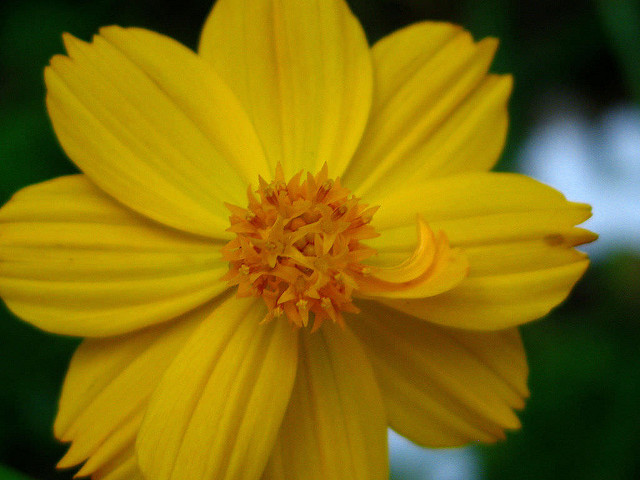
The mistakes we make teach us the most helpful lessons. The imperfections in the flower give it its striking beauty.
Nobody is perfect. The joys of life rise out of our shared imperfections. We tell the stories of our imperfections with each other and we grow closer. When we try to cover ourselves in perfectionism it drives us apart.
It may be challenging for us to appreciate, value, and celebrate our own imperfection. As we do we begin to receive the wisdom our imperfection has for us.
Our choice is between perfectionism which cuts us off from real life and the reality of our own imperfection.
Becoming “imperfectionists” allows us to live the lives we have.
How can we put our own imperfection to work today?
Where can we celebrate our own imperfection this week?
[Image by mRio]
Greg Richardson is a spiritual life mentor and leadership coach in Southern California. He is a recovering attorney and university professor, and a lay Oblate with New Camaldoli Hermitage near Big Sur, California. Greg’s website is StrategicMonk.com, and his email address is [email protected].
Previous Post

January 9, 2018
Listening to Sacred Stillness: Unexpected Depths of Stillness
Next Post

January 13, 2018 Practices From the Inside Out: How Will We Worship Today?
Browse Our Archives
Select a Category Blog Book Reviews Everything Else Guest Posts Leadership Monastic Strategies Neighborhood Pilgrimages Sacred Stillness Spiritual Direction Spiritual Practices Work
Select a Month May 2024 April 2024 March 2024 February 2024 January 2024 December 2023 November 2023 October 2023 September 2023 August 2023 July 2023 June 2023 May 2023 April 2023 March 2023 February 2023 January 2023 December 2022 November 2022 October 2022 September 2022 August 2022 July 2022 June 2022 May 2022 April 2022 March 2022 February 2022 January 2022 December 2021 November 2021 October 2021 September 2021 August 2021 July 2021 June 2021 May 2021 April 2021 March 2021 February 2021 January 2021 December 2020 November 2020 October 2020 April 2020 March 2020 February 2020 January 2020 December 2019 November 2019 October 2019 September 2019 August 2019 July 2019 June 2019 May 2019 April 2019 March 2019 February 2019 January 2019 December 2018 November 2018 October 2018 September 2018 August 2018 July 2018 June 2018 May 2018 April 2018 March 2018 February 2018 January 2018 December 2017 November 2017 October 2017 September 2017 August 2017 July 2017 June 2017 May 2017 April 2017 March 2017 February 2017 January 2017 December 2016 November 2016 October 2016 September 2016 August 2016 July 2016 June 2016 May 2016 April 2016 March 2016 February 2016 January 2016 December 2015 November 2015 October 2015 September 2015 August 2015 July 2015 June 2015 May 2015 April 2015 March 2015 February 2015 January 2015 December 2014 November 2014 October 2014 September 2014 August 2014 July 2014 June 2014 May 2014 April 2014 March 2014 February 2014 January 2014 December 2013 November 2013 October 2013 September 2013 August 2013 July 2013 June 2013 May 2013 April 2013 March 2013 February 2013 January 2013 December 2012 November 2012 October 2012 September 2012 August 2012 July 2012 June 2012 May 2012 April 2012 March 2012 February 2012 January 2012 December 2011 November 2011 October 2011 September 2011 August 2011 July 2011 June 2011 May 2011 April 2011 March 2011 February 2011 January 2011 December 2010
Follow Us!
TAKE THE
Religious Wisdom Quiz
According to Hebrews, who serves as a copy and shadow of what is in heaven?
Select your answer to see how you score.
The prophets The apostles The priests in the earthly sanctuary The angels
Related posts from Strategic Monk

How Are We Called to Live?: More About...

A Spiritual Practice of Reading: Join Us Online

Taking a Deep Breath, and Another: Finding Time...

Listening to Our Own Rhythms: When Will We...
TRENDING AT PATHEOS Contemplative

Handy Contemplative Practices for Political Spaces
A Spiritually Grounded Presence In order to bring a spiritually grounded presence...

Halloween: The Holiday of Loving Your Neighbor
All Hallows Eve Is Halloween the least Christian holiday in America, or...

Can Love Be Saved? Some Thoughts on the...
Happy Valentine's Day! I recently published a post on Patreon called Can...

"This Loving, Uniting Embrace": the Holy Ordinary
Today's guest post is by Mark Longhurst, author of The Holy Ordinary:...

How Are We Called to Live?: More About...
How Are We Called to Live? Many of us struggle with discerning...

A Spiritual Practice of Reading: Join Us Online
A Spiritual Practice of Reading A healthy spiritual practice of reading is...
view all Contemplative blogs
Ad-Free & Subscriber Log-In Subscription Support
- About Us
- 2026 Calendar
- Videos
- Podcasts
- Library of World Religions
- Faith In Media Tracker
- Advertise With Us
- Write for Us
- Privacy Policy
- Terms of Service
- Do Not Sell My Data
- Contact Us
- Radiant Digital
- Manage Newsletter Subscriptions
- Unsubscribe From Notifications
- Sitemap
Copyright 2008-2026, Patheos. All rights reserved.
Subscription Support Ad-Free & Subscriber Log-In
Follow Patheos