
BuddhistCatholicContemplativeEvangelicalGeneral ChristianHinduJewishLatter-day SaintMuslimNew VisionsProgressive Christian
Beliefs
- Buddhist
- Catholic
- Contemplative
- Evangelical
- General Christian
- Hindu
- Jewish
- Latter-day Saint
- More Voices
- Muslim
- New Visions
- Pagan
- Progressive Christian
Topics
- Religion News
- Food and Religion
- Sports and Religion
- Religious Art
- Religious Music and Entertainment
- Religious Events
- History and Religion
- Style and Religion
- Politics and Religion
- Women in Religion
- Recreation Outdoors and Religion
- Business Finance and Religion
- Careers Workplace and Religion
- Education and Religion
- Family Parenting and Religion
- Health Fitness and Religion
- Home and Religion
- Relationships and Religion
- Technology and Religion
- Travel and Religion
Columnists
- Buddhist Columnists
- Business Finance and Religion Columnists
- Careers Workplace and Religion Columnists
- Catholic Columnists
- Contemplative Columnists
- Education and Religion Columnists
- Evangelists Columnists
- Family Parenting and Religion Columnists
- General Christian Columnists
- Health Fitness and Religion Columnists
- Hindu Columnists
- History and Religion Columnists
- Home and Religion Columnists
- Jewish Columnists
- More Voices Columnists
- Latter Day Columnists
- Muslim Columnists
- New Visions Columnists
- Nonreligious Columnists
- Pagan Columnists
- Politics and Religion Columnists
- Progressive Columnists
- Recreation Outdoors and Religion Columnists
- Relationships and Religion Columnists
- Religion News Columnists
- Religious Art Columnists
- Religious Events Columnists
- Religious Music and Entertainment Columnists
- Sports and Religion Columnists
- Style and Religion Columnists
- Technology and Religion Columnists
- Travel and Religion Columnists
- Women in Religion Columnists
Resource Library
- 2026 Calendar
- Library of World Religions
- The 100 Most Holy Places on Earth
- Patheos Answers
- Podcasts
- Videos
- Faith Leaders Database
- Anglican Episcopalian
- Bahai
- Baptist
- Buddhism
- Christianity
- Confucianism
- Eastern Orthodoxy
- Hinduism
- Holiness and Pentecostal
- ISKCON
- Islam
- Judaism
- Lutheran
- Methodist
- The Church of Jesus Christ of Latter-day Saints
- New Age
- Paganism
- Presbytarian and Reformed
- Protestantism
- Religion Behind the Scenes
- Roman Catholic
- Scientology
- Shia Islam
- Sikhism
- Sufism
- Sunni Islam
- Taoism
- Zen
- See all religions
Research Tools
 Ad-Free & Subscriber Log-In Subscription Support
Ad-Free & Subscriber Log-In Subscription Support
Follow Patheos 

- Trending:
- Forgiveness
- |
- Marriage
- |
- Consciousness
- |
- Death Penalty
- |
- Election
- |
- Halloween
 Strategic Monk
-
About
-
Services
- Home
- Contemplative
- Listening to Sacred Stillness: Saying No and Saying Yes
Listening to Sacred Stillness: Saying No and Saying Yes
Last updated on: December 14, 2017 at 1:23 pm by Greg Richardson
Listening to Sacred Stillness: Saying No and Saying Yes 2017-12-14T13:23:06-08:00 Greg Richardson
Patheos Explore the world's faith through different perspectives on religion and spirituality! Patheos has the views of the prevalent religions and spiritualities of the world.

Saying No and Saying Yes
Two of the most challenging words for us to use wisely and well are Yes and No.
Some of us have much more practice saying, and hearing, one than the other. Few of us have found a comfortable balance of saying no and saying yes.
It may be difficult for us to tell someone no, especially ourselves. We probably like to think we are giving, generous, and selfless. People may not be happy when we say no, getting angry or frustrated with us. When we tell someone no they might take it personally.
No matter what the question, some of us prefer not to say no.
It could be we have more difficulty telling people, including ourselves, yes. We may be afraid to commit ourselves, afraid to risk saying yes. It could be we see ourselves as careful, insightful, or responsible. We do not want to get carried away or need to deal with unforeseen consequences.
Saying yes may take us places we are not sure we want to go.
For all the challenges or potential problems, our lives are full of saying no and saying yes.
Each decision we make is a combination of saying no and saying yes. Every choice is a combination of yes and no. Saying no and saying yes are apparently essential skills for us.
It is almost as if we spend our lives learning how to choose to say yes or say no.
Saying no and saying yes are skills we need to apply to find physical and financial health. Our ability to say yes and say no reflects our emotional health.
Saying no and saying yes are also basic to the health of spiritual life within us. Listening to sacred stillness is a combination, a balance of saying no and saying yes.
Sacred Stillness and Saying No
Listening to sacred stillness means learning how to say no.
We cannot listen to sacred stillness until we let go of the things getting in our way.
When we pause to listen to the stillness, it seems like we are quickly inundated. There are noises and voices demanding our attention, distracting us. We suddenly remember we were going to contact someone or finish a project.
It is almost as if we are part of a conspiracy to keep ourselves from listening to sacred stillness.
Our minds are excellent at solving problems. We have trained them to solve problems all day, every day. When we decide to pay attention to something other than problems for a while, they see that as a problem to solve. Our minds start generating solutions to the problem of not thinking about our problems.
Our survival skills are trying to make sure we stay alert to problems all around us.
Part of learning to listen to sacred stillness is finding the easiest way to free ourselves.
We want our response to be easy so we will not need to spend much energy on it. If we take an antagonistic approach to distractions and try to force them to submit, they will distract us even more. We want to be as gentle, as friendly and pay the least amount of attention to distractions.
I practice a form of listening, contemplative prayer in which we choose a sacred word. Which word is not important. When we realize we are distracted, thinking about our thoughts, we remember the word.
The word is a symbol of our commitment to say no to distractions.
Listening to sacred stillness is a combination of saying no and saying yes.
Sacred Stillness and Saying Yes
Listening to sacred stillness is more than merely letting go of what distracts us.
As we listen to stillness we also learn to say yes to the deep truths it has for us.
We could take time to listen every day and still not be paying attention. As we learn to release what gets in our way we also need to learn to be open.
Sacred stillness is more than the absence of distractions, the absence of sound.
We learn to let go of what can distract us. It can be just as challenging, or more, to learn to pay attention to the deep truths in the stillness.
We are learning how to say no and how to say yes, often at the same time.
It is one thing to practice the easiest way to say no to our distractions and thoughts. Many of us have a much more difficult time saying yes to what sacred stillness has for us.
It can be hard to say yes. We may have been taught to say no for as long as we can remember. No may be the first word we heard anyone saying to us. We may need to practice saying yes, hearing yes, and not expect ourselves to be perfect.
Some people practice saying yes to themselves. Whenever they have an idea or an insight they practice making their first response Yes.
We pay attention and reflect on our inner conversation. As we practice, we begin to find the balance between saying no and saying yes.
Sacred Stillness Shapes Who We Are Becoming
Saying no and saying yes, we listen to sacred stillness and seek the balance in ourselves. As we practice and reflect, we find ourselves changing over time. Listening to sacred stillness shapes how we understand ourselves and who we are becoming.
Saying no and saying yes is an essential aspect of who we are. As we learn how to listen and how to make choices and decisions, we know ourselves more clearly.
We see ourselves as we actually are, in our depth and beauty. Our image of ourselves changes how we choose, changes our saying no and saying yes.
Spiritual life works within us to help us find the balance we are seeking.
How are we saying no and saying yes today?
When will we say no and say yes as we listen to sacred stillness this week?
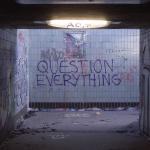
[Image by zogh]
Greg Richardson is a spiritual life mentor and leadership coach in Southern California. He is a recovering attorney and university professor, and a lay Oblate with New Camaldoli Hermitage near Big Sur, California. Greg’s website is StrategicMonk.com, and his email address is [email protected].
Previous Post
November 18, 2017
Practices From the Inside Out: Sustaining Curiosity
Next Post

November 25, 2017 Practices From the Inside Out: Building Our Own Spiritual Life
Browse Our Archives
Select a Category Blog Book Reviews Everything Else Guest Posts Leadership Monastic Strategies Neighborhood Pilgrimages Sacred Stillness Spiritual Direction Spiritual Practices Work
Select a Month May 2024 April 2024 March 2024 February 2024 January 2024 December 2023 November 2023 October 2023 September 2023 August 2023 July 2023 June 2023 May 2023 April 2023 March 2023 February 2023 January 2023 December 2022 November 2022 October 2022 September 2022 August 2022 July 2022 June 2022 May 2022 April 2022 March 2022 February 2022 January 2022 December 2021 November 2021 October 2021 September 2021 August 2021 July 2021 June 2021 May 2021 April 2021 March 2021 February 2021 January 2021 December 2020 November 2020 October 2020 April 2020 March 2020 February 2020 January 2020 December 2019 November 2019 October 2019 September 2019 August 2019 July 2019 June 2019 May 2019 April 2019 March 2019 February 2019 January 2019 December 2018 November 2018 October 2018 September 2018 August 2018 July 2018 June 2018 May 2018 April 2018 March 2018 February 2018 January 2018 December 2017 November 2017 October 2017 September 2017 August 2017 July 2017 June 2017 May 2017 April 2017 March 2017 February 2017 January 2017 December 2016 November 2016 October 2016 September 2016 August 2016 July 2016 June 2016 May 2016 April 2016 March 2016 February 2016 January 2016 December 2015 November 2015 October 2015 September 2015 August 2015 July 2015 June 2015 May 2015 April 2015 March 2015 February 2015 January 2015 December 2014 November 2014 October 2014 September 2014 August 2014 July 2014 June 2014 May 2014 April 2014 March 2014 February 2014 January 2014 December 2013 November 2013 October 2013 September 2013 August 2013 July 2013 June 2013 May 2013 April 2013 March 2013 February 2013 January 2013 December 2012 November 2012 October 2012 September 2012 August 2012 July 2012 June 2012 May 2012 April 2012 March 2012 February 2012 January 2012 December 2011 November 2011 October 2011 September 2011 August 2011 July 2011 June 2011 May 2011 April 2011 March 2011 February 2011 January 2011 December 2010
Follow Us!
TAKE THE
Religious Wisdom Quiz
I am twelve stones taken from a riverbed and set up as a memorial to a miraculous crossing. What am I?
Select your answer to see how you score.
The memorial stones Altar stones The Stones of remembrance Bethel
Related posts from Strategic Monk

How Are We Called to Live?: More About...

A Spiritual Practice of Reading: Join Us Online

Taking a Deep Breath, and Another: Finding Time...

Listening to Our Own Rhythms: When Will We...
TRENDING AT PATHEOS Contemplative

Handy Contemplative Practices for Political Spaces
A Spiritually Grounded Presence In order to bring a spiritually grounded presence...

Halloween: The Holiday of Loving Your Neighbor
All Hallows Eve Is Halloween the least Christian holiday in America, or...

Can Love Be Saved? Some Thoughts on the...
Happy Valentine's Day! I recently published a post on Patreon called Can...

"This Loving, Uniting Embrace": the Holy Ordinary
Today's guest post is by Mark Longhurst, author of The Holy Ordinary:...

How Are We Called to Live?: More About...
How Are We Called to Live? Many of us struggle with discerning...

A Spiritual Practice of Reading: Join Us Online
A Spiritual Practice of Reading A healthy spiritual practice of reading is...
view all Contemplative blogs
Ad-Free & Subscriber Log-In Subscription Support
- About Us
- 2026 Calendar
- Videos
- Podcasts
- Library of World Religions
- Faith In Media Tracker
- Advertise With Us
- Write for Us
- Privacy Policy
- Terms of Service
- Do Not Sell My Data
- Contact Us
- Radiant Digital
- Manage Newsletter Subscriptions
- Unsubscribe From Notifications
- Sitemap
Copyright 2008-2026, Patheos. All rights reserved.
Subscription Support Ad-Free & Subscriber Log-In
Follow Patheos