
BuddhistCatholicContemplativeEvangelicalGeneral ChristianHinduJewishLatter-day SaintMuslimNew VisionsProgressive Christian
Beliefs
- Buddhist
- Catholic
- Contemplative
- Evangelical
- General Christian
- Hindu
- Jewish
- Latter-day Saint
- More Voices
- Muslim
- New Visions
- Pagan
- Progressive Christian
Topics
- Religion News
- Food and Religion
- Sports and Religion
- Religious Art
- Religious Music and Entertainment
- Religious Events
- History and Religion
- Style and Religion
- Politics and Religion
- Women in Religion
- Recreation Outdoors and Religion
- Business Finance and Religion
- Careers Workplace and Religion
- Education and Religion
- Family Parenting and Religion
- Health Fitness and Religion
- Home and Religion
- Relationships and Religion
- Technology and Religion
- Travel and Religion
Columnists
- Buddhist Columnists
- Business Finance and Religion Columnists
- Careers Workplace and Religion Columnists
- Catholic Columnists
- Contemplative Columnists
- Education and Religion Columnists
- Evangelists Columnists
- Family Parenting and Religion Columnists
- General Christian Columnists
- Health Fitness and Religion Columnists
- Hindu Columnists
- History and Religion Columnists
- Home and Religion Columnists
- Jewish Columnists
- More Voices Columnists
- Latter Day Columnists
- Muslim Columnists
- New Visions Columnists
- Nonreligious Columnists
- Pagan Columnists
- Politics and Religion Columnists
- Progressive Columnists
- Recreation Outdoors and Religion Columnists
- Relationships and Religion Columnists
- Religion News Columnists
- Religious Art Columnists
- Religious Events Columnists
- Religious Music and Entertainment Columnists
- Sports and Religion Columnists
- Style and Religion Columnists
- Technology and Religion Columnists
- Travel and Religion Columnists
- Women in Religion Columnists
Resource Library
- 2026 Calendar
- Library of World Religions
- The 100 Most Holy Places on Earth
- Patheos Answers
- Podcasts
- Videos
- Faith Leaders Database
- Anglican Episcopalian
- Bahai
- Baptist
- Buddhism
- Christianity
- Confucianism
- Eastern Orthodoxy
- Hinduism
- Holiness and Pentecostal
- ISKCON
- Islam
- Judaism
- Lutheran
- Methodist
- The Church of Jesus Christ of Latter-day Saints
- New Age
- Paganism
- Presbytarian and Reformed
- Protestantism
- Religion Behind the Scenes
- Roman Catholic
- Scientology
- Shia Islam
- Sikhism
- Sufism
- Sunni Islam
- Taoism
- Zen
- See all religions
Research Tools
 Ad-Free & Subscriber Log-In Subscription Support
Ad-Free & Subscriber Log-In Subscription Support
Follow Patheos 

- Trending:
- Forgiveness
- |
- Marriage
- |
- Consciousness
- |
- Death Penalty
- |
- Election
- |
- Halloween
 Strategic Monk
-
About
-
Services
- Home
- Contemplative
- Leading Like a Monk: Understanding Strength and Weakness
Leading Like a Monk: Understanding Strength and Weakness
Last updated on: September 21, 2017 at 3:58 am by Greg Richardson
Leading Like a Monk: Understanding Strength and Weakness 2017-09-21T03:58:18-08:00 Greg Richardson
Patheos Explore the world's faith through different perspectives on religion and spirituality! Patheos has the views of the prevalent religions and spiritualities of the world.
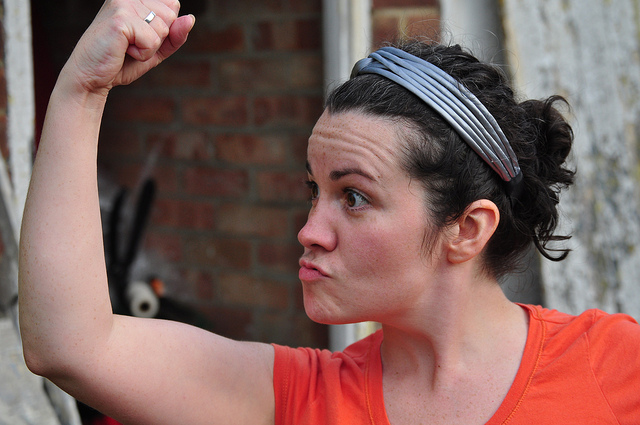
Understanding Strength and Weakness
We like to believe we are strong people.
Some of us are physically strong, while others focus on mental toughness. We appreciate our emotional strength, our spiritual strength, or how much stronger we are becoming.
Building strength and overcoming weakness are important to us. We take tests to find our strengths and measure how strong they are. Strength helps us do things while weakness makes it harder to get things done.
It is usually more polite, and more helpful, to point out someone’s strengths than their weaknesses.
Most of us see strength and weakness as opposites. We believe in a gradual scale with strength on one end and weakness on the other.
It is usually easy for us to tell the differences between strength and weakness. We want to be strong and few of us desire being weak.
It is as if we see ourselves as a chart with bars for all of our qualities and characteristics. The bars for our strengths are above the line while the bars for weaknesses are below it.
Some of us live as though we are trying to get as many of those bars above the line as we can.
I see strength and weakness differently. It has become more and more challenging for me to differentiate between strength and weakness. I am starting to conclude we assess weaknesses and strengths based on how we see them.
There are qualities I tend to see as weaknesses which other people experience as strengths. Some traits which I see as great strengths other people view as significant weaknesses.
More and more, I see assessing people’s weaknesses and strengths says more about me than it does about them.
What do we think makes us strong? Which qualities weaken us?
What is a Strength and What is a Weakness?
Is persistence a strength while stubbornness is a weakness? Do you see patience as a strength and reluctance to take action as a weakness?
How do we decide whether a trait or characteristic is a weakness or a strength?
I took one test which told me being focused is one of my strongest strengths. It is right up there along with being strategic and analytical.
Being able to concentrate and focus my attention has served me well. It helped me do well in school and in practicing law.
There are times, though, when being focused can act like a weakness. I miss things when I am busy concentrating on something else. It is possible for me to be so attentive to what I am reading I do not hear what someone says to me. I may be so focused on figuring out a solution to a problem I lose track of time.
My ability to focus can also get in the way when more unfocused attention might help. Listening to someone with a lot of focus can make them feel like they are being interrogated. Cross-examination is not the impression you want to give someone when you are asking them to trust you.
Having the ability to do something well can be a helpful strength. We may be able to accomplish things other people cannot or more easily than they can. The challenge is any trait we identify as a strength may be perceived by someone else as a weakness.
There is a fine line, or no line, between strength and weakness.
The key is appreciating the subtle balance inherent in all our qualities. When we rely too much on a particular characteristic, a potential strength may become a weakness.
Monastic Strength and Weakness
Monks are some of the strongest people I know.
It is not how much weight they can lift or how far they can run which makes them strong. Their deep strength comes from how they approach themselves and the world around them.
The monks who inspire me lead by example and by asking insightful questions. Many of them translate the time they spend in reflection into open-ended questions.
Monks share stories. They have shared their own stories with me and listened to mine. Monks also tend to be adept at telling stories which illustrate a particular point.
Monastic leadership is about sharing stories. We each share our own stories and they come together to form our story. Each of us plays our part and the story comes together around us. No matter how we see our own strengths or weaknesses, the story fits together.
We share the stories of our past and they come together to create our present. Our future stories grow out of the stories we share.
The stories monks have told me feed my own reflection. As I listen and reflect, I begin to see myself, and other people, differently, in new ways. Qualities I thought were weakness may be revealed to be strengths.
Reflecting on Strength and Weakness
We tend to rush into evaluating and assessing strength and weakness. It can be easy for us to miss how our qualities combine in our true selves.
We work hard to fit other people’s expectations and definitions of a strong person. Our deepest strength grows from how well we know our deepest selves. As much as we try to make ourselves stronger by pretending to be someone else, we are not.
We often need to be truly strong to build a relationship with life as it is. As we grow, we set aside the masks we have developed to hide our weaknesses. We work through the layers of protection we have constructed to find who we truly are.
We move beyond worrying about whether our qualities are strengths or weakness. As we get to know ourselves well, we come to see our evaluation does not make a difference.
We are a unique balance of strength and weakness. Ready to share our stories, we contribute to the story we all share.
What is your greatest strength, and your greatest weakness?
How will you tell the difference between strength and weakness this week?
[Image by smashmirrorcardboardface]
Greg Richardson is a spiritual life mentor and leadership coach in Southern California. He is a recovering attorney and university professor, and a lay Oblate with New Camaldoli Hermitage near Big Sur, California. Greg’s website is StrategicMonk.com, and his email address is [email protected].
Previous Post

September 19, 2017
Listening to Sacred Stillness: Getting Out of Our Own Way
Next Post
September 23, 2017 Practices From the Inside Out: Celebrating Spiritual Life
Browse Our Archives
Select a Category Blog Book Reviews Everything Else Guest Posts Leadership Monastic Strategies Neighborhood Pilgrimages Sacred Stillness Spiritual Direction Spiritual Practices Work
Select a Month May 2024 April 2024 March 2024 February 2024 January 2024 December 2023 November 2023 October 2023 September 2023 August 2023 July 2023 June 2023 May 2023 April 2023 March 2023 February 2023 January 2023 December 2022 November 2022 October 2022 September 2022 August 2022 July 2022 June 2022 May 2022 April 2022 March 2022 February 2022 January 2022 December 2021 November 2021 October 2021 September 2021 August 2021 July 2021 June 2021 May 2021 April 2021 March 2021 February 2021 January 2021 December 2020 November 2020 October 2020 April 2020 March 2020 February 2020 January 2020 December 2019 November 2019 October 2019 September 2019 August 2019 July 2019 June 2019 May 2019 April 2019 March 2019 February 2019 January 2019 December 2018 November 2018 October 2018 September 2018 August 2018 July 2018 June 2018 May 2018 April 2018 March 2018 February 2018 January 2018 December 2017 November 2017 October 2017 September 2017 August 2017 July 2017 June 2017 May 2017 April 2017 March 2017 February 2017 January 2017 December 2016 November 2016 October 2016 September 2016 August 2016 July 2016 June 2016 May 2016 April 2016 March 2016 February 2016 January 2016 December 2015 November 2015 October 2015 September 2015 August 2015 July 2015 June 2015 May 2015 April 2015 March 2015 February 2015 January 2015 December 2014 November 2014 October 2014 September 2014 August 2014 July 2014 June 2014 May 2014 April 2014 March 2014 February 2014 January 2014 December 2013 November 2013 October 2013 September 2013 August 2013 July 2013 June 2013 May 2013 April 2013 March 2013 February 2013 January 2013 December 2012 November 2012 October 2012 September 2012 August 2012 July 2012 June 2012 May 2012 April 2012 March 2012 February 2012 January 2012 December 2011 November 2011 October 2011 September 2011 August 2011 July 2011 June 2011 May 2011 April 2011 March 2011 February 2011 January 2011 December 2010
Follow Us!
TAKE THE
Religious Wisdom Quiz
Which Psalm contains "The Lord is my shepherd; I shall not want"?
Select your answer to see how you score.
Psalm 51 Psalm 23 Psalm 1 Psalm 119
Related posts from Strategic Monk

How Are We Called to Live?: More About...

A Spiritual Practice of Reading: Join Us Online

Taking a Deep Breath, and Another: Finding Time...

Listening to Our Own Rhythms: When Will We...
TRENDING AT PATHEOS Contemplative

Handy Contemplative Practices for Political Spaces
A Spiritually Grounded Presence In order to bring a spiritually grounded presence...

Halloween: The Holiday of Loving Your Neighbor
All Hallows Eve Is Halloween the least Christian holiday in America, or...

Can Love Be Saved? Some Thoughts on the...
Happy Valentine's Day! I recently published a post on Patreon called Can...

"This Loving, Uniting Embrace": the Holy Ordinary
Today's guest post is by Mark Longhurst, author of The Holy Ordinary:...

How Are We Called to Live?: More About...
How Are We Called to Live? Many of us struggle with discerning...

A Spiritual Practice of Reading: Join Us Online
A Spiritual Practice of Reading A healthy spiritual practice of reading is...
view all Contemplative blogs
Ad-Free & Subscriber Log-In Subscription Support
- About Us
- 2026 Calendar
- Videos
- Podcasts
- Library of World Religions
- Faith In Media Tracker
- Advertise With Us
- Write for Us
- Privacy Policy
- Terms of Service
- Do Not Sell My Data
- Contact Us
- Radiant Digital
- Manage Newsletter Subscriptions
- Unsubscribe From Notifications
- Sitemap
Copyright 2008-2026, Patheos. All rights reserved.
Subscription Support Ad-Free & Subscriber Log-In
Follow Patheos