
BuddhistCatholicContemplativeEvangelicalGeneral ChristianHinduJewishLatter-day SaintMuslimNew VisionsProgressive Christian
Beliefs
- Buddhist
- Catholic
- Contemplative
- Evangelical
- General Christian
- Hindu
- Jewish
- Latter-day Saint
- More Voices
- Muslim
- New Visions
- Pagan
- Progressive Christian
Topics
- Religion News
- Food and Religion
- Sports and Religion
- Religious Art
- Religious Music and Entertainment
- Religious Events
- History and Religion
- Style and Religion
- Politics and Religion
- Women in Religion
- Recreation Outdoors and Religion
- Business Finance and Religion
- Careers Workplace and Religion
- Education and Religion
- Family Parenting and Religion
- Health Fitness and Religion
- Home and Religion
- Relationships and Religion
- Technology and Religion
- Travel and Religion
Columnists
- Buddhist Columnists
- Business Finance and Religion Columnists
- Careers Workplace and Religion Columnists
- Catholic Columnists
- Contemplative Columnists
- Education and Religion Columnists
- Evangelists Columnists
- Family Parenting and Religion Columnists
- General Christian Columnists
- Health Fitness and Religion Columnists
- Hindu Columnists
- History and Religion Columnists
- Home and Religion Columnists
- Jewish Columnists
- More Voices Columnists
- Latter Day Columnists
- Muslim Columnists
- New Visions Columnists
- Nonreligious Columnists
- Pagan Columnists
- Politics and Religion Columnists
- Progressive Columnists
- Recreation Outdoors and Religion Columnists
- Relationships and Religion Columnists
- Religion News Columnists
- Religious Art Columnists
- Religious Events Columnists
- Religious Music and Entertainment Columnists
- Sports and Religion Columnists
- Style and Religion Columnists
- Technology and Religion Columnists
- Travel and Religion Columnists
- Women in Religion Columnists
Resource Library
- 2026 Calendar
- Library of World Religions
- The 100 Most Holy Places on Earth
- Patheos Answers
- Podcasts
- Videos
- Faith Leaders Database
- Anglican Episcopalian
- Bahai
- Baptist
- Buddhism
- Christianity
- Confucianism
- Eastern Orthodoxy
- Hinduism
- Holiness and Pentecostal
- ISKCON
- Islam
- Judaism
- Lutheran
- Methodist
- The Church of Jesus Christ of Latter-day Saints
- New Age
- Paganism
- Presbytarian and Reformed
- Protestantism
- Religion Behind the Scenes
- Roman Catholic
- Scientology
- Shia Islam
- Sikhism
- Sufism
- Sunni Islam
- Taoism
- Zen
- See all religions
Research Tools
 Ad-Free & Subscriber Log-In Subscription Support
Ad-Free & Subscriber Log-In Subscription Support
Follow Patheos 

- Trending:
- Forgiveness
- |
- Marriage
- |
- Consciousness
- |
- Death Penalty
- |
- Election
- |
- Halloween
 Strategic Monk
-
About
-
Services
- Home
- Contemplative
- Leading Like a Monk: Bringing Our Intention to Life
Leading Like a Monk: Bringing Our Intention to Life
Last updated on: July 14, 2017 at 1:30 pm by Greg Richardson
Leading Like a Monk: Bringing Our Intention to Life 2017-07-14T13:30:28-08:00 Greg Richardson
Patheos Explore the world's faith through different perspectives on religion and spirituality! Patheos has the views of the prevalent religions and spiritualities of the world.
Bringing Our Intention to Life
Our values drive us. Often formed before we can possibly be conscious of them, our values shape who we are. As we grow and learn we discover our values for ourselves.
Our values shape our interests and perspectives. As we experience the world we draw principles from our values which fit together into a vision.
Our vision shows us where we want our lives to go, who we want to become.
As we gain understanding and appreciation for our values and vision, we form intention. A lifelong value for creativity draws us into creative activities and ways of living. Our core value of justice attracts us promote fairness in our world.
The values we recognize we share with other people bring us into common commitments. We become part of communities and enterprises with which we share values.
Along with our personalities and skills, our values guide us in how we spend our lives.
Each of us has our own unique set of values which feed into our own personal vision. Our vision may shape who we are even when we do not realize it.
When we have not explored our values and vision it is difficult for us to live intentionally. We may set goals or objectives which frustrate us. The plans we make may not reflect who we really are. We may hear ideas we like from other people but never put them into practice.
The intentions we will put into practice, we will bring to life, grow from our true selves.
What Do We Truly Value?
I do not remember a time when I did not set goals and objectives. Each year I would commit myself to change my life. My goals were always designed to make me a healthier, wealthier, better person.
Not all of my goals we failures, but enough were to make me curious. Why were there areas in which I set similar goals again and again without effecting real change? What were the parts of life in which I needed to grow but never thought of setting goals? How could I become more effective at practicing the changes I wanted to make?
As I struggled, I gained insight into the sources of my struggling.
Part of my difficulty was I did not know myself as well as I need to know myself. I was good at absorbing suggestions and expectations from other people. There was a lot less clarity about who I really was and what I actually valued.
My wandering and wrestling eventually brought me to the brink of a precipice. I recognized my own lack of insight into myself. I did not know what I valued, what my vision was, because I did not really think about it.
The way to find how to move forward was to get to know myself more intimately. I did not need to spend more time evaluating myself, but in getting acquainted with myself.
How I spent time with myself needed to change. I did not need to measure myself by outside standards, but to appreciate who I was.
My first step was sorting through what my core values were. I have a list which I review each year.
What Do We Intend to Do?
Some of my goals remained very similar. Others changed dramatically.
My goals were no longer for turning me into a perfect, balanced person. Some of them became less measurable and more intuitive.
Not only the goals themselves changed. My attitude toward my goals changed as well.
Goals became less intense, less of a life-or-death struggle. They became less about what I was committed to doing, no matter what, and more about what I intended.
My goals were supposed to transform me into a more perfect person. I challenged myself to fit into a preconception of what would make me better. If only I could force myself to do this and do that, I would be more happy.
Intentions are both less restrictive and more personal. Underlying my intentions is a process of becoming more myself. My intentions appreciate who I am rather than trying to fix who I am.
Each year, based on my experience that year, I review my values, vision, and intentions. My intention is to apply what I have learned and see how my actions reflect my inner truth.
My goals often felt discouraging to me. They served as blinders designed to keep me focused on what was directly in front of me. My intentions help me remember who I am and look ahead to see how I can put my values into practice.
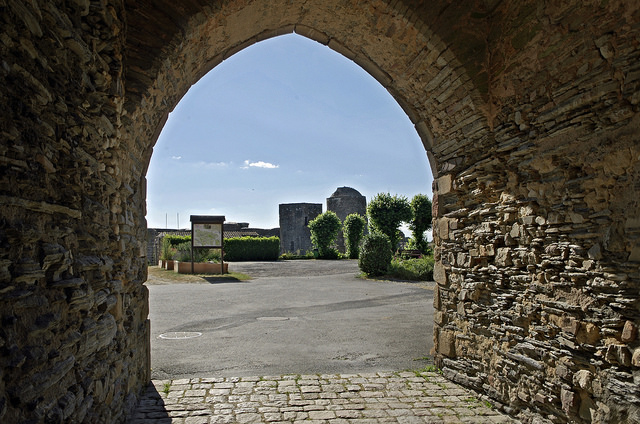
Intention is the opening in the wall toward which I am walking.
Intention in Monastic Life
Monasteries do not generally have annual or quarterly plans or objectives. Following Benedict’s Rule does not involve particularly measurable progress.
Monastic life is more about our intention. Reflection shows us who we are in our inner truth, connected to Sacred truth. Our spiritual practices are designed to help us see more clearly and apply what we see.
Monks do not aspire to become perfect monks. Monastic life is not a process of gaining ground or moving forward. Our intentions help us remember who we are and put ourselves into practice each day.
Intentional Leadership
It is fairly easy to set goals the way many of us do it. We take what we planned last year, or last quarter, and add a small percentage for growth. Our goals tend to be about quantity, not quality.
The leaders who inspire me work more deeply than that. Like monks, they help the people around them see themselves more clearly. Their new insights allow them to put their values into practice creatively.
Leaders with intention appreciate the significance of values rests on applying them every day.
How will we apply our own insights about our values today?
What intention do you have to put your values into practice this week?
[Image by sybarite48]
Greg Richardson is a spiritual life mentor and leadership coach in Southern California. He is a recovering attorney and university professor, and a lay Oblate with New Camaldoli Hermitage near Big Sur, California. Greg’s website is StrategicMonk.com, and his email address is [email protected].
Previous Post
July 11, 2017
Practices From the Inside Out: The Stillness Between Words
Next Post

July 15, 2017 Practices From the Inside Out: What Does God Look Like to You?
Browse Our Archives
Select a Category Blog Book Reviews Everything Else Guest Posts Leadership Monastic Strategies Neighborhood Pilgrimages Sacred Stillness Spiritual Direction Spiritual Practices Work
Select a Month May 2024 April 2024 March 2024 February 2024 January 2024 December 2023 November 2023 October 2023 September 2023 August 2023 July 2023 June 2023 May 2023 April 2023 March 2023 February 2023 January 2023 December 2022 November 2022 October 2022 September 2022 August 2022 July 2022 June 2022 May 2022 April 2022 March 2022 February 2022 January 2022 December 2021 November 2021 October 2021 September 2021 August 2021 July 2021 June 2021 May 2021 April 2021 March 2021 February 2021 January 2021 December 2020 November 2020 October 2020 April 2020 March 2020 February 2020 January 2020 December 2019 November 2019 October 2019 September 2019 August 2019 July 2019 June 2019 May 2019 April 2019 March 2019 February 2019 January 2019 December 2018 November 2018 October 2018 September 2018 August 2018 July 2018 June 2018 May 2018 April 2018 March 2018 February 2018 January 2018 December 2017 November 2017 October 2017 September 2017 August 2017 July 2017 June 2017 May 2017 April 2017 March 2017 February 2017 January 2017 December 2016 November 2016 October 2016 September 2016 August 2016 July 2016 June 2016 May 2016 April 2016 March 2016 February 2016 January 2016 December 2015 November 2015 October 2015 September 2015 August 2015 July 2015 June 2015 May 2015 April 2015 March 2015 February 2015 January 2015 December 2014 November 2014 October 2014 September 2014 August 2014 July 2014 June 2014 May 2014 April 2014 March 2014 February 2014 January 2014 December 2013 November 2013 October 2013 September 2013 August 2013 July 2013 June 2013 May 2013 April 2013 March 2013 February 2013 January 2013 December 2012 November 2012 October 2012 September 2012 August 2012 July 2012 June 2012 May 2012 April 2012 March 2012 February 2012 January 2012 December 2011 November 2011 October 2011 September 2011 August 2011 July 2011 June 2011 May 2011 April 2011 March 2011 February 2011 January 2011 December 2010
Follow Us!
TAKE THE
Religious Wisdom Quiz
Who was David’s best friend?
Select your answer to see how you score.
Jonathan Saul Joseph Samuel
Related posts from Strategic Monk

How Are We Called to Live?: More About...

A Spiritual Practice of Reading: Join Us Online

Taking a Deep Breath, and Another: Finding Time...

Listening to Our Own Rhythms: When Will We...
TRENDING AT PATHEOS Contemplative

Handy Contemplative Practices for Political Spaces
A Spiritually Grounded Presence In order to bring a spiritually grounded presence...

Halloween: The Holiday of Loving Your Neighbor
All Hallows Eve Is Halloween the least Christian holiday in America, or...

Can Love Be Saved? Some Thoughts on the...
Happy Valentine's Day! I recently published a post on Patreon called Can...

"This Loving, Uniting Embrace": the Holy Ordinary
Today's guest post is by Mark Longhurst, author of The Holy Ordinary:...

How Are We Called to Live?: More About...
How Are We Called to Live? Many of us struggle with discerning...

A Spiritual Practice of Reading: Join Us Online
A Spiritual Practice of Reading A healthy spiritual practice of reading is...
view all Contemplative blogs
Ad-Free & Subscriber Log-In Subscription Support
- About Us
- 2026 Calendar
- Videos
- Podcasts
- Library of World Religions
- Faith In Media Tracker
- Advertise With Us
- Write for Us
- Privacy Policy
- Terms of Service
- Do Not Sell My Data
- Contact Us
- Radiant Digital
- Manage Newsletter Subscriptions
- Unsubscribe From Notifications
- Sitemap
Copyright 2008-2026, Patheos. All rights reserved.
Subscription Support Ad-Free & Subscriber Log-In
Follow Patheos