
BuddhistCatholicContemplativeEvangelicalGeneral ChristianHinduJewishLatter-day SaintMuslimNew VisionsProgressive Christian
Beliefs
- Buddhist
- Catholic
- Contemplative
- Evangelical
- General Christian
- Hindu
- Jewish
- Latter-day Saint
- More Voices
- Muslim
- New Visions
- Pagan
- Progressive Christian
Topics
- Religion News
- Food and Religion
- Sports and Religion
- Religious Art
- Religious Music and Entertainment
- Religious Events
- History and Religion
- Style and Religion
- Politics and Religion
- Women in Religion
- Recreation Outdoors and Religion
- Business Finance and Religion
- Careers Workplace and Religion
- Education and Religion
- Family Parenting and Religion
- Health Fitness and Religion
- Home and Religion
- Relationships and Religion
- Technology and Religion
- Travel and Religion
Columnists
- Buddhist Columnists
- Business Finance and Religion Columnists
- Careers Workplace and Religion Columnists
- Catholic Columnists
- Contemplative Columnists
- Education and Religion Columnists
- Evangelists Columnists
- Family Parenting and Religion Columnists
- General Christian Columnists
- Health Fitness and Religion Columnists
- Hindu Columnists
- History and Religion Columnists
- Home and Religion Columnists
- Jewish Columnists
- More Voices Columnists
- Latter Day Columnists
- Muslim Columnists
- New Visions Columnists
- Nonreligious Columnists
- Pagan Columnists
- Politics and Religion Columnists
- Progressive Columnists
- Recreation Outdoors and Religion Columnists
- Relationships and Religion Columnists
- Religion News Columnists
- Religious Art Columnists
- Religious Events Columnists
- Religious Music and Entertainment Columnists
- Sports and Religion Columnists
- Style and Religion Columnists
- Technology and Religion Columnists
- Travel and Religion Columnists
- Women in Religion Columnists
Resource Library
- 2026 Calendar
- Library of World Religions
- The 100 Most Holy Places on Earth
- Patheos Answers
- Podcasts
- Videos
- Faith Leaders Database
- Anglican Episcopalian
- Bahai
- Baptist
- Buddhism
- Christianity
- Confucianism
- Eastern Orthodoxy
- Hinduism
- Holiness and Pentecostal
- ISKCON
- Islam
- Judaism
- Lutheran
- Methodist
- The Church of Jesus Christ of Latter-day Saints
- New Age
- Paganism
- Presbytarian and Reformed
- Protestantism
- Religion Behind the Scenes
- Roman Catholic
- Scientology
- Shia Islam
- Sikhism
- Sufism
- Sunni Islam
- Taoism
- Zen
- See all religions
Research Tools
 Ad-Free & Subscriber Log-In Subscription Support
Ad-Free & Subscriber Log-In Subscription Support
Follow Patheos 

- Trending:
- Forgiveness
- |
- Marriage
- |
- Consciousness
- |
- Death Penalty
- |
- Election
- |
- Halloween
 Strategic Monk
-
About
-
Services
- Home
- Contemplative
- Leading Like a Monk: Setting Our Internal Clocks
Leading Like a Monk: Setting Our Internal Clocks
Last updated on: June 29, 2017 at 9:51 am by Greg Richardson
Leading Like a Monk: Setting Our Internal Clocks 2017-06-29T09:51:49-08:00 Greg Richardson
Patheos Explore the world's faith through different perspectives on religion and spirituality! Patheos has the views of the prevalent religions and spiritualities of the world.
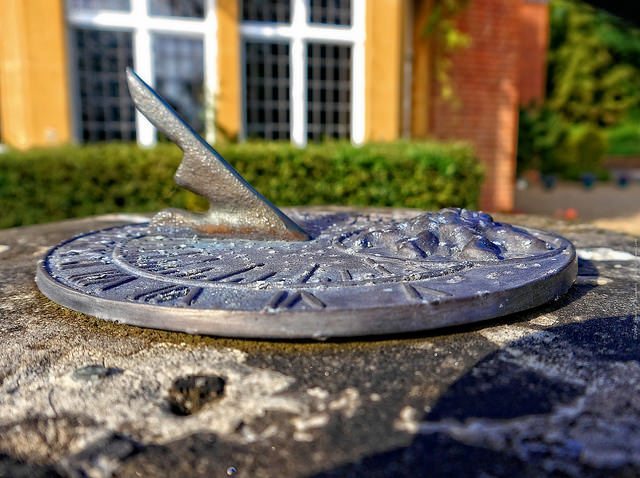
Setting Our Internal Clocks
We live in a culture which wants to set our internal clocks for us.
The society we have built for ourselves believes we work all day every day. It is difficult to schedule time for resting and sleeping, much less reflection, into our lives. There is always something more to read, to analyze, to sort into boxes.
We work as long as we can, as hard as we can, as often as we can.
There is no time for us to come to terms with our past or realistically anticipate our future. We do not have time to pay attention to our present moment. There are so many things to do.
The way we lead, and are led, is focused on what needs to be done right now, today. We pay attention to what we can do in the next few months. Having goals for the year seems like long term thinking.
We focus on not making the same mistakes which were made last year. The goal for this year is usually to do more than we did last year with fewer resources.
We live in a culture of reaction.
Our frame of reference is shrinking. We do not remember the past and do not consider the future. Our working assumption is we will be facing the same challenges then we face now.
Things are changing so quickly we cannot possibly succeed without adapting.
The fact is we do not know where we are coming from and are too busy to know where we are going.
Monastic Standard Time
The monks I know experience time differently.
Benedictine monks follow a rule of life written more than 1,500 years ago. The monks at the hermitage where I am an oblate do not have quarterly or annual plans.
Monks are struggling with questions and on a journey which will last a lifetime, at least.
Time is our most equally distributed resource. Each of us has exactly the same number of hours and minutes each day. The challenge for us is how to use what we have most effectively.
People in monastic communities have a different understanding of time than other people. There are many differences between how monks experience time and how our culture does.
Two of these differences, in particular, can be helpful to us as leaders. First, monastic life takes place within its own horizons, a unique frame of reference. Second, the way monks experience each day is different from how we do in our culture.
A Monastic Frame of Reference
Our society has a quarterly focus. We think about financial activity in three month increments. Our leaders, even our national leaders, are evaluated in terms of their first 100 days.
We assess what we did in the last quarter and project what we will do in the next quarter.
Most things which happened more than three months ago have already been forgotten.
Monastic life has stability and constancy built into its frame of reference. Many monastic practices and much monastic wisdom are based in writings which are hundreds of years old. People who practice monastic life are not eager to change without a reason.
Benedictine monks draw strength and stability from Benedict’s writings. There are works older than Benedict’s which help form the foundations of monastic practices. These insights have stood the test of time. The roots of monastic life spread deep.
In addition to a strong supporting history and tradition, monastic life reaches forward. The monks I know do not have expectations to meet at the end of a fiscal year. It is the same way as their history stretches back to draw wisdom from their predecessors. Monastic future is not next month or next quarter or next year.
Monastic life extends as far as into the future as Benedict was in the past.
Daily Monastic Life
Complementing the extended past and future of monastic life are the daily practices.
Our culture likes to pride itself on being flexible and adaptable. No matter what happens each day, we can handle it. Every day is different.
Reaching back to Benedict’s rule, the daily life of monks has a regular rhythm and a pattern. Monks rotate into and out of specific tasks while the overall structure remains the same.
The monks at the hermitage where I am an oblate gather for prayer at 7:00 AM and 6:00 PM Pacific. These and other prayer services form the hems of their days which hold the other parts together.
I join them, praying with them wherever I happen to be.
The schedule of monastic life helps create a community experience, even for people far away. Praying, working, reflecting with the monks at New Camaldoli reminds me I have been received. We are praying and working together, no matter where we are.
The set times of prayer in monastic days remind me we are not separated. We are praying with everyone praying in Pacific time. Beyond that, we are in a wave of constant prayer spanning the globe. It is always 7:00 AM, and 6:00 PM, somewhere.
Each day fits into the global stream of monastic life.
Not only does our wave cover the earth, it stretches back into the past and out into the future. People in monastic life have been praying each morning and each evening for hundreds of years. The network of prayer will continue for as far as we can see.
Leading Like a Monk
Our leadership needs to be effective in accomplishing goals, getting things done. The challenge for us is seeing past the next reporting deadline.
We are part of a something with a history and a tradition. Our future goes beyond what we can plan.
Like monks, we can incorporate our expanding time horizon in tangible ways each day. We remember we are part of a network of leaders which span the globe.
Our internal clocks need to be set, and reset, each day.
How do you experience the time in which you live?
Where do you see your time going from here?
[Image by dksesh]
Greg Richardson is a spiritual life mentor and leadership coach in Southern California. He is a recovering attorney and university professor, and a lay Oblate with New Camaldoli Hermitage near Big Sur, California. Greg’s website is StrategicMonk.com, and his email address is [email protected].
Previous Post

June 27, 2017
Practices From the Inside Out: When Spiritual Life Feels Far Away
Next Post

July 1, 2017 Spiritual Life, Liberty, and the Pursuit of Happiness
Browse Our Archives
Select a Category Blog Book Reviews Everything Else Guest Posts Leadership Monastic Strategies Neighborhood Pilgrimages Sacred Stillness Spiritual Direction Spiritual Practices Work
Select a Month May 2024 April 2024 March 2024 February 2024 January 2024 December 2023 November 2023 October 2023 September 2023 August 2023 July 2023 June 2023 May 2023 April 2023 March 2023 February 2023 January 2023 December 2022 November 2022 October 2022 September 2022 August 2022 July 2022 June 2022 May 2022 April 2022 March 2022 February 2022 January 2022 December 2021 November 2021 October 2021 September 2021 August 2021 July 2021 June 2021 May 2021 April 2021 March 2021 February 2021 January 2021 December 2020 November 2020 October 2020 April 2020 March 2020 February 2020 January 2020 December 2019 November 2019 October 2019 September 2019 August 2019 July 2019 June 2019 May 2019 April 2019 March 2019 February 2019 January 2019 December 2018 November 2018 October 2018 September 2018 August 2018 July 2018 June 2018 May 2018 April 2018 March 2018 February 2018 January 2018 December 2017 November 2017 October 2017 September 2017 August 2017 July 2017 June 2017 May 2017 April 2017 March 2017 February 2017 January 2017 December 2016 November 2016 October 2016 September 2016 August 2016 July 2016 June 2016 May 2016 April 2016 March 2016 February 2016 January 2016 December 2015 November 2015 October 2015 September 2015 August 2015 July 2015 June 2015 May 2015 April 2015 March 2015 February 2015 January 2015 December 2014 November 2014 October 2014 September 2014 August 2014 July 2014 June 2014 May 2014 April 2014 March 2014 February 2014 January 2014 December 2013 November 2013 October 2013 September 2013 August 2013 July 2013 June 2013 May 2013 April 2013 March 2013 February 2013 January 2013 December 2012 November 2012 October 2012 September 2012 August 2012 July 2012 June 2012 May 2012 April 2012 March 2012 February 2012 January 2012 December 2011 November 2011 October 2011 September 2011 August 2011 July 2011 June 2011 May 2011 April 2011 March 2011 February 2011 January 2011 December 2010
Follow Us!
TAKE THE
Religious Wisdom Quiz
Which book of the Bible contains the story of Balaam’s talking donkey?
Select your answer to see how you score.
Numbers 1 Samuel Judges Exodus
Related posts from Strategic Monk

How Are We Called to Live?: More About...

A Spiritual Practice of Reading: Join Us Online

Taking a Deep Breath, and Another: Finding Time...

Listening to Our Own Rhythms: When Will We...
TRENDING AT PATHEOS Contemplative

Handy Contemplative Practices for Political Spaces
A Spiritually Grounded Presence In order to bring a spiritually grounded presence...

Halloween: The Holiday of Loving Your Neighbor
All Hallows Eve Is Halloween the least Christian holiday in America, or...

Can Love Be Saved? Some Thoughts on the...
Happy Valentine's Day! I recently published a post on Patreon called Can...

"This Loving, Uniting Embrace": the Holy Ordinary
Today's guest post is by Mark Longhurst, author of The Holy Ordinary:...

How Are We Called to Live?: More About...
How Are We Called to Live? Many of us struggle with discerning...

A Spiritual Practice of Reading: Join Us Online
A Spiritual Practice of Reading A healthy spiritual practice of reading is...
view all Contemplative blogs
Ad-Free & Subscriber Log-In Subscription Support
- About Us
- 2026 Calendar
- Videos
- Podcasts
- Library of World Religions
- Faith In Media Tracker
- Advertise With Us
- Write for Us
- Privacy Policy
- Terms of Service
- Do Not Sell My Data
- Contact Us
- Radiant Digital
- Manage Newsletter Subscriptions
- Unsubscribe From Notifications
- Sitemap
Copyright 2008-2026, Patheos. All rights reserved.
Subscription Support Ad-Free & Subscriber Log-In
Follow Patheos