
BuddhistCatholicContemplativeEvangelicalGeneral ChristianHinduJewishLatter-day SaintMuslimNew VisionsProgressive Christian
Beliefs
- Buddhist
- Catholic
- Contemplative
- Evangelical
- General Christian
- Hindu
- Jewish
- Latter-day Saint
- More Voices
- Muslim
- New Visions
- Pagan
- Progressive Christian
Topics
- Religion News
- Food and Religion
- Sports and Religion
- Religious Art
- Religious Music and Entertainment
- Religious Events
- History and Religion
- Style and Religion
- Politics and Religion
- Women in Religion
- Recreation Outdoors and Religion
- Business Finance and Religion
- Careers Workplace and Religion
- Education and Religion
- Family Parenting and Religion
- Health Fitness and Religion
- Home and Religion
- Relationships and Religion
- Technology and Religion
- Travel and Religion
Columnists
- Buddhist Columnists
- Business Finance and Religion Columnists
- Careers Workplace and Religion Columnists
- Catholic Columnists
- Contemplative Columnists
- Education and Religion Columnists
- Evangelists Columnists
- Family Parenting and Religion Columnists
- General Christian Columnists
- Health Fitness and Religion Columnists
- Hindu Columnists
- History and Religion Columnists
- Home and Religion Columnists
- Jewish Columnists
- More Voices Columnists
- Latter Day Columnists
- Muslim Columnists
- New Visions Columnists
- Nonreligious Columnists
- Pagan Columnists
- Politics and Religion Columnists
- Progressive Columnists
- Recreation Outdoors and Religion Columnists
- Relationships and Religion Columnists
- Religion News Columnists
- Religious Art Columnists
- Religious Events Columnists
- Religious Music and Entertainment Columnists
- Sports and Religion Columnists
- Style and Religion Columnists
- Technology and Religion Columnists
- Travel and Religion Columnists
- Women in Religion Columnists
Resource Library
- 2026 Calendar
- Library of World Religions
- The 100 Most Holy Places on Earth
- Patheos Answers
- Podcasts
- Videos
- Faith Leaders Database
- Anglican Episcopalian
- Bahai
- Baptist
- Buddhism
- Christianity
- Confucianism
- Eastern Orthodoxy
- Hinduism
- Holiness and Pentecostal
- ISKCON
- Islam
- Judaism
- Lutheran
- Methodist
- The Church of Jesus Christ of Latter-day Saints
- New Age
- Paganism
- Presbytarian and Reformed
- Protestantism
- Religion Behind the Scenes
- Roman Catholic
- Scientology
- Shia Islam
- Sikhism
- Sufism
- Sunni Islam
- Taoism
- Zen
- See all religions
Research Tools
 Ad-Free & Subscriber Log-In Subscription Support
Follow Patheos 

- Trending:
- Advent
- |
- Forgiveness
- |
- Thanksgiving
- |
- Election
- |
- Seasonal Holidays
- |
- Marriage
 Storied Theology
- Home
- Progressive Christian
- Gentile Transformation: In Conversation with Wesley Hill
Gentile Transformation: In Conversation with Wesley Hill
Last updated on: September 17, 2016 at 8:29 am by J. R. Daniel Kirk
Gentile Transformation: In Conversation with Wesley Hill 2016-09-17T08:29:42-08:00 J. R. Daniel Kirk
Patheos Explore the world's faith through different perspectives on religion and spirituality! Patheos has the views of the prevalent religions and spiritualities of the world.
Over at the Spiritual Friendship blog Wesley Hill has raised an (the?) important question about what it meant for the early church to include Gentiles within its number and what the ramifications of this might be for modern day inclusion of LGBTQ people within the people of God.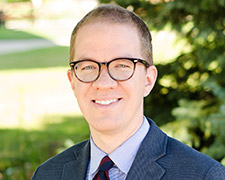
Some of us have argued that inclusion of the gentles provides a model for inclusion of LGBTQ people. In such an argument the idea is that God’s acceptance of the person as they are means that the peculiar identifying markers of that person’s identity do not have to be surrendered in order to belong to the body of Christ. Gentile Christians did not have to start acting like Jews. Gay Christians don’t need to start acting like celibates or straight people.
But of course, Gentiles did have to start acting like Christians. And this meant turning away from their (stereotyped) sinful lifestyles that included sexual immorality. There are a few passages that might make such a point. Hill points to 1 Corinthians 12 where Paul can speak of “Gentiles” as a past identity for the Corinthians (“When you were Gentiles you were led astray to mute idols”). He might have also invoked 1 Corinthians 6 on this score (“Don’t you know that wrongdoers won’t inherit the kingdom of God? Don’t be deceived, fornicators, idolaters, adulterers… will not inherit the kingdom of God. And such were some of you, but you were washed…”).
Hill says that the fact that being brought into the community meant a change in what it meant to be a Gentile is not sufficiently appreciated. Perhaps the “change” component does get short shrift in these conversations. But I don’t think that’s the key to landing the argument, either.
How Do We Know What to Do?
The counter-argument that Hill offers us really just brings us back to the baseline question over which the debate rages: is same-sex sexual activity inherently sinful?
Is it, therefore, a marker of a life lived outside of Christ, under the sway of the flesh and the powers of sin and death? Or is it something that was, instead, once thought to be sinful, but which God’s people today can participate in with a good conscience?
The question behind the question is, How do we know what God wants us to do?
The reason that the inclusion of the Gentiles is so important is that it shows us a surprising answer to that question. We can’t know what God wants us to do simply by listening to what God has already said in the past. We have to take what we have heard from God in the past and measure it alongside what God is also doing in the present.
The great surprise about the inclusion of the Gentiles isn’t that they were included in the people of God, but that they were included without having to become obedient to the Torah in the same way that Jews had been.
To sharpen that point a bit: the change in composition of the people of God transformed what it meant to live a godly life. The ethics of the people of God actually changed because God, by the Spirit, showed that these Gentiles were acceptable to God without their living up to, or conforming to, the ethical standards of the people of God as those ethical standards had previously been established to mark God’s people out as holy.
I think that most of us in the Evangelical world grow up with a sense of deep continuity across the biblical story. We tend to look at the inclusion of the Gentiles, from a gut and maybe even mental level, as something that is clearly “What God was up to all along,” something that only does away with “incidental” matters of Jewish “ceremonial law.”
Each of these assumptions is wrong.
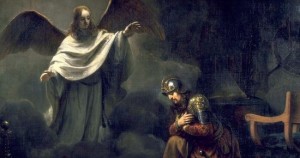
Gerbrand van den Eeckhout, “Vision of Cornelius the Centurion”
When the early church tells Gentiles that they don’t have to keep food laws, they are not only abandoning whole chapters of biblical instruction, they are not only doing away with a defining marker that set God’s people apart from an idolatrous world, they are also doing away with a whole way of being that was supposed to mark Israel as sharing in and putting on display God’s own character: “Be holy, because I am holy.” That’s what food laws were all about.
When the early church tells Gentiles that they don’t have to be circumcised, they are engaging in a massive revision of the provisions of the Abrahamic covenant, whose stipulations say that anyone who is not circumcised will be cut off from God’s people forever. Not only this, but when the prophet Ezekiel looks to the future ingathering of the nations (i.e., what’s being fulfilled in Paul’s ministry!), foreigners have to be circumcised not only in heart but also in flesh to be able to enter God’s sanctuary.
When the early church tells Gentiles that they don’t have to keep Sabbath, they remove any possibility of creating some category called “moral law” that remains constant across history for all times and places. The Sabbath was part of the Decalogue, the words Gods spoke and inscribed on tablets. The Sabbath was a marker of both creation and redemption. Breaking Sabbath was so serious it was punishable by death. And, when Isaiah looks to the eschatological future (i.e., the time being fulfilled in Paul’s ministry!) he sees Sabbath keeping as one of the markers of God’s eschatological people—foreigners who are willing to keep Sabbath will be included.
The point here is this: any way that you want to measure what “sin” is ahead of time—what it means to reflect the character of God, what it means to be marked out as God’s people separate from all other people, sins so serious that they raise to the level of the Ten Commandments, sins so serious that they would receive the death penalty if violated, sins so serious that the prophets looking ahead to nothing less than the inclusion of the Gentiles said “these things all Gentiles who are included will have to do”—any way you want to measure what “sin” is ahead of time simply falls away once God says, “These are my beloved children, do not call unclean what I have purified.”
The composition of the people of God transforms what is required of us.
Identity and Inclusion
One reason that the debate about the inclusion of LGBTQ people rages so fiercely is that traditionalist Christians have made “not gay” an identity marker for their definition of the people of God. What this means is that “not gay” so defines our tribe that “not gay” is shorthand and identity marker for the people of God.
This is what makes the presence of flourishing, faithful, partnered gay people among us so queer and troubling. Based on any measure of what a life marked by the Spirit of God entails, these sisters and brothers show themselves to be living a life “purified” by the Spirit of God, something we therefore should be loathe to call “unholy.”
 What the inclusion of the Gentiles shows us is that when a people of a new identity are included, the very notion of what is righteous versus what is sinful has the potential to be transformed. The church has never before had to deal with openly coupled gays lesbians faithfully following Jesus. That’s the new thing that we have to discern in our midst.
Is the Spirit of God at work in this? Or is it some sort of massive deception, the inclusion of all the wrong people at our tables of fellowship for the purpose of leading us astray—like some prostitute trying to wash the feet of Jesus and thereby bringing her sexual promiscuity and sensuality and the profits of her sin into our midst?
Inclusion, Power, and the Gospel
Moreover, there’s another vexing angle that goes too much unnoticed. One of the most important dynamics at play in the inclusion of the Gentile other is that it is part of a holistic upending and annihilation of the world’s power system (patriarchy/kyriarchy) for delineating who is in charge, who is an ideal human, who gets to say, “To be most supremely human is to be like me.” The old insiders and higher-ups are told, “No.”
The cross does this.
I find it not the least bit curious that the people most prone to exclusion of LGBTQ people in our whole society, evangelical Christians, are awash with rumors of power games and power mongering at last year’s Evangelical Theological Society meeting. I find it not the least bit curious that the people most prone to exclusion of LBGTQ people in our whole society, evangelical Christians, are nearly the only people in our society who are still trying to regulate the places where women can freely speak and act.
The thing that Paul is driving at most deeply with his theology of the embrace of the Gentiles is that the old powers have been overthrown. The old assumptions of superiority have been undone. It is only in spaces upheld by the continuation of these power structures that maintain men as the superiors, leaders, and penetrators of those who are their lessers (spaces where doctrinal purity serves as a guise for political machinations that remove people from jobs who start to believe too much of what everyone else in the world knows to be true) that people are saying to LGBTQ people, “You are not welcome here in the fulness of who you are—you have to become like me.”
Paul would call that a denial of the gospel (cf. Gal 3), even though he couldn’t see it clearly on this issue from where he stood in the first century.
Becoming the Gospel
What does it mean to become like the true insiders, the true people of God? The most important thing that it means is to become a community that puts on display the upside down economies of power, money, and inclusion that are put on display in the life of Jesus and the cross of Christ.
What does it mean to live the lives of those who are united to Christ? Paul would say that it means engaging sexually within the body (if we must!) by joining to another body what is part of the Body of Christ. Our physicality marks us as a united people. Our table affirms that union. Our sexual unions enact it.
We who have the Spirit of God strive to communicate in our sex and in our sexual relations and restrictions what God has spoken to us as God spoke over Jesus: “You are God’s beloved child.” There is no place here for imposition of sex by power, or for denigration, or for domination, or for control, or for exclusion. Can we say, “Submit to my sexuality or you’re out?” Can a man say that to a woman who works for him? Can we The Straight say that to our LBGT siblings in the name of God? Would that make us a manifestation of the crucified Christ or of the crucifying centurion?
So yes, sex is important. Yes, sex needs to be woven into our peculiar story.
Yes, being brought in among the people of God means being transformed into God’s peculiarly holy people.
And, with my faithful, Jesus-following sisters and brothers and others who are sexually involved with their partners, we can figure out the difficult business of being the people of God, being the holy people of God, being the united people of God, being the cruciform people of God, so that as the people of God even the Gentiles around us will see our goodness as life-giving light and glorify our common Father who is in heaven.
Image: LGBT © Michael Pollack | flickr | CC 2.0
Previous Post

September 15, 2016
Wilberforce and Newbigin
Next Post

September 19, 2016 Scripture: Our Father & Mother's Unruly Child
Browse Our Archives
Select a Category American Culture Bible Book Reviews Church Culture Conferences LectioCast Newbigin House Pop Culture Uncategorized
Select a Month October 2017 March 2017 February 2017 January 2017 November 2016 October 2016 September 2016 August 2016 July 2016 June 2016 May 2016 April 2016 March 2016 February 2016 January 2016
Follow Us!
TAKE THE
Religious Wisdom Quiz
I destroyed the world but saved eight people and many animals in a floating vessel. What am I?
Select your answer to see how you score.
The flood A great storm God's judgment The deluge
Related posts from Storied Theology

"God Made Me Like This"? Sexuality & Culture
TRENDING AT PATHEOS Progressive Christian

The Secret behind A Charlie Brown Thanksgiving
Do you know the secret behind A Charlie Brown Thanksgiving? Sparky was...

Bridging the Gap Between God and Man
From Far Off to the Ultimate Embrace “God is a Spirit: and...

Let Matthew 25 Guide You to a Greater...
With the crisp feel of fall in the air, our minds quickly...

Can a Chatbot Touch Your Soul?
Can a chatbot offer genuine spiritual counsel? One conversation brought me to...

Religion and Politics: How Should We Then Live?
Two cultural axioms get repeated in polite company. Don't mix religion and...

7 Things We Get Wrong About Giving Thanks
It's a time of year when many of us turn to the...
view all Progressive Christian blogs
Ad-Free & Subscriber Log-In Subscription Support
- About Us
- 2026 Calendar
- Videos
- Podcasts
- Library of World Religions
- Faith In Media Tracker
- Advertise With Us
- Write for Us
- Privacy Policy
- Terms of Service
- Do Not Sell My Data
- Contact Us
- Radiant Digital
- Manage Newsletter Subscriptions
- Unsubscribe From Notifications
- Sitemap
Copyright 2008-2026, Patheos, part of the Radiant Digital network of media brands. All rights reserved.
Subscription Support Ad-Free & Subscriber Log-In
Follow Patheos