
BuddhistCatholicContemplativeEvangelicalGeneral ChristianHinduJewishLatter-day SaintMuslimNew VisionsProgressive Christian
Beliefs
- Buddhist
- Catholic
- Contemplative
- Evangelical
- General Christian
- Hindu
- Jewish
- Latter-day Saint
- More Voices
- Muslim
- New Visions
- Pagan
- Progressive Christian
Topics
- Religion News
- Food and Religion
- Sports and Religion
- Religious Art
- Religious Music and Entertainment
- Religious Events
- History and Religion
- Style and Religion
- Politics and Religion
- Women in Religion
- Recreation Outdoors and Religion
- Business Finance and Religion
- Careers Workplace and Religion
- Education and Religion
- Family Parenting and Religion
- Health Fitness and Religion
- Home and Religion
- Relationships and Religion
- Technology and Religion
- Travel and Religion
Columnists
- Buddhist Columnists
- Business Finance and Religion Columnists
- Careers Workplace and Religion Columnists
- Catholic Columnists
- Contemplative Columnists
- Education and Religion Columnists
- Evangelists Columnists
- Family Parenting and Religion Columnists
- General Christian Columnists
- Health Fitness and Religion Columnists
- Hindu Columnists
- History and Religion Columnists
- Home and Religion Columnists
- Jewish Columnists
- More Voices Columnists
- Latter Day Columnists
- Muslim Columnists
- New Visions Columnists
- Nonreligious Columnists
- Pagan Columnists
- Politics and Religion Columnists
- Progressive Columnists
- Recreation Outdoors and Religion Columnists
- Relationships and Religion Columnists
- Religion News Columnists
- Religious Art Columnists
- Religious Events Columnists
- Religious Music and Entertainment Columnists
- Sports and Religion Columnists
- Style and Religion Columnists
- Technology and Religion Columnists
- Travel and Religion Columnists
- Women in Religion Columnists
Resource Library
- 2026 Calendar
- Library of World Religions
- The 100 Most Holy Places on Earth
- Patheos Answers
- Podcasts
- Videos
- Faith Leaders Database
- Anglican Episcopalian
- Bahai
- Baptist
- Buddhism
- Christianity
- Confucianism
- Eastern Orthodoxy
- Hinduism
- Holiness and Pentecostal
- ISKCON
- Islam
- Judaism
- Lutheran
- Methodist
- The Church of Jesus Christ of Latter-day Saints
- New Age
- Paganism
- Presbytarian and Reformed
- Protestantism
- Religion Behind the Scenes
- Roman Catholic
- Scientology
- Shia Islam
- Sikhism
- Sufism
- Sunni Islam
- Taoism
- Zen
- See all religions
Research Tools
 Ad-Free & Subscriber Log-In Subscription Support
Ad-Free & Subscriber Log-In Subscription Support
Follow Patheos 

- Trending:
- Forgiveness
- |
- Marriage
- |
- Consciousness
- |
- Death Penalty
- |
- Election
- |
- Halloween
 Storied Theology
- Home
- Progressive Christian
- Use Your Imagination…
Use Your Imagination…
Last updated on: August 1, 2016 at 9:37 am by J. R. Daniel Kirk
Use Your Imagination… 2016-08-01T09:37:52-08:00 J. R. Daniel Kirk
Patheos Explore the world's faith through different perspectives on religion and spirituality! Patheos has the views of the prevalent religions and spiritualities of the world.
… it’s the only thing you’ve got.
Yesterday, as I sat listening to a sermon on the love of God preached from Hosea 11, it occurred to me that the most important tool in the preacher’s toolkit is the preacher’s theological imagination.
More pointedly: what the preacher already thinks about God is the single greatest determining factor in what the preacher says about God in any given sermon.
And let’s not be exclusive about this.
What any of us think about God is the single greatest determining factor in what we claim for God in the context of any biblical passage or real-life situation.
Cultivating Our Subjectivity
In other words, we are inescapably dependent on our subjective notions of who God is. This is not a bad thing. But it is not how most of us think about our ideas of God. Usually we assume or pursue a greater objectivity. 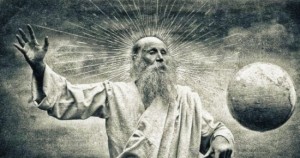
We like to think that our ideas of God come from scripture. And no doubt some do. But who is your God, really? The God who could never change its mind? Or the God who actually does change its mind throughout the story that spans the biblical narrative? Most of us don’t default to the both/and paradox on this one. We have an idea of God that determines which we think to be more accurate.
I would venture to guess that most of the time we are being shaped into imagining God in certain ways that we are not even aware of.
This is one reason why the gendered language we use of God is so critical .
The fact that the default setting on much of our worship is to use masculine pronouns for God not only reflects our position as heirs of a certain tradition, it also has a deep impact on how we imagine God. Simply put, it is not possible to use exclusively masculine, or masculine and neuter, pronouns for God without subtly shaping people’s theological imaginations toward a male God.
One of the weighty gifts of the postmodern era is the rending of the veil of objectivity. We are being shown with the rise of post-colonized voices that our ideas of God have been radically self-serving. A king has empowered a people to rule through subjugation. There is an image of God that upholds such practice. And there is an image of God that undermines it entirely.
Confronted with the reality of ourselves as interpreters of God, and confronted with the power of our ideas of God to shape the world for good or ill, we have to choose. We have to choose to cultivate an image of God that is not only faithful to the biblical story but also to the life-giving gospel that we believe best encapsulates it.
We have to engage in that “not only… but also” because there are many Gods waiting to be derived from the biblical narrative. There are many Gods capable of subjecting the biblical narrative to themselves.
This means that we have to be active, thoughtful, intentional cultivators of our theological imagination. We have to choose what kind of God we will allow to take root in our minds or it will be chosen for us.
Gods That Divide
When the Wheaton College fiasco shed public light on the debate about whether or not Christians and Muslims worship the same God a friend of mine turned the whole debate on its head.
Not only was he willing to say that he, as a Christian, did not worship the same God as Muslims. He was willing to say that as a progressive, peace-loving Christian he didn’t worship the same God as Jerry Falwell, Jr., or Al Mohler, or the Wheaton College administration. Ok, so he might not have named those particular names. But his audacious claim raised a piercing question: might it, in fact, be the case that it is nothing less than the gods we serve that divide us one from another?
At the end of that thought experiment, I don’t want to say that we worship different gods, but I do want to say that we understand the person and character of the one true God quite differently. That difference comes down to the defining contours of the story that we believe that God to be playing the lead in.
In the end, I think that the tragic divisions among Christian people right now come from deeply conflicting imaginations about God. “A God who does x would not be a God worthy of worship—because that’s not a God of love,” conflicts with, “God has said that God does x, so a God who does x would, by definition, be worthy of worship—because it’s true!”
Before these fights are fights about dogma or the Bible they are fights about theology. Which is to say, they are fights about the God who has been constructed in our imaginations over years of both active reflection and passive absorption.
Convert the Imagination
So we all need to be about the business of conversion of the imagination (as Richard Hays puts it) or, if you prefer Paul, being renewed by the transformation of our mind.
This happens as we learn the gospel from the Jesus stories, as we learn the gospel of reconciliation from Paul, as we learn the cross as a sacred calling of love, as we recognize the Lord’s supper as the defining marker of our family’s way of life, as we listen to our neighbor’s understanding of who God is, as we listen to preachers who know that God is love and we are at root God’s beloved children, as we hear the stories of people who have been cast off by the institutional church and yet continued to walk in the way of Jesus, as we read theologians who are willing to have God blow up their own categories, as we watch Coen Brothers movies or read Flannery O’Connor or Richard Rohr or Ursula Le Guin.
It is easy to look beyond our walls and say, for instance, of a radicalized Muslim suicide bomber, “Any god who makes you do such a thing, or who would approve of such a thing, is no God at all.” Much harder to look in the mirror and see how the aggressions large and small that mark our own lives are denials of God by that very same standard.
How will we know what God is like? How will we know God when we see it? Is there a God who is able to give life and life up and make us new?
That will all depend on how our imagination has been shaped.
Featured Image © Ted Van Pelt | flickr | CC 2.0
Previous Post

July 11, 2016
Joining Newbigin House
Next Post

August 4, 2016 Opportunity in the Chaos
Browse Our Archives
Select a Category American Culture Bible Book Reviews Church Culture Conferences LectioCast Newbigin House Pop Culture Uncategorized
Select a Month October 2017 March 2017 February 2017 January 2017 November 2016 October 2016 September 2016 August 2016 July 2016 June 2016 May 2016 April 2016 March 2016 February 2016 January 2016
Follow Us!
TAKE THE
Religious Wisdom Quiz
What was the name of the King who made Esther his queen?
Select your answer to see how you score.
Jeremiah Barnabas Hezekiah Ahasuerus
Related posts from Storied Theology



Love Your Enemy: Thoughts on Donald Trump

Today, the Human Jesus Matters
TRENDING AT PATHEOS Progressive Christian

What Being a Modern-Day Apostle Means to Me
In my last column, I discussed the ins and outs of modern-day...

Did Ancient China Once Worship the God of...
Across human history, a common thread weaves through the origins of the...

Love Your Neighbor – Including Earth-Kin: Lev. 19,...
God’s command to love your neighbor means acting in an ethical and...

Lead a Church Study of “Jesus and Lao...
Guest writer Jack Thomas (The Irreverent Reverend) reflects on leading his church...

Pastoral Wisdom for Responding to Sermon Pushback
Getting sermon pushback on your social justice sermon? Learn practical, Proverbs-based strategies...

Principles for Understanding the Apostolic Ministry Today
Whenever people discover that my formal ministry title is "apostle," as in...
view all Progressive Christian blogs
Ad-Free & Subscriber Log-In Subscription Support
- About Us
- 2026 Calendar
- Videos
- Podcasts
- Library of World Religions
- Faith In Media Tracker
- Advertise With Us
- Write for Us
- Privacy Policy
- Terms of Service
- Do Not Sell My Data
- Contact Us
- Radiant Digital
- Manage Newsletter Subscriptions
- Unsubscribe From Notifications
- Sitemap
Copyright 2008-2026, Patheos. All rights reserved.
Subscription Support Ad-Free & Subscriber Log-In
Follow Patheos